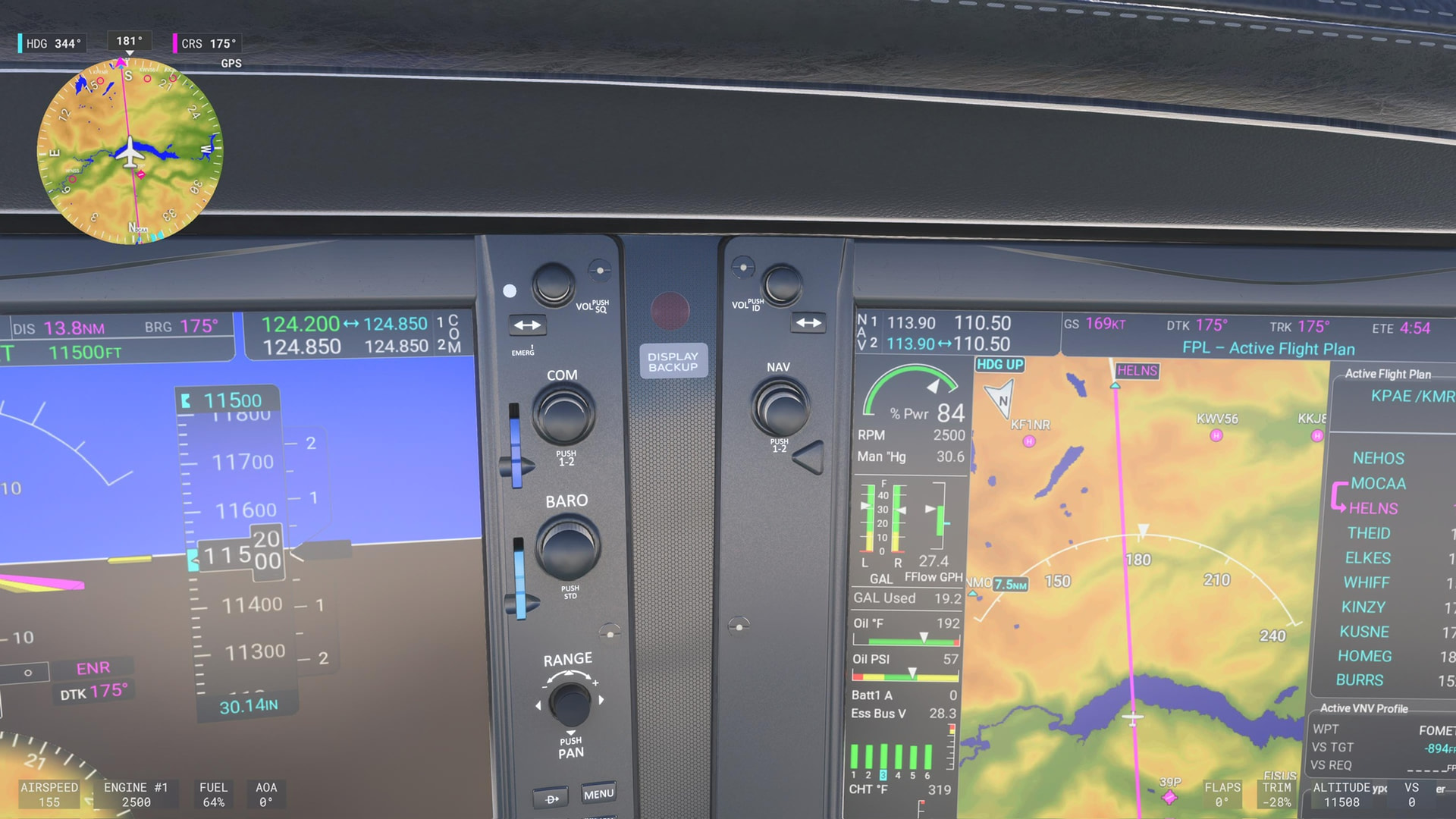
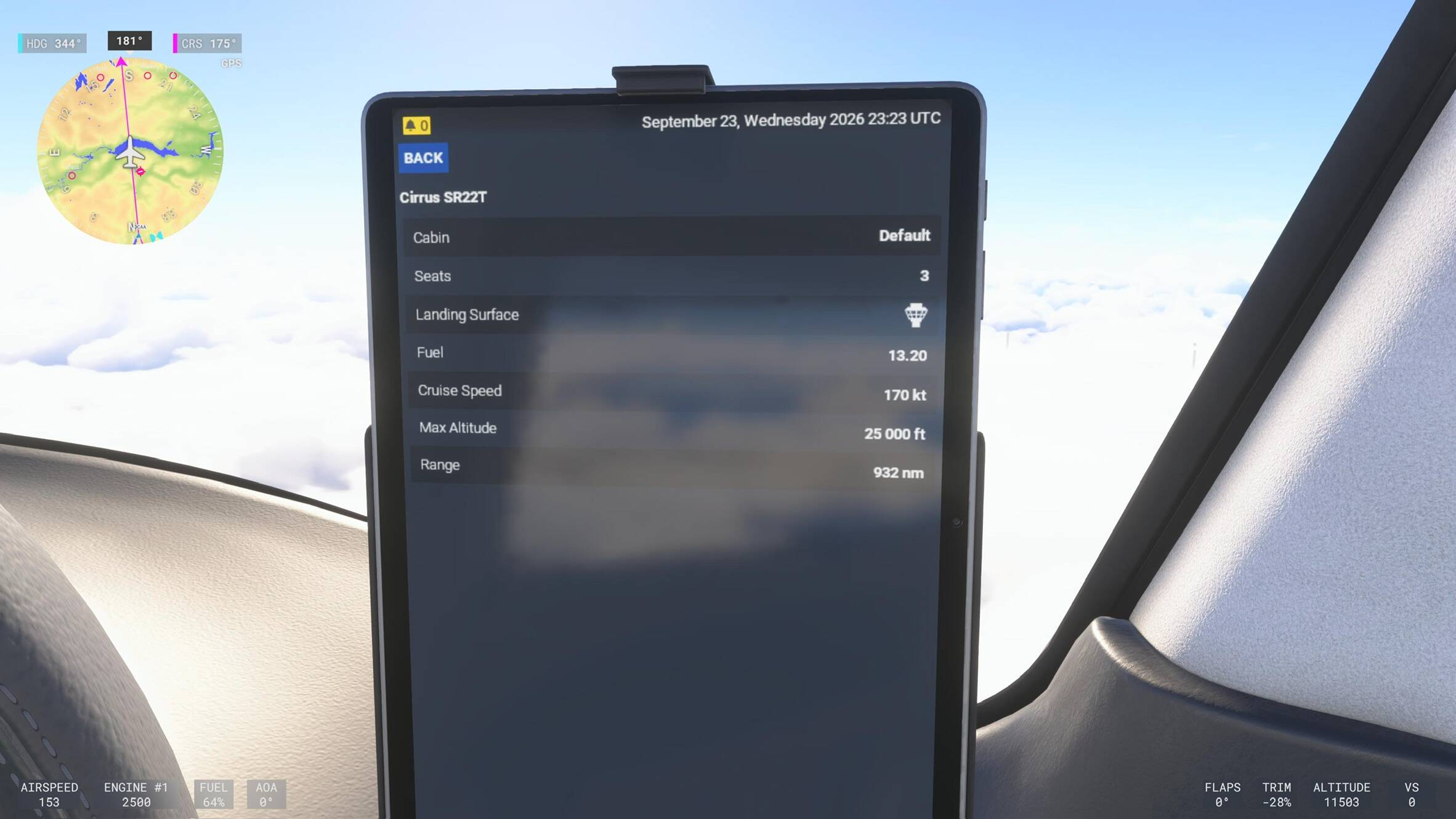
Description of the issue: Fuel flow is higher than what is indicated in the EFB. Changing and adjusting the mixture does not change fuel flow. Just to state it here, I am on a PS5 PRO.
FREQUENCY OF ISSUE
How often does this occur for you (Example: Just once, every time on sim load, intermittently)? Every time I use aircraft
REPRODUCTION STEPS
Please list clear steps you took in order to help our test team reproduce the same issue:
start flight
take-off
monitor fuel flow
YOUR SETTINGS
I have all AI assistances turned on, and all graphic settings to maximum.
Did you manually adjust mixture? I wasn’t able to. Granted, I do normally fly with AI assistances. Can the AI Assists disable manual changes of the mixture?
Hi @CyclicRoom8326
I always manually adjust the mixture. The only assistance I’ve ever used is the lean assist built into the G1000, and even that is not perfect and needs some manual adjustment to get the mixture set right.
So I can’t really speak to whether the in-sim AI assist would override any manual input you might set. I would “think” it might do that, but don’t have any evidence whether that’s true or not.
Regards
I am not sure if the “Fuel” value in the EFB indicates the fuel flow. Since the fuel flow vary on multiple parameters it is not a fix one. Let’s see if someone can confirm what this value stands for.
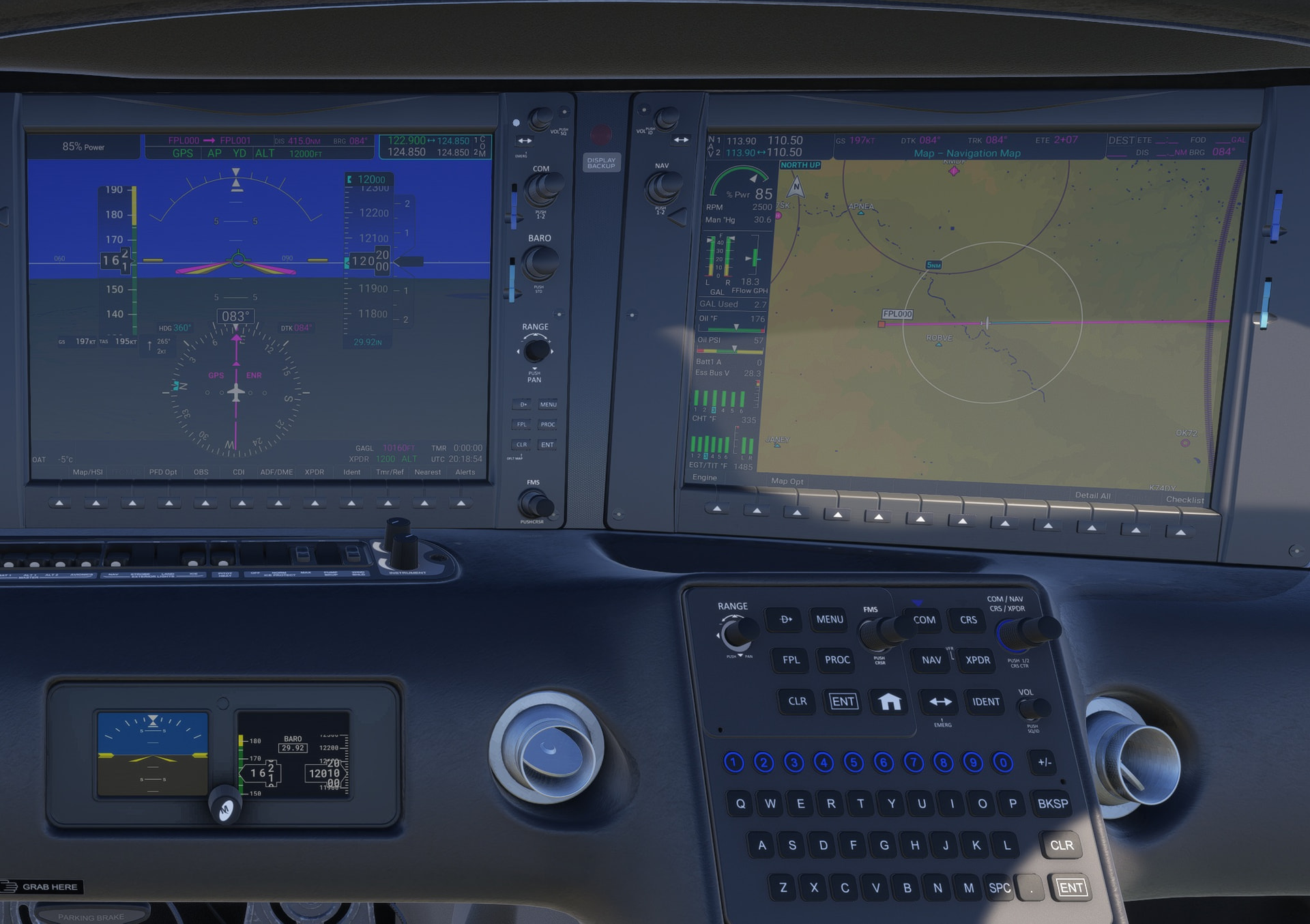
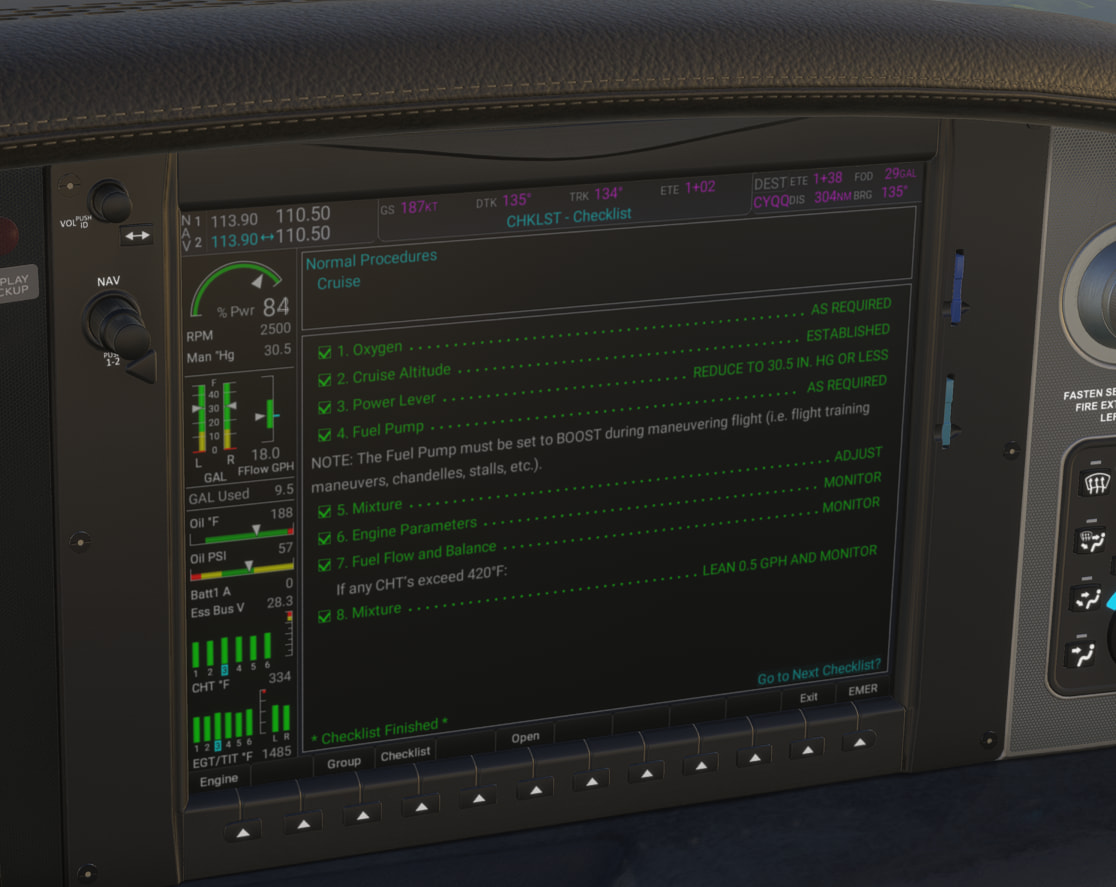
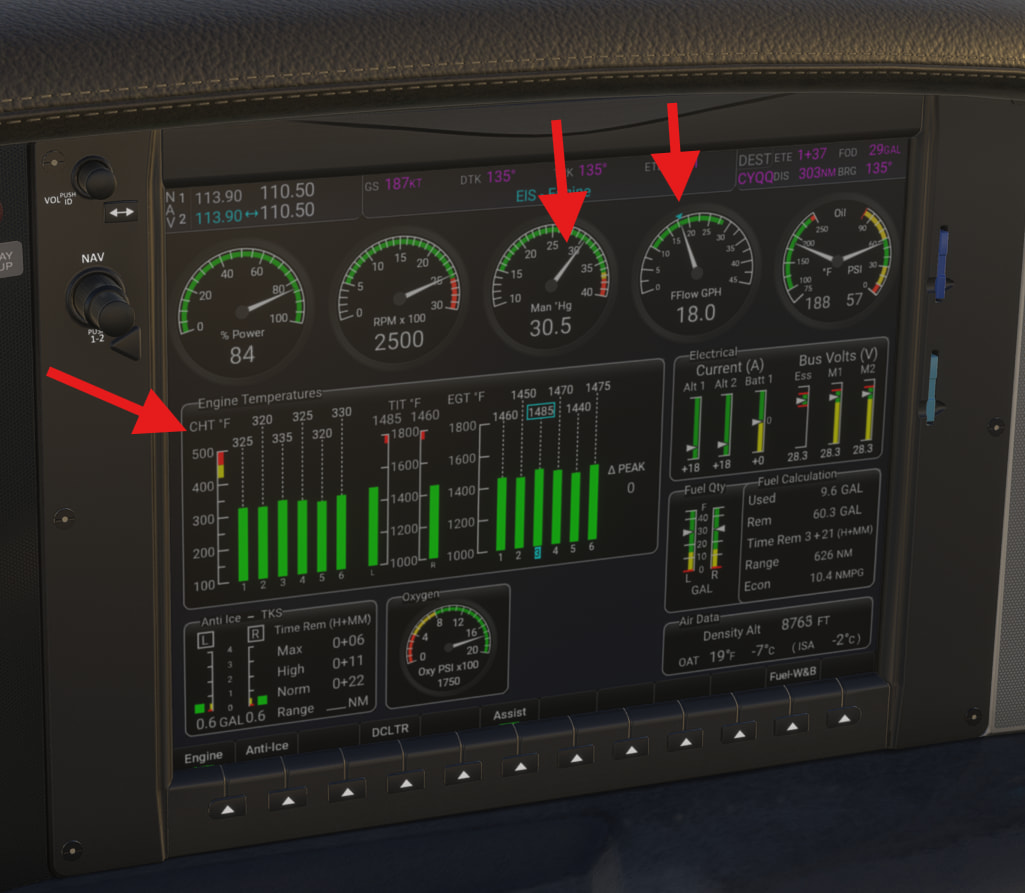
My two cents, I use the checklist on the MFD (also found in the POH) where the power level is adjusted to 30.5 IN HG or less (item 3.) and Mixture (item 5.) is adjusted to line up with the little green carrot on the engine FFlow GPH indicator. Monitoring of CHTs <420F is also stated…
P.S. No assistance
P.S. I don’t pay for gas so I run at 83-85 RPM (~158 IAS) … LOL.
Would it be useful to compare total fuel used over a fixed 30-minute cruise at a known power setting? That might show whether this is just an indication problem or the aircraft is actually burning too much fuel.
Finally got around to flying the SR22T again. Currently flying it and the aircraft in the sim lines up almost perfectly with the POH numbers.
I have automixture AI assistance turned off. One small note rn, at the POH-recommended mixture settings, I keep getting Co-Pilot Alerts that the engine is being starved.
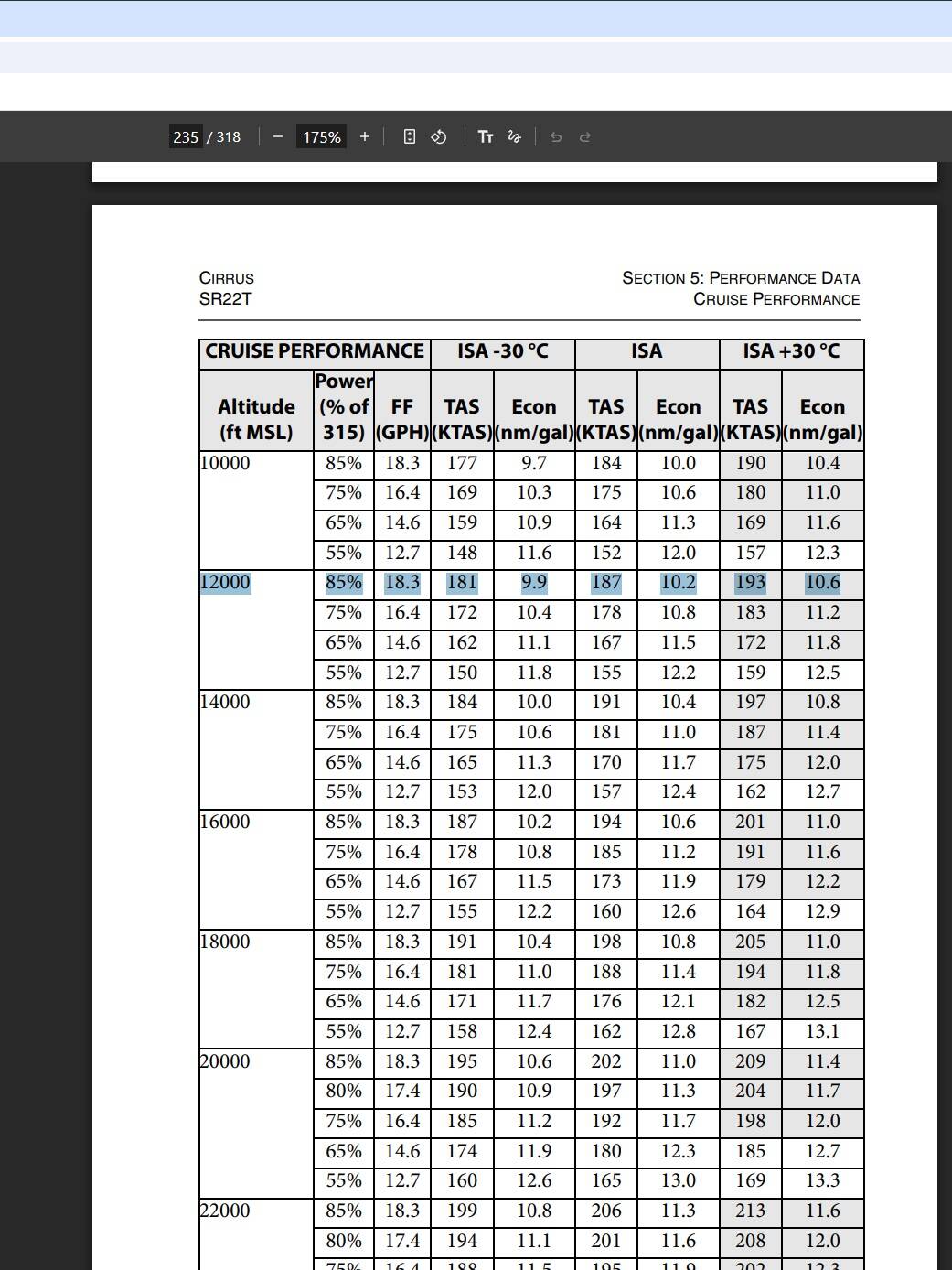
Don’t quote me here! but to me it looks like they pulled the “nm/gal” figures for one of several scenarios in the POH.
Some examples:
Cruise at FL 220 and 55% power, at ISA, TAS 168 kts, nm/gal=13.2 (also reflected as you’d expect on the “Range/endurance chart” for “55% power after full power climb”, range=933 nm/13.2 nm/gal
(as comparison, same alt/ISA, 85% power gives you TAS 206 and econ of 11.3 nm/gal with a range of 805 nm after full power climb)
There’s other power/alt combos that give you that same number in the POH, but this is a typical consideration you’d use IRL to make decisions. Nothing like having the “slower plane” get to the destination ahead of you because you flew BTTW but had to descend, land, buy more fuel at their price, takeoff, climb and cruise again, all while they cruised along!
So I’d suspect that number is one they chose that reflects a “typical” nm/gal (a concern if you’re paying for it!) for a flight that helps maximize range.
Regards
 but to me it looks like they pulled the “nm/gal” figures for one of several scenarios in the POH.
