Test machine specs: MSI X670E, AMD Ryzen 7 7800X3D, AMD Radeon RX 7900XTX, 48gb RAM
Version reviewed: 1.1.0, FS2024
Add-ons: BATC, GSX Pro, GFX, Global Shipping '24
DETAIL
Having bought (and been pleased with) this Japanese dev’s Hiroshima, I decided to add the recently-updated Kumamoto to my expanding Japanese collection. The price is perhaps a tad steep for a minor international facility but it is actually one of Japan’s more important airports, being around the 11th busiest in the country.
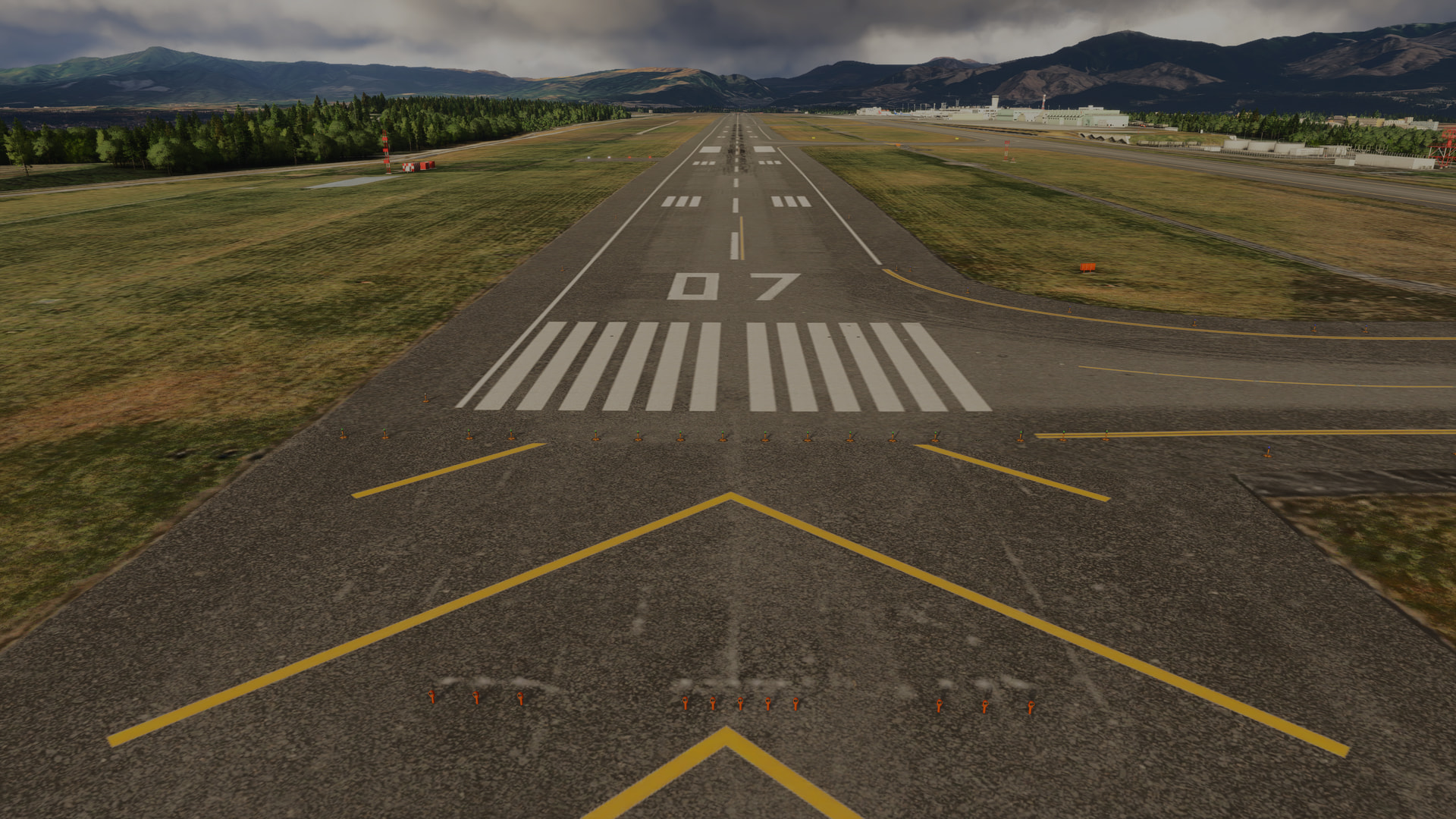
Already owning the far newer Hiroshima, I knew what to expect; but Kumamoto actually betters its younger sibling in a number of departments — most notably with its runway, taxiway and ramp textures, which are now (thanks to the update) high-res overlays placed atop the custom ortho. Granted, a lot of the lower-res ortho remains but it’s confined to non-paved and landside areas where it’s less noticeable. I’m puzzled as to why Hiroshima didn’t get the same treatment in its own recent update but I guess that’s another story…
Ground markings are very good but that only leaves them a touch above average for 2026. Airfield lighting is a mix of custom (approach lights) and default (runway/taxiway edge lights) but the signage is all bespoke. The main ramp contains a decent amount of branded JAL/ANA GSE, which can also be found in some of the enclosed storage areas close by.
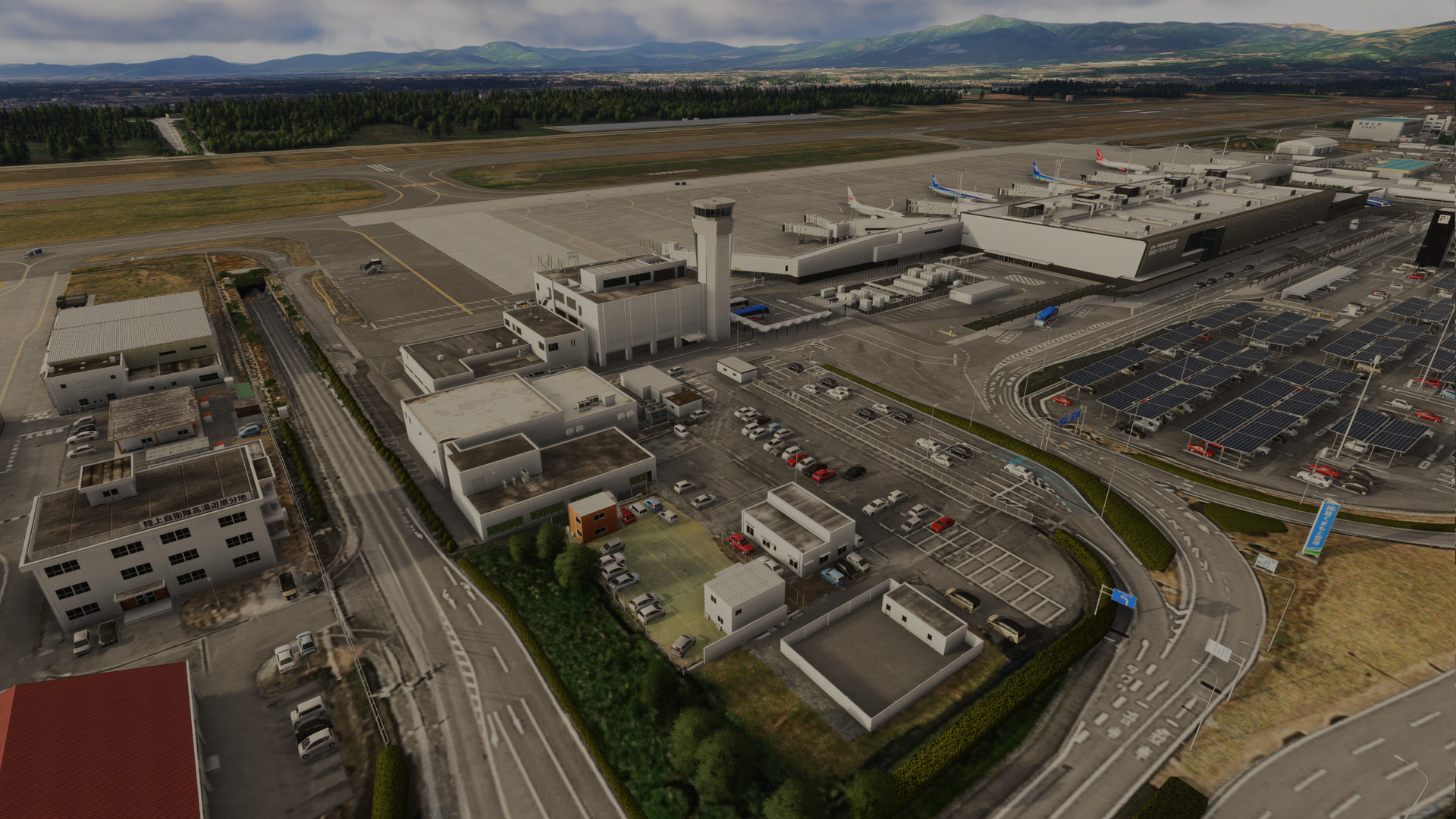
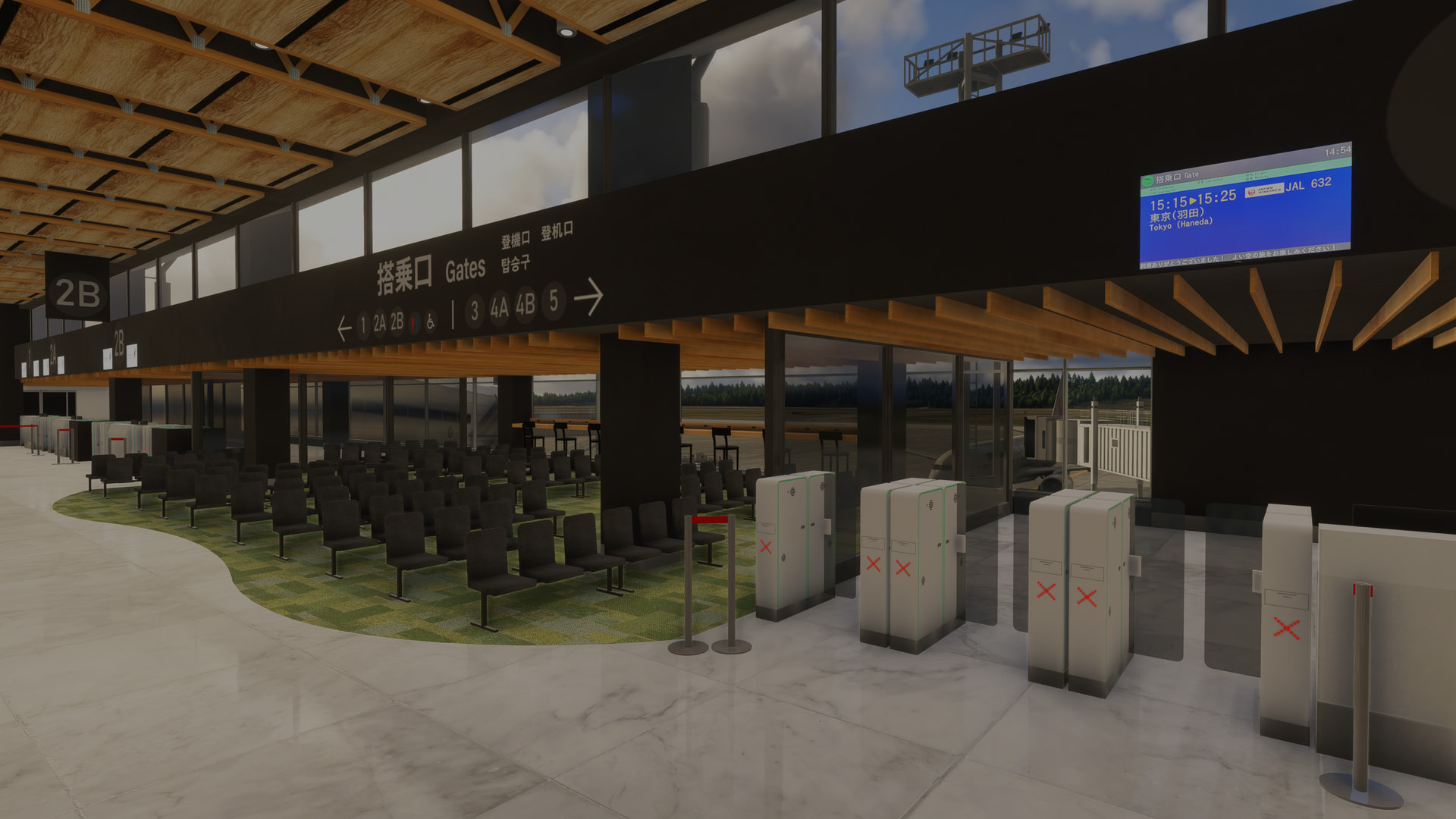
The terminal building — parts of which are brand new IRL — looks superb. It features custom jetways (that closely match the real airport), an interior covering the whole airside (with tinted glass), very good weathering effects and the (obligatory, in Japan) visitor terrace on the roof. I do like my fine detail and I had to have a little laugh to myself when I noticed the vending machines on the visitor terrace are illuminated at night! Just a shame there are no people viewing the proceedings. In fact, there are no people anywhere in the scenery, which is sad.
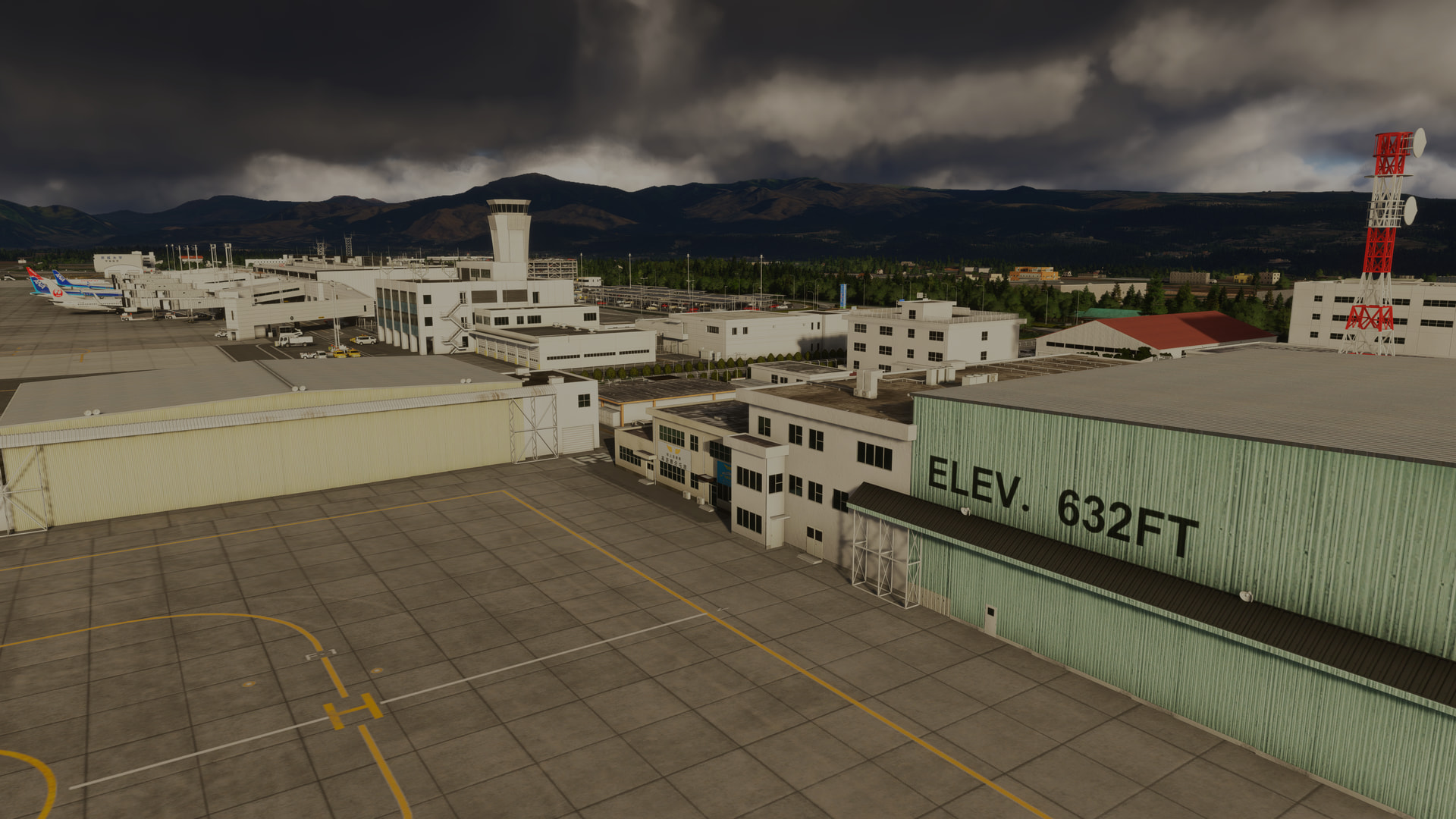
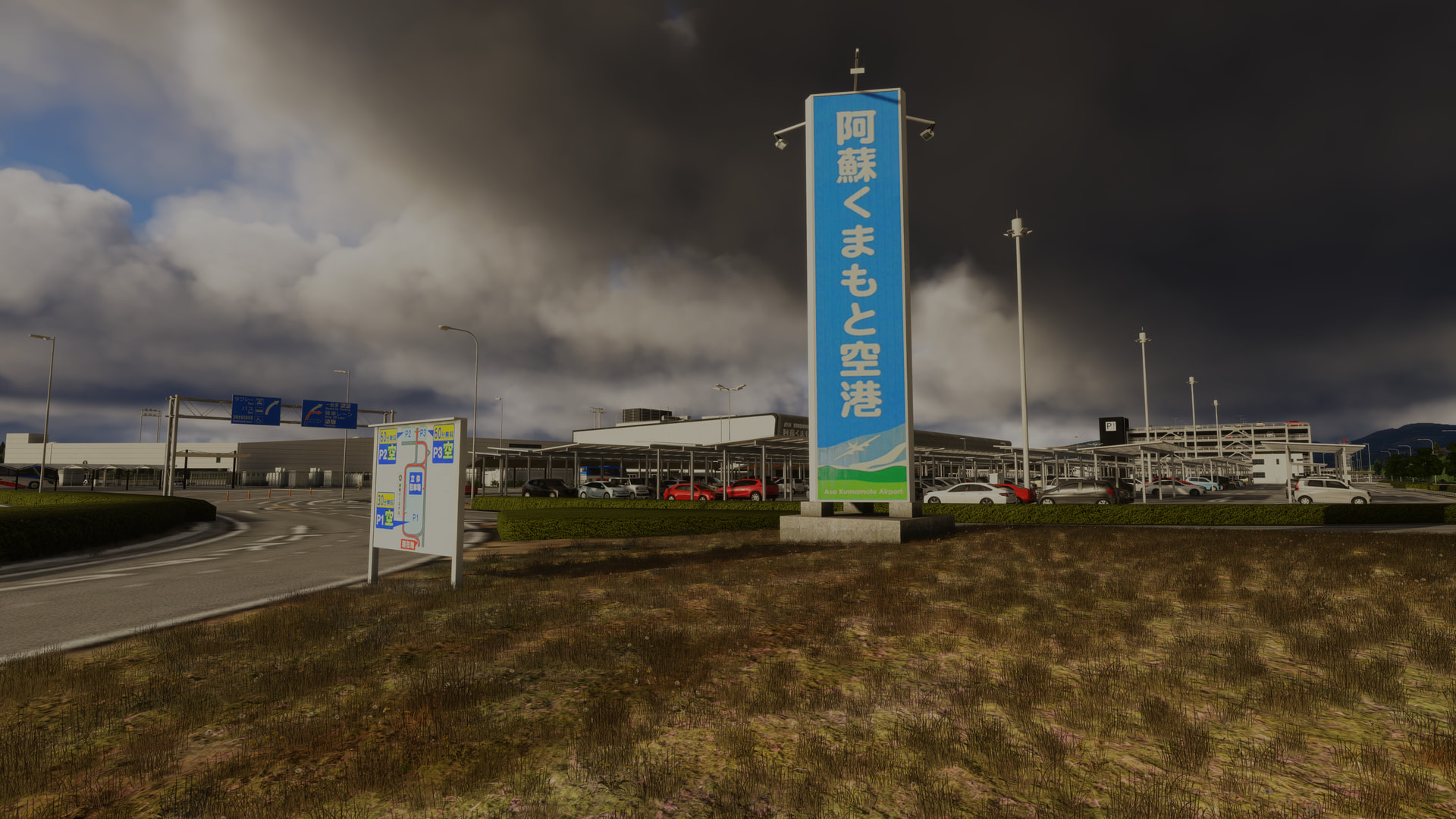
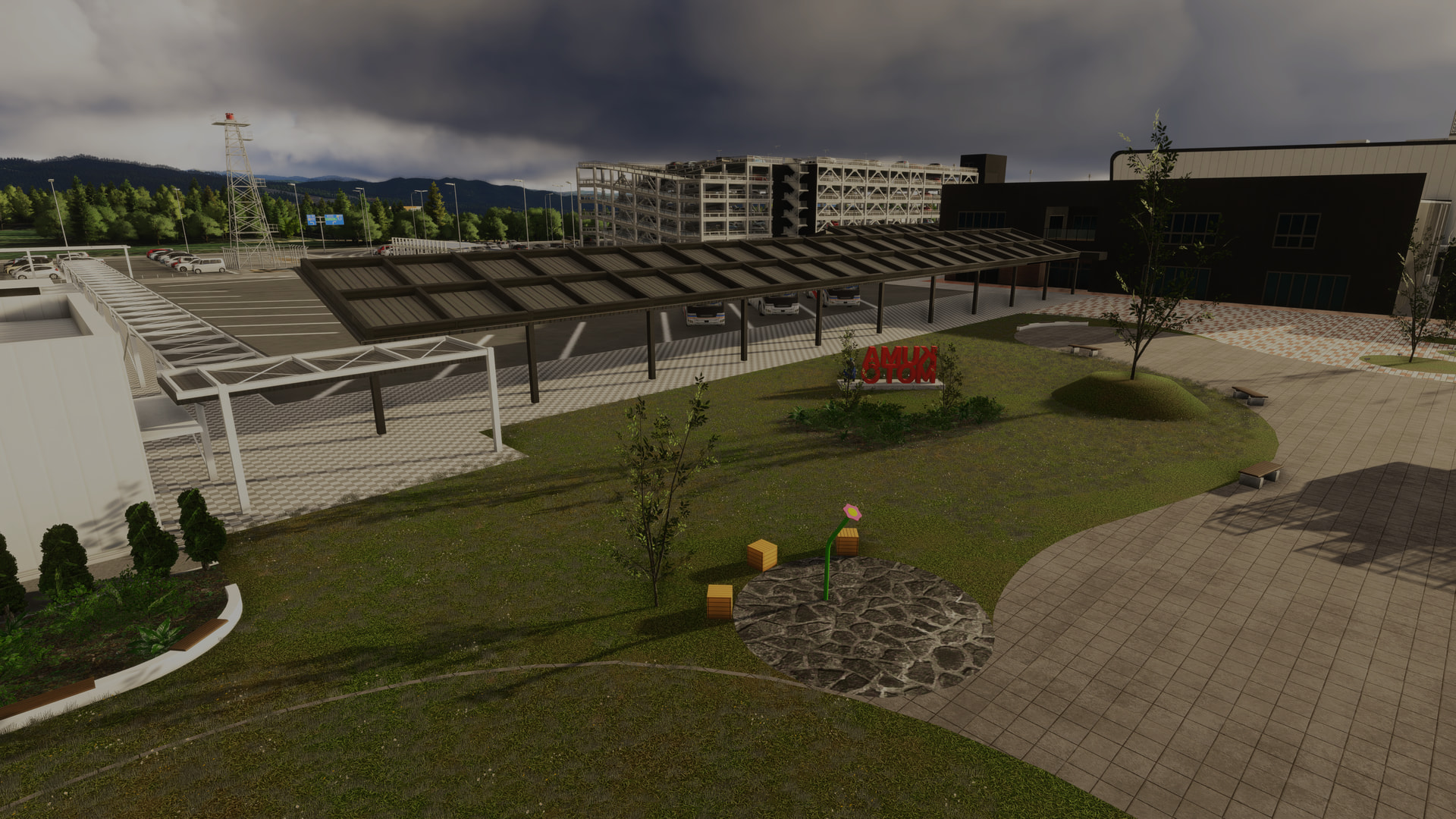
The terminal’s landside features an equally impressive amount of fine detail but the lower-res ground ortho here definitely takes some of the shine away. Still, the modelling exhibited remains excellent, however some of the hangars either side of the terminal have noticeably blurry roofs. What I really like is the consistency of the detail — wherever you go on and even around the airfield, the quality doesn’t decline, and there are no areas that feel neglected (except perhaps the road tunnel, where it emerges at the airfield’s northern perimeter).
The airfield has a custom fence — a different one to Hiroshima, so almost certainly tailored specifically to this airport — but it’s only been placed around the terminal and its adjacent hangars. With the effort made to create this bespoke fence, it’d have been nice to see it fully encircle the airport.
Surrounding detail is fairly sparse but this seems the case in reality. Tokai University, just southeast of the airport, has been modelled, as have a few nearby hotels.
Night-lighting is a strength, I’d say, and the only Asobo ‘globes’ I managed to locate within the airfield boundary are way out to the north, near the perimeter. The scenery puts in a solid performance after dark, and I’m particularly impressed by the fully-functional custom approach lights (some devs basically ‘mask’ the default lights by encasing them within custom structures — an approach (pardon the pun) that rarely ever looks right).
There’s no GSX profile provided (not even a community-made one) but the airfield’s operational simplicity means everything seems to work fine without. BATC compatibility seems spot-on, from what I’ve seen so far.
PERFORMANCE
Excellent for me. The nearest PG is in the vicinity of RJFT’s sister airport, Hiroshima, but Kumamoto’s surroundings seem to have benefitted from the last Japan World Update, which released not long ago.
VERDICT
Since the release of Technobrain’s RJTT, I imagine many people will be looking to expand their collection of Japanese airports. A unique aspect of Japanese aviation is that many small regional airports see service by JAL and ANA heavies and, like Hiroshima, Kumamoto is no exception. For those looking to revive Drzewiecki’s excellent RJAA, there are lo-co flights between it and Kumamoto operated by JetStar Japan.
The Kumamoto scenery itself is really well done and sits beautifully with the default surroundings. There are city, mountain and agriculture elements around the airfield, making approaches varied and aesthetically pleasing.
My only minor complaints are the low-res ortho, landside (elsewhere, it’s not a great problem), the lack of people anywhere in the scenery, and the fact that the custom fence has only been placed near the terminal. But the pros here really do outweigh the cons, and in a country with surprisingly few quality airports, Kumamoto is right up there with Technobrain’s RJTT and Drzewiecki’s RJAA. In fact, there are certain, uncanny similarities between SNJ’s work and Technobrain’s — it would seem Japanese developers are obsessed with accuracy, and fine detail in places few people would think to check.
Kumamoto might not be on every simmer’s mind as their next destination but, as I mentioned previously, owners of Techno’s new RJTT are undoubtedly going to be looking for destinations. Kumamoto is about equidistant from both Tokyo and Okinawa (slightly closer to Okinawa), so MK’s Naha suddenly finds itself a very relevant part of a slowly evolving Japanese network.
On a final note, don’t expect to pick up SNJ airports in sales — never in their history have they discounted any of their products!
IMAGES