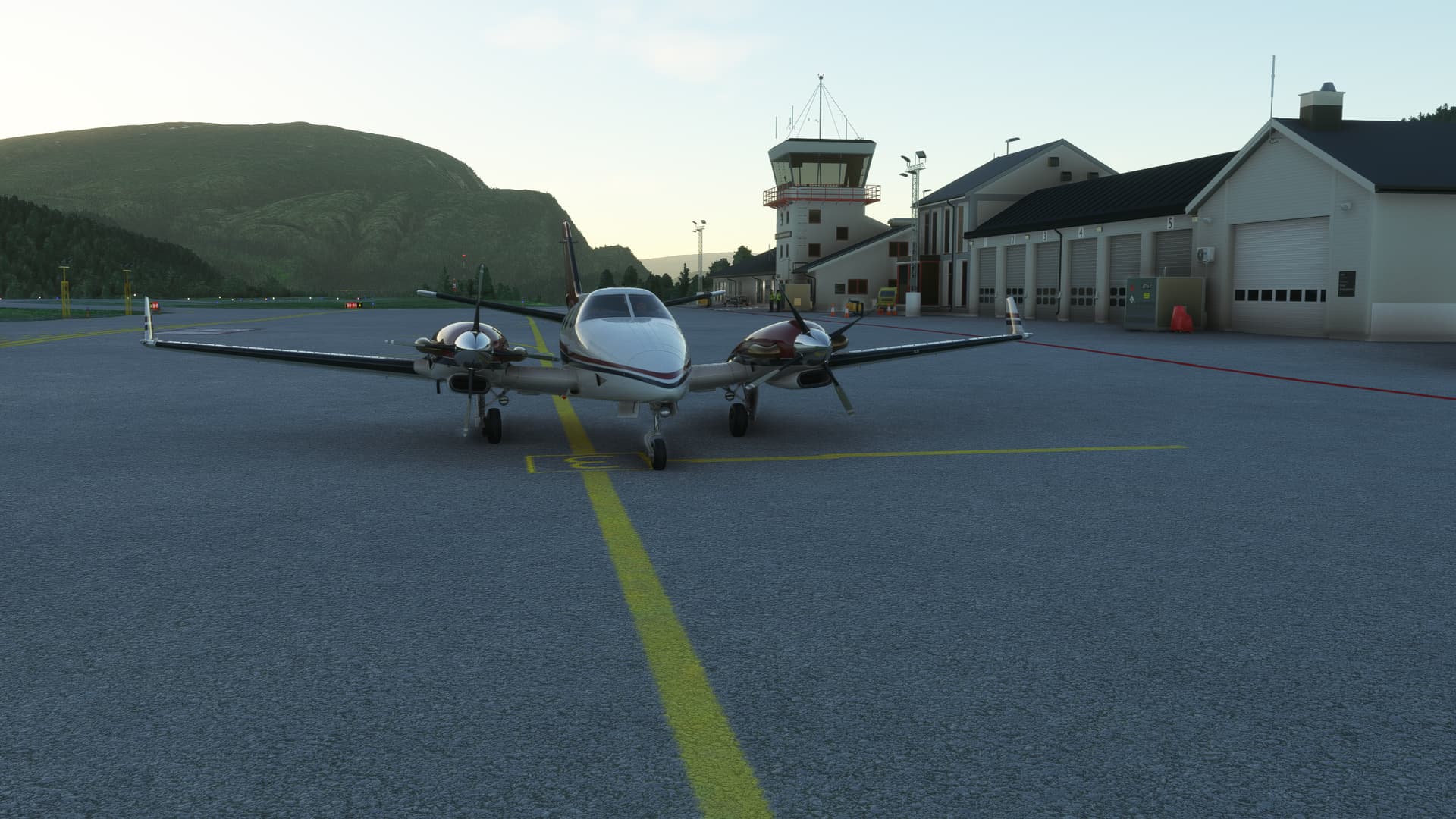
Let’s practice some approaches then, shall we?

The weather in Mosjøen ENMS these past few days has been fine, so after my subpar previous performance, I wanted to use the opportunity to sharpen up on the unique approaches that this airport has to offer.
The winds yesterday were light, allowing approaches to both runway 15 and runway 33. The plan was to do the VOR A approach with circling to both runways, then the RNP runway 33 straight-in approach, and finally the RNP runway 33 approach with circling to runway 15.
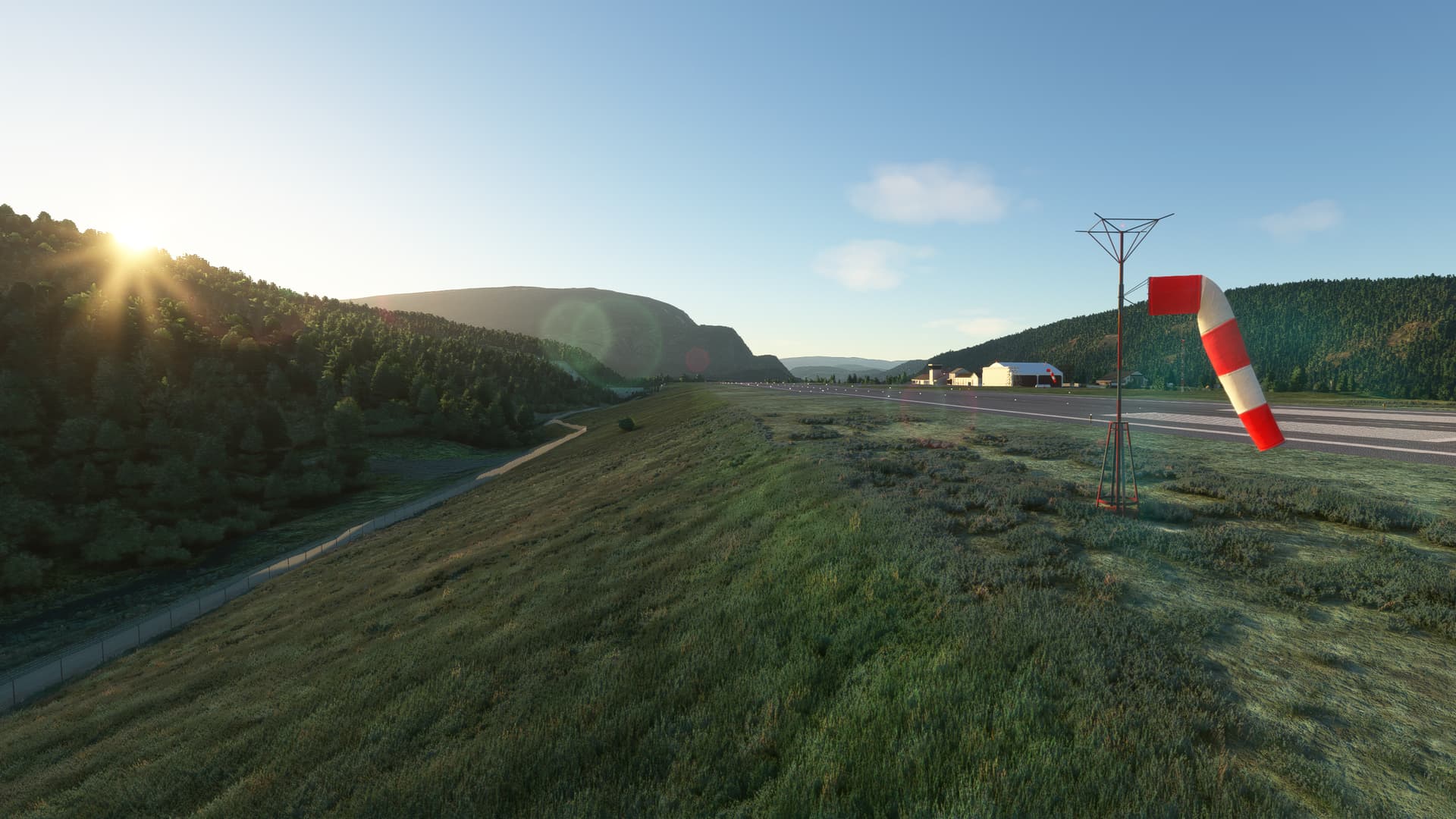
Light winds mean we get to choose which way we approach
I started by setting up for the VOR A approach. I chose to keep it simple: I would fly the approach manually, raw data. No GPS guidance, no flight director. Tune NAV 1 to 113.3, dial in the final approach course of 198 degrees, and I was good to go.
The VOR A approach is nice and simple. Vardefjell VOR is both the initial approach fix (IAF) and the missed approach point (MAP). There’s a holding over the VOR with 6-mile legs, and the inbound leg of the holding doubles as the final approach course. The MDA is high at 3000 feet, not least because the VOR is located on the peak of the mountain that gives it its name. If visual contact is established at the MDA, then continuing to follow the 198 radial outbound takes us directly to the airport – but of course we’ll have to manuever to circle to one of the runways.

Gear up
After taking off from runway 33, I tracked inbound towards the VOR, climbing to 6000 feet and keeping separation from terrain visually. Reaching the VOR, I performed a teardrop entry, which brought me nicely around onto the final approach course. At my approach speed of 140 knots, the descent angle of 3.9 degrees required a healthy descent rate of around 1000 fpm.

Tracking outbound
Given the fine weather, there was never any doubt that I’d see the lead-in lights at the MAP – though not the airport itself, which is still hidden behind a ridge at this point in the approach. I continued my descent over the southern end of Mosjøen and started my turn to final once I was over the river. At this point, I was in the narrow river valley, with ridgelines on both sides. I rolled out only maybe 100 feet above the airport, touched down just beyond the aiming point marker and immediately selected full reverse. I wasn’t going to be doing touch-and-gos at an airport with this much terrain around it. The stopping capability of the Turbine Duke is such a confidence booster on short runways – landing distance available here is only 829 meters.
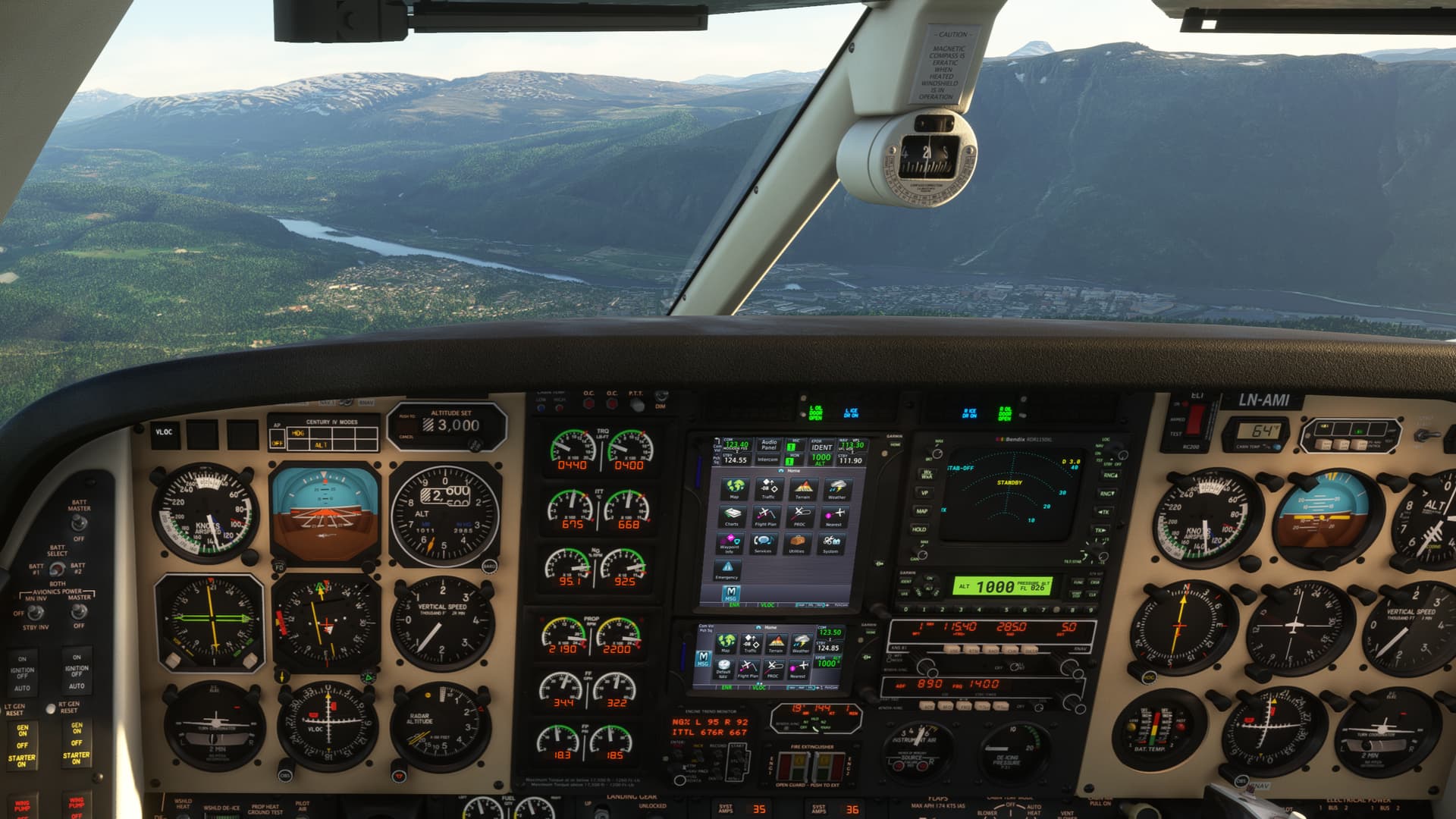
Mosjøen ahead
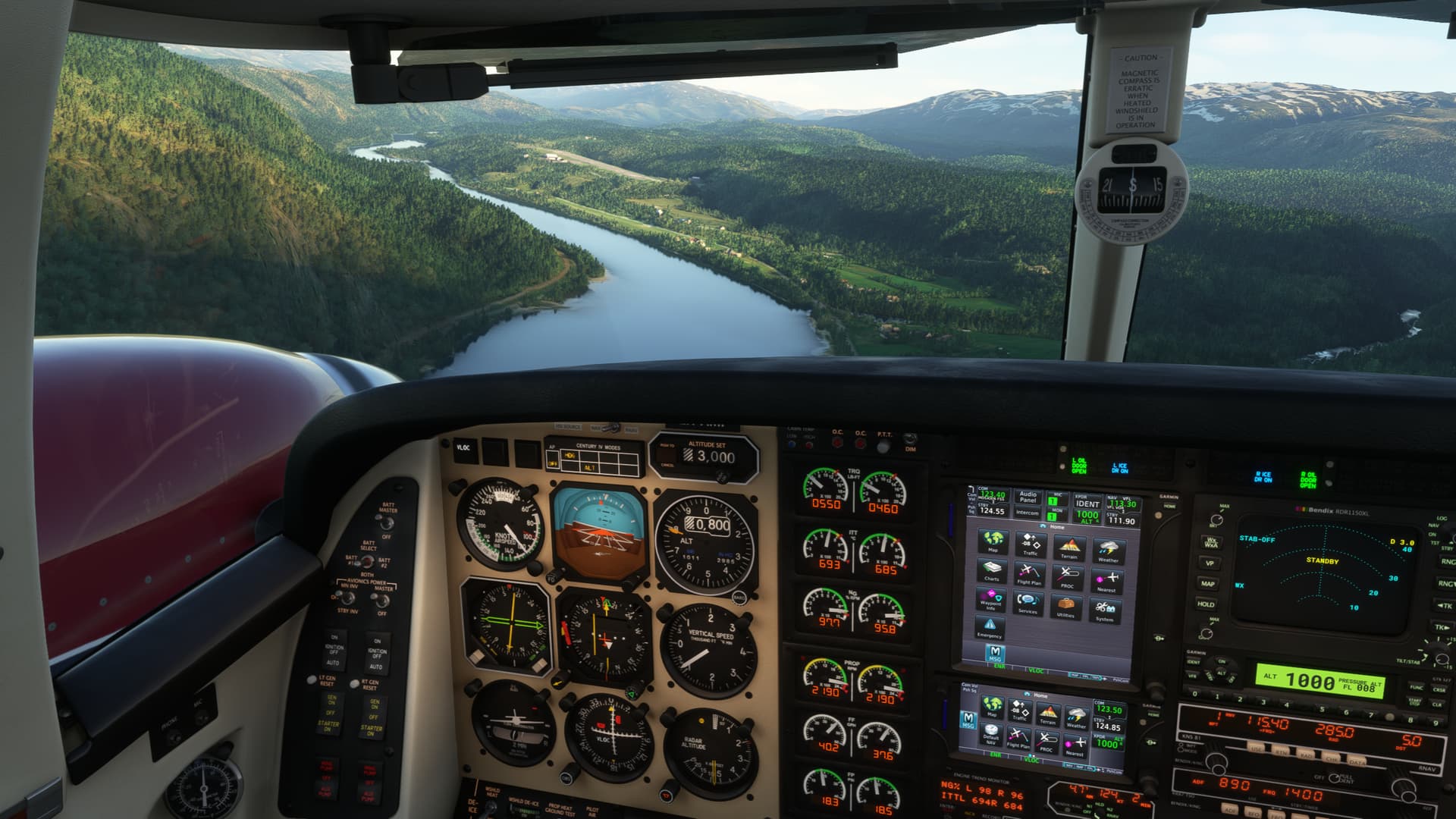
Turning final
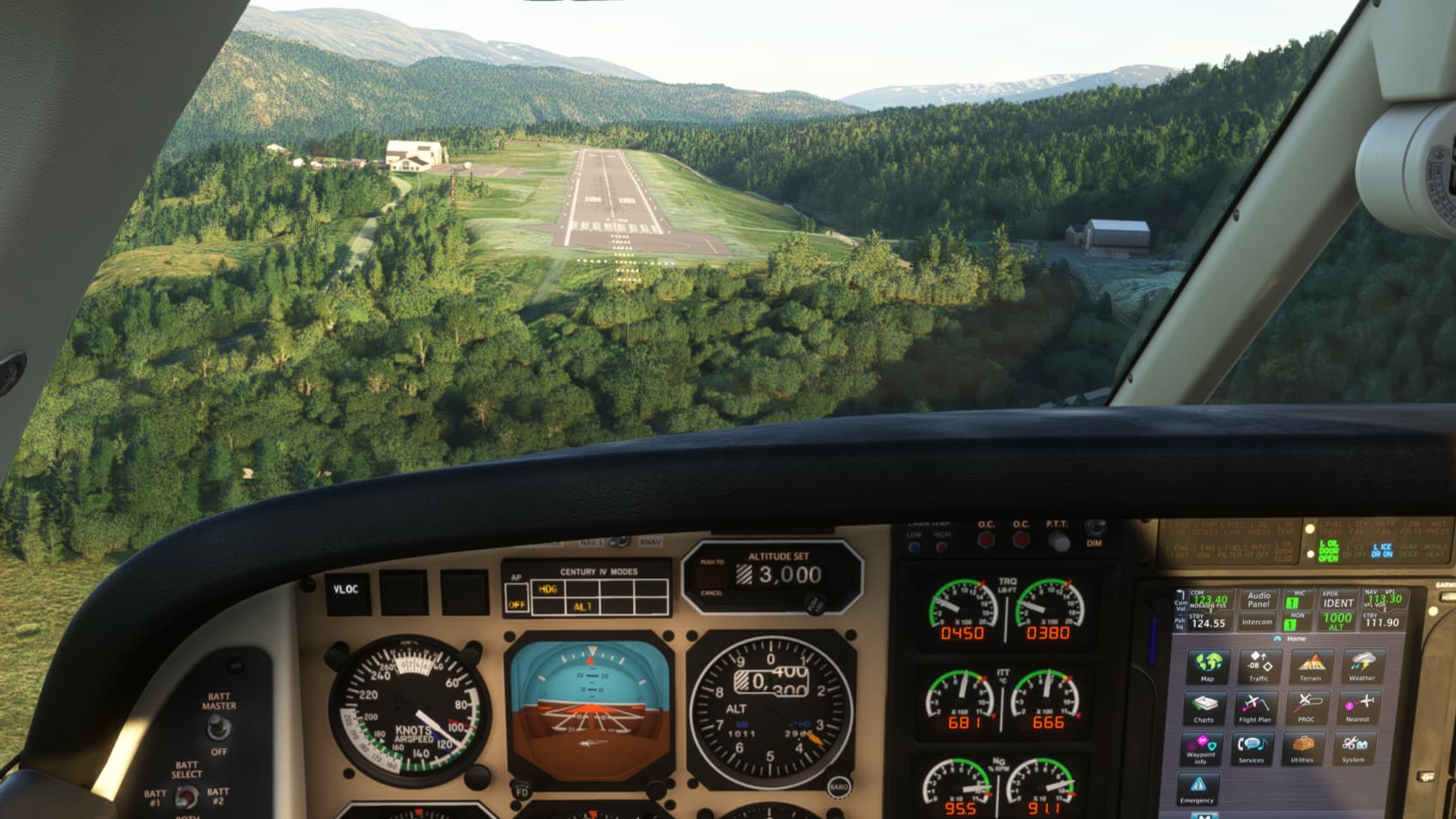
About to touch down
On the next approach I was going to confront my nemesis: The VOR A with circling to runway 33 that I had done such a bad job of on my last outing. On that occasion, I had tried to fly the downwind low and close to the airport, leaving me with little space to maneuver in amongst the terrain. This time, I would fly a much wider pattern at a higher altitude.
I took off and flew the approach again, then broke off onto a right downwind well before reaching the river and at an altitude of 2000 feet. I extended my downwind for quite a distance before turning base, then final. I was set up for a nice, long final, and the reward came in the form of another good landing on the aiming point.
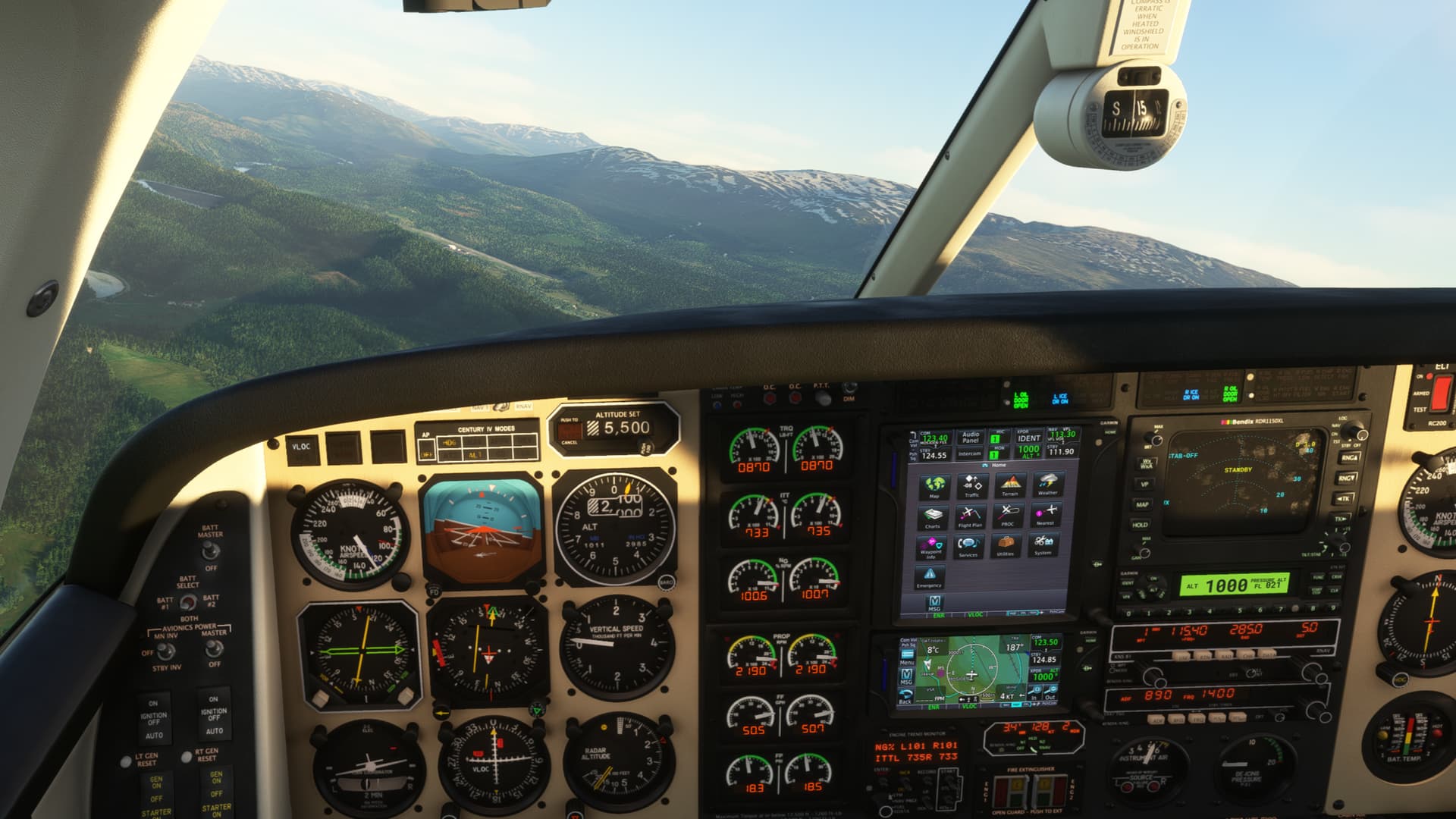
Breaking off onto a right downwind

Abeam the touchdown point
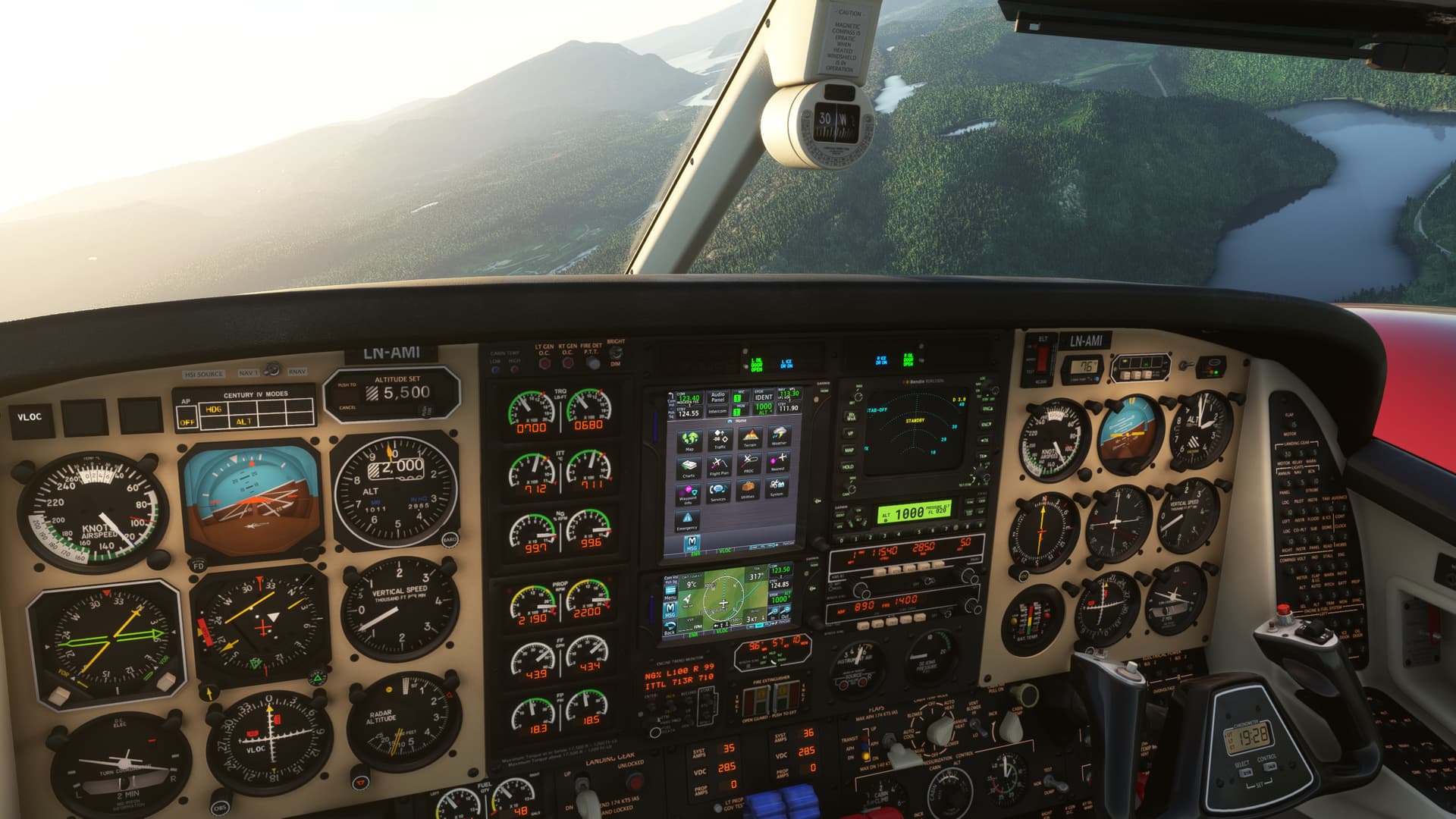
Turning onto final runway 33
Having defeated my foe, I would now be able to take a breather. The next approach would be the easiest of the day. The RNP runway 33 approach isn’t entirely standard, though – the final approach course is slightly offset by four degrees from the runway centerline, and the approach is steep with a descent angle of 4.5 degrees. Not a problem for the Turbine Duke – those big propellers are just as happy acting as airbrakes as they are producing gobs of thrust.
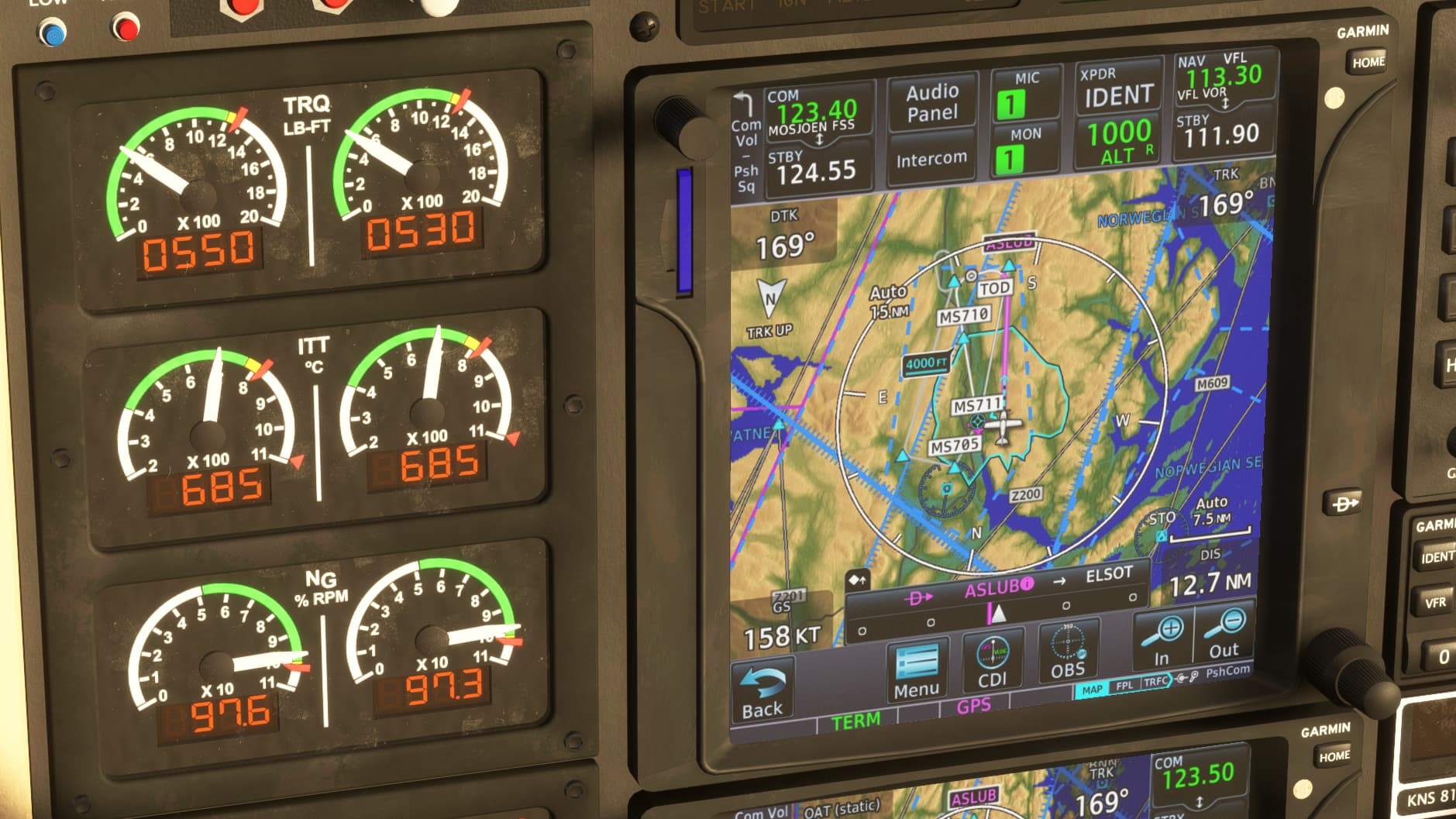
Time to let the computer do the work
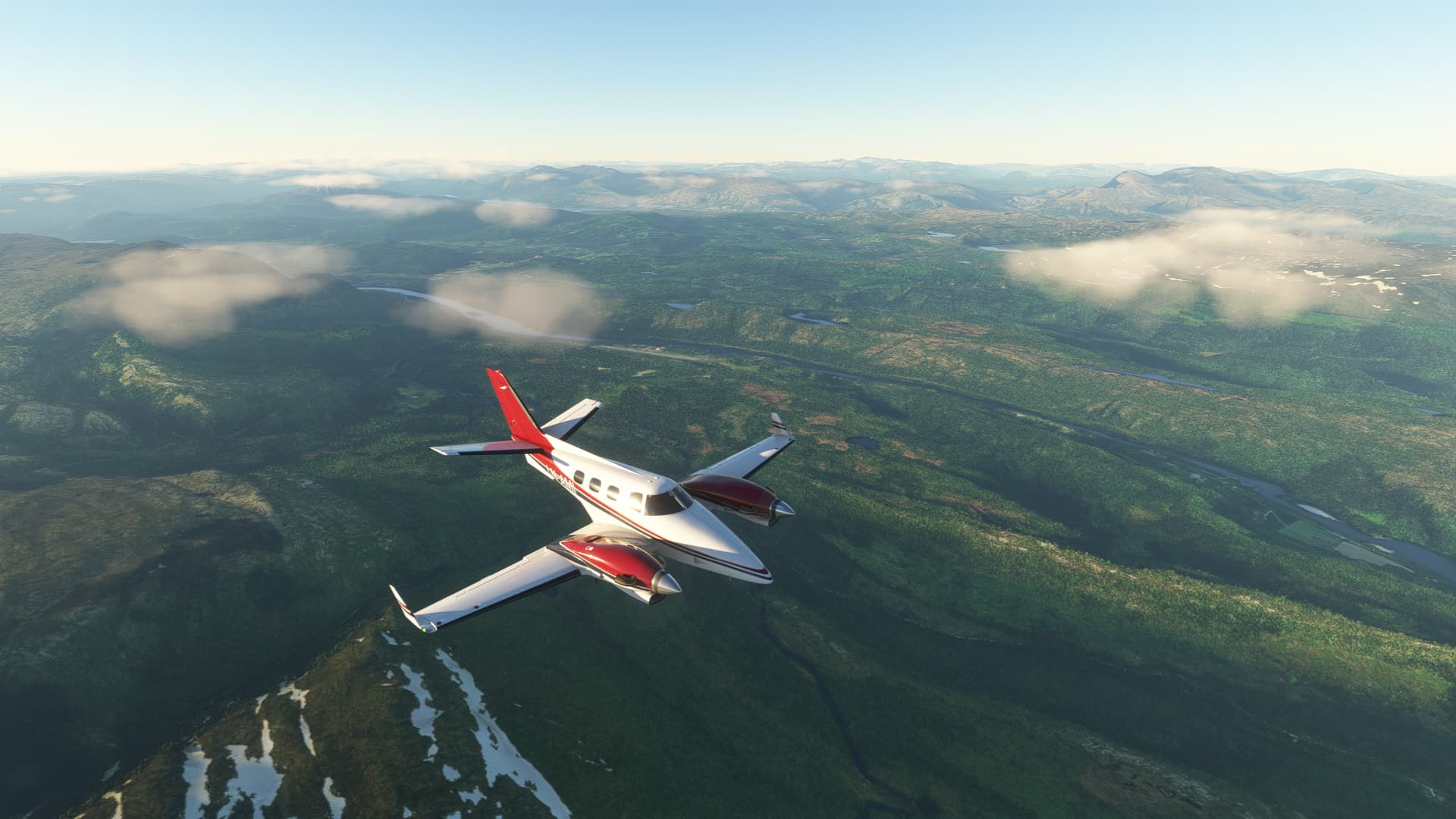
Heading out to ASLUB
After setting up the approach in the GTN 750, I took off again, performing a visual climb until I was clear of terrain, then turning in towards the ASLUB IAF. Autopilot engaged, put my feet up – I was really going to take it easy for this one. Turning in onto the final approach course, I descended to 4000 feet, then intercepted the glidepath. It was all getting a bit too boring, so I disconnected the autopilot early and hand-flew the rest of the way. The approach was right on the money, and I got another good landing out of it. Maybe it’s time to think about applying to Widerøe.
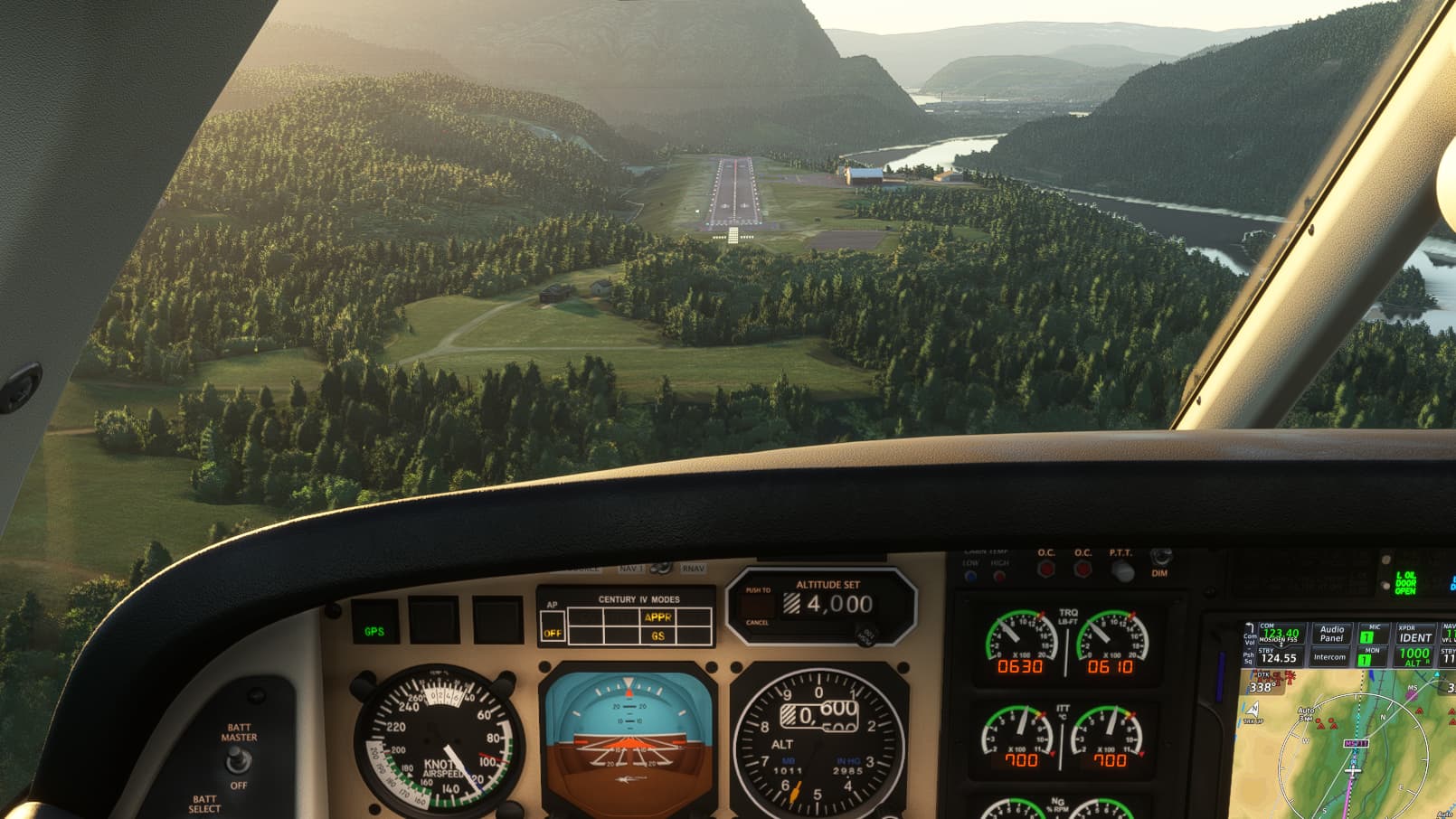
Short final
But there was one approach left. The RNP runway 33 again, but this time with a circling to runway 15. This requires a close-in turn of more than 180 degrees. In low visibility, the circling lights are indispensable – consider that the circle-to-land requires a visibility of only 1500 meters. Here’s a video of this approach in different weather conditions.

Turning base
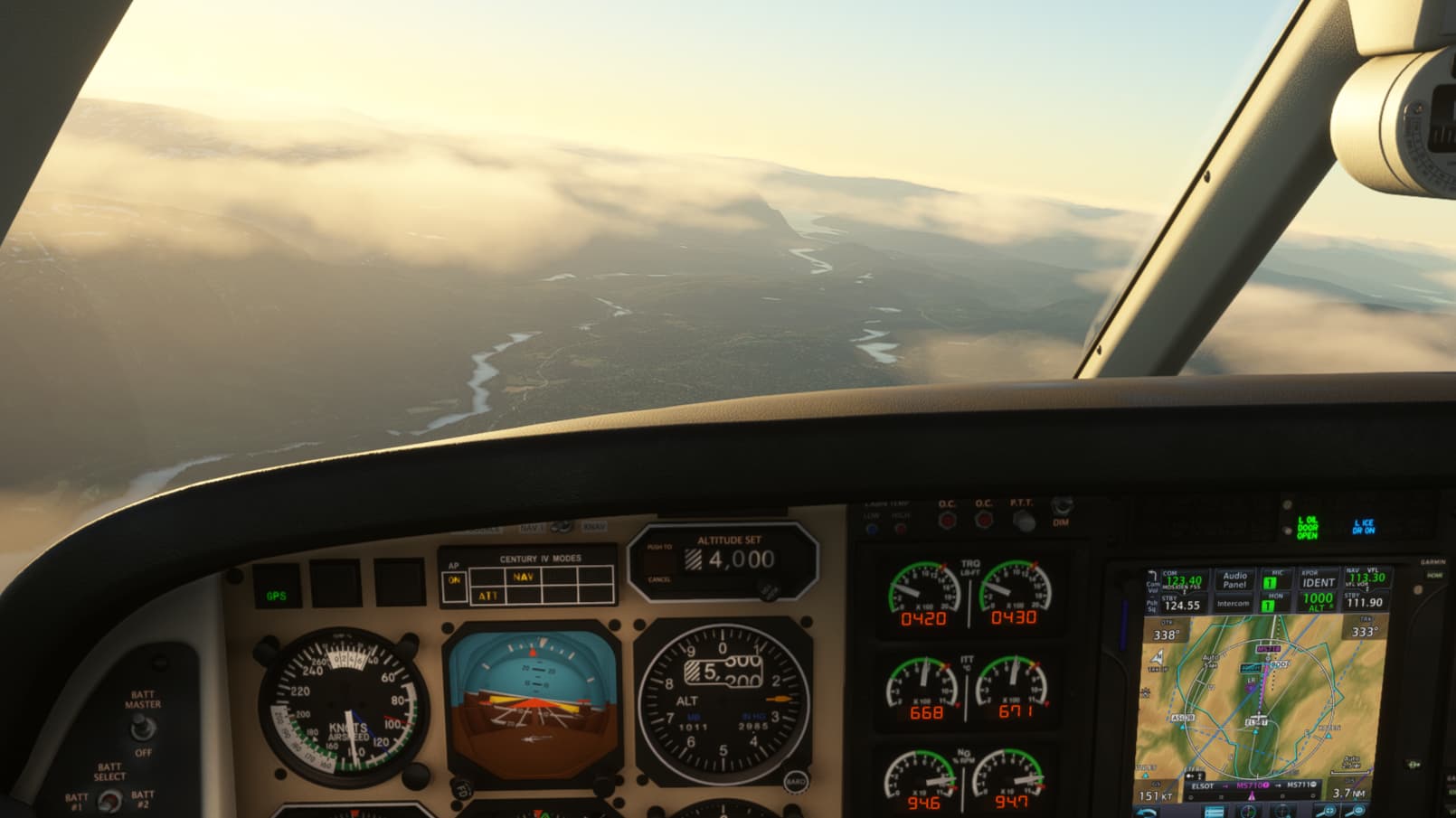
Just a few thin clouds on the approach
I took off and flew the approach as before, but then leveled off at around 2000 feet. About a mile from the threshold, I broke off to the right to being the circling. Even though the weather was good, the circling lights helped greatly in flying the maneuver accurately. In the latter stages of the circling I got a bit low – maybe I’m not quite ready for Widerøe after all – but all in all the approach was stable.
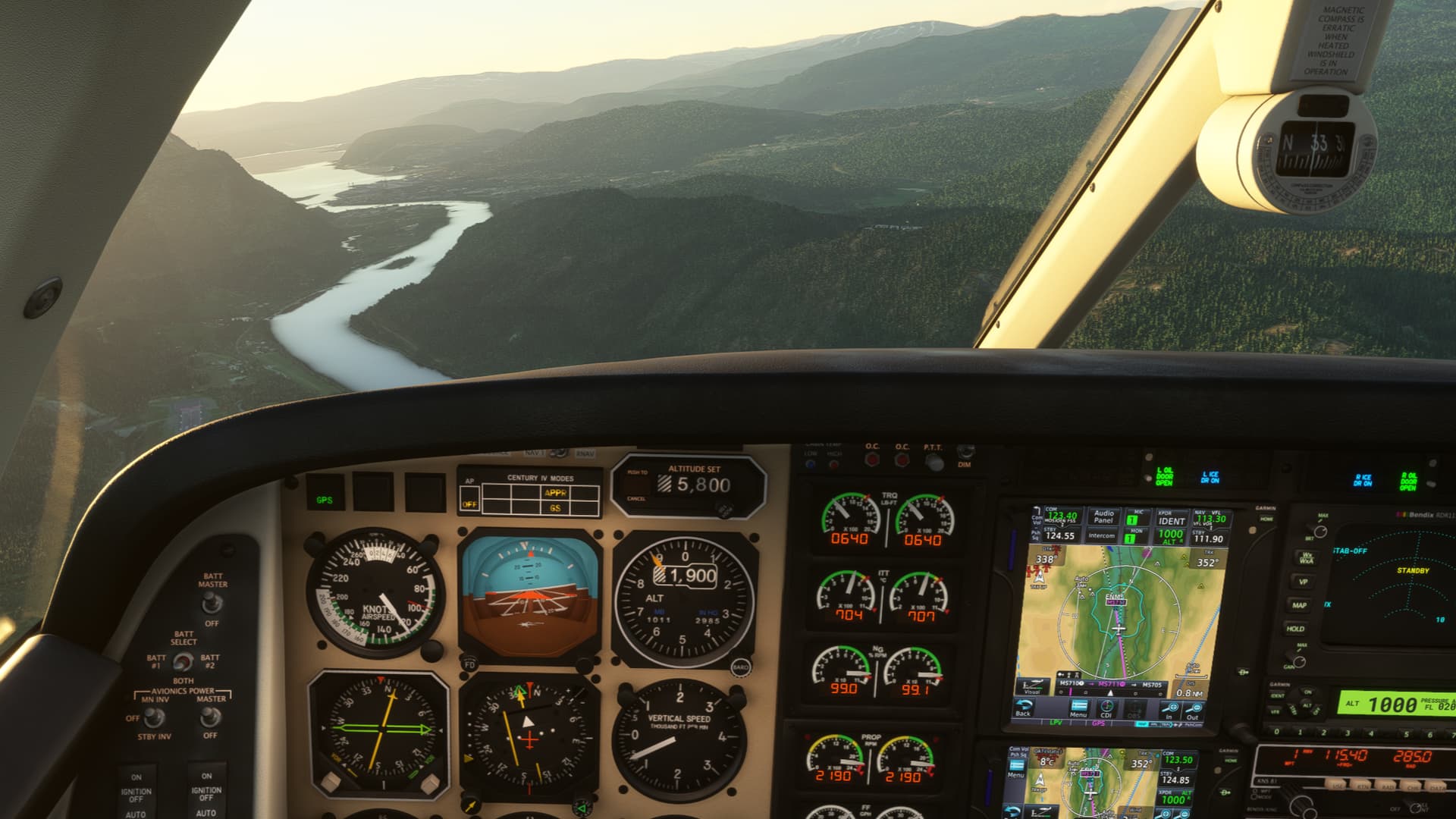
Breaking off for the circle-to-land
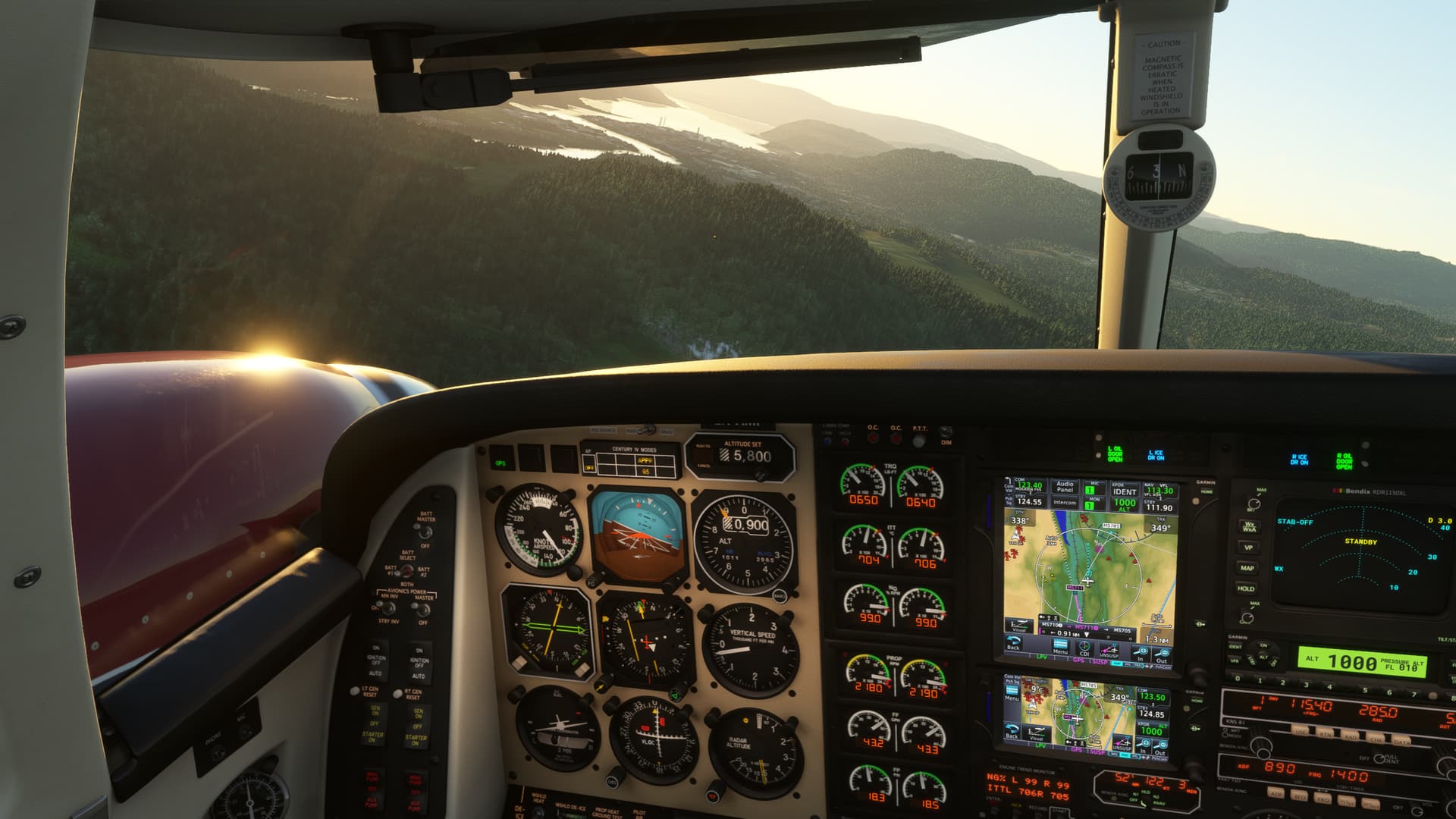
Turning back in
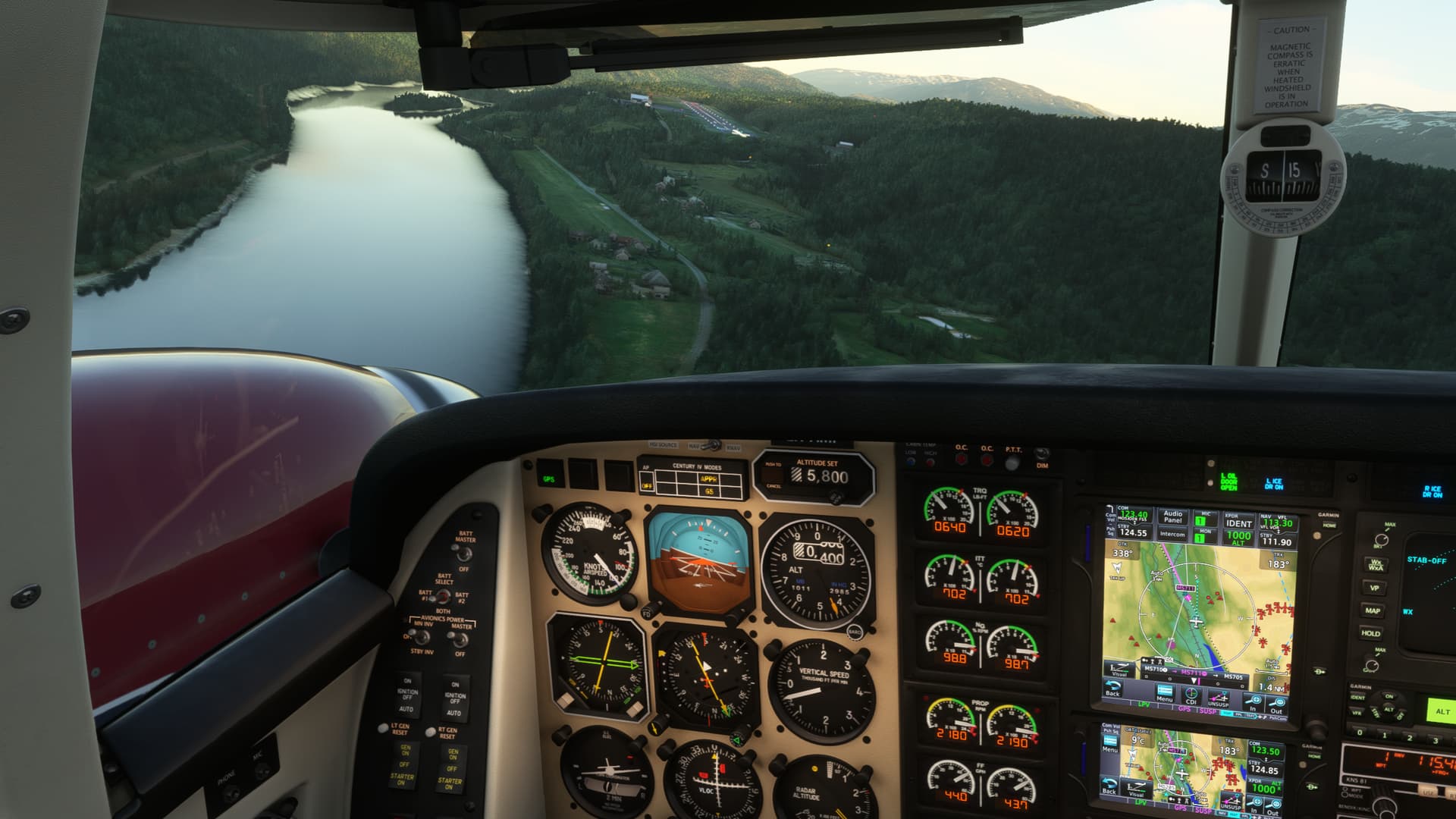
Rounding the corner
Taxiing in, I felt a real sense of accomplishment. I didn’t go anywhere today, but the flight was still immensely rewarding. Next time, we’ll continue our trek south – exact destination still to be determined.
Before I sign off, I need to point out the excellent freeware scenery of Mosjøen ENMS by scenery artist Sauron, available on flightsim.to. Not only is it visually stunning, even coming with a detailed terminal interior, it also provides accurate approach lighting, including the circling lights and PLASIs (pulse light approach slope indicators). Highly recommended!