In MSFS the Pa34 Seneca from Carenado has a max take of weight of 4407lbs.
According to the specs from the Piper aircraft company the Pa34 has a max take off weight of 4750 lbs
see: 2021_Seneca-Single-Sheet_Lo-Res.pdf (piper.com)
is the Careando model an old version with very much lower specs? could someone please update me here, or is this an error by Carenado?
I believe this is because of the installed anti-icing gear on the aircraft.
I found this in one of the EASA docs relating to the Seneca V.
8.For operational reasons AFM/POH with a reduced MTOW are available. No physical changes to the aircraft other than installation of additional limitation (weight and manoeuvring speed) placards and installation of applicable AFM/POH are necessary for this MTOW reduction. With Piper Kit 766-632 (or equivalent Piper Drawing 88247-{ }) installed weights are as follows:
2009 kg (4430 lb). –Max. Ramp Weight
1999 kg (4407 lb). –Max Take-Off, Landing and Zero Fuel Weight
For aircraft S/Ns 3449479 through 3449482and 3449484 through 3449486kits in accordance with Piper Drawing88247-{ } havebeen installed during production at the factory without being specifically listed as installed options in the aircraft logbooks.
9.Operation in known icing conditions is approved if the complete optional ice protection system in accordance with the respective Piper POH/AFM-Supplement (AFM/POH Section 9) is installed and operable.
2 Likes
It has nothing to do with anti-icing gear. As your cited source says, the reduced MTOW includes “No physical changes to the aircraft”.
The reason is just a different classification of aircraft between US and Europe (which makes a difference in landing fees, insurane etc). In Europe, one of the limits is 2t, so often an aircraft that has technically a bit higher MTOW (for the American market) is available in an “artificially” limited version to 1999kg.
2 Likes
If the difference is european and US classefication of landing fees is the reason for this difference in mtow , then Caranado should make it posibble to use a US setting to swap the difference between a MTOW 4407lbs and 4750 lbs. A MTOW of 4750lbs is not “technically a bit higher”. It is a substantial difference of more than 340lbs or about 2 pax. With full tanks the plane in present setting is a 3 seater, with factory setting it becomes a 5 seater.
If it was like marccreal states, 340lbs overload compared to a mtow of 4407 should not change the the flight characteristics other things beeing equal. In the sim a teoretical 300 lb overload, result in drastically increased stall speed from according to factory spec is about 60 knots to about 85 knots according to my testing.
I’m not aware of any aircraft in MSFS which shows this weird behavior when being overweight.
Have you tested the stall speed at 4400lbs first before comparing it to the stall speed at 4700lbs?
Testing occurs with the same CG?
Is the PA34 actually stalling at 85kts or are you running out of elevator/pitch authority?
yes I have tested this, it is particularely notisable during landing, 1) loaded the plane up to mtow of 4407 and took did sevaral stall test inflight, normal behavior and audiable stall warning before stall, landing as normal. 2) loaded plane to mtow of 4705 lbs, which the sim give a overweight of 343lbs, took off almost as normal (take of speed + 80knots), but stall in flight take place at 80-85knts and somtimes the plane stalls without audiable warning, this is particularely noticeable during landing where you can stall around 85-80 knots. which is particularely anoying if you use the p34 in a fleet as part of the Onair or Airhauler where stall in flight is given a large penalty.
I invite others to do the similar tests.
That’s exactly what I mean, if there’s no stall warning you didn’t stall, but you ran out of pitch/elevator authority.
Suggest to recheck and/or move the CG aft to be actually able to stall the PA34.
The full flap stall speed at 4400lbs is 61kt, adding/removing 300lbs theoretically alters the stall speed by less than 1kt.
You are right I did not do any accurate CG calculation, I lack the proper tools/diagram for accurate CG calc. The non audiable “stall”, is by the Onair program registered as a stall and gives a penalty,
I’m not sure if I understand correctly.
The PA34 doesn’t stall, it’s an external program which triggers a false stall message?
No need to calculate CG. Simply move the CG aft until you are actually able to stall the PA34.
(CG would be most likely still approximately in the center of the diagram.)
edit: just re-read your previous post. If takeoff is normal at 4700lbs (flaps 0° 79kts) how can the PA34 stall with full flaps at 80-85kts? Strange indeed.
this is may case: I use the p34 as a part of a fleet, in the airline program Onair.
In flight with an overweigt of about 300lbs and a speed reduced down to around 80knt the plane starts first to tilt left right a little before nose suddenly drops and plane looses height and recover after500-1000 feet drop in altitude this happens without any audiable warnig, Onair register this as a stall. I have belived this is related to plane actually beeing overloaded (according to EU regulation).
The left/right banking before the stall doesn’t happen if the weight is 4400lbs and there is an audible stall warning?
That’s really strange, not only that the weight has zero effect on the stall behavior, but the stall warning is triggered by AoA, nothing else.
As long as there’s no audible stall warning, the aircraft can’t be stalled.
Sorry, but I don’t have a clue what’s going on. 
you are right, strange indeed,
a) the nose drop around 80 knots at 300+ overload is there and can easy be tested by others
b) the Onair program probably uses several parameters from the sdk to register stall, I dont know .
I tested this and recorded some values via Simconnect. I could not reproduce what you describe. I had weather to clear skies and throttle to idle. The aircraft behaves very similar in both cases. Have a look at the diagrams (note that the vertical speed is in 100*fpm and inverted just for better visualization):
4407 lbs configuration:
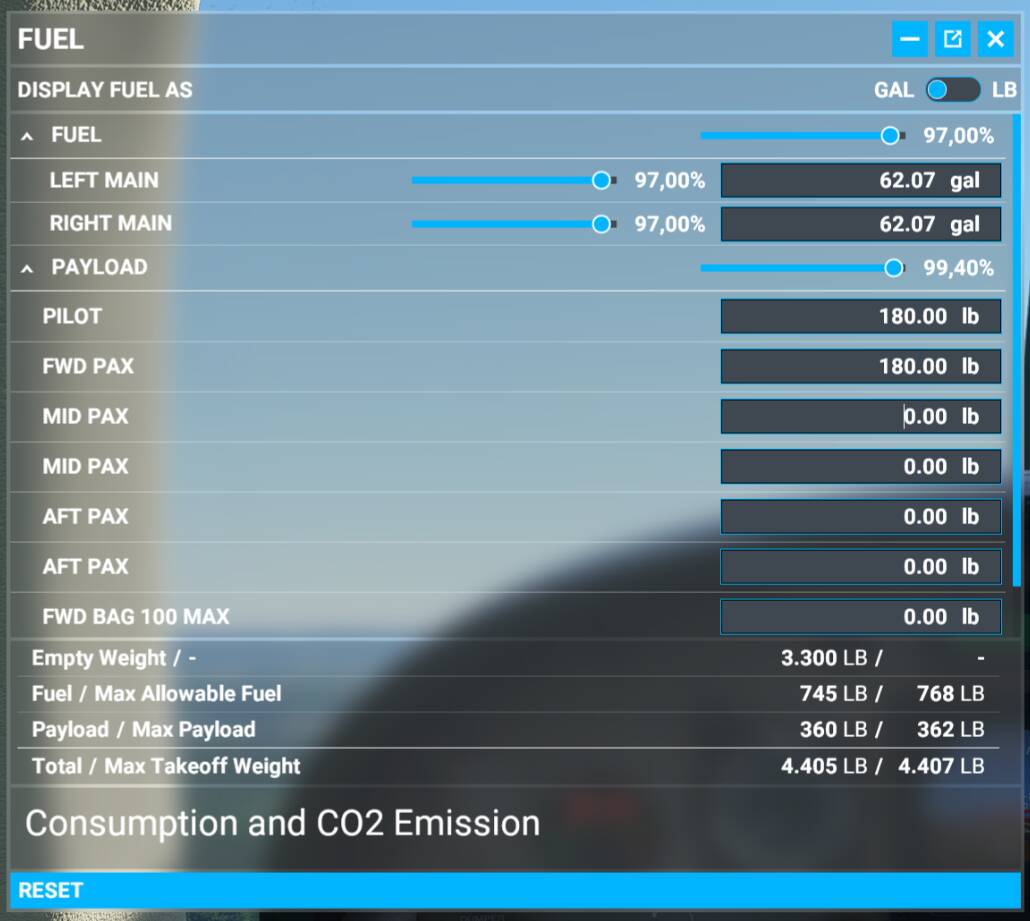
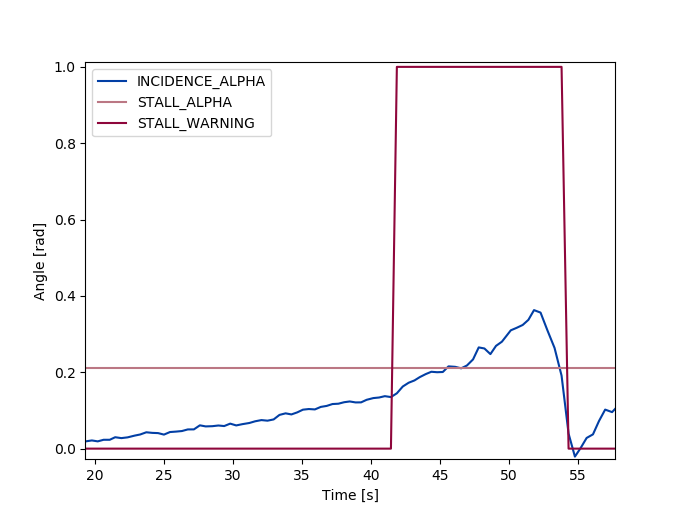
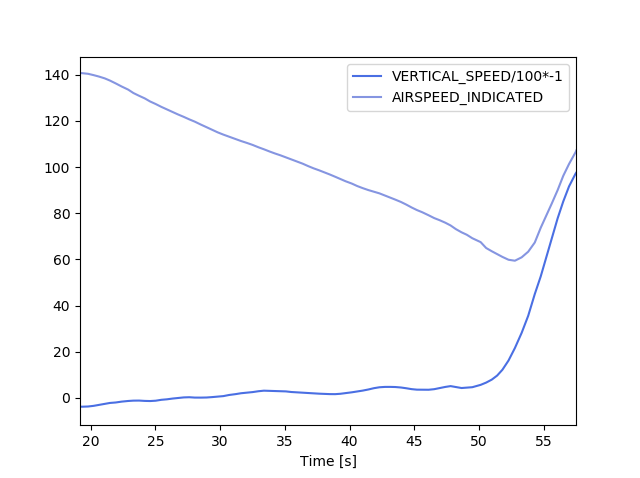
4750 lbs configuration:
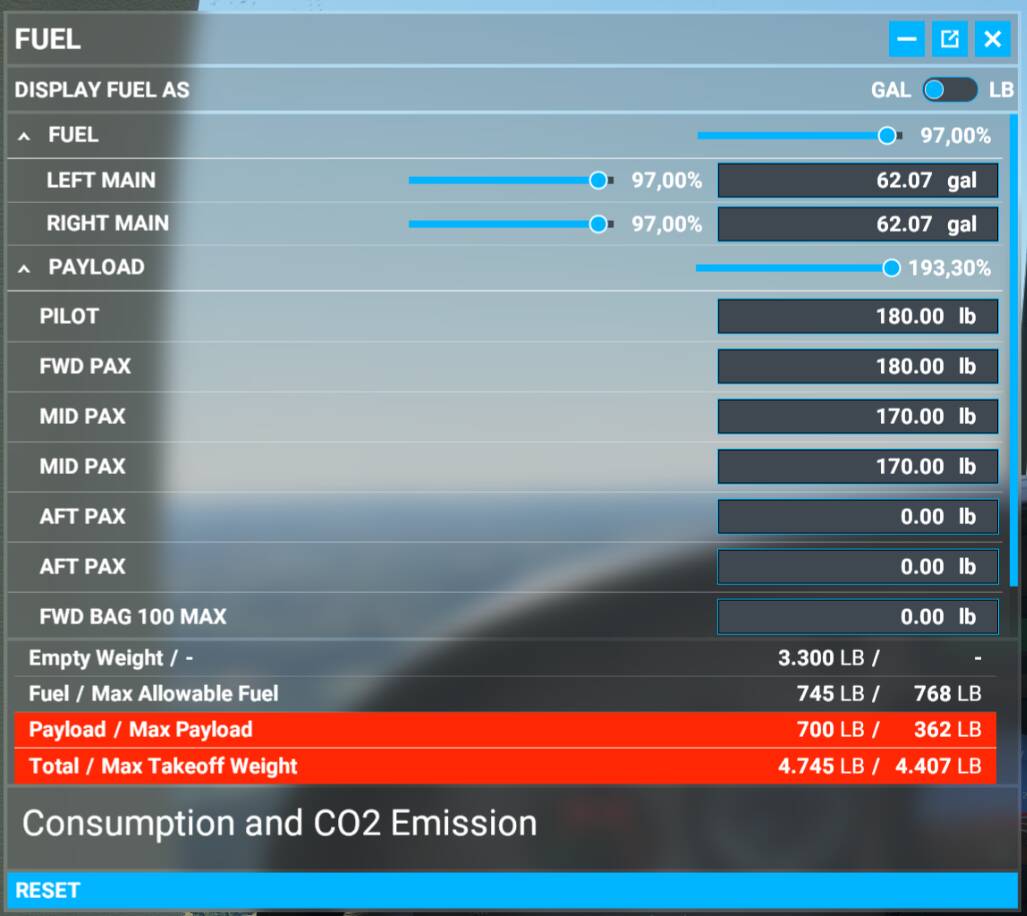
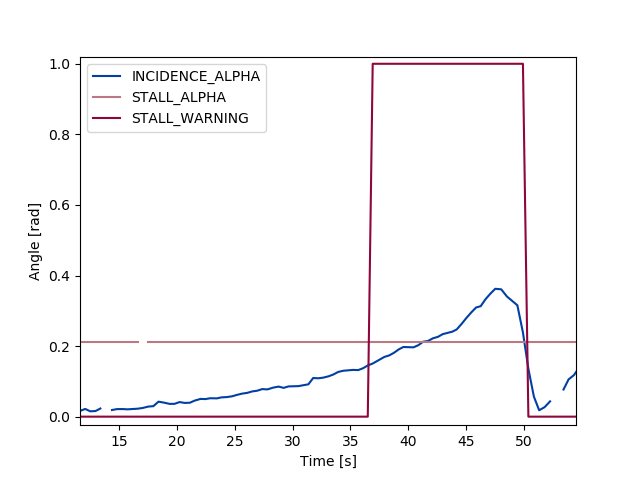
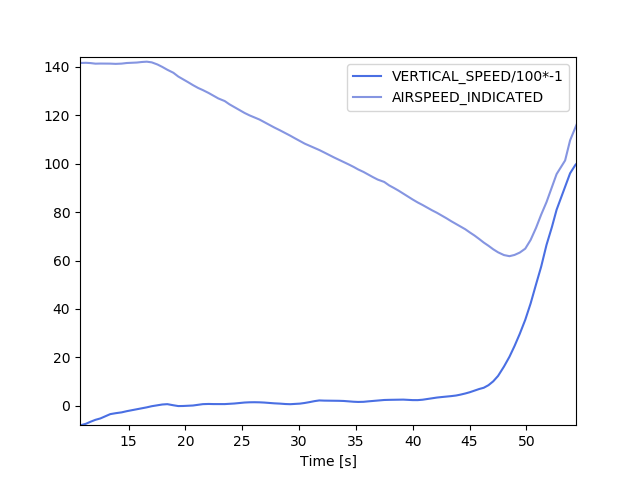
1 Like
Interesting test obviously proof that what i observe has nothing to do with the sim, but must be related to the Onair 3rd party program. I had ttwo incidents of registrated stalls (without audiable warning) during aproach to LFST today with about 10% overload, weather was ifr with heavy rain
Are you sure that you didn’t encounter icing conditions?
1 Like
I have sama problem. No icing, Seneca stall warning activates way too early, and it may stall at 70…80 knots, in landing configuration, should be close to 60. This was discussed also at avsim, w/o a solution.
My bad. Read the documents. Approach speed in landing configuration is 90 knots and for short field landings 82 knots KIAS, so one should not try to land at speeds in range 60-70 knots.