I’m still trying to master RNAV approaches in the Pilatus PC-12 NGX. I need to be able to identify IAF and FAF. In the attached screenshot of a flight plan, am I correct that NEYLN is the IAF and XIVZU is the FAF? Thanks
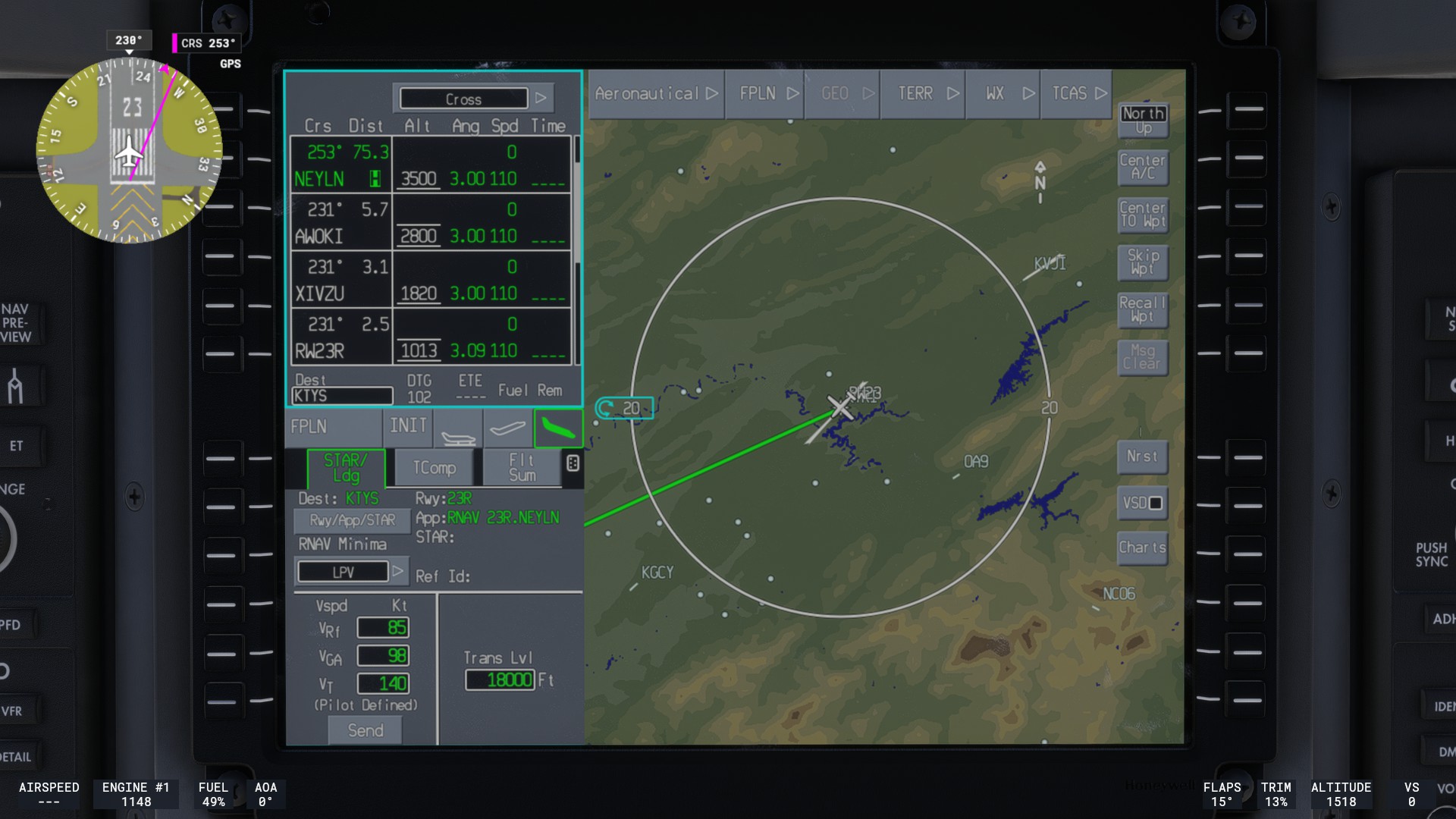
Correct on IAF, maybe for the FAF, but on the published approach plate, there is a visual descent point at 1.4 NM. Wondering if you are also referring to an approach plate while you are learning about instrument approaches? Good learning!
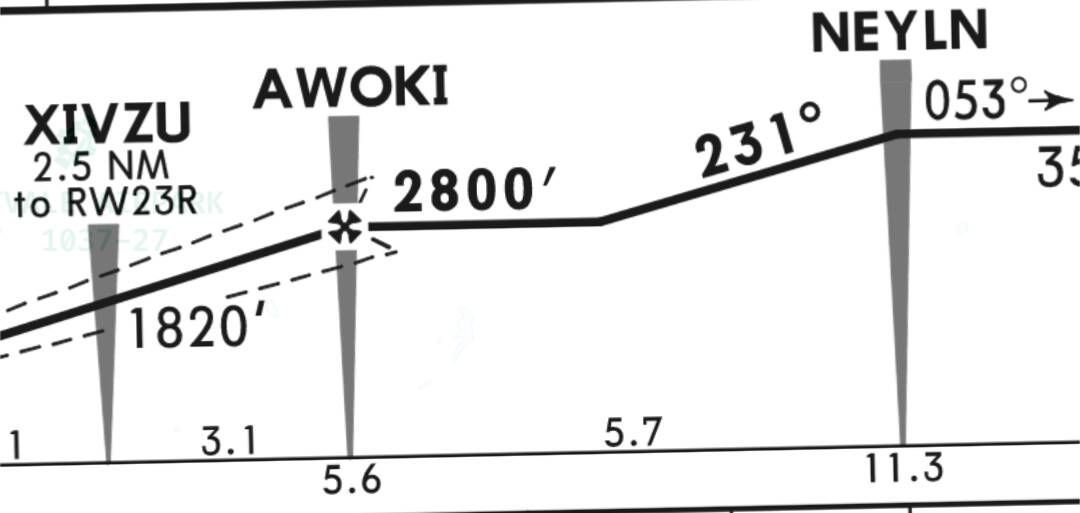
Thanks for your reply. I’m new to approach plates and I’m a really bad pilot so I’m unapologetically looking for aids to get me all the way down to the threshold in a straight line and the right landing altitude. Looking at the EFB approach plate for KTYS, I see the IAF clearly labeled but not clear for FAF - no lightning bolt or Maltese cross. I also don’t see the visual descent point you mentioned. Why is that important and do I need a better approach plate than the one in EFB?
Thanks for your reply. I looked at the EFB approach plate for KTYS. NEYLN is clearly labeled as IAF. There is no Maltese cross shown for AWOKI - there is an “F” next to AWOKI but not sure what that means. Maybe I need a better approach plate than the one in the EFB?
You’re not a bad pilot for getting stuck on this; approach plates are a language of their own.
On the MSFS EFB plate, the little F next to AWOKI is the important clue. Treat AWOKI as the final approach fix / final approach waypoint. NEYLN is the IAF, then you fly the intermediate segment, and from AWOKI you’re on the final segment toward the runway.
The VDP is a different thing. On some non-precision approaches it’s the point where, if you have the required visual references, a normal visual descent from MDA to the runway should work. It isn’t the same as the FAF, and you don’t need it just to understand where the final segment starts.
For learning, I’d keep the EFB plate open but compare it with an official FAA-style chart when something looks unclear. The symbols become much easier once you’ve seen the same approach in both formats.
I believe Microsoft and Working Title arranged to supplement Navblue (2020) and now Lufthansa (2024) internal sim Navdata with FAA charts for enhanced US coverage. These should be available in the EFB but since I’m a Navigraph user, I don’t delve into the stock sim capabilities for flight planning as much as I should.
This is the link to the FAA IFR Charts lookup:
https://www.faa.gov/air_traffic/flight_info/aeronav/digital_products/ifr/
This is the FAA charts page for Tyson:
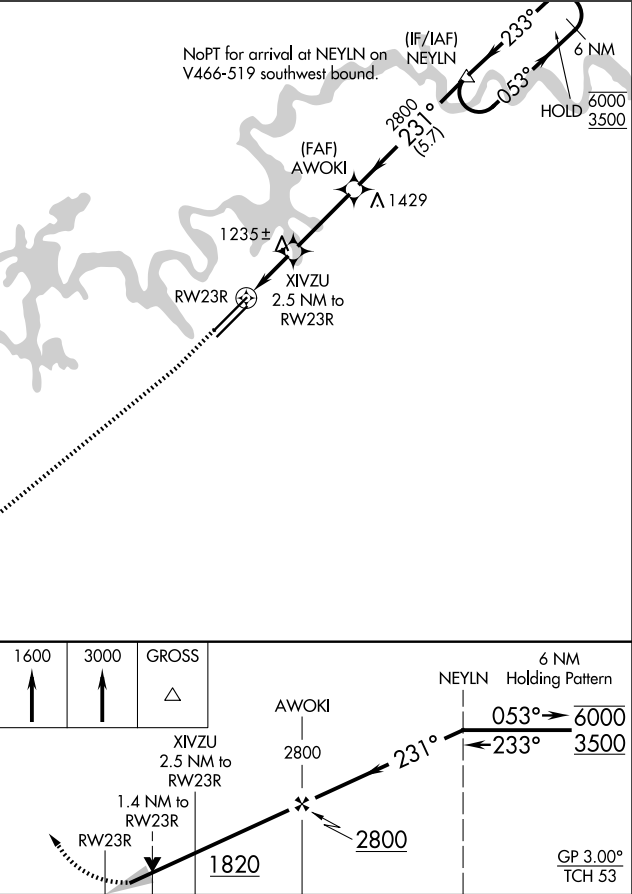
This is the chart for KTYS:
The FAF is similarly denoted as a cross icon.
Adding to the excellent responses above, and in full agreement, that you are looking for aids to fly a stabilized approach shows that you are actually the best kind of pilot: the one who knows their limitations and is looking to learn more about what they can improve upon in their flying and/or knowledge of aviation. Suggest learning about some of the things posted above and do keep asking questions. That’s how pilots continue to learn and stay safe in the air. Good flying!
If you are truly “a really bad pilot” why not joint an organization like The Pilot Club. No fees, and free training for simmers and now rl pilots. It can be challenging but at least you’ll know why a landing was really bad or realliy good. Best of luck.
At the risk of being self-promotional, I’m an FAA Instrument Ground Instructor and I’m doing a series on instrument flight on my channel. These streams may be helpful to you:
How to Read IFR Charts | Approach Plates Made Simple
Instrument Approaches 101 | ILS, LPV, LNAV & VOR Approaches Explained