Just to point out. The reversers on dry runways do not decrease landing distance. They only take some of the load from the brakes so that you don’t need to wait that long for them to cool down before another take off can take place. Autobrakes provide a fixed deceleration rate whether you use the reversers or not. The more reverser the less wheel brakes will be used.
6 Likes
Do you need to do use autobrakes? Can´t you just land manually and have a shorter stopping distance with the help of reversers?
Is there a way to use the “lock” mouse system that is default for MSFS with this plane? I just got the 736 and it doesn’t seem to operate like every other plane in the game. With airliners especially I really like being able to “grab” the knob and adjust it without constantly scrolling my mouse or holding down for a long time.
The ground physics in MSFS leaves much to be desired, but I think PMDG has done a rather impressive job trying to mimic the correct behavior. For example, I noticed you have little steering control (besides the rudder) when the nose wheel isn’t touching the ground during touchdown.
Not how it works really. Just remember. On dry runways the reversers are used to prevent the brakes from heating up, not to brake more. The braking rate is provided by the autobrake setting. If what you’re doing is using full manual braking (the highest deceleration rate possible if anti-skid is operative), you’re only heating up the brakes and braking more than necessary.
On non-dry runway it’s a completely different story.
In my airline we always use autobrake. On extremely long runways we will select at least autobrake 1 and any time during the landing roll we can disarm it.
2 Likes
This is an interesting topic. I am not sure if this is the same on the 737, but some of the airbus pilots I knew a few Jobs ago (I am not pilot, but worked with them) said they used manual brakes and no auto brakes but full REV Thrust when they had really quick turnarounds due to not wanting to be delayed if the brakes were hot, so would rather put the stress on the engines and manual brake. Not sure how it applies exactly but they said basically in hot countries with quick turnarounds hot brakes was a massive no no and the last they wanted to see was the ECAM message “Delay Take Off, until brakes cool”
Took the little -600 to an “undisclosed location” this afternoon after work. I can’t tell you where - this guy made it clear in no uncertain terms what would happen to me if I did. 


1 Like
Not sure if this has been mentioned but the most recent update using the PMDG Operations Centre has caused the park brake in the 737-700 to not operate properly. I try to set the park brake and it flings back to unset. Like its attached to a coiled spring.
Any suggestions on how to fix this
1 Like
Take a look at https://www.youtube-nocookie.com/embed/sv1pGD_pQhI and https://www.youtube-nocookie.com/embed/WQsKNo5o0Tc
1 Like
Suggestions?
Read the release notes and use it properly 

3 Likes
Police Scotland are reviewing the clip …
1 Like
Haha I love it. I had the same scenario. I can’t tell you about it either..in fact it did not even happen!!!

1 Like
I don’t know the brake cooling requirements of the a320. In the 737 we use the recommended brake cooling schedule tables from the QRH to calculate the required cooling time given weight+flaps (Vref), temperature, brake setting and reversers. Since a few years ago we don’t use the actual tables like we used to. We use the OPT in our EFB. In summer on a normal summer load it’s very easy for the brakes to require a longer time to cool down than the time we have to turn the airplane around.
Unless you’re on a very long runway (3Km+) and you plan to vacate at the end you will always need some amount of braking and reversers alone will not be enough. In reality runways are not always long and airports operate on minimum runway occupancy time. You’re expected to vacate at a certain exit (performance permitting) so we select a combination of flaps, speedbrake and reversers to make that exit with a heat amount in the brakes that can dissipate during the turnaround (ideally with the parking brake released as soon as the airplane is on chocks).
Here’s an example. In this example if I select F30 instead of F40 I would get the word CAUTION instead of the brake cooling minutes (because of the higher Vref). That would require an engineer inspection (there’s a risk of melting the fuses). Landing in Dortmund in a hot summer day in a heavy airplane it’s very common to see the caution message. Not long ago I flew there and the wind was VRB2KT. If the wind had been VRB3KT we wouldn’t have been able to land. This is because when the wind is variable we introduce it in the OPT as tailwind (VRB3KT is entered as -2), and tailwind is factorized. So on that particular day, if the wind had been -3 the autobrake setting required to stop on the runway caused the engines to heat up too much (and we don’t have engineers in Dortmund so that would have been a 2 hour delay) and the autobrake settings that kept the brakes cool enough for a turnaround without engineer inspection would have resulted in a runway excursion which is also not ideal.

6 Likes
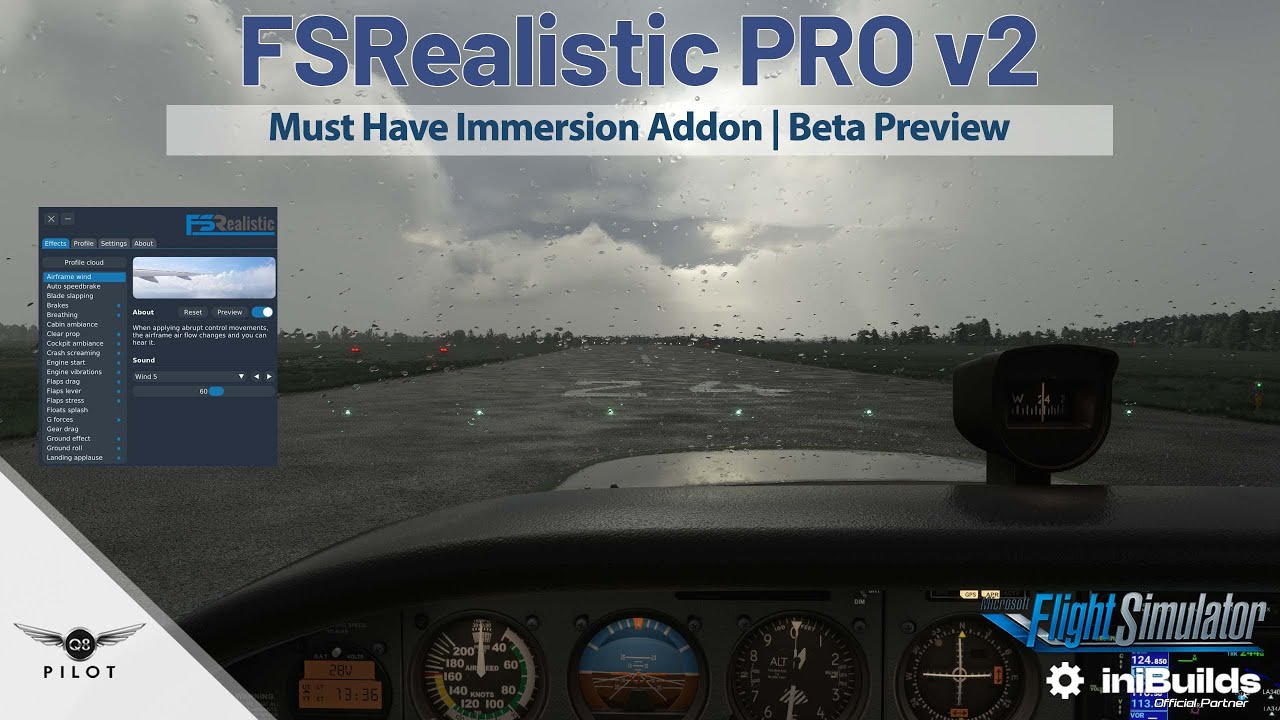
I recommend FSRealistic for that. It gives a good impression of how soft or hard your touchdown was and you even get a verbal comment how your landing was (can be switched off).
Snail,
I’m always interested in flying approaches that are particularly beautiful or particularly challenging. I’m only flying on my side of the pond but was wondering if you have any favorites from your experiences flying in Europe?
1 Like
This is fascinating. How are they landing in places like YBBN (Brisbane, Aust) on 38 degree days? Lots of reverse thrust?
Wow many thanks for the great reply and information. Truly amazing to have real pilots kind enough to share and explain. Many thanks!
That one is easy. YBBN has a runway more than 3500m long. High autobrake settings are not required so brake cooling will rarely be an issue.
Strewth!
Straya mate, just chuck a bit of cold water on the brakes maae and she’ll be alrite maae then head down to the boozer for a schooner of vb…
Ozy ozy ozy oi oi oi
3 Likes