No thank you.
I have enough problems landing as it is now without looking over my shoulder every 5 seconds or so to see if the passengers are behaving themselves 
No thank you.
I have enough problems landing as it is now without looking over my shoulder every 5 seconds or so to see if the passengers are behaving themselves
Quick update on the bindings for anyone interested in how well this aircraft caters for external control. I have all overhead controls (not including the cb’s) all working. Only gripe on this is the master battery switch binding operates the circuit but the switch animation isn’t moving. I’ve reported than one to the dev.
I ran out of time to go into any detail on the rest but had a quick look at them and so far all I can see missing are some of the ac controls on the lower right side panel. I’ll try setting the rest during my next session.
There are quite a lot of custom LVAR’s so you’ll need third party software for control of these. Most of them are listed in the manual on FSS website.
Good question! Most of the time I can find those on Wikipedia, but this airline doesn’t seem to have an entry. Perhaps too small/local?
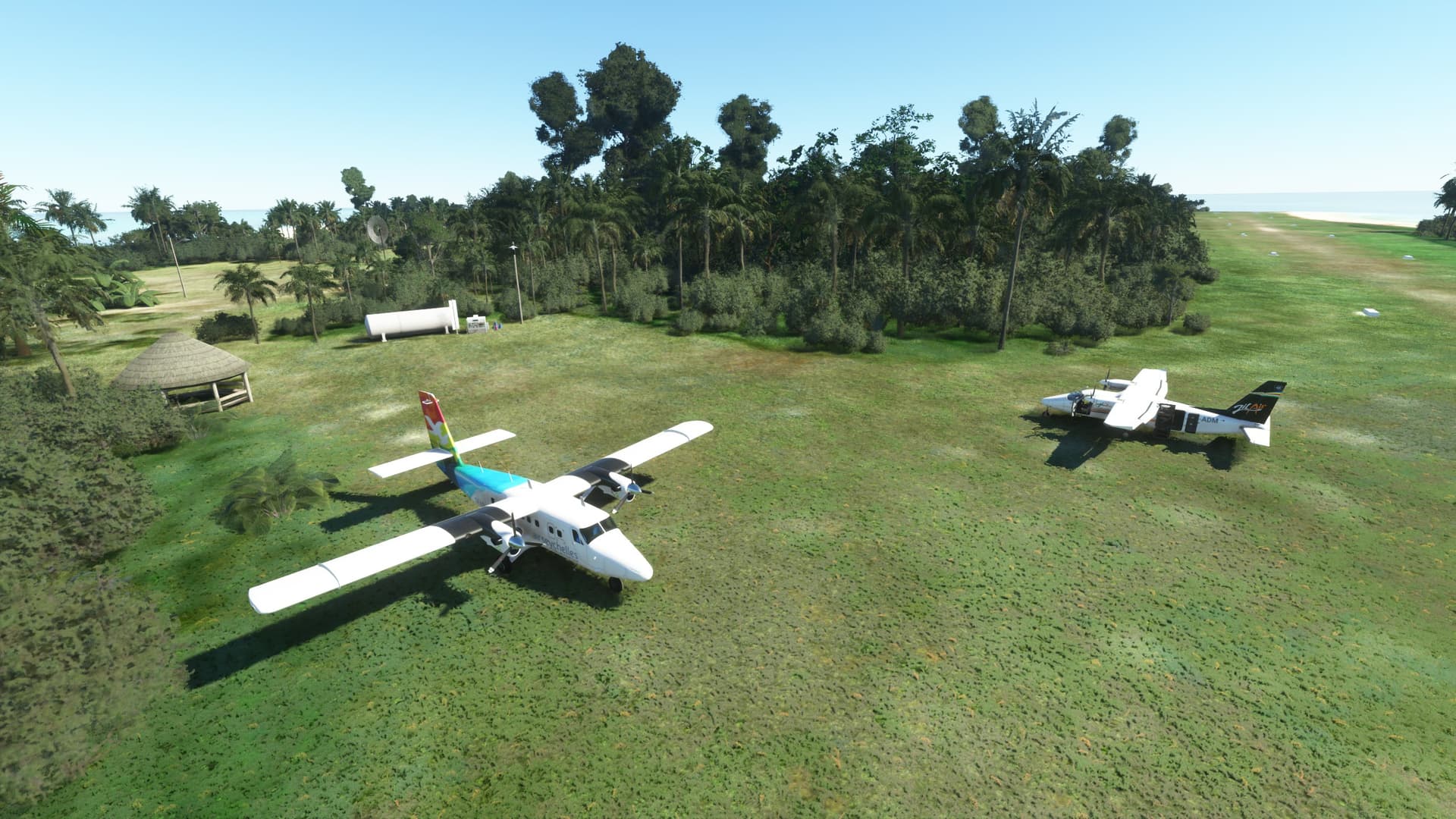
Callsign is S7-ADM
I wonder if they refer to the aircraft for ATC as alpha-delta-mike or “Adam”…
Sorry, unfortunately I can’t answer that.
i submitted a ticket for the attitude indicator…they replied that’s a konwn issue and will be fixed in the next patch
Yep - FADEC (Full Authority Digital Engine Control) is becoming the standard. It’s more reliable and takes some of the workload off the pilot.
Thanks for the replies!
This add-on aircraft looks incredibly detailed and flexible, with the loaded EFB and the fun variants. That alone makes it very attractive.
In real life, what is the use-case that leans P2012 versus Grand Caravan?
I would assume if they are using the full WT G1000NXi avionics with no custom code that the Navigraph G1000NXi Simbrief plugin should work?
The numbers on the P2012 are surprisingly comparable to the Caravan, so it’s a good question.
The P2012 was made to Cape Air’s specs as a replacement for their C402’s, so I guess you could call that the main use case…that type of operation. It could also be seen as a modern equivalent to a Piper Navajo or Chieftain.
I guess generally speaking, a piston twin is going to be more economical than a turboprop single. I imagine the Caravan probably has an advantage in some hot/high takeoff situations even with the P2012 being turbocharged. The Caravan is bigger inside and probably more rugged overall.
The P2012 is also ideal for routes where a greater distance has to be covered over open water. It’s always a good idea to have two engines 
I’ve heard turboprop singles are just as reliable as twin pistons. Turboprop engines are super solid.
Yes, but if your only solid engine craps out, it sucks too 
PT6 is about the most reliable engine there is.
A caravan cost per hour is north of $1600. The P2012 appears to be about $400/hr. That’s a sizable saving for a carrier.
Might also have been easier for Cape Air to fit a new piston-engine aircraft into their maintenance operation, vs. adding the personnel and equipment needed to maintain turboprops.
yes, and the overhaul price of a turboprop is a fortune.
I have the 2006. I like it, but don’t fly it a lot. Maybe because she’s a little too slow? The 2012 seems a bit more attractive, but is it so much better/different that it would justify a purchase? Especially because my hangar is full of planes I bought that looked great but are forgotten easily.
I know it’s my own decision, but I need to justify this purchase (or not).
Not to burst your bubble of excitement for a new aircraft. But the 208 is 100+ HP more powerful, both engine combined.