Hi, that’s a really nice opportunity to talk about why it’s not a deliberate choice and the history of atmospheric scattering papers.
One of the very first papers about atmospheric scattering is Nishita’s paper in 1995, which was spectrally rendered but only included single scattering and didn’t model ozone. One paper in early 2000s (I can’t find it for some reason, will update here when I find it) which was based on Nishita’s paper made it real-time by instead of rendering the atmosphere spectrally, rendering it in RGB by picking a single wavelength for red, green and blue. In the paper 680 nm for red, 550 nm for green and 440 nm for blue. Other than that it was the same as Nishita’s paper which means it also didn’t model ozone absorption. Based on their experiments, it was close enough to the spectrally rendered reference. But again, they didn’t model ozone absorption which will be significant in a moment.
As Rayleigh scattering coefficients change monotonically with wavelength, this approximation was likely good enough. The issue began when the following papers such as Hillaire’s, directly used the same wavelengths but started to take ozone absorption into account. Unlike Rayleigh scattering coefficients, ozone absorption coefficients don’t change monotonically with wavelength and they change much faster too. This means 3 wavelengths are simply not enough anymore and the rendered results are not accurate.
MSFS, XP12 etc. all reused the same coefficients as is from these papers, they did not calculate them on their own, so it certainly wasn’t deliberate as the coefficients weren’t even chosen by them.
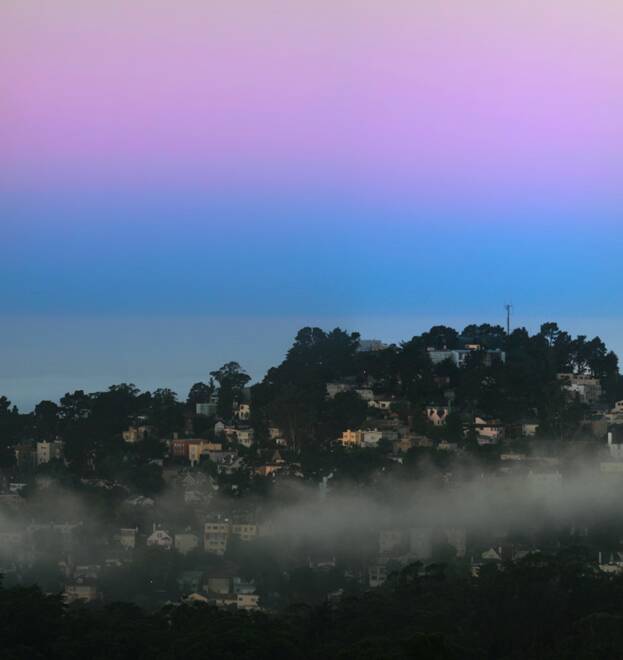
Either case, instead of looking at photos which might have a completely wrong white balance and an unrealistic post-processing, comparing the results rendered in RGB to the spectrally rendered results makes more sense. In other words, the spectrally rendered results are the ground truth and any deviation from them is an inaccuracy, even if it still looks like something that could happen in real life by coincidence. If you compare the results from the original coefficients and the ones from ARPC, you will see that the results from the original coefficients deviate a lot from the spectrally rendered ground truth meanwhile the ones from ARPC are often within 1%. Be noted that I’m not saying photos cannot be a valid reference, they without a doubt can, but they can be also completely off depending on the white balance and post-procesing which means they’re only a valid reference when they’re confirmed by the person who took the photos that they indeed looked like that in real life.
Also it appears that your comparison is from an early sunset, while the discrepancy is most obvious during later sunset, where atmosphere turns into deep blue with a slight hint of purple in real life while a complete purple in the simulator.