When I wrote my last post, I was confident that I wouldn’t see the sun set for the rest of my trip, as the next sunset in Tromsø was not going to be until 26 July, and even later at the remaining stops. Little did I realize that unexpected events would conspire to keep me from flying for the next six weeks.
Route
ENTC/36 LITPI3X LITPI GINEK Z203 HMF IDADA ULPAB LULEB DCT ENHV/26
I finally reunited with the Duke yesterday, 9 August, for the next leg to Honningsvåg ENHV. As usual, it was going to be a late departure for me. Sunset in Tromsø was going to be at 10:18 pm local time, and the sun would only rise again at 3:21 am. In Honningsvåg, a bit further north and significantly further to the east, sunset was going to be at 10:15 pm and sunrise at 2:22 am.
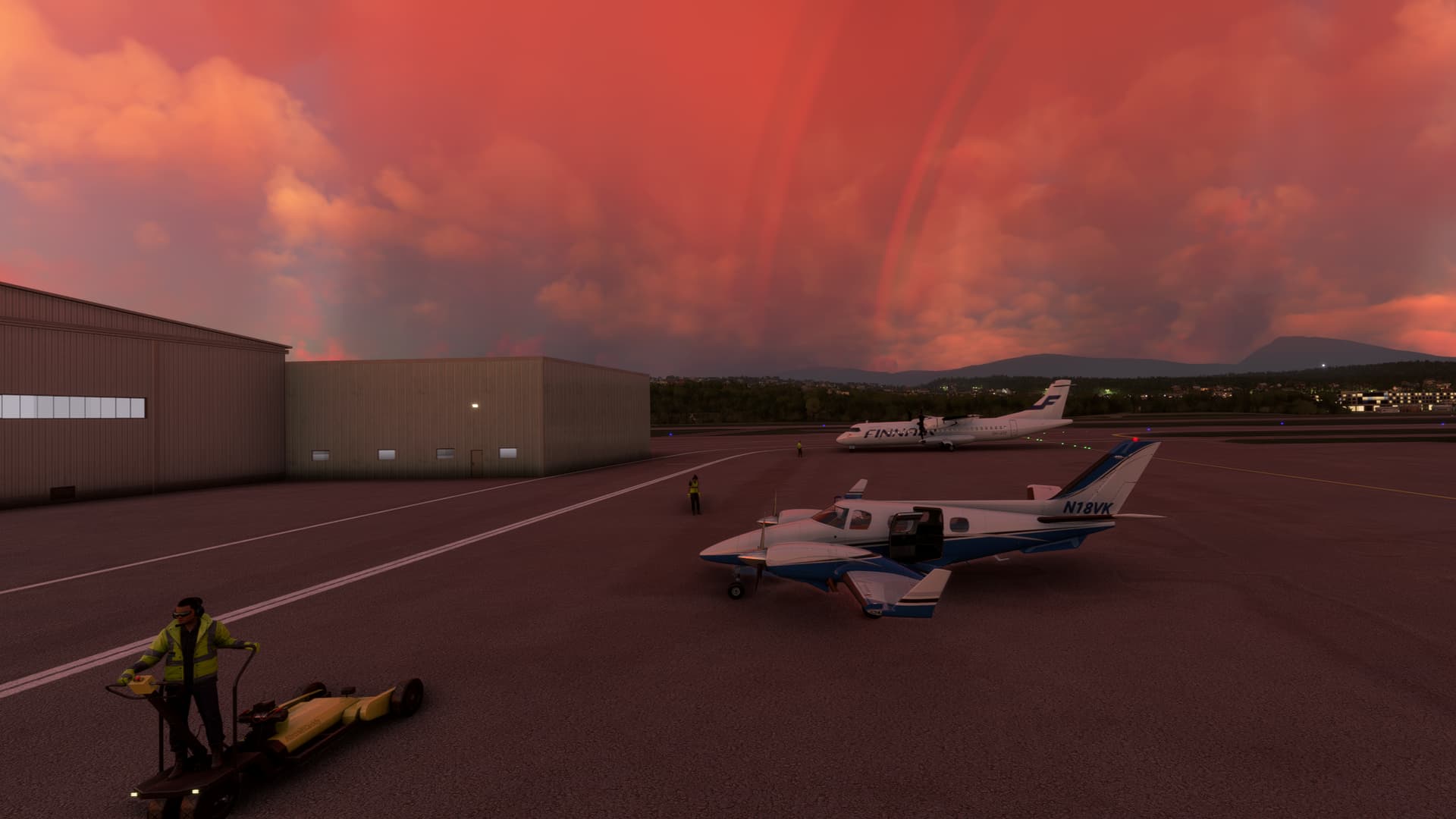
Hello, old friend, it’s really good to see you once again
It was already 10 pm when I got to the airplane, so was this going to be my first night flight on this trip? Not quite. Under EASA rules, night does not begin until the end of evening civil twilight (EECT), when the center of the sun is 6 degrees below the horizon. This won’t happen before 14 August in Tromsø and 18 August in Honningsvåg. So I had just gotten in under the wire to make this leg a daytime flight.
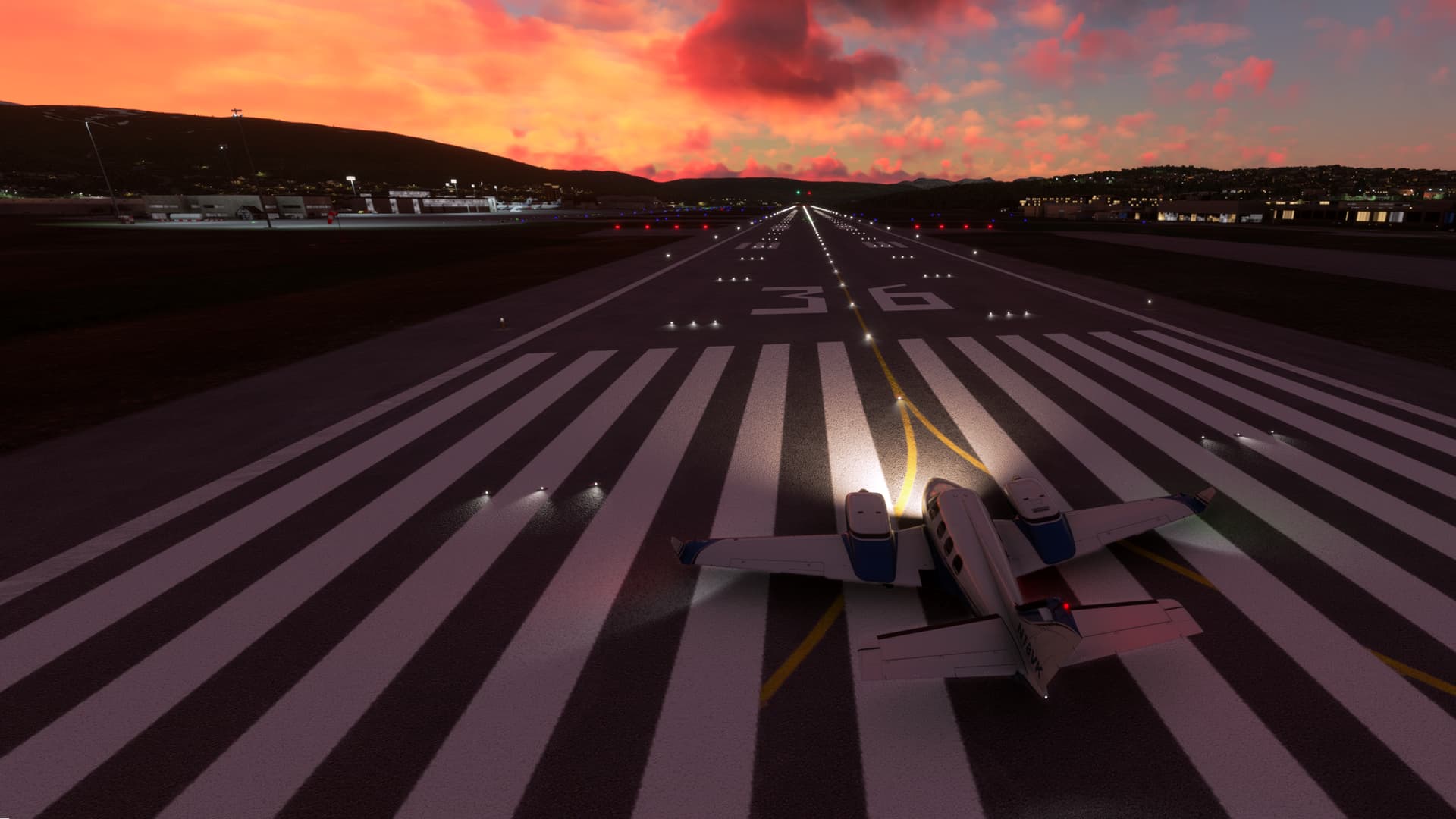
Lined up and ready to go
I took off from runway 36 in Tromsø. While the winds at 2600 feet were reported to be from the south, the surface winds were light and tended to be from the north, and taking off from runway 36 gave me a shorter routing.
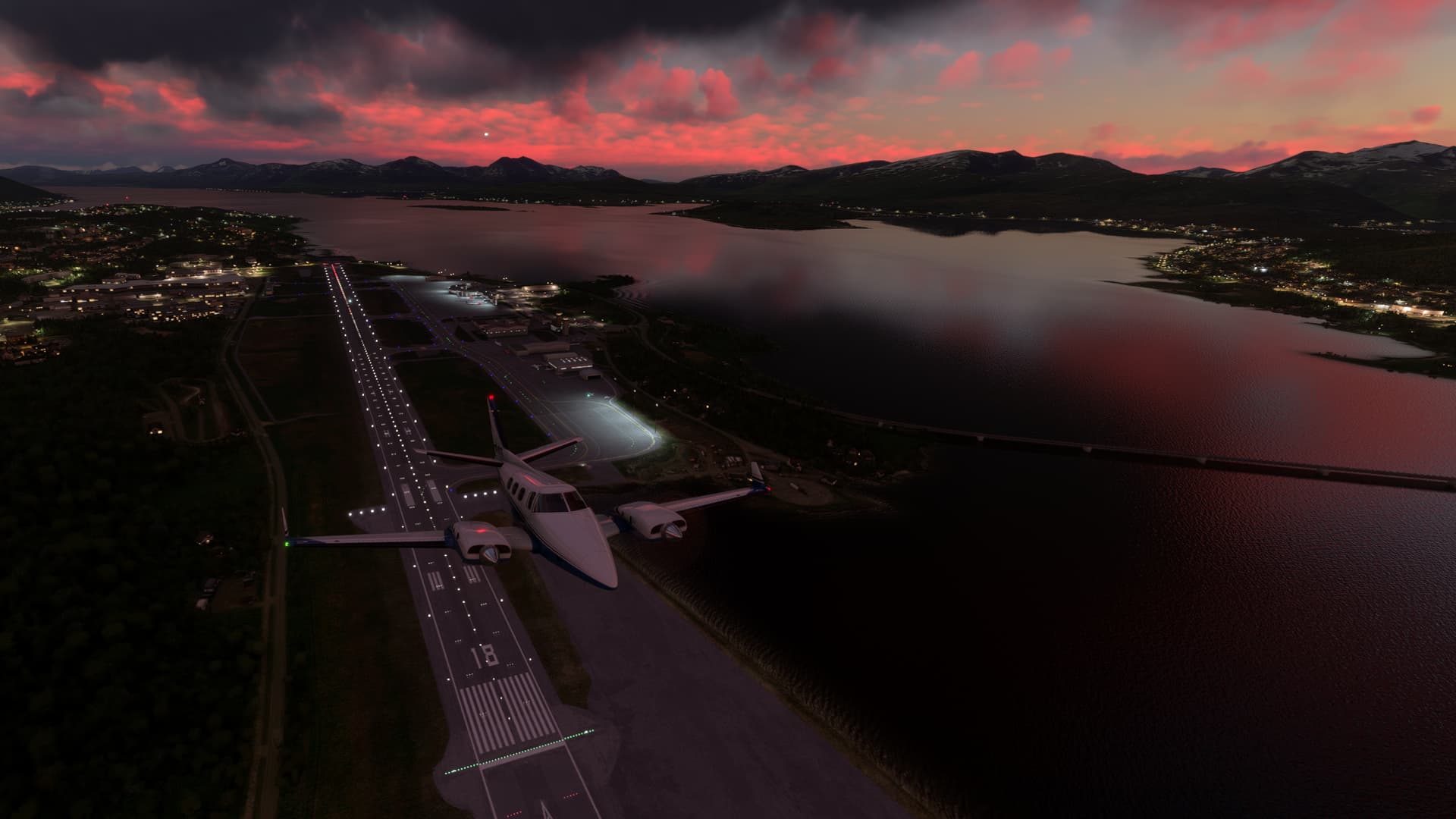
Airborne
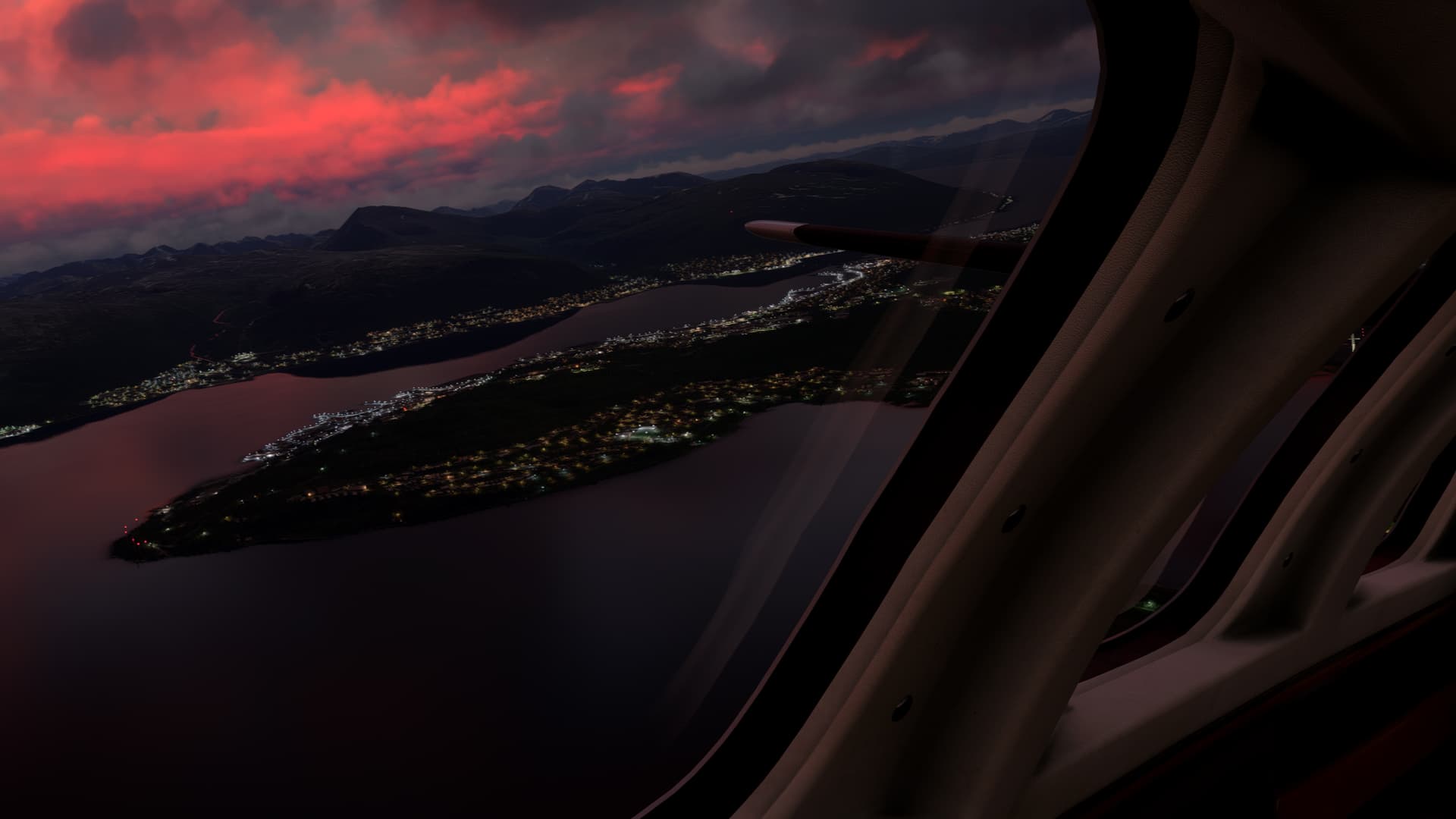
A view of Tromsø on the climbout
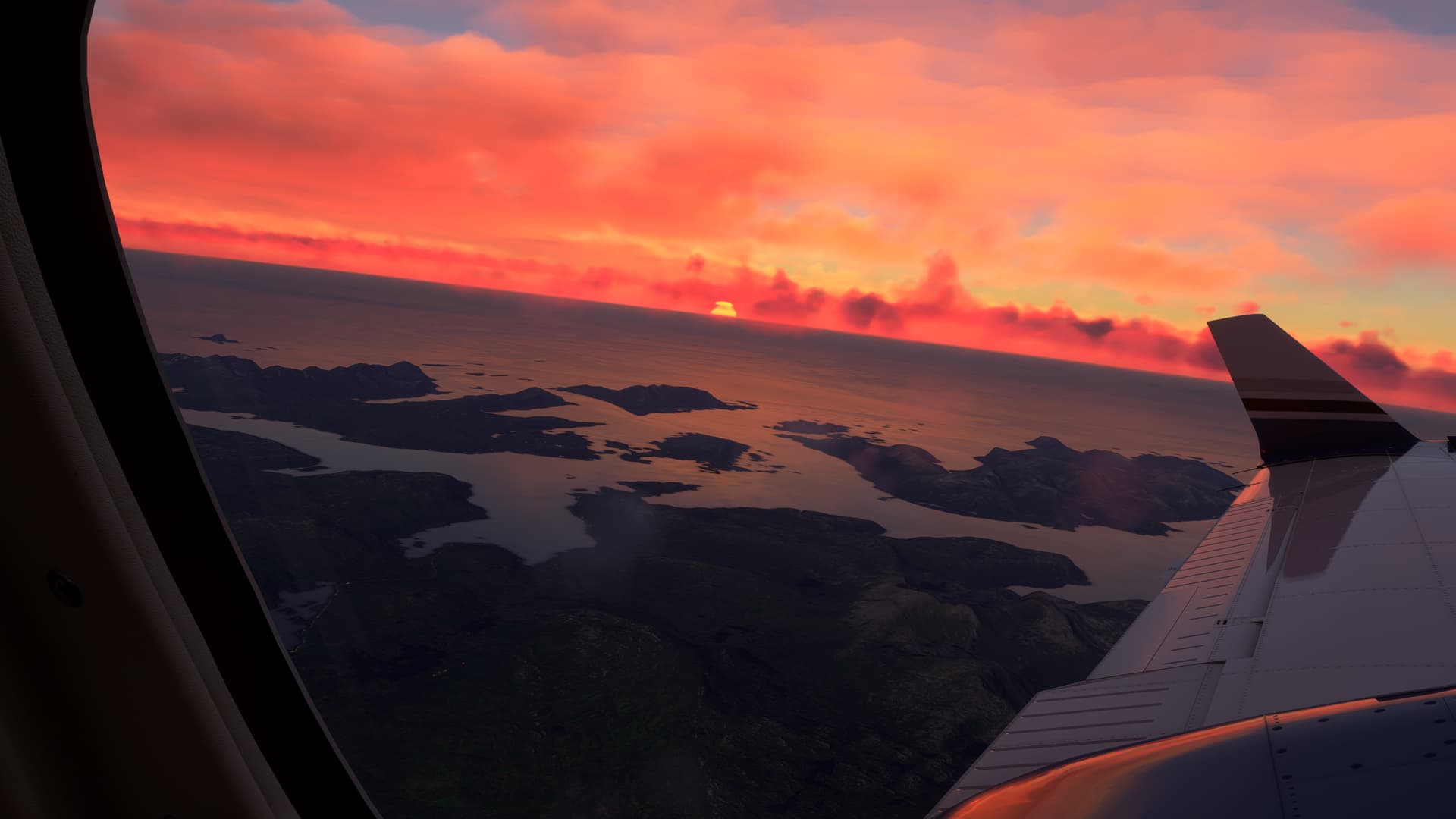
Sun still visible over the horizon half an hour after the sun was supposed to have set. Does MSFS model the effects of refraction and altitude?
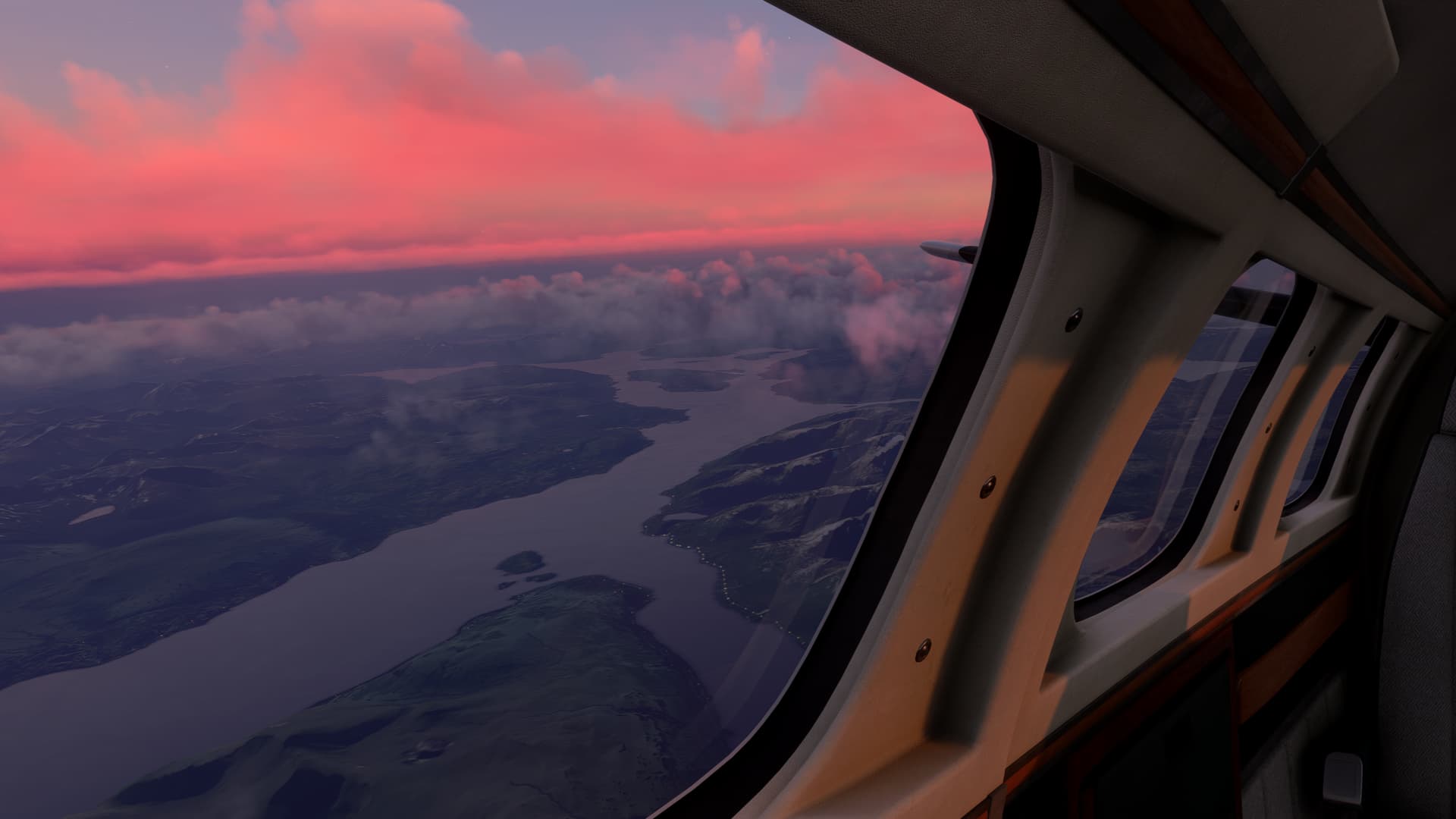
A parting view of the Tromsø area
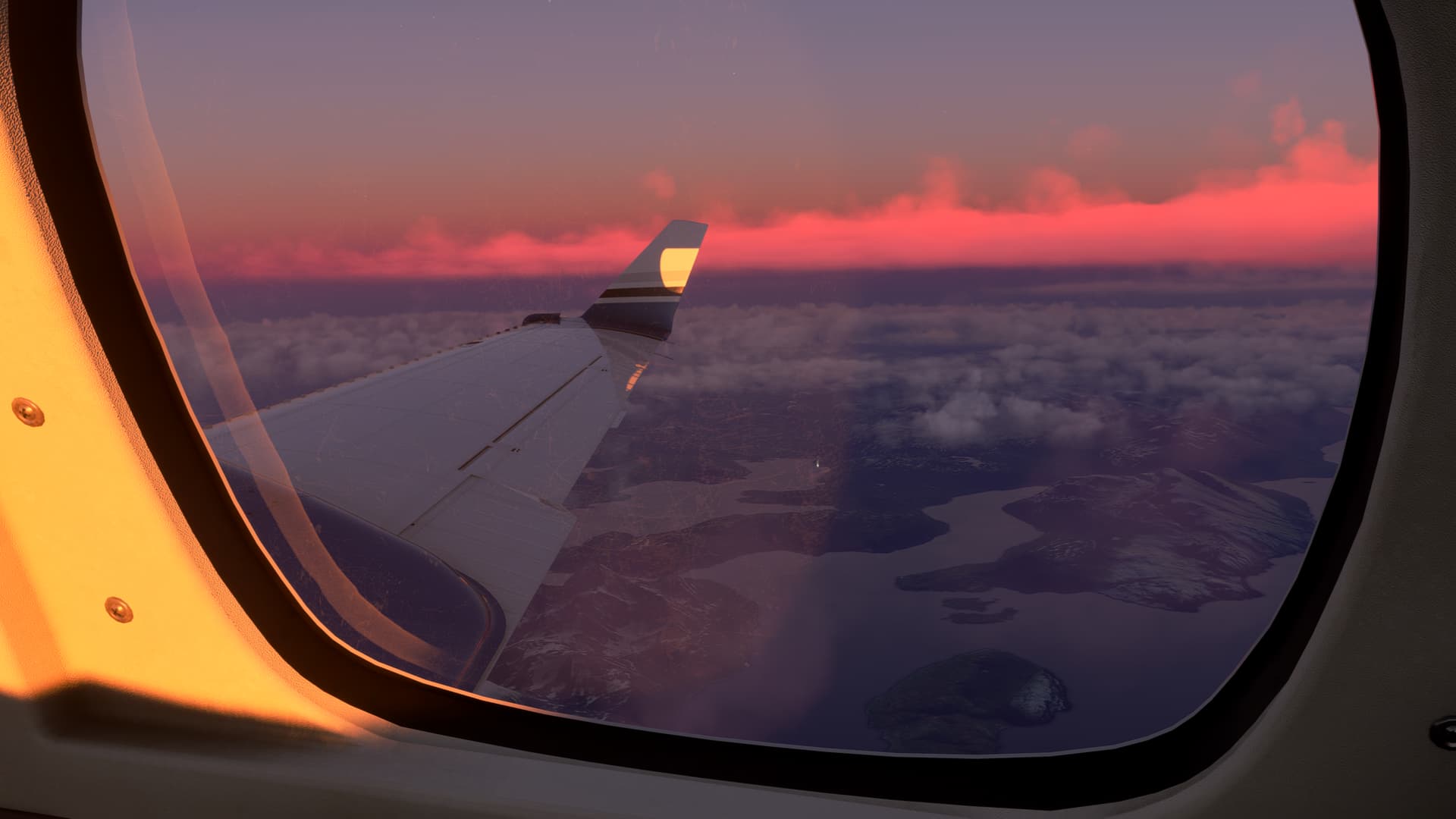
Abeam Sørkjosen ENSR

The island of Sørøya west of Hammerfest
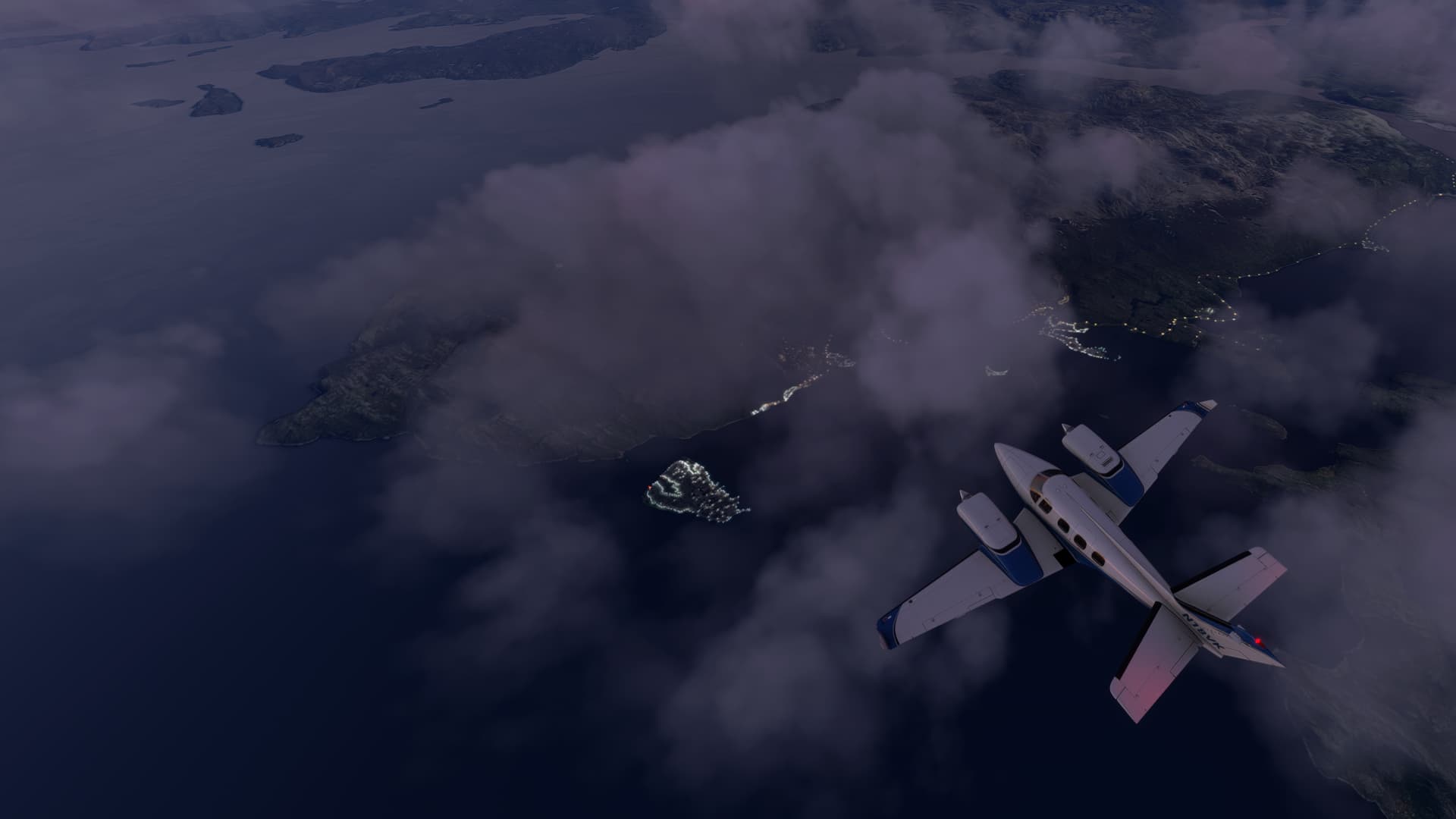
Overhead Hammerfest
My route paralleled the northern coast of Norway, taking me directly over Hammerfest and then past the highlight of this leg, the Nordkapp (North Cape) on the island of Magerøya. The European highway E69, connected to the mainland via a tunnel, terminates here, making the Nordkapp the northernmost point of Europe that can be reached by car, though the neighboring Knivskjelodden cape lies slightly further to the north.

Approaching the island of Magerøya with the Nordkapp and our destination Honningsvåg
The route waypoint ULPAB lay just slightly to the north of the Nordkapp, and ATC approved a diversion to the north, allowing me to give my passengers a better view.

A view of the Nordkapp for my passengers seated on the right…
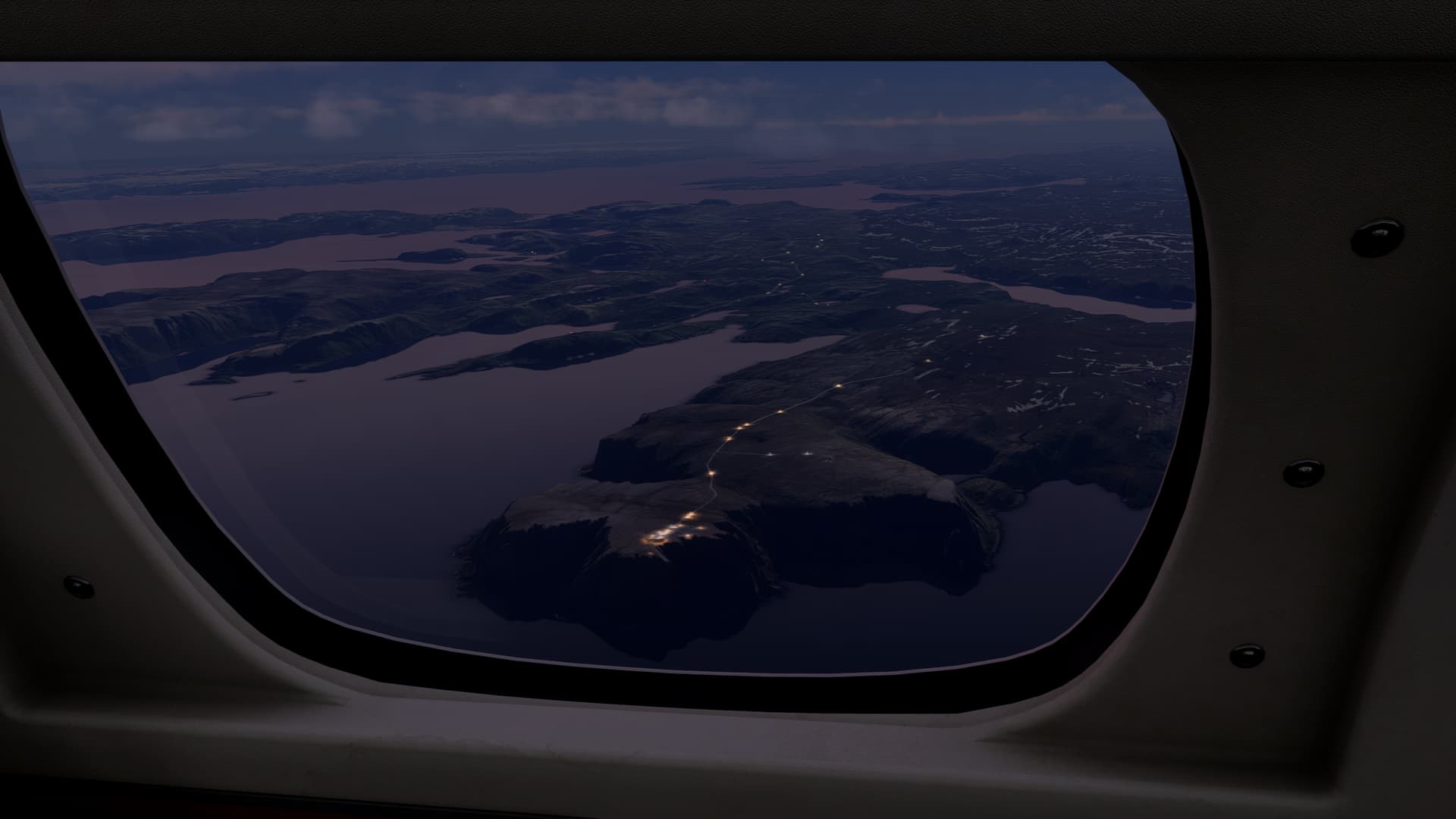
…and on the left
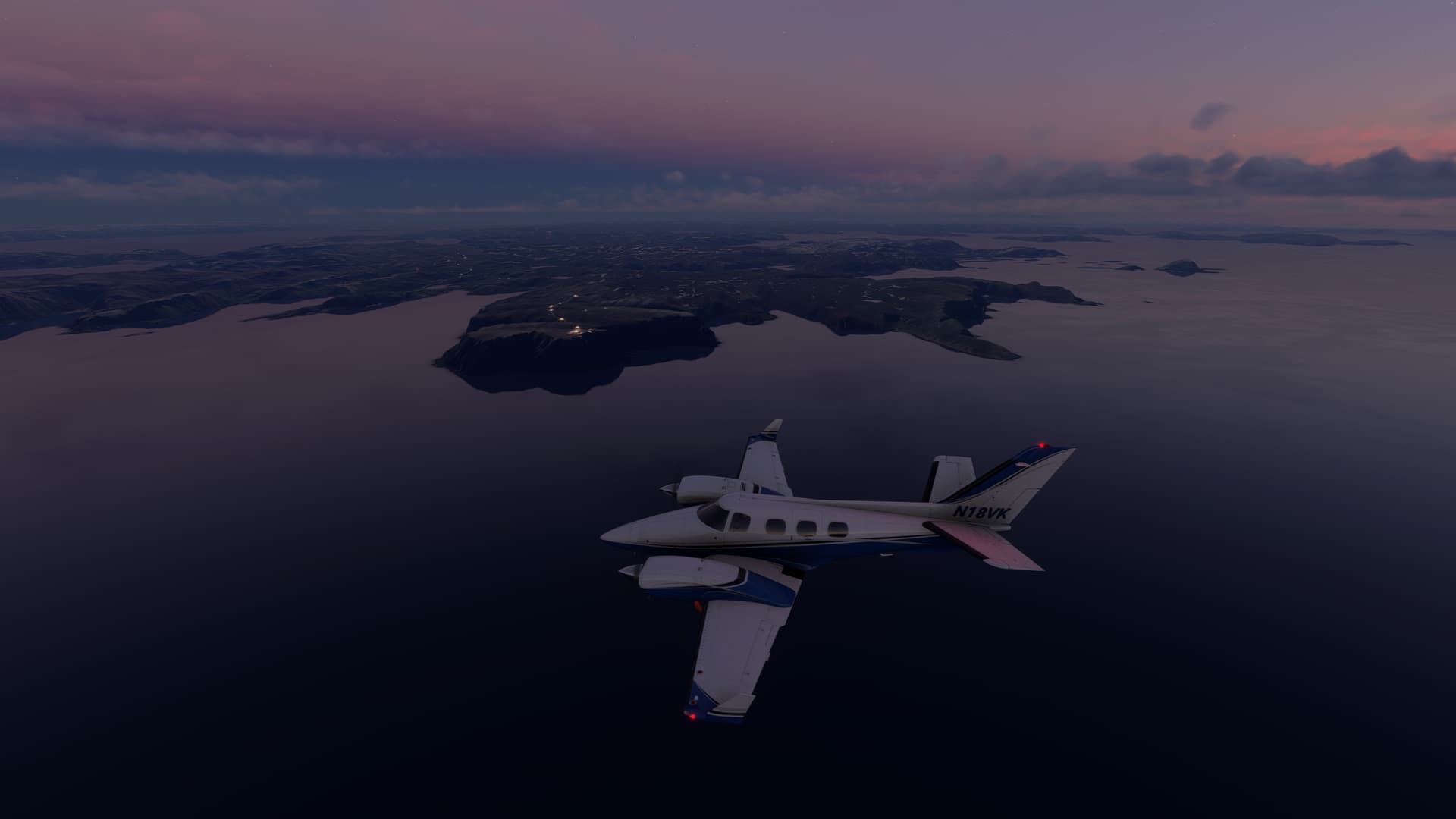
Rounding the tip of the European continent
The approach into Honningsvåg was going to be a challenge, too. Landing distance available is only 800 meters, and there are no straight-in approaches due to the terrain.
Here are two examples of Widerøe demonstrating their usual skill approaching Honningsvåg, both times to runway 08. Here is an approach by a single-engine piston aircraft to runway 26. Note how close the terrain on the left-hand side is on short final.
On my flight, the winds favored runway 26, so I planned for the RNP A approach. The MAP is only about a mile from the threshold, with an MDA of around 1200 feet above the airfield, so a direct descent from the MAP to the runway is impossible. I imagine a circle-to-land from the MAP should only be attempted if the pilot is intimately familiar with both the airfield and the aircraft.
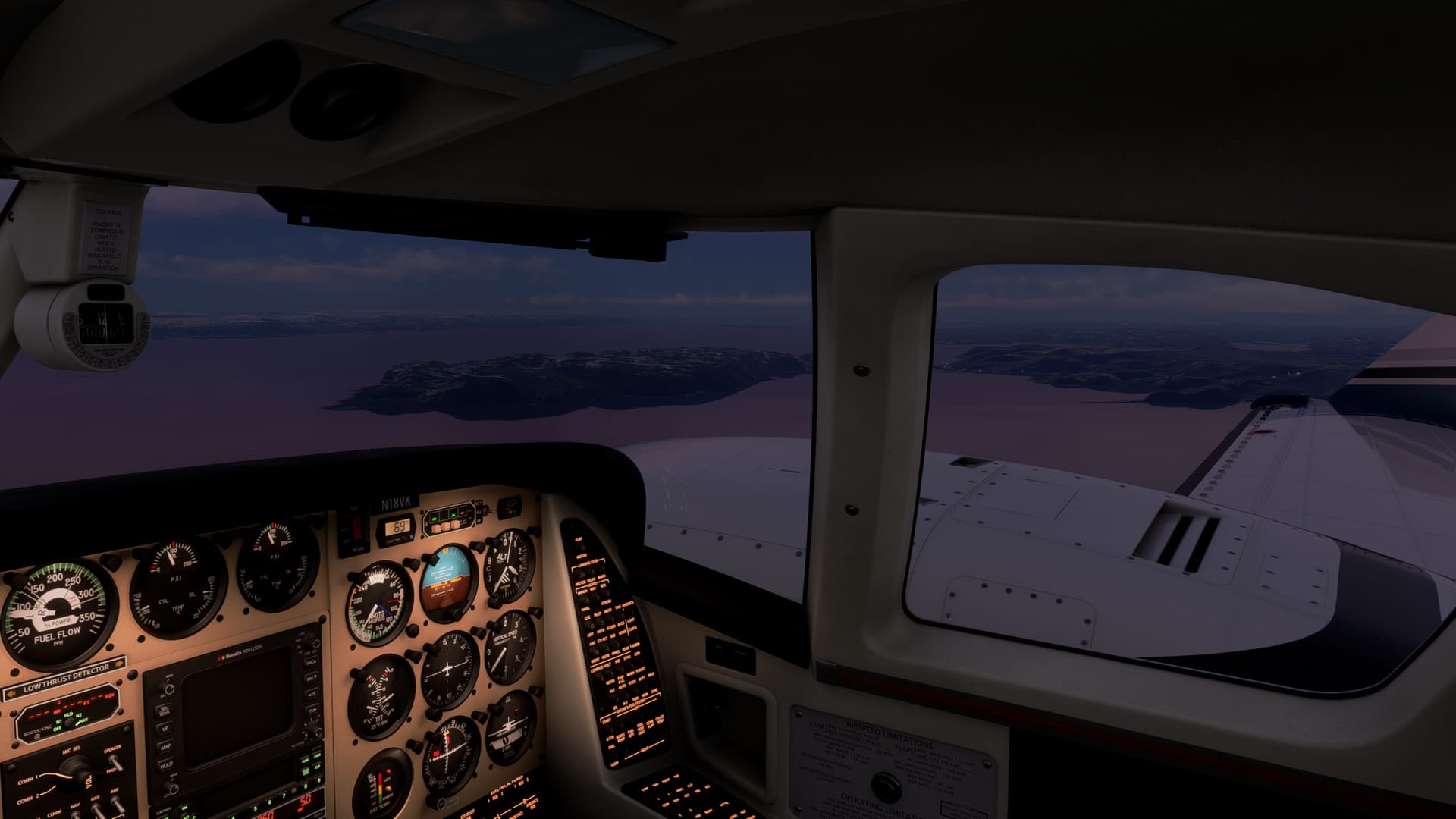
On the approach - Honningsvåg is off the right wing
Fortunately, the weather was good, so I would be able to start a visual descent to the runway some distance before the MAP, and I would also be able to break off to the left to give myself a bit more room to manoeuvre. The airport has lead-in lights to assist with the circling, which are modelled in the excellent freeware scenery. I definitely appreciated the assistance in the fading light, but even so, my first approach was too high, and I went around. I repositioned visually for another attempt, and this time my vertical profile was better, and I completed the landing.

At the MDA, continuing visually

Approaching Honningsvåg on my first attempt, shortly before going around
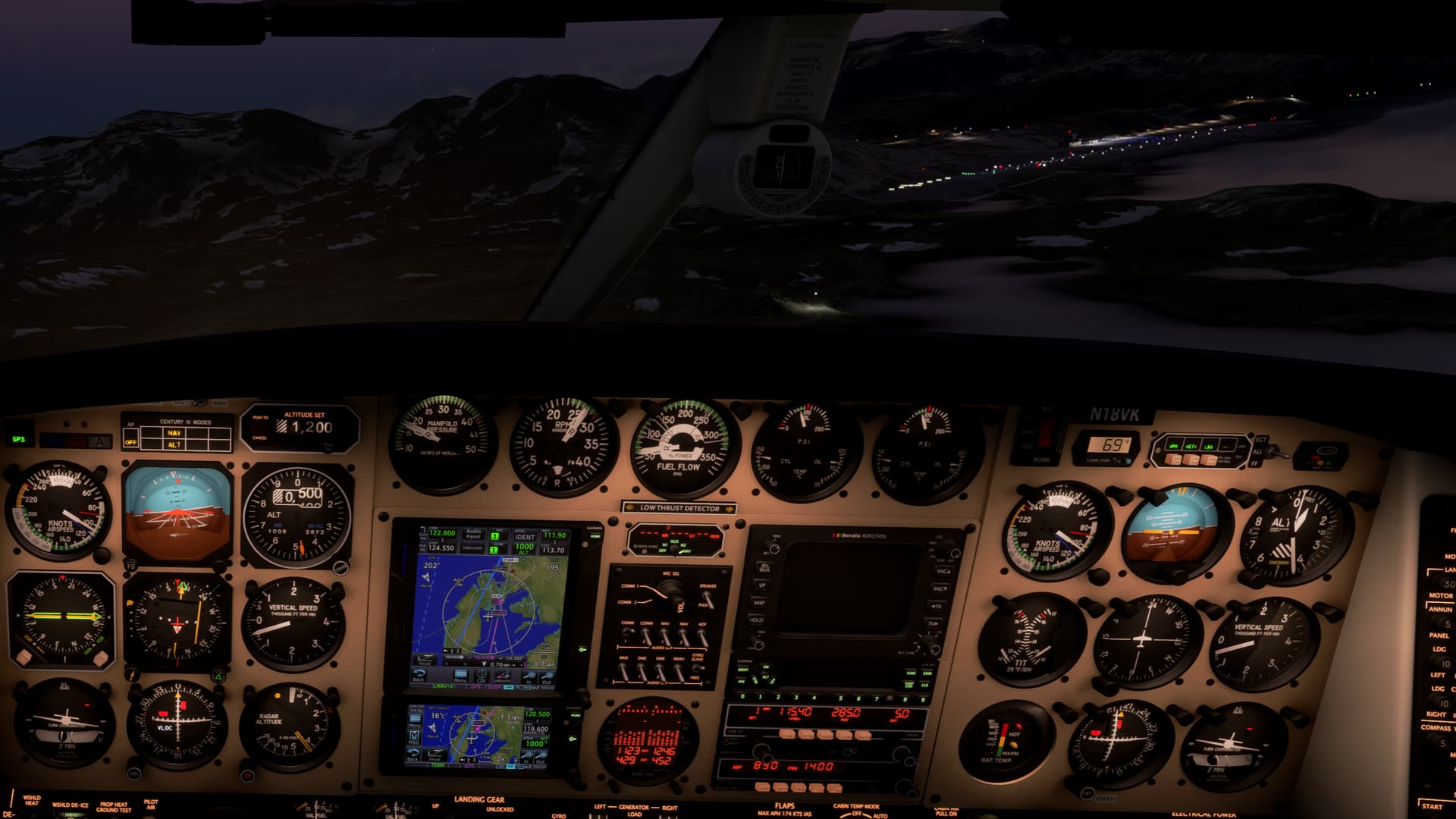
Second attempt, turning in
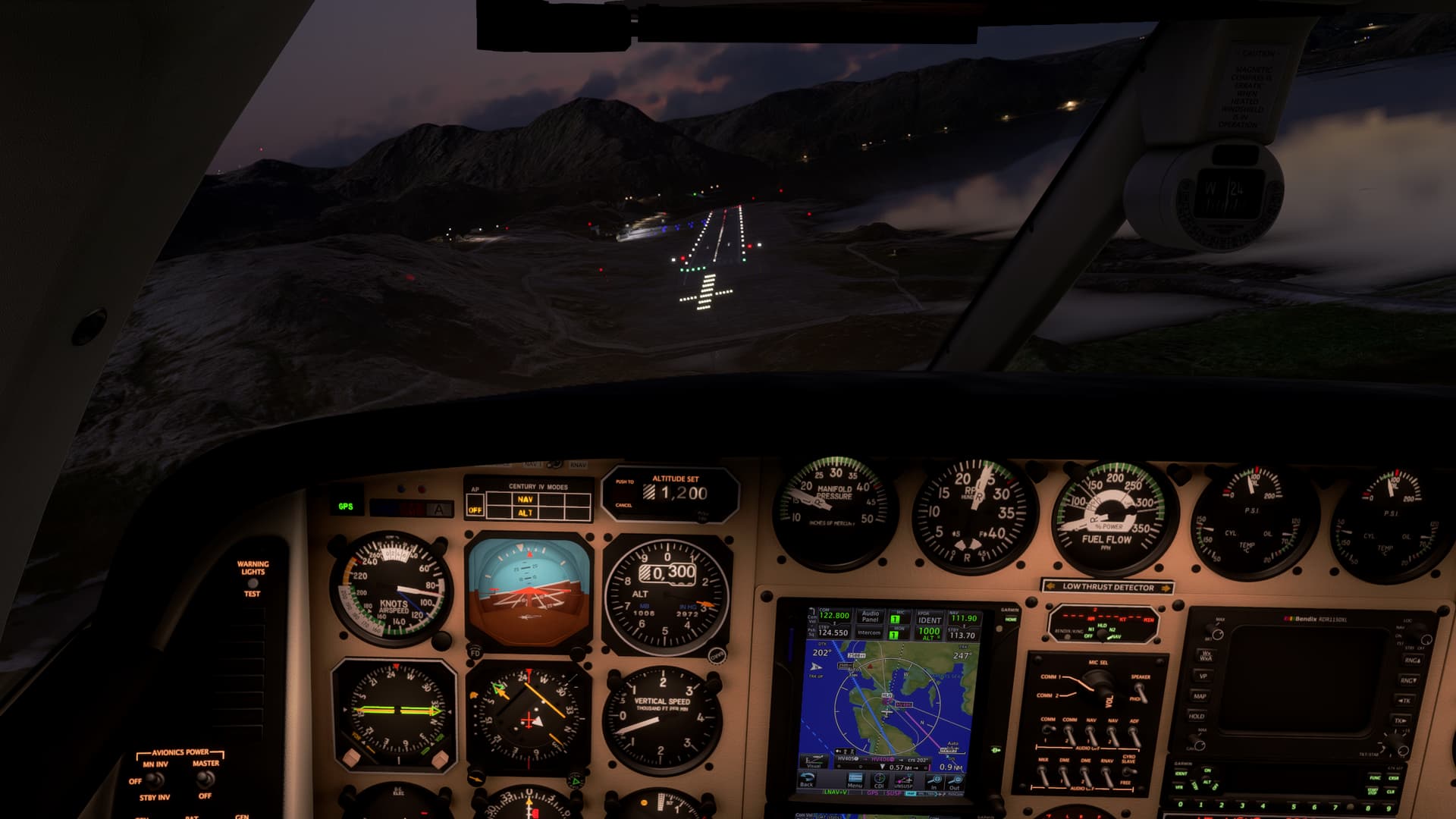
Short final
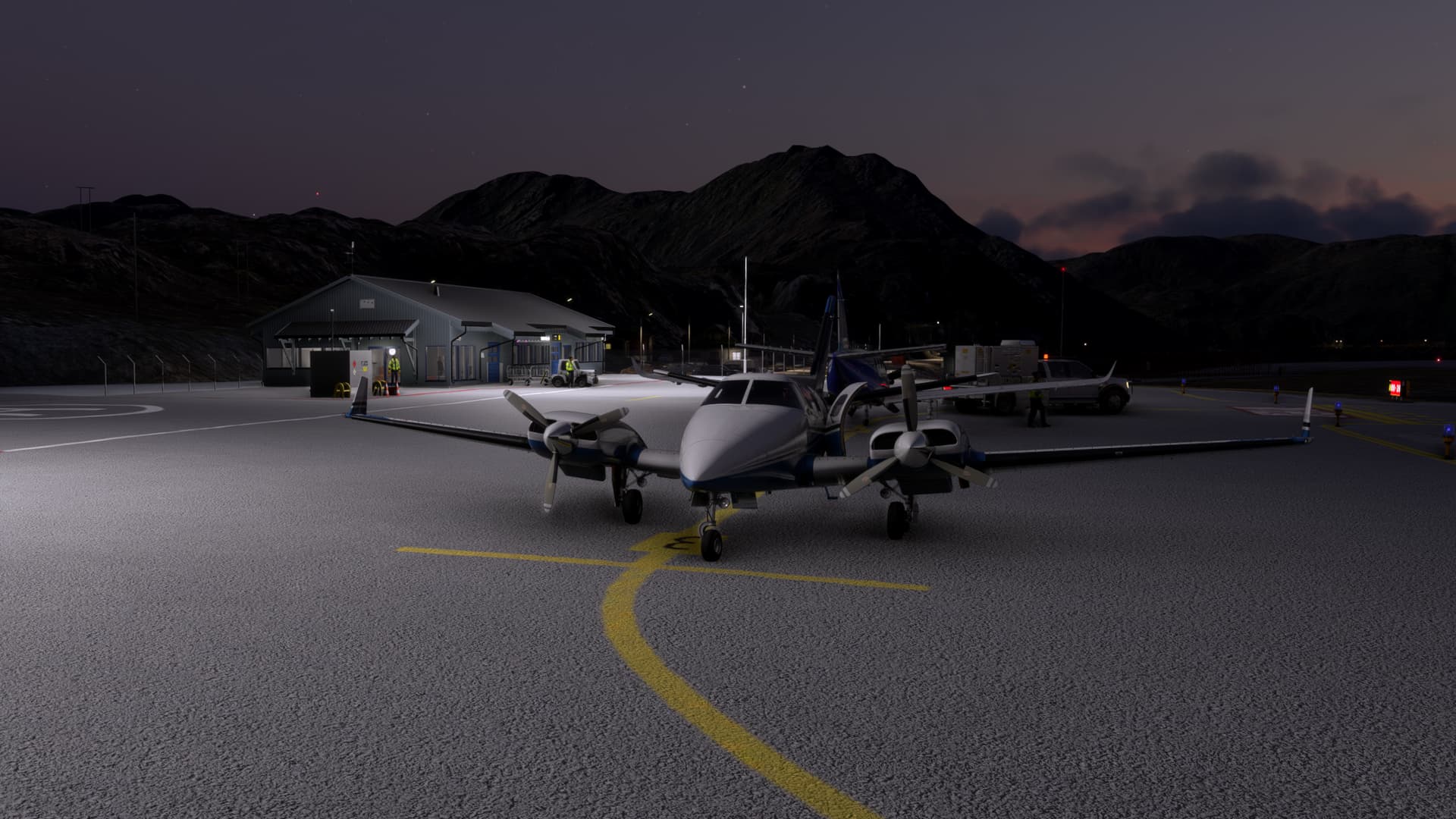
Parked on stand. Technically, this is still daylight…
Chasing the midnight civil twilight may not sound as romantic as chasing the midnight sun, but I’ll take it. And if I can get the final leg in soon, there’s a chance I can still catch up with the midnight sun again. The next sunset in Longyearbyen in Svalbard will be on August 25.