ISSUE DESCRIPTION
Description of the issue:
The human eye does not generate lens flairs. It already adjusts to lighting.
Can we please fully disable these gamification “features” and let the Mark 1 eyeball do what it already does?
Playing in VR, I turn my head to look at the dashboard, and outside goes super bright, I look outside, the dashboard dims. The eye adaption is looking at where center of screen is, not where my eyes are, so lets us turn this all off.
In real flight, sometimes you are just scanning over the dash and do not have to turn your head much. Right now as I pass the window support on my helicopter, the entire screen flashes as it tries to auto adjust the brightness.
Simulate the proper colors and lighting, and our own eyes will adjust.
Please keep all the effects on the external, drone and camera views, as those would be cameras you would be using for that purpose.
 For anyone who wants to contribute on this issue, Click on the button below to use this template:
Do you have the same issue if you follow the OP’s steps to reproduce it?
•
Provide extra information to complete the original description of the issue:
•
If relevant, provide additional screenshots/video:
•
7 Likes
I find that if I add back this section from the MSFS Usercfg.opt file into the MSFS 2024 Usercfg.opt file, it gives me those options back.
Like you, I am no fan of the sudden overexposure.
This is the whole section:
{PostProcess
Enabled 1
EyeAdaptation 0
ColorGrading 0
Sharpen 1
Fringe 0
LensDistortion 0
Dirt 1
LensFlare 0
FilmGrain 0
Vignette 0
LensBlurMultiplier 1.000000
FringeMultiplier 1.000000
}
and I added it just above the last section before the VR part, where is is in the MSFS version.
Please note that changing a setting will delete this addition and put it back to enabled with no means of disabling it.
I guess that marking the file as read only might stop that, but it will also stop the changing of any other settings.
YMMV.
Unfortunately, this trick with the Usercfg.opt file in MSFS2024 does not work.
When MSFS2024 launches, during the package activation phase, it modifies the Usercfg.opt file before it fully loads, deleting the PostProcess section.
I didn’t try making the file read-only, as it needs to be written (at least for me), since I’m running MSFS2024 in windowed mode and repositioning it.
This is why I typed YMMV.
Here is it, “not working”
https://www.dropbox.com/scl/fi/ocivbfeiat2df18v1584m/bandicam-2025-02-05-10-27-18-578.mp4?rlkey=orp40xhet95rtbhcm6sv3zvtt&st=11siujgh&dl=0
The Usercfg.opt file is what its name implies, a configuration file, so it has no effect on what you do with MSFS 2024 in Windowed mode or otherwise, except as it first appears when you load it.
If you are using VR, I have no idea if it would work, but I will guess that you would need to add the same section to the VR part of the Usercfg.opt file.
It just a suggestion, that works here to solve the issue, see the video.
If you know better, or it doesn’t work for you, that’s all good.
Add the propeller and rotor effects to the list too.
3 Likes
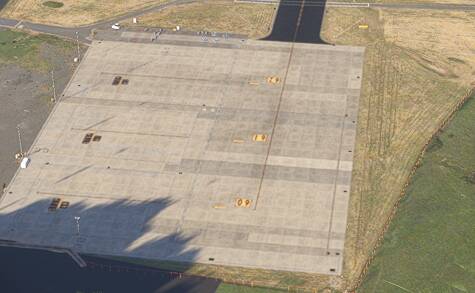
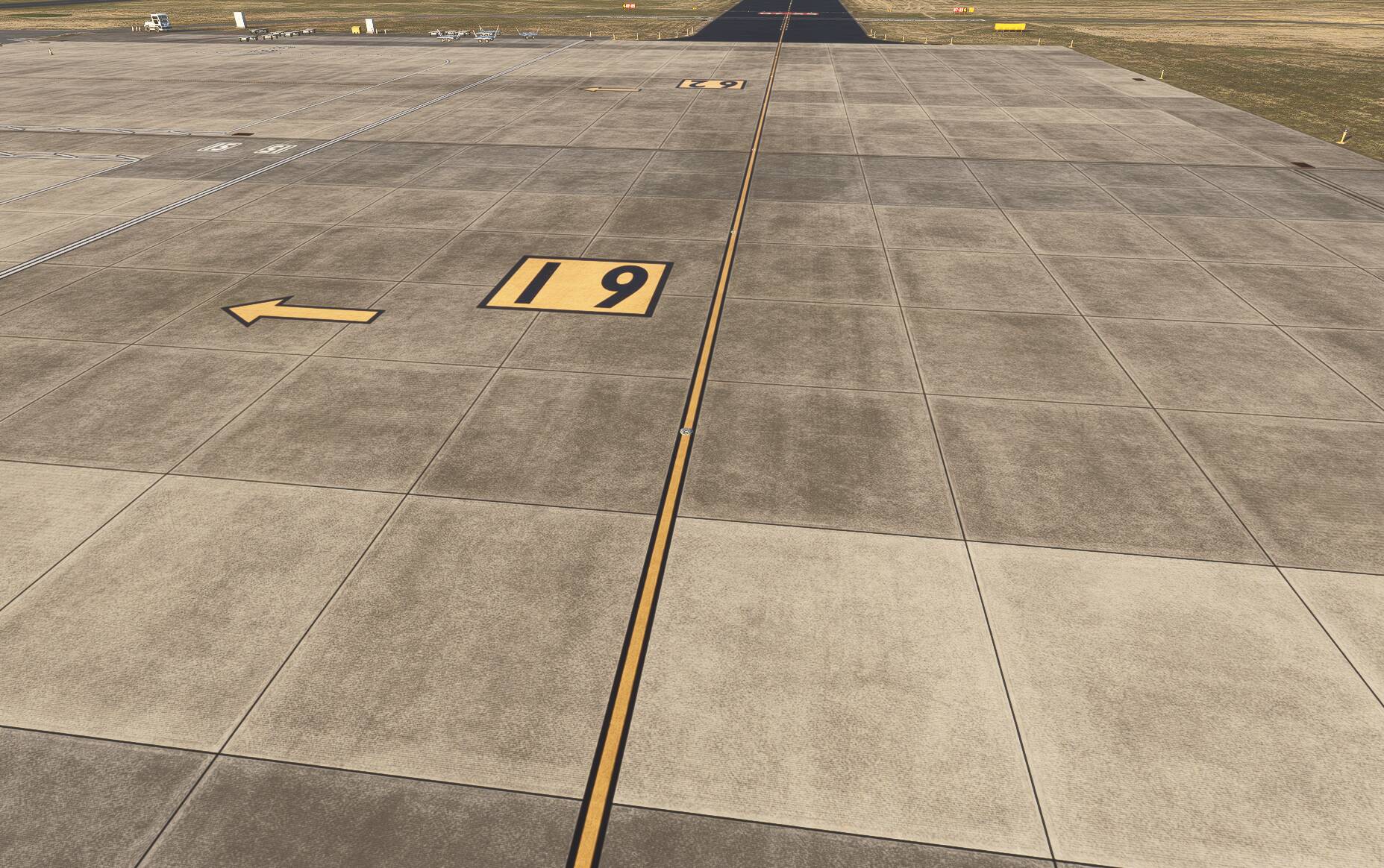
The problem is also with the current simulation tarmac does not behave or look like as you would see it with your eyes. The further you move away from the apron the brighter it get, which makes dirt literally disappear. That’s not even how a camera works. That’s just not how it works whatsoever:
this is the same apron just from different distances. It looks like 2 completely different aprons, or the same apron with dirt removed.
Sadly, that is less eye simulation and more level of detail being too aggressive, and lower LODs not having the dirt detail on it.
Have to have LODs or we lose FPS, the trick is finding the sweet spot where you dont notice the blending between the two at their change over distance(s).
I’m voting for this because it’s one of those simulated things that just doesn’t need simulating. I would love to turn it off so I’m able to view everything correctly no matter where I’m looking and not having to wait for the screen to “adapt.”
6 Likes
What I dont like is that the sim tries displays the dynamic range different between bright sky and dim instrument panel on non-hdr displays, which usually results in too dark panels.
In reality, this is not an issue as the eye has a high dynamic range, so you can see both fine at the same time, but in the sim the artificial darkening makes it hard to read especially analogue instruments!
3 Likes
Was any of this addressed with SU4? I’m so tired of having lens flair while simulating a pilot, not a GoPro. The other thing with the brightness outside making the panels darker fails to recognize an important thing.. pilots can hold their hand up to block the light outside when looking at the panel. We don’t have that ability in the sim, so this isn’t realistic.
3 Likes
Cleary nice looking screenshots and showcase videos are higher priority for Asobo than realism and usability.
1 Like
Are coded LOD curves the same for Xbox, PS5, and high-end PC’s?
I hadn’t flown since my last comment until yesterday..I see we’re still flying around as a simulated camera instead of a pilot.
Do you have the same issue if you follow the OP’s steps to reproduce it?
•
Provide extra information to complete the original description of the issue:
•
If relevant, provide additional screenshots/video:
•i hate this too with a vengence. My eyesight is limited and this stupid and unnatural feature makes the sim almost useless.
Really hope MS/Asobo could improve the dark/cloudy conditions of the sim. It look stunning in sunny weather, but not good when it’s cloudy and darker.
This simulation is superimposed on the eye, which is already doing everything it normally does. The result is a doubling — for example, of the cockpit shading.
Agree. Would be great if Asobo could aknowledge that they are aware of this, and if they are planning on adressing it at some point.
Except that’s not really true at all, and everyone who complains about this issue fundamentally misunderstands it.
Your eye, when looking at a monitor, is doing nothing at all, especially for SDR monitors (and not very much even for very bright HDR monitors). The contrast ratio outdoors is absolutely enormous, like 4-5 orders of magnitude more than your monitor can display. With physically based rendering (PBR), the light levels represented in the game renderer are exactly as they are in the real world: so sunlight is closer to 100K lux, moonlight might be 500 lux.
Meanwhile, your monitor might maybe get to 5% of that whole range of real brightness. Our eyes work hard to make all of this work without us knowing it, but your eye can’t do anything at all when the thing you’re looking at (your monitor) is really going from not lit to barely lit (in absolute terms).
Therefore there has to be some algorithm that compresses this enormous range into something usable on a a monitor; that algorithm is called tone mapping, and is that eye adaptation. Without it on dark stuff would be invisible, outdoor sunlight would be clipped to white, and you might be able to see a tiny little sliver of a range in the middle.
PBR is what makes things look realistic; it’s exactly what XPlane went to in 12 that brought the rendering to the MSFS arena. There’s precisely zero chance Asobo rips out their PBR pipeline and replaces with an old non-physical rendering approximation. It would be an enormous graphical step backwards and every single piece of art ever made for the sim would have to be redone completely. This is why they haven’t responded on this topic, because it is graphical suicide and not even remotely feasible.
Unfortunately, this means folks just have to live with the limitations of modern monitors.
3 Likes
IRL I just move my eyes towards gauges and they accommodate. In the Sim if I move my eyes it just stays dark because the picture does not move and daylights are coming bright from the pilots glass are still where they are and gauges are non-readable in the dark - I have to move camera to “brighten them” them and to do this this I have to use my keyboard or other controls and I often need my hands doing something else with controls instead of this.
2 Likes
I would argue this eye adaptation garbage is the step backwards. Games have been made for decades without needing such a gimmick. I don’t care if it’s pseudo-realistic to have it when it means it’s harder to make out the details.
1 Like