Crosswind handling on the ground

Hi, thx for post :+1:, of course, you are right if we are talking about reality, it would be possible. But unfortunately you got carried away with fantasy and personify MSFS too much in relation to realism :wink:. MSFS does not work that well, at least not yet, and the topic of crosswind is primarily related to problems in modeling quite simple functions. Torque effect like this it could be possible but not with this Argus engine, maybe if we use Twin wasp here (btw. I don’t think I’ve even encountered the torque effect anywhere in any model in MSFS yet), also note that the RPM has been increased gradually. Its also worth adding that I did take off from the other side (unfortunately I don’t have a video) and it was pushing the same to the houses, so it’s no Torque effect Im 100% sure). The rudder in MSFS hasnt alomst any effect at low speed (only the tailweel works), so you can’t counter the pressure of wind gradually like in real live, here it starts working suddenly as you can clearly see in the video, I deliberately use the rudder to the maximum from the beginning to show this senseless behavior, ailerons do not help here either and their effect is negligible, I know this technique and it could be used, for example, in P3D, nothing helps here, in MSFS at all.

And now the most interesting thing, I did this test then exactly in the same conditions but with full rudder to the left and also free (neutral with correct correction like IRL), the effect is identical. This just shows exactly where MSFS has prioritized and how unrealistic it presents behavior in this respect.
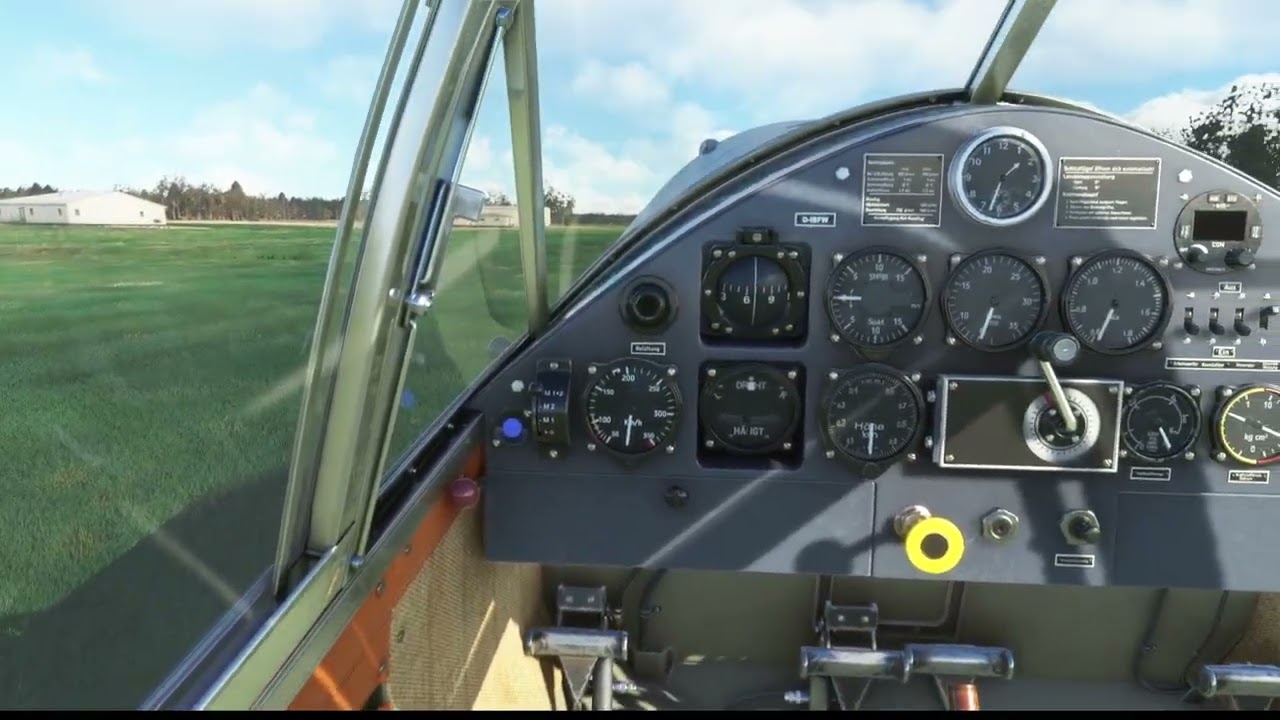
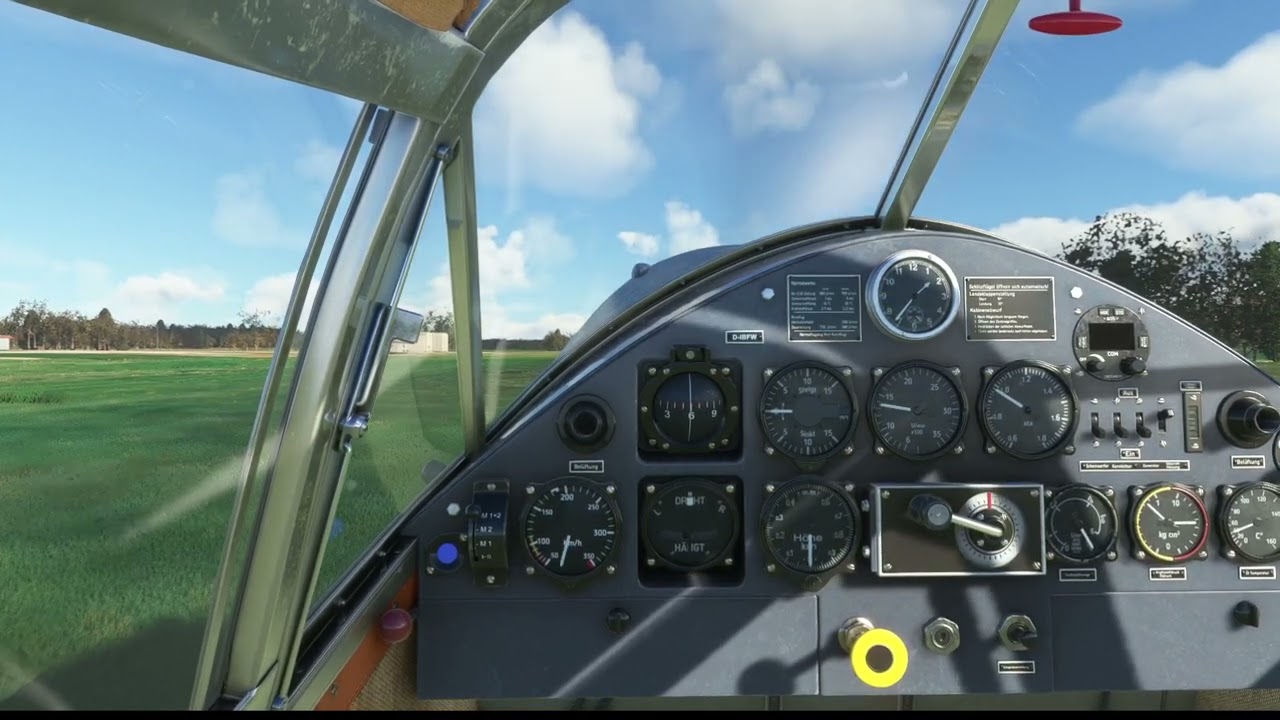
So yes, you are right in what you write, but if these were the effects here, I would be happy, because any person with aviation experience would be able to deal with them intuitively. Here at MSFS, we have a set of incomprehensible cases that, regardless of the pilot’s behavior, cause the same thing, without affecting the aerodynamic behavior of the aircraft. Undoubtedly, this is one of the greatest sins of the authors of this simulator. I think that, for example, the side wind is great in P3D (along with Active Sky), also in DCS it is impeccable, you can even fly with the scissor technique, which is practically unattainable in MSFS. They should fix it here and it should be priority for Asobo team. :pray:

I read once interesting hypothesis that it could be the tire edge effect (what? :innocent:), which causes this behavior in MSFS if there is a crosswind (so it would be something completely different, maybe the weather is ok after all, but the probem is elsewhere). Who knows maybe it’s true. :pensive:

@rafikst can you have a look in the ā€œflight_model.cfgā€ of the aircraft (it’s the BF108), what these values are set to?
ground_crosswind_effect_max_speed
ground_crosswind_effect_zero_speed

These define, when the crosswind effects sets on depending of IAS (the unit is pecularily ft/s)
See SDK documentation: flight_model.cfg

I dont see those values in model’s cfg.

You’ll get all the left turning tendencies in a little put-put Cessna 152. I wouldn’t discount it at all.

It’s flight_model.cfg. If they are not set, then the default values are active which are 5 ft/s (=5.5km/h=3kts) and 80 ft/s (=88km/h=47kts). Within those IAS, the effect of the crosswind is scaled up from 0% to 100%.

Two other things concerning your specific problem with this airplane:

  1. Just to be sure, have you checked in your settings that the flight model is set to ā€œmodernā€? You can also try cycling to ā€œlegacyā€ and back to ā€œmodernā€. Sometimes, strange things happen with regard to this setting.
  2. I notice in the video that you apply brakes and set full power. Maybe this was just for this video? Try without brakes and gradually increase power, this makes the turning tendencies more controllable.

As a general note: I think it is more or less general consensus that the ground roll simulation in crosswind is flawed in the sense that much bigger control inputs are necessary to keep the aircraft on centerline compared to real life. I guess this is especially pronounced in taildraggers because they have less control authority in the ground roll at slow speeds.

1 Like

When it comes to getting this sorted, I’ve put my money where my mouth is on gathering data. If you want to know if your aircraft has been improved with the new values, or want to add to the list, check this out.

Note that many stock Asobo aircraft have NOT been improved.

1 Like

The crosswind scaling is a barely useable crutch and I don’t think that this will improve in the foreseeable future.

I’ve not experimented with those values to be able to have an opinion.

Improved lateral tire friction scalars do however make a difference.

I don’t like the approach taken to solve this issue. It should be addressed at the level of the physics of how air pressure on a given surface area is modelled. But tire friction is the band-aid they have applied and left it up to the aircraft developers. Hence there will be a highly variable response and pilot experience. So we need to track it and see if ANY sticking plaster has been applied by a dev.

Or we could all just stop using MSFS, but that’s not really a solution, is it? (although it was for you)

I re-ran my tests from over a year ago ([All aircraft] Crosswind takeoff/landing physics very flawed since release)
to see how the CJ4 flies with the new tire friction scalars. Much improved - still tricky at the higher speeds and now it has a weird nose dip just after rotation that doesn’t help., but the TL:DR is that these scalars work - if applied. Which in most aircraft they have not.

Do you happen to have the old and new copies of the config files? I’d like to do a windiff on them to see what’s different.

Do you mean for the WTMod version compared to the AAU1 release? Yes, I still have a copy of the WTMod. I can send to you when back at my PC. But I think you can still download from the WT website too.

They made many changes to the flight model, but the two variables I was testing were:

ground_high_speed_steeringwheel_static_friction_scalar
ground_high_speed_otherwheel_static_friction_scalar

These were simply absent in the WTMod. AAU1 release they were set to 5. SU12Beta have been set higher (not sure to what). If you wanted to see what it is like without the tire friction, leave these scalars blank.

Likewise for any aircraft you could add them or tweak to preference. By how much requires judgement - my yardstick is that a take off at max demonstrated crosswind for a given aircraft should only just be achievable for an average pilot. If you run on rails, it’s too much.

Btw. after few days of testing I racived quite good results with:

ground_crosswind_effect_zero_speed =
ground_crosswind_effect_max_speed =

Its not Holy Grail and not solved all things but the improvement is clear. If anyone has a problem with taildraggers I advise you to give it a try. This is some solution. :+1:

What I noticed also, those parameters give no result for taildraggers:

ground_high_speed_steeringwheel_static_friction_scalar
ground_high_speed_otherwheel_static_friction_scalar

but maybe for planes with nosegear, I haven’t tested it here.

Yes, it works for tricycle gear well. Should try with a tail dragger with steerable rear wheel. Also, what value did you try up to? Unlike the max/min effect values of you leave these blank no default effect is applied.

I was going to try with the Milviz PC-6 ( which is what it is still called in my files) but I can’t find the .cfg and suspect it is encrypted. The Asobo DC-3 has already been tuned on release, which suggests they will work with tail draggers.

Probably every plane should have it adjusted individually. Here, for example, you have an example for the Bf-108 model, but I also tested other settings and the effect was exaggerated or not noticeable. You have to adjust it a bit to the flight manual of the real plane (data) and his take-off and landing speeds.

http://www.sim-outhouse.com/sohforums/showthread.php/129884-Inibuilds-Bf-108-Taifun-Released-2-24?p=1308067&viewfull=1#post1308067

Yes, this is the thing. Each plane needs to tuned. But the fact is that very few have. It’s why I’ve opened the other thread mentioned in my post above: [All aircraft] Crosswind takeoff/landing physics very flawed since release

If the Dev hasn’t tuned the aircraft consider modding. If the Dev hasn’t ( or won’t say) and has encrypted the .cfg then I suggest simply don’t buy it. For example I’d love to know what Aerosoft have done with the Twin Otter.

2 Likes

Excellent thread ! I’ve endured disappointment for over 25 years with Microsoft’s idea of flight ā€œsimulationā€, especially in the large jets which i try to fly.

Why didn’t Microsoft just license obsolete code from CAE and build a new sim ? A CAE sim from 20 years ago would be so much better than MSFS today, and that code is is just gathering dust on a shelf somewhere. Why not recycle it ?

1 Like

Whilst an interesting thought, think there is realistically zero prospect of that in MSFS 2020. They would effectively have to cancel the title and relaunch it as it would be an entirely different product rendering all the existing aircraft models obsolete.

We are where we are. Asobo do continue to make improvements. But it’s also on Asobo and 3rd party devs to make use of the options presently available to improve ground handling. That would be a more modest solution!

Just was pointed to this thread by a fellow simmer. What is the latest state of affairs on Asoboā€˜s/MSā€˜ side regarding the flawed flight model in the sim?
What do they say? if anything?
Only heard from a third party developer, that they are aware of the flaws but issue orders of nondisclosure, silencing 3rd party developers to not talk about it publicly… If true, thatā€˜s a scandal.

On the specific question of side forces seeming to be modeled false:
The ā€šmodern’ MSFS flight model SDK states specifically that the side forces are now a result of the ā€šAIRPLANE_GEOMETRY’ the coded math thus being in the core code, not accessible to 3rd party developers.
Our engineering instincts definitely point in the direction, that there must be some variable off ā€šin thereā€˜. E.g. a simple mistaking numeric values, to be measured in meters, instead using values in feet, thus giving results being false by the factor of about three. Something like that. ā– ā– ā– ā–  happens…
It could possibly explain BOTH exaggerated yaw in ground rolls and depreciated adverse yaw in the air.

Would it be too embarrassing for Asobo to find and admit it? Subsequently all planes would have to be modified, more specifically get ā€šunpatchedā€˜. (if having been patched for more yaw realism in the first place)

https://docs.flightsimulator.com/html/Content_Configuration/SimObjects/Aircraft_SimO/flight_model/aerodynamics.htm

side_force_ …
In the modern flight model this effect is natively obtained through aerodynamic simulation of the surfaces defined in the [AIRPLANE_GEOMETRY] section. In the modern flight model, the side force resulting from a roll is a complex combination of the effect of all the aircraft surfaces that cannot be directly controlled. Making sure the aircraft surfaces are correctly aligned and feature correct areas and coefficients will result in a realistic side force when rolling.

I wonder if this would get more visibility by MS if the discussion was in this bug report instead…

Ground effect too strong in windy conditions - Bug Reports & Wishlist / Aircraft & Systems - Microsoft Flight Simulator Forums

Please vote for it!

vote this topic (sorry my bad grammar) All that is wrong with the MSFS Flight Model (Inertia, Stalling, Pitch Authority, Trim & Sensitivity)