I’m no real world pilot, but something must be wrong, because I landed a JMB VL3 with 19 knots crosswind Saturday (I don’t remember the exact angle, but it was near 90 degrees). I don’t know how it would be in real life, but I certainly don’t have the skills to do this. I only cared of the proper approach and rotation, but once at the runway it was pretty easy to control. At least gusts in real-time weather now work in flight and wind speed has been corrected at the ATC.
Well congratulations for keeping it on the runway!
I doubt the official crosswind limit is anything like 19 knots although I stand to be corrected. I couldn’t find any details on the “real world” limits but there’s a nice review of the real aircraft on the Flyer website here:
https://flyer.co.uk/feature/jmb-aircraft-vl-3te-915-september-2020/
1 Like
I’m not sure if it’s the same aircraft version, but this manual states 10kt as maximum crosswind and 15kt as maximum head wind. Maybe the Little Nav Map window showed an uncorrected ft/s speed, but this would be very near the limit. Maybe this aircraft model hasn’t been updated to the new sim feature? 
Don’t know about this VL3 aircraft, but evidence that something is very wrong are shown in the videos I posted months ago up in this thread.
1 Like
Thanks for the support. It’s hard to make Asobo aware of the bugs, it’s even harder when people who have no clue of what they’re talking about, start saying everything it’s fine.
1 Like
You’re welcome. As you say it important that these basic bugs get fixed. People claiming “all is good” because they’ve been “flying” a computer in their bedroom for years is nonsense.
2 Likes
Update:
Just managed to successfully land the Carenado V35 Bonanza in a 20 knot crosswind without getting flung off the runway. I wouldn’t try this in real life.
If anyone sees this over the next couple of hours try a circuit at LFAC Calais Runway 24 in France and report back!
In general, what crosswind landing technique is most often used: crabbing or wing-low?
Most commercial and low wing aircraft will use the crab technique. This helps to avoid the risk of hitting an engine pod or wing tip as they touch down. Pilots flying high wing tail-draggers tend to use the “wing down” method or a combination of the two. I was taught to use both in my PPL training.
Here is a recording I made landing in a real weather crosswind at LFAC in the Carenado V-35. Very windy and gusty but a firm safe landing without going off the runway MSFS style. As you can see I’m using the crab technique to place my aircraft over the numbers then kicking off drift with the rudder as I touch down.
1 Like
Nice! I think on some aircraft the crosswind physics is better than others: since MSFS release I mainly flew with 4 aircraft: default C172, default TBM, WT CJ4 and PMDG B737.
On the default C172 and default TBM, you can keep the aircraft on the runway even if I think the input on the flight controls is too much.
With the WT CJ4, it’s completely impossible to keep the aircraft on the centerline, even with the slightest crosswind.
The PMDG B737 has the best physics I think, even if the weathervaning is still overdone.
2 Likes
That’s very interesting - I tried this exact flight in the default Cessna 172 G1000 but ran out of rudder authority - the 172 went off the side of the runway 
I find it odd that the Carenado V-35 dealt with the crosswind so well. Carenado are not known for their “flight dynamics”. Maybe it was something special about the “V Tail” presenting less of a surface area to the crosswind force compared to a conventional vertical stabilizer.
2 Likes
The 172 received the new variable to apply 100% wind applied at all speeds, but doesn’t appear to have received any further tuning to compensate for that. In an unmodified state the current 172 is not very crosswind friendly unfortunately.
3 Likes
Ah that would explain it then. I was surprised it performed so badly what with all the news about the 172 having the latest NPS and CFD updates.
1 Like
The wind comes from your right, so when you touch ground, Should be your left wheel the first to touch ground?
I think it should be the right wheel the first to touch ground.
Sorry for my english.
1 Like
You are quite correct well spotted 
UPDATE: I have re-watched the video and I think I may have applied too much left rudder to straighten up before touching down.
Flying in MSFS is a lot more difficult than in real life…
4 Likes
Hi. I am non IRL pilot and have absolutely no understanding of weather physics but it seems completely broken in SU10 to me.
I’ll explain my problem and hopefully you’ll have the answer for me and explain how its accurate to reality.
This is my flight setup. Cessna 172 steam gauge, live weather departing from Wick airport in Scotland starting cold and dark.
I’m sitting in the plane with everything off. I can hear the wind, but it’s not influencing my plane yet. Rock solid not moving. I turn on the battery, alternator and avionics. Fuel pump in, set my beacon and nav lights on so far so good.
Start the magnetos apply some mixture, lift hand brake.
Now the wind magically appears. I haven’t even applied enough throttle to start moving yet, practically on idle but my plane starts blowing to the left. I apply differential braking and it manages to hold the plane in a straight line, standing still.
I communicate to ATC that I would like to depart straight out and taxi north.
They instruct to use taxiway A out to runway 13.
I cannot get to runway 13 because even with full right rudder, differential braking the plane wont’ turn right because its being blown to the left.
In the end I just let the plane blow to the left, and decide to make for the grass as I can’t reach the runway.
I apply max throttle the plane wants to careen off to the left but with my right foot fully on my rudder pedal I’m able to keep the left lurch to a mild camber.
Building up speed to 55 knots I pitch up, coincidently at exactly the same time the wind stops and I’m now up in the air, having taken off from the grass and now enjoying a nice smooth and stable flight.
The weather phenomenon that only affects the plane on the ground and when the engine has been turned on has abrubtly vanished.
If you know of an IRL pilot, experienced simmer or meteorologist that can provide an explantation for my ignorant ears I’d love to hear it.
2 Likes
Yes, the crosswind componment does exceed the recommended value within 172 POH. The problem lies with how the model behaves on the ground.
The issue come into how, even if you’re facing into the wind, the turn tendency on the ground got very whacky
Case example; Winds 330 @ 24 gusting 30. Trying to taxi to the SE/NW runway (16/34) the controls did not maintain consistency, even if observing the standard dive into the wind (if headwind) / dive away (if tailwind) method. If I attempt to turn to the left, the plane will then start turning to the right (with the exception being the plane would weathervane to the left, without rudder correction). Even if applying full left rudder, it would still turn to the right at the same velocity (a skid condition perhaps) . It would require full braking to stop the spin. I was doing donuts.
After correcting, repositioning the plane to face into the wind, it then spins the opp direction with the same inputs. The plane then “tipped” (as mentioned in the piror post), and when you’re using an occulus rift, it def throws you off, seeing yourself at a 30-45 degree pitch, while at a 30 degree yaw.
I’m wondering how the model came the conculsion of being inconsistent on the turn behavior with high ground wind speeds
(Edit; can the fourms please add a spellcheck feature please)
To the alleged “real world pilots” claiming everything is correct on MSFS:
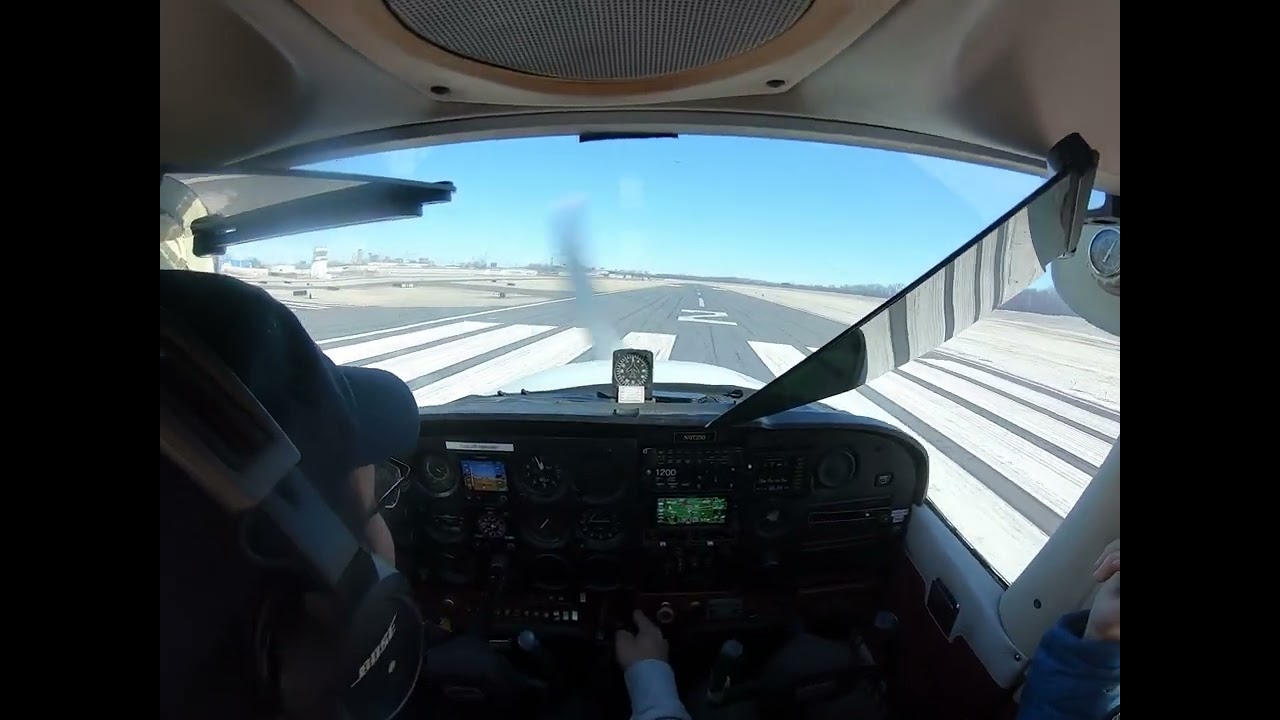
If you try to land on MSFS with a C172 and 33kt crosswind, you’ll end up in the grass next to the runway (if you are lucky to get to the runway)
5 Likes
There is definitely something wrong with the ground handling of the aircraft in MSFS. Try taking off in a 152 or 172 with 15 kts direct crosswind and enjoy the inevitable runway excursion even with full rudder deflection. It’s great!
4 Likes
How the wind effects an aircraft on the ground is different from when it is in the air because the wheels act as pivot points, resisting the effects of the wind.
Basically as a cross wind applies force to the aircraft it will pivot around the wheels. As there is a larger surface area to the aft because of the stabiliser it means the nose will always turn into the wind as the force of the wind is stronger - you turn like a weathervane into the wind.
With the parking brake applied the SIM holds the aircraft in place. In strong enough winds once you release the brake the aircraft can start to get pushed around. As you gain speed on a takeoff roll a complex process starts where the various forces acting on the aircraft alter dynamically (flight control surface authority grows, wheel friction reduces as the wings start to create lift, but intertial forces also increase). It’s especially complex in a high-wing taildragger.
But as soon as you are airborne there is nothing anchoring you to the ground acting as a pivot point - you are now afloat in the stream of air and moving with it and the vaning effect stops. The reverse is true when landing.
1 Like