You can keep trying, but you’re not contradicting anything I’ve said. It’s amazing that every response is the same, yet none seems to understand. I guess I shouldn’t be surprised.
I’d say he was exactly the same, actually.
100% agree, that’s what he teaches. Understanding the why of low-altitude stalls. Everyone knows the how, yet we do it anyway. It’s because nobody teaches practical ways to avoid it. I guarantee if I post a bunch of what it was taught about how to fly patterns and how to avoid stalls it will judged all wrong, so I won’t bother. But we’ve been teaching stalls the same way for 70 years and people still do it. Yet apparently we’re teaching it correctly? I know of two recent accidents with very experienced CFIs and commercial students augering in doing stalls.
Aviation is the one venture where we constantly argue in favor of doing things the same way and expecting different results.
Then they clearly need to know how to recover from a stall, which I believe is one of the points being made.
Showing a student pilot how to stall a plane may not be the entire focus of the exercise, as you seem to be implying, but how to get out of a stall should it occur.
To learn, and practise, how to recover from said stall, you have to stall the plane first, in a few scenarios as I posted above, like on approach, and final.
Yep, it’s been made 5 times now, and I point out that I never said it shouldn’t be taught over and over but apparently that won’t suffice.
What I’m talking about is best practices to avoid them. You can teach a student pilot the physical skill all day long, but if you don’t teach them where and why they happen and how to prevent that, it doesn’t help all that much. And I’m not talking about “they happen on the base-to-final turn”. That doesn’t tell us much either. Why does it happen then? How does it happen then (and I don’t mean “the wing exceeds the critical angle of attack)? And what can you do proactively to avoid finding yourself there? The answers are simple. Nobody teaches them.
If you can’t feel a stall coming on you don’t belong in the cockpit.
In the image I posted above, would that be “symptoms”, and “recognition”? If so, that flying club would seem to do just that.
Looking down the list, they seem to be showing the student how to recognise a stall as it happens, then demonstrate how that works in practise, followed by how to recover from those situations.
I may not be a pilot, but I read good! 
2 Likes
Not really. Everyone teaches symptoms and recognition, yet it still happens. One of my favorite things he teaches is, always turn final too soon rather than too late. If you turn in too early you can just drift over to centerline. Where people get in trouble is turning final too late; the tendency is to use the inside rudder to drag the nose around, and that’s where you can get cross-controlled and stall. And if you do that at 500 feet, you’re a goner.
Two of the other biggest things he teaches (and this one absolutely everyone will disagree with): no more than 20-degree turns in the pattern; and the biggest one: a go-around is a POSITIVE maneuver. Way too many pilots think a go-around means you screwed up. A go-around is always a good decision, regardless of the reason (I’ve gone around because something just doesn’t feel right).
2 Likes
I’ve done the turn too late in the sim so many times. Typically turning left into a left crosswind, and it is certainly harder to recover from that than loosening your turn a bit if you were a bit early.
1 Like
Yep! For sure.
Still not every stall is caused by pilot deviation you can teach students how to prevent getting there in the first place (which is a big part of any pilot course), still at the end of the day people make mistakes and undesired aircraft states do occur. Not all factors can be controlled, you have contributing factors like unreliable airspeed, instrument failure, wake turbulence, weather. Its too easy to say “just learn not to stall”, every pilot needs to be proficient in edge of the flight envelope maneuvers which means practicing them regularly, even the best pilot in the world could end up in such situation, no matter how much you are trying to prevent it.
4 Likes
No I wouldn’t, but you tee’d up the point pretty nicely here.
The intent isn’t to teach you how to get into a stall, the intent is teaching you how to get out. Similar to your VFR into IMC example. But, since we have hoods and foggles to create the IMC, we don’t have to go find a real cloud to do that training.
Sometimes if you need to teach someone how to get out of something, you must first put them in that something. When you need to teach a VFR pilot the rudimentary steps of getting out of IMC, you put them in it with the hood.
Since I know you know this, I feel like you’re just being argumentative.
I was definitely taught how stalls develop and what we can do to avoid them, which seems to be a key part of your argument. And you’re right on that point. That is critical training. And so is the seat of the pants feeling of what it feels like when you’re right on that boundary. You can’t avoid what you can’t identify. You know perfectly well that stalls aren’t tied (firmly) to numbers on the dash, they are tied only to air over the wings. That is something you have to learn to feel.
Since there is a way to safely do it, then (my opinion only - lest anyone think its doctrine) putting someone there is the best way to teach that.
Fire fighters train with the real stuff, because its important to know that its not ever a one-size-fits-all solution how that task might evolve in real time. Upset recovery in a plane is the same.
I won’t deny that I don’t know what you’re trying to accomplish with your remarks really. You’ve already said you did this same training. And its clear you understand the purpose of the training.
1 Like
I routinely teach a full upset prevention and recovery course in a Super Decathlon; I can talk about this stuff all day ;).
Certainly, high emphasis is placed on the “prevention” aspect, because if a pilot experiences a loss-of-control event at low altitudes, the “recovery” aspect may be irrelevant no matter how good you are at it.
So - why do stalls (and spins in capable aircraft if you have chutes) routinely? Two reasons - and only one of them is to practice recovery.
The even more important reason is so the pilot is absolutely familiar with how the aircraft looks and feels as it approaches a departure from controlled flight. This level of instinctive familiarity is what will cut through the distractions that led you there in the first place. It is what will cut through the startle, and enable the pilot to actually effect a correction that prevents the departure in the first place.
There’s absolutely no substitute for regularly experiencing your aircraft actually departing controlled flight. There’s no other way for you to understand exactly how, when, and where this occurs; how load factor and coordination affect it, etc. You can’t just read about it. Doing a few stalls once every 6 months is nowhere near enough to maintain this level of proficiency. And, under the hood only? That serves one purpose, but it doesn’t translate much to flying visually - which is where an LOC event is statistically more likely to occur for an instrument-rated pilot.
And then, yes, there is a recovery aspect to the UPRT training that is quite important. If you’ve never even seen a spin, the startle factor is crucially important and not to be underestimated. And then there’s the occasional LOC event that isn’t pilot caused: a wake turbulence or rotor turbulence encounter, for example. There are best practices that can minimize these occurrences, but not entirely eliminate them; I’ve been rocked by rotor turbulence on the crest of a wave in a 737 that rolled us 70 degrees, kicked the autopilot off etc, and we were 10 thousand feet above terrain. That certainly would have flipped a GA aircraft inverted, and if you’ve never been there, that’s not the time to try and figure it out.
Basically, teaching the academic concepts of preventing a stall is great, but only the beginning of truly preparing a pilot to be safe in an aircraft. If solving any problem was as simple as telling pilots “just don’t make mistakes!”, then the entire field of human factors would be irrelevant! But instead, the absolute foundation of human factors is termed “the inevitability of human error.” Humans WILL make mistakes - guaranteed.
And when a pilot makes those mistakes and puts himself near the LOC regime, absolute familiarity with recognition and recovery is what will save him - not an instructor (I feel like I should put that word in quotes) who just told him “don’t stall.”
I really, REALLY recommend you find a UPRT course taught in an aerobatic aircraft by a qualified instructor; I absolutely guarantee you that your whole perspective on this would change.
3 Likes
If people are wondering how stalls can happen even with competent pilots with hundreds of hours logged, watch this video about a fatal incident at Houston in a Cirrus:
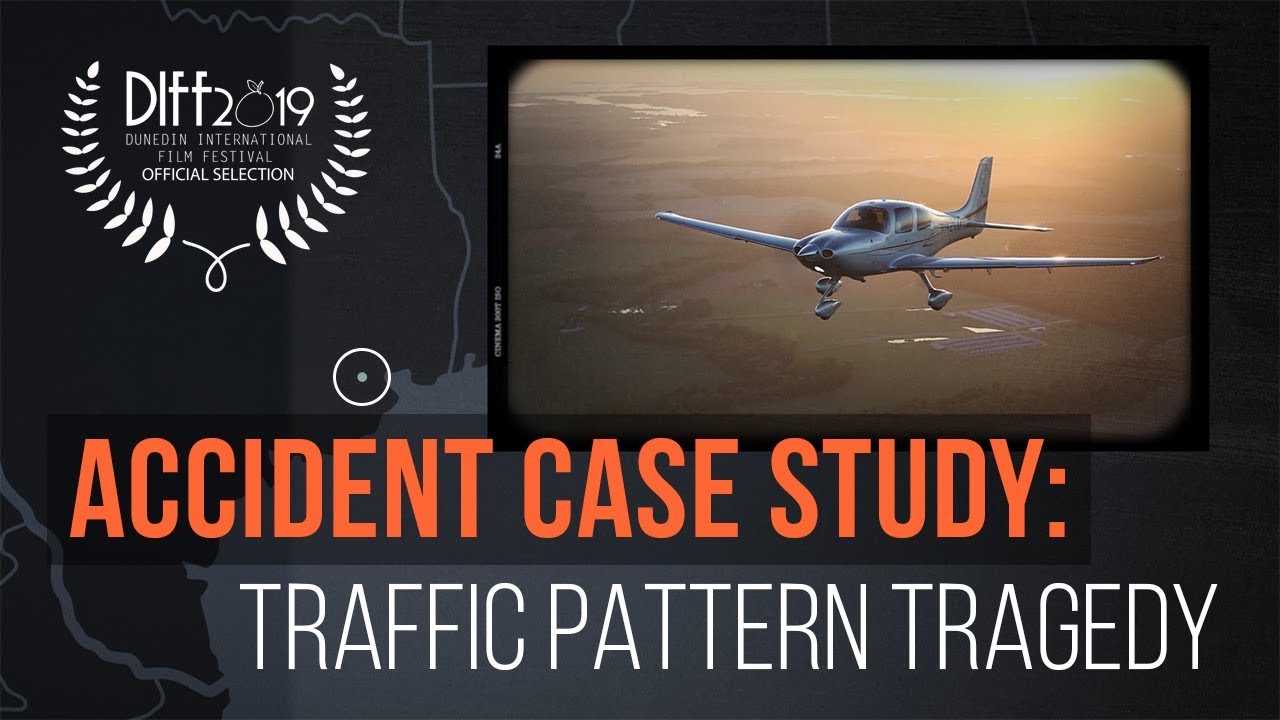
Very easy to get distracted while dealing with ATC instructions.
Aviate. Navigate. Communicate. (In order of descending priority.)
2 Likes
With every new plane I fly (soaring) one of the first things we do is slowly touch the stalling point of the plane so that you recognize it when it happens and know how she feels at that moment.
Next to that, if stalling (speeds) aren’t correctly modeled I find it hard to believe the rest of the model behaves in a realistic way.
1 Like
What I find really amazing is how every single person responding to what I wrote has expanded a statement I made into an entire philosophy that I do not hold and then “refuted” a whole bunch of things I never said or implied (the classic “strawman”). In fact in a lot of cases I’ve specifically responded to point out where these assumptions are incorrect and not at all what I said, but that gets ignored, too. I guess it’s just the internet nowadays.
She was just along for the ride that day. There was no PIC on that aircraft.
I think this discussion is a dead horse at this point, but thats an interesting remark.
If “every single person” is responding in a way you didn’t expect then it seems reasonable to conclude that you aren’t communicating well.
If 2, or 3 people are misunderstanding your intent, then its a lot easier to say “Well, that one read too fast, and that one saw what they expected to see”.. etc.
But since not one person said “Wait, what stateside is driving at is…”, then I’m sorry, but it seems like your point wasn’t as clear as you believe it was.
I said my instructor likes to teach people how not to stall an airplane. This has been turned into my a) never having done stalls, b) advocating that pilots not practice stalls, c) not teaching pilots how to correctly respond to a stall when and if it happens. None of which I ever stated or implied.
I surrender. Talk about beating my head against a wall. You haven’t made any effort whatsoever to understand my point. Like others, rather than ask about something that doesn’t make sense to you, it’s just attack, attack, attack. If winning an argument is what matters to you, you win. I really don’t care.
Same here - when I showed a little timidity with stalls, we went up to 5,000 feet in the C152 my CFI had me hold the yoke in my lap and continue to maneuver, demonstrating what you can and cannot do in a stalled situation.
Very interesting to hear that some instructors tell you not to practice stalls solo. I was at a Part 121 school and actually had solo practice flights where all I was supposed to do was to practice power on, power off, and accelerated stalls (and recoveries - objective was to achieve a ratio of 1:1 there). Spins were not supposed to be practiced solo.
I did my PPL at Leeds bradford in the UK 9 years ago.
My instructor taught me power on and power off stalls. Also these were examined on my skills test. There was an altitude requirement you had to recover from. Also you had to show the examiner you were carrying out the HASSELL checks. remember one guy got a partial because he did not carry out the required checks beforehand.
Come to think of it though. I got taught to notice the signs of a potential stall, yet never the reasoning why they were occurring in that paticular scenario. Some interesting points on this thread.
Never practiced stalls while solo though. Too busy navigating 