I’m sure ATC is not happy with me when I ignore what they tell me (if it is wrong) and land with the best wind aspect. I also ignore the “Go Around” demand unless the runway is not clear. 
Had one of those yesterday - I wanted to fly the River Visual, local conditions be d*mned. Final was OK - helped that you don’t turn final 'til the last second - but the rollout got really squirrely. Fun!
It stays airborne with about 100 knots airspeed and flaps 20, I found. But it gets a bitt wobbly, I usually land with 115 knots.
I usually do AFE up until the In Range is completed and then let gyro on for descent to 500 feet. I manage throttle, RPM, flaps. I never do the AFE for landing part.
There is a great checklist/help PDF on flightsim.to by JD, which I found very useful.
I get usually down to 26 % throttle lever (I have selfmade AAO gauges to see that) and 65% RPM in approach. Once flaps come out more throttle is needed, the in last 100 feet throttle to zero and sail it home.
No idea if that is how it´s done, but it works for me.
100 knots is too slow for any maneuvering. The only time you want to be at 100 knots (give or take, depending on landing weight) is past the threshold in a very light airplane, coming back to your landing speed. In the POH (page 318), it’s listed as “target threshold speed.” There’s a table by weight and flap setting.
On final, you want to be at an approach speed well above that, about 135 knots, or faster if you’re heavy. For definitive numbers, see the placard on the upper overhead and adjust for your landing weight. Your numbers are approach speed (Vapp), then Vref (the speed over the threshold at 50 feet AGL), and finally touchdown speed.
Good discussion in this post (and actually in the whole thread):
And… one of the best aviation videos ever, about airpseed control and safety. Got a lot of attention, including a writeup in Flying. Dan Grider is now giving seminars about it - there’s one on YouTube - but this is the place to start.
This video is priceless. Thank you so much.
Amen to that. Excellent training video.
Couldn’t agree more (and @BostonJeremy77, glad to share it). FlightChops is arguably the best aviation video channel out there. And that particular one is the absolute pinnacle.
This was the Flying writeup:
One of the things I most enjoy about flying The Six is the amount of planning necessary to fly it successfully. I keep hearing my first CFI’s words in my head, “Stay ahead of the airplane.” In the DC-6 you’re going to have a bad day if you don’t stay ahead of things.
The video posted by @AlanA4643 - above all else - teaches you to not only stay ahead of the airplane but to anticipate the unexpected, especially when low and slow.
You took great measures to quote me but I don’t think you really read my posting.
that’s pretty much what I wrote, was that not obvious.
Nevertheless it stays airborne at 100 knots. That is just so.
No I don’t want that. Thank for assuming what I want but since my way of landing the airplane works very well, I will stick to it. It lands perfectly with 115-120 knots touchdown speed while pretty much sailing it home. I love it. I have yet to fail a landing, but I might try higher speeds for touchdown once, if i remember it.
Thank you however for your efforts. Yet I have read the POH and the tutorials as well.
For me it’s a perfect balance - demanding to the point where it really sharpens my skills, but doesn’t need an hour of switchology just to get it off the stand.
Although… when the Aerosoft Twin Otter comes along, or when there’s a really good DC-3, I’ll probably wind up dividing my time between the Six and one of those others that’s a bit more seat-of-the-pants. Maybe a split between weeknight airplanes and a weekend airplane that takes a bit more forethought and deliberation.
For me at least, that’d be a great hangar.
Quite right - the DC-6 should touch down nicely at 115-120 knots with 20-30 degrees of flap if your landing weight is in the 82,000-88,000 pound range. Good settings for you to use, since you seem to be carrying quite a lot of baggage.
My 2 cents on landing…
I normally set and forget 90 bmep and play with the flaps to adjust my glideslope.
Since you’ll be flying the approach nose down in ‘landing’ view (press f to reenter then spacebar to raise the view) the runway sits perfectly centred in your view which is convenient for judging your glideslope.
I also find it much easier to judge the flare in this view.
Just delay feeding in flaps 50 because you’ll slow dramatically, leave it till you’re quite close to the runway to prevent getting to slow too far out.
With flaps 50 in the plane gradually slows to your threshold speed of around 105kts.
In the flare raise your nose up around 2-3 degrees (halfway to first tick) and hold it whole SLOWLY pulling back the power to idle. You should settle down onto runway with no bounce and minimal float if you do it right.
This is what I’ve learned after practicing approach and flare 100s of times. I used skydolly (the freeware replay program) to quickly reset myself onto short final for practice.
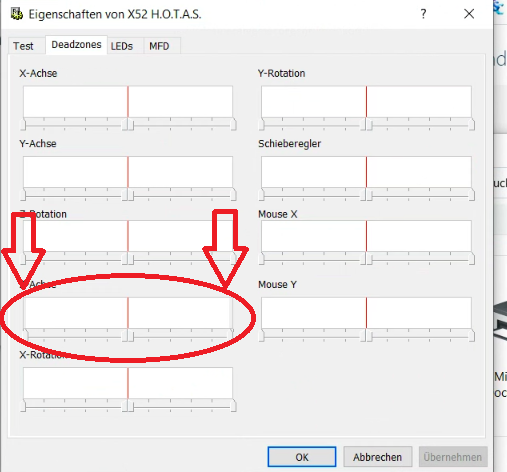
I had the same problem that the engine 1 died after rolling when I put the throttle back to idle. It was like the idle was minimally too low. The problem has been solved since I raised the end point of the throttle axle (X52) just a little.
Since then I have no more problems with the engine stalling.
Edit Oil temperature and oil pressure was in the green range before rolling !!
Like I suspected, there is a deeper issue between cockpit and sim.
I just came upon a new bug where the entire cockpit froze. I could at least still click on switches and hear a sound when the switch was activated. But neither the instruments, 3d position of switches nor the tablet would change.
Interestingly enough this also auto-corrected after some minutes.
Is this also a known issue from other planes?
It’s an Asobo thing. Even their default jets sometimes do that. I have seen it on the Boeings as well as A320 (both default and FBW)
There is a DC-3 planned by Aeroplane Heaven for MSFS. I’m hoping they offer the DC-3 / C-47 bundle as a choice, or perhaps a discounted add-on / upgrade later (as did Just Flight with the Arrow Trio.)
I’d think the DC-3 should be as well done as the C140 just released (version 1.3.0 already pushed out today) and because of my experience with the C140 I’ll be a day one buyer for the DC-3.
Having both the DC-6 and the DC-3 in my virtual hangar will mean lots and lots of fun flights. 
I hope that at some point in the future, we will get other Douglas aircraft too… Since the DC-6 came out, I am pretty much obsessed with them and how cool they are. Can’t wait for the DC-3… I would have bought some other Douglas stuff for P3D, but none are currently available for the most current P3D.
It would be great to have a DC-4 / C-54 to fly. You’d be limited in altitude with passengers, but could still fly cargo at higher altitudes. They used the smaller R2000 engines, but still had good range and speed.
I’d also like to see a Curtiss C-46 like Buffalo Airways flies. They also fly the DC-3, as well as the Lockheed Electra. Kind of a cool story with those guys, way up where it’s very cold.
There IS actually a DC-4 by Flight Replicas that’s compatible with P3D v5. I am considering it. But I told myself no more P3D purchases. But I want it. But…