Not so much rolling friction as that’s not really a thing but I can think of any of a dozen areas I’d look at. Anything from static thrust to raw engine power to induced drag and so on and so on. And yeah, I would check those out and happily mod it to fix the issues if not for everything being encrypted. I’m willing to bet the Moo doesn’t even use the new file layout so I can’t even use the shotgun technique. At any rate, we’re stuck with it and I think I only flew the thing once. On one hand, it was wasted money. On the other hand, it’s a cheap lesson learned about low effort GA trash like what inibuilds puts out
Definitely a shame. The MU-2 is a neat little plane, but the performance on the runway is awful (and more importantly not realistic). If ini can’t fix it, Asobo should at least unencrypt the files, so others could.
This is the plane that made me stop buying inibuilds products. I didn’t expect study level, but the poor performance (acceleration, taxi roll out, etc.) that has been present since 2020 when I bought it is very disappointing. I just don’t understand why this hasn’t been or apparently won’t be addressed. Once it is in the air flying and up to speed, it’s not so bad. But I don’t fly it because I literally can’t take it off without literal miles of runway available, so it limits me to very large airports.
I reported it as a bug a while ago but specifically mentioned high elevations being an issue. The bug got removed since the manual specifies that high altitude takeoffs are harder. But the issue occurs regardless of elevation so I should probably resubmit the bug…
Yeah, when I heard “at Telluride” I thought to myself, “I think I’ve heard issues with MU-2 in real life like that”… but, not falling off the end. I’m going to imagine you’d want a notch of flaps, and use short takeoff techniques at altitude like that anyway.
Long forum thread here on the MU-2… seems the short body is everyone’s favorite. I’ll be spending some time with the thread tonight…
A quote from the thread. I’m sure I’ll find lots more nuggets in it…
For over 20 years, we operated out of a 3000 ft strip using 40 flaps and a Vref speed of 90kts for landing. Routinely used only 1200ft to roll out with little or no braking and just the props to ground idle. In fact, just put on the pair of brakes ($2000 usd then for set) that were purchased with the airplane in 1993.
For take-off, standard for runways < 3000ft was 20 flaps ( bleeds off ) set power to 80% watch for the ram rise @ 50kt cross check and a 80kt go/no go check, followed by rotation @ 85kts.
Charles,
If you are operating where STOL is required then its a risk the PIC has to decide to take and this in true of many STOL equipped airplanes. The Twin-Otter and the Mu both have areas where climb performance is not assured and the same considerations for engine loss under those conditions.
Primarily the decision for a take-off in this region on the perf chart is that, you can close the power levers and fly the airplane to the point of impact or elect not to and impact without control. This is true of a lot of other aircraft NOT only the MU-2.
There is a STOL technique that works for both the Twin Otter and MU-2, where you break ground @ 50kts and in less than 800ft. But, your along way from a safe climb speed of 120kts with flaps 20 and even further from the 150kt blue line.
We were comfortable flying into 1500ft to 3000 ft unimproved strips as it was the nature of our business. Over time, we learned to exploit the full potential of our airplane. However, for the first 100hrs I will say this: I routinely scared the hell out of myself till i adapted to the discipline of flying the airplane by the book and not feel.
Nigel
Edit: Interestingly, I saw a couple of references that the takeoff performance numbers in later manuals were “pessimised” as it were, deliberately worse than the plane is actually capable of (apparently because the early manuals had performance numbers that were on the edge, so the pendulum swung the other way). If Inibuilds met the manual numbers with their FM design, that might explain what many are saying here that it seems underpowered.
Thanks for the info! I wish there was a mod out there that increased the power a bit, the takeoff just feels so wrong to me compared to every other turboprop
The official position is that the Inibuilds MU-2’s inaccurate flight model is “by design.” Given that there is readily-available performance data for the plane, and that the sim version doesn’t match it, this translates to “We don’t care that it’s wrong and we refuse to fix it.”
Ouch…. My original post specifying high altitudes was closed, but I realized the problem persisted regardless of altitude so I made an updated post. That one was merged with the first one and closed as well
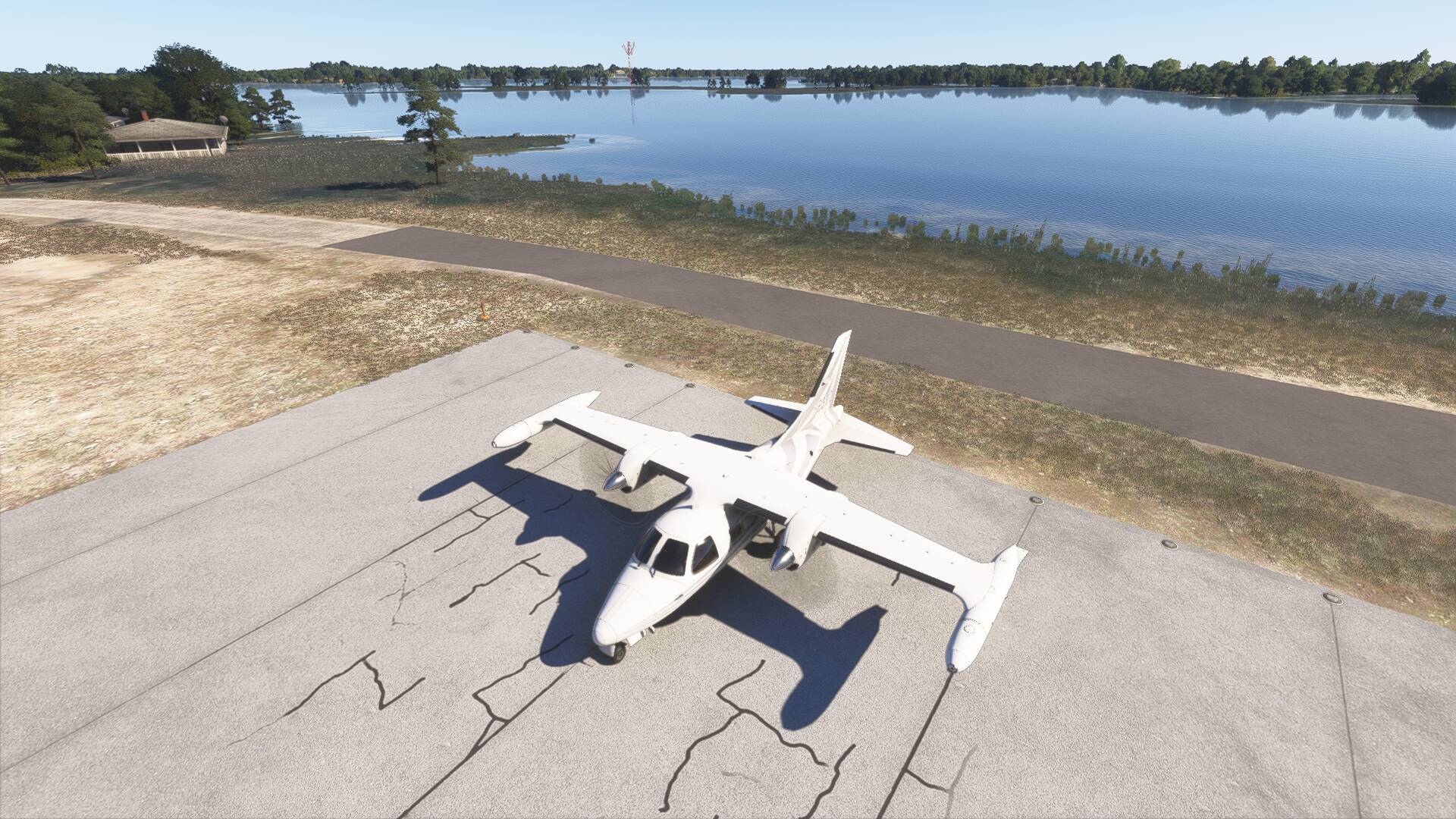
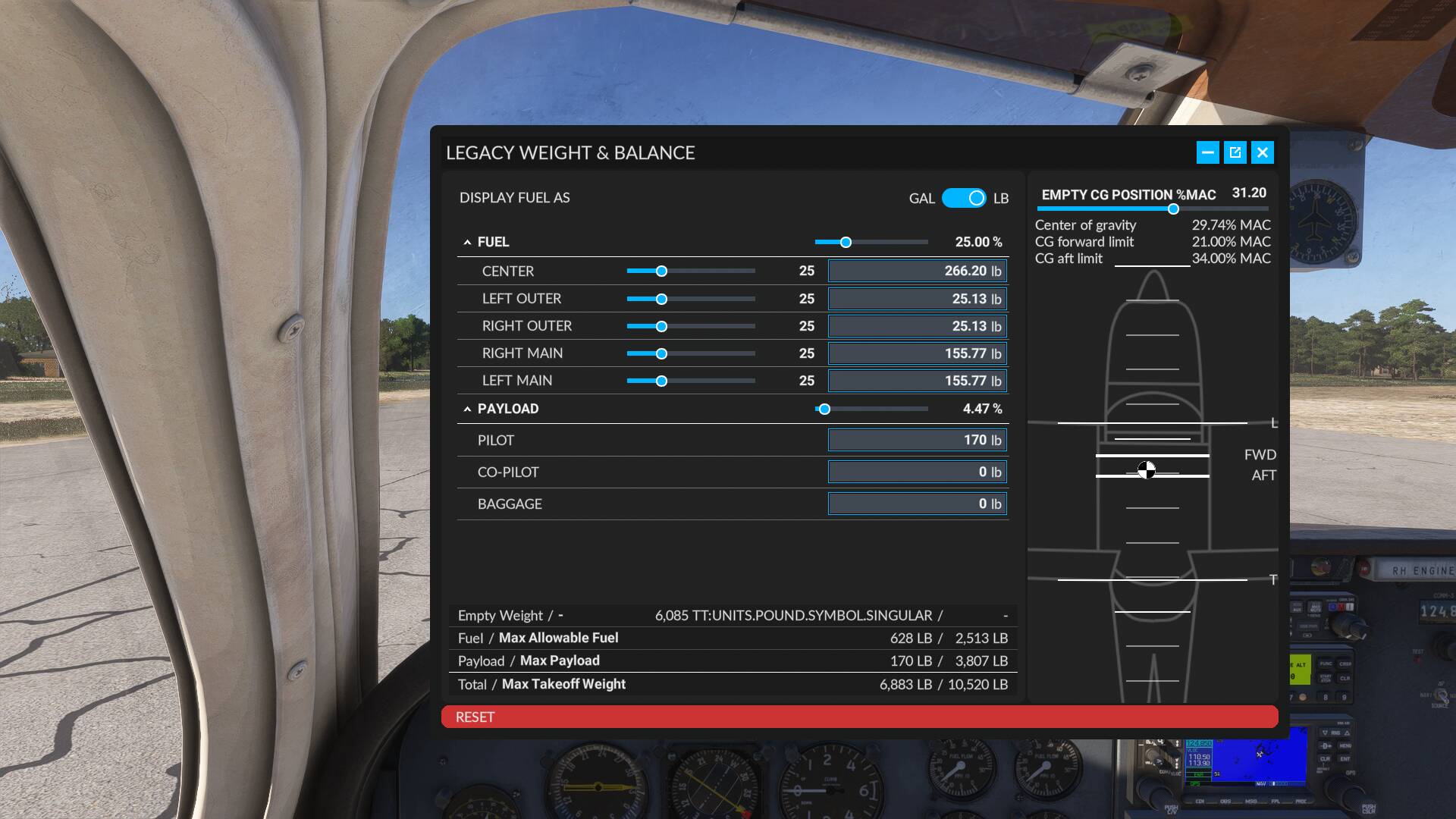
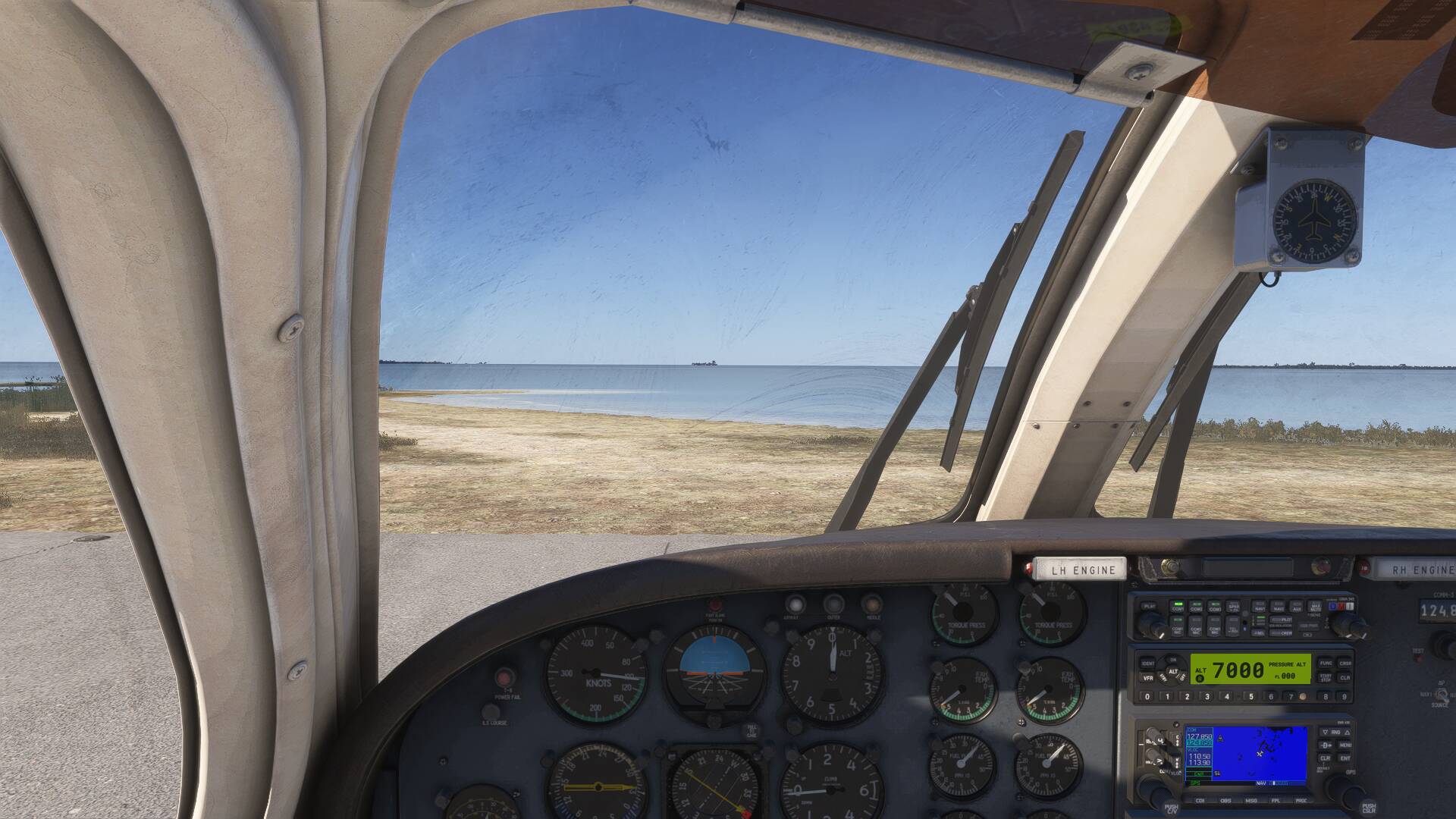
That’s IniBuilds’ own manual, which states on page 2 that ground roll is 2,170 feet, and on page 38 that rotation speed is 115 knots. In the pictures below, I’m at KCDK, with a 2,321-foot runway at sea level. IniBuilds’ manual doesn’t specify the aircraft weight for that ground roll and rotation speed, so to give it the best possible chance, I loaded it with one pilot, no cargo, and just 25% fuel. Temperature and pressure were set to ISA standard, and wind was calm. With the plane backed up to the very edge of the runway, the brakes were held and full power applied. Once torque and RPM were stabilized at maximum, the brakes were released. At the end of 2,321 feet, it had achieved an airspeed of just over 100 knots. In other tests, with an identical load under identical atmospheric conditions, I’ve found that it takes about 2,800 feet to reach 115 knots.