That is the plan yes, the CDU-3000F on the KC-10 will be adapted from the open source Pro Line 21 FMC from Working Title, which already has Simbrief integration, and the AINS-70 which will be custom coded, will hopefully have Simbrief integration as well. The EFB is also planned to have Simbrief and Navigraph integration.
3 Likes
This is very interesting project, thumbs up !
is there a valid Discord Invite Link ?
Can’t wait!
Awesome, Thanks for sharing.
Yes, feel free to join here Aero Dynamics
1 Like
Really nice work, hopefully we can fly it not too distant in the future


Wow, those pics look great! How are the systems coming along? Really looking forward to this, you guys have all my supposrt!
Wow, what a great looking plane, cant wait.
I am eagerly awaiting this release. One of my favorite planes. They made an update on their discord about the progress and said next progress release date will be October. Sounds like this will release next year?
Is it released already?
1 Like
Not yet, probably still (many) months from release.
Latest update was posted on their Discord today with some cool pics (in case you are not following them there)
Hello everyone!
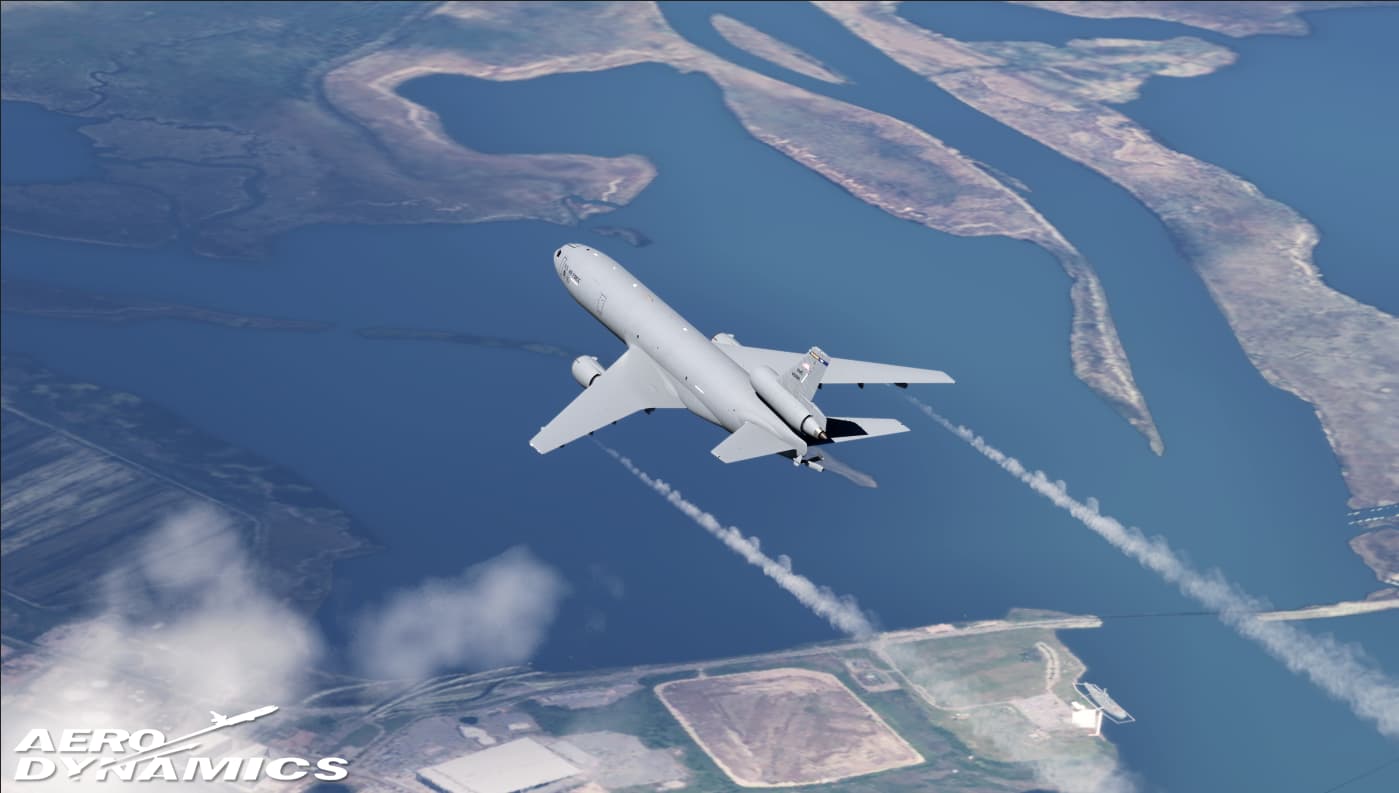
Welcome to this quarter’s info drop! Be advised, this is not as lengthy as the previous releases. The majority of the work this quarter has been backend systems and workflow. Visually, we’ve been working more with optimization and enhancements of the aircraft to ensure standardization in our workflow for future additions and variants. Nonetheless, we hope you enjoy what we have for you all!
Model Exterior: This quarter, we added additional detail in some key areas of the aircraft. Shown below, pilots will be able to open up their engine cowlings to see the beautiful CF6-50C2 engine on the base variant. Other exterior areas refined include the interior of ground service panels, such as pneumatic air input, cabin air input refueling panel, and more!

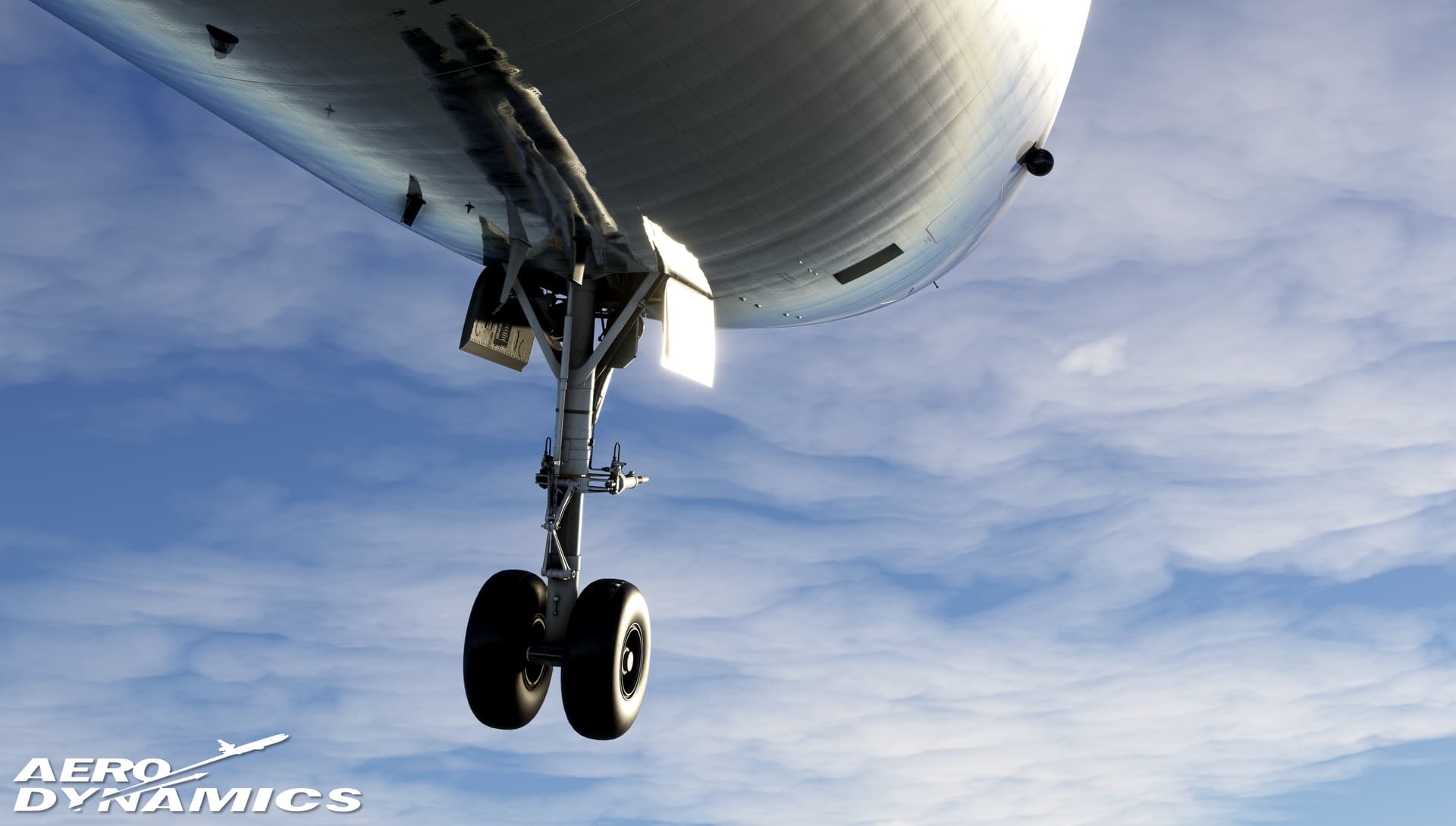
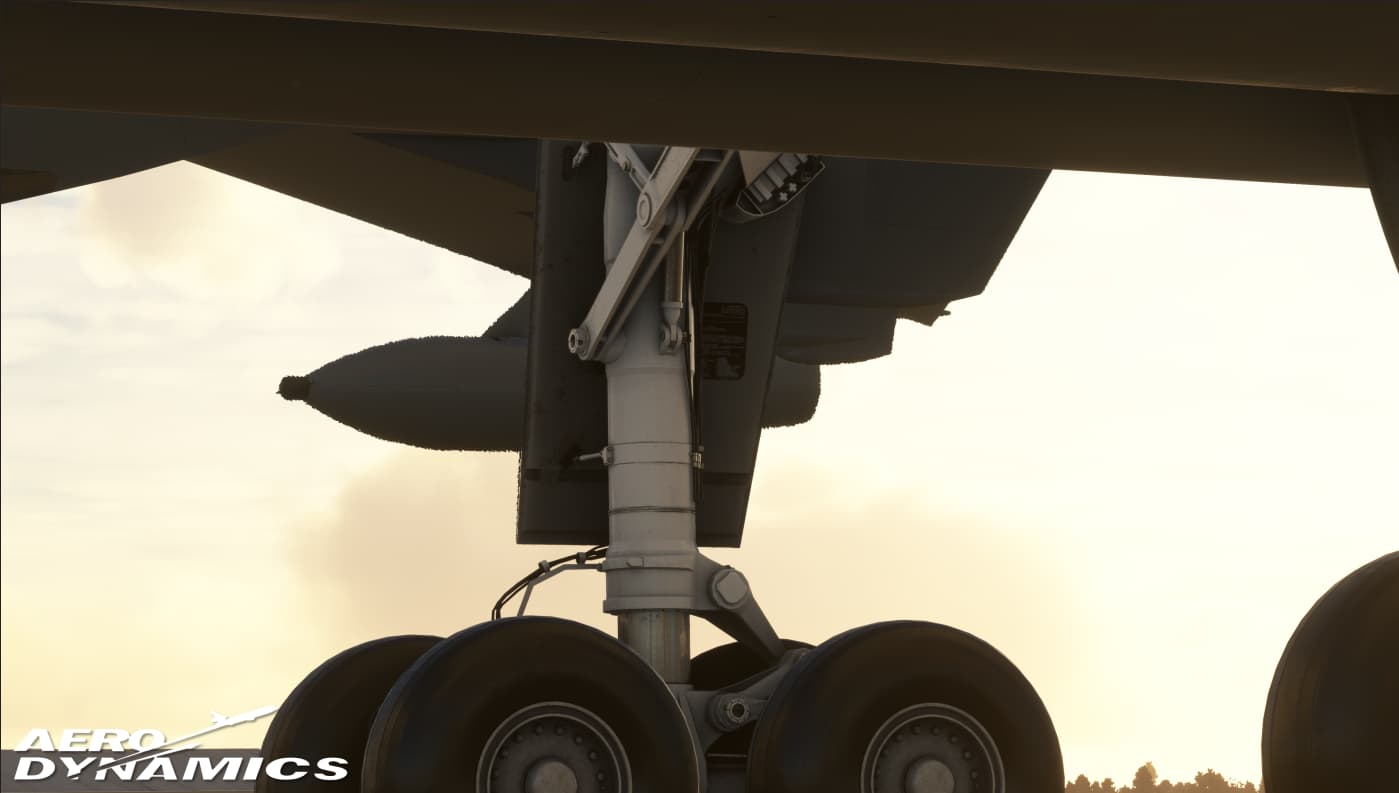
We have also included some development on the interior of the gear bays. These details really help bring the DC more to life!
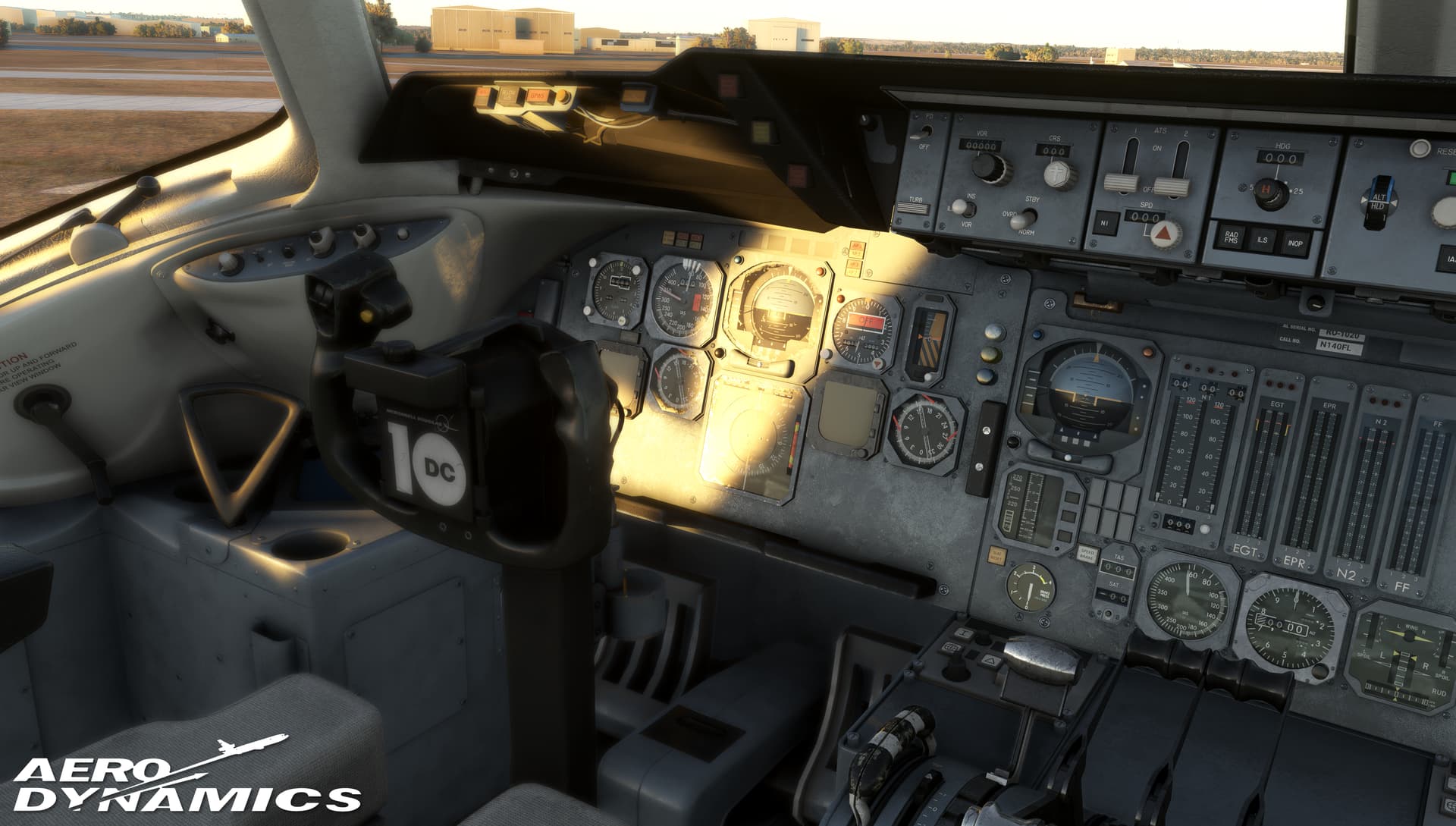
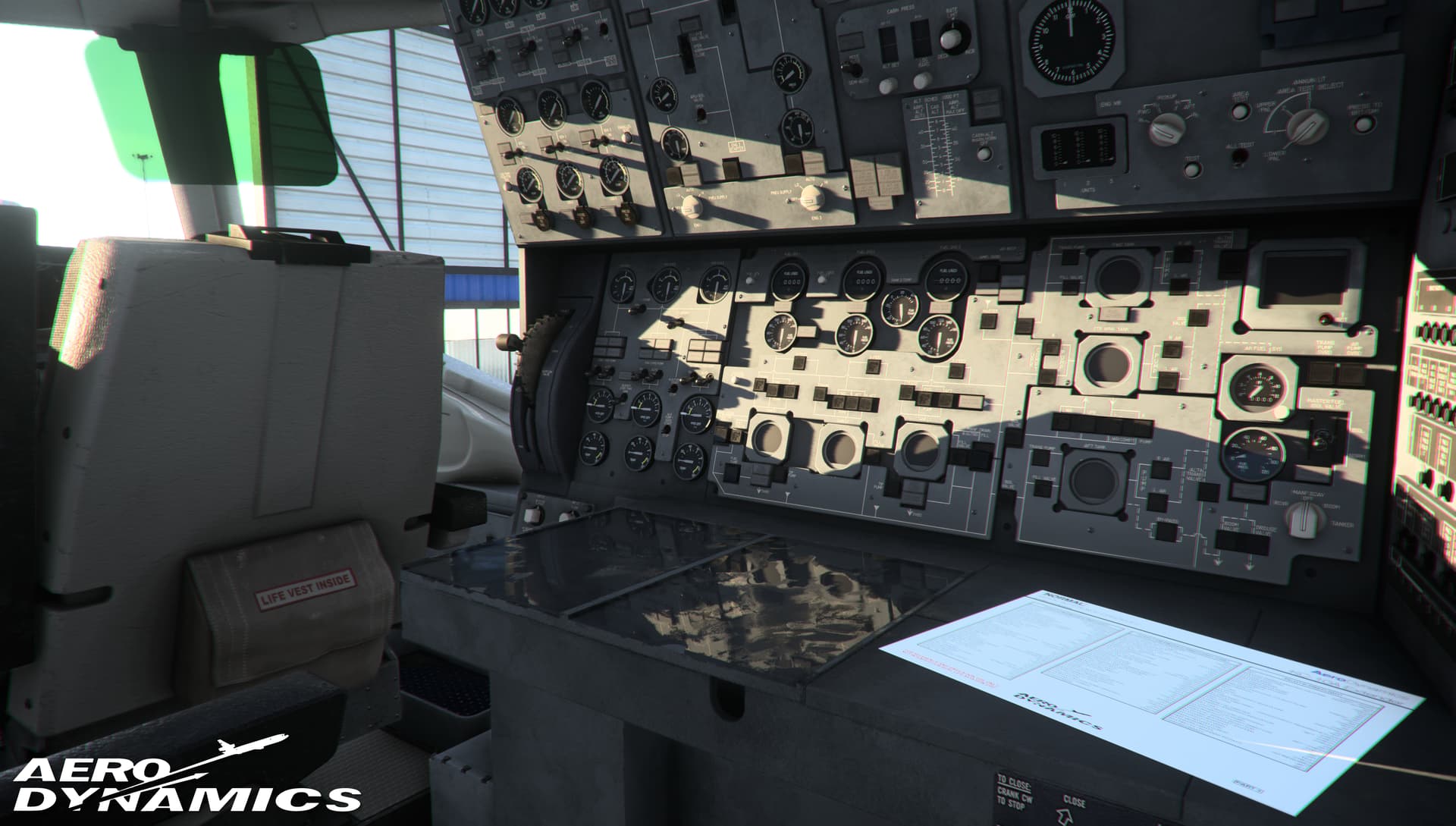
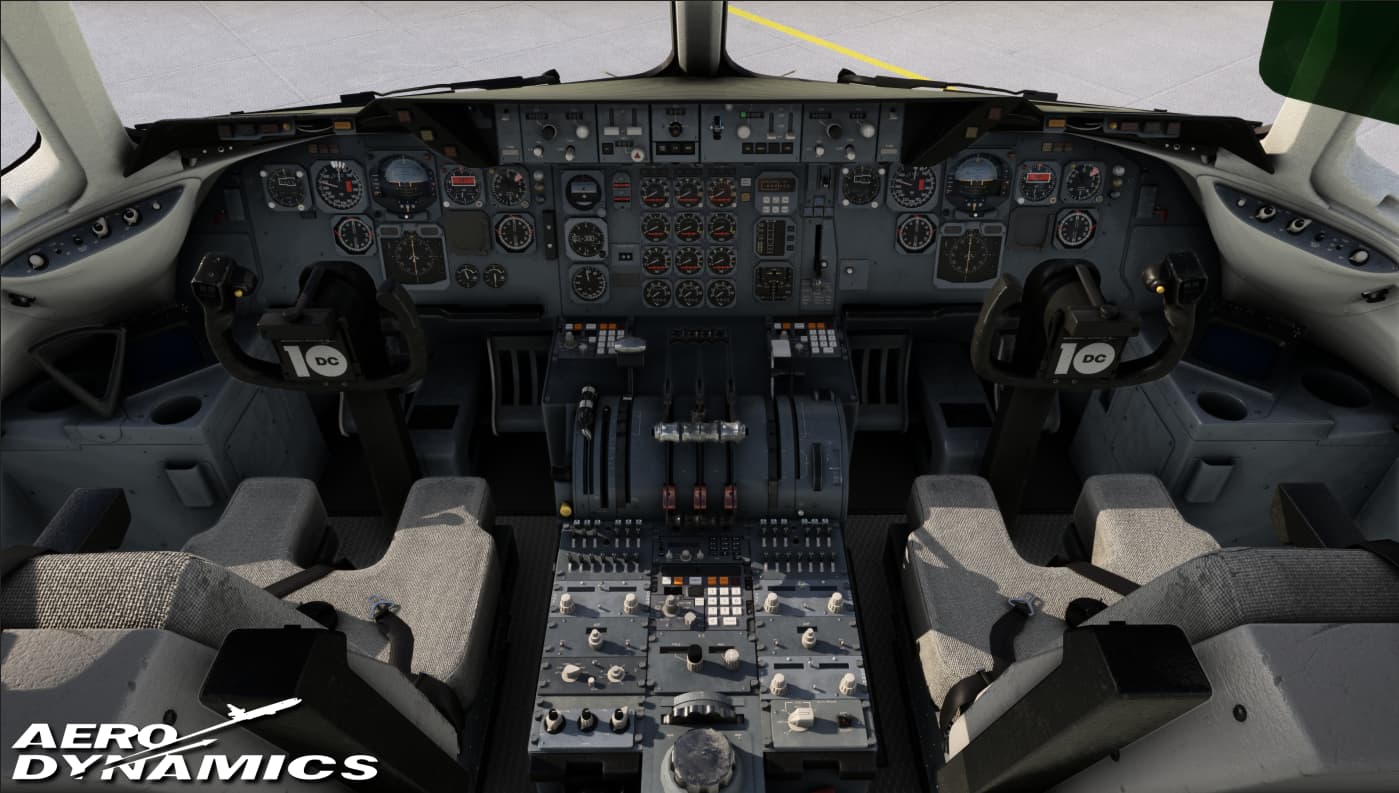
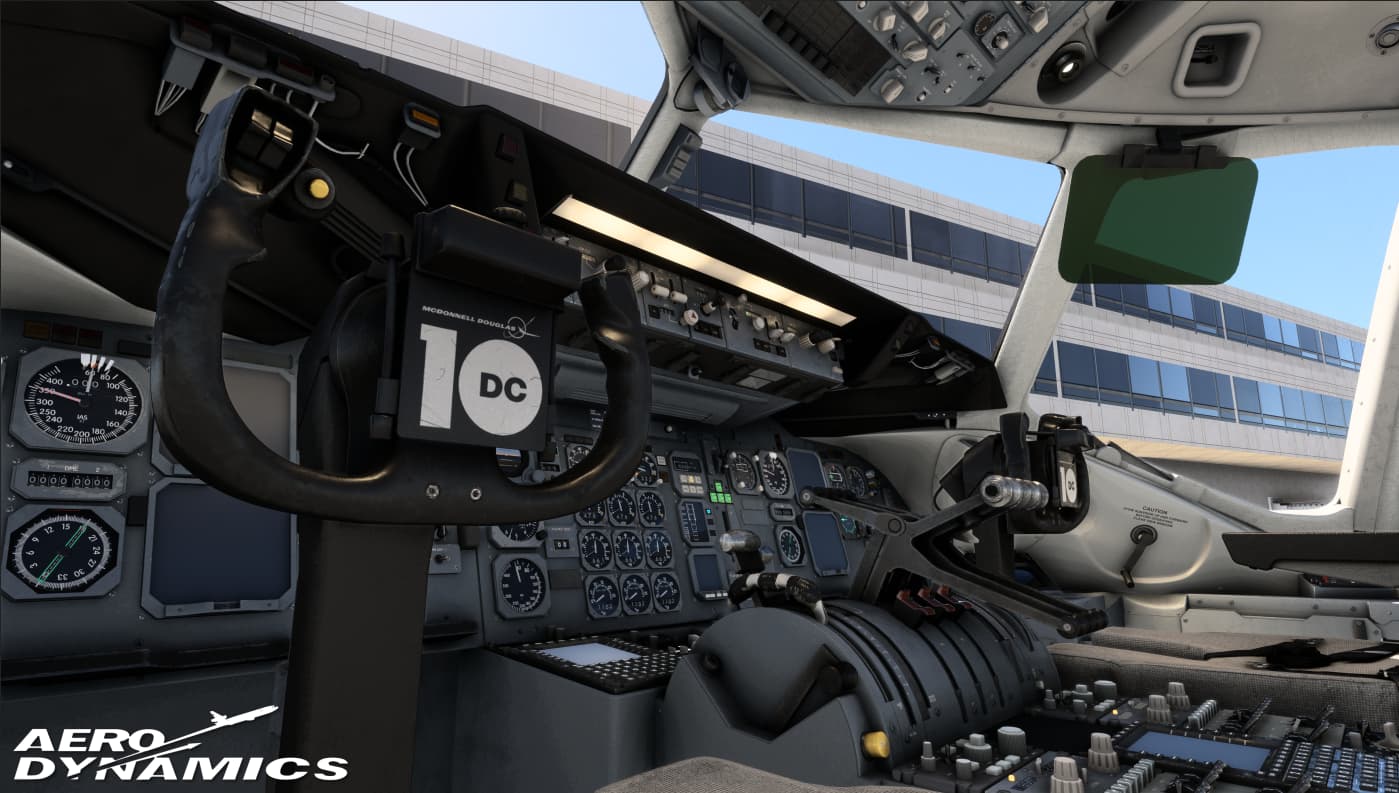
Model Interior: In the past few weeks, we’ve started a texture and model overhaul to better reach our desired standard of quality. This part of the journey has only just begun, but enjoy some shots of our work-in-progress KC pit. We’ve also started enhancing our DC pit. With the future DC cockpit, pilots will be able to swap certain gauge areas to their aesthetic and operational desire. Currently, the plan will include the gauge options to create dozens of unique cockpit combinations!


Systems: This is a demonstration of the hydraulic system in action. What you see here is typical powerup of hydraulic pressure, and that pressure being used to actuate the ailerons. This process is still very much in the early stages, but we hope it shows the direction we are working toward. The aircraft flight control surfaces are tied to different hydraulic systems. We aim to simulate this redundancy.
Future Plans and Development Opportunities: We thank this community for the continuous support. We will continue to put forth work on the DC-10 platform in hopes of getting her to you all! In these next few months, some of our goals will be to continue cockpit textures to a high level of accuracy, exterior visual improvements, coupling visual effects with unique aircraft states, and much more!
If you have a love for flight simulation and want to actively participate in the DC-10 project’s growth, we invite you to become a developer with us! We are continually searching for fresh talents who resonate with our mission and are enthusiastic about becoming part of this amazing adventure! To learn more, feel free to reach out…
And then they stated that the next update will drop on Feb 2024.
7 Likes
Would this also come to the ingame marketplace and xbox ? It looks sooo good 
The KC-10 “tanker” version was also used for airlift, air mobility, and medical evacuation. So I guess people can use it to “simulate” those missions regardless of whether there’s anyone to refuel. But we can always hope someone adds the ability to conduct air refueling at some point!
Regards
No plans for either, especially considering the required changes for compatibility and getting it on the marketplace in the first place. We plan on having several systems work outside the sim so Xbox integration would be next to impossible.
1 Like
Ah okay that makes sense, xbox unfortunatly can’t run external programs.
In case you missed it, recently updated on their Discord channel:
Hello everyone!
The past few months have been a whirlwind of activity for the KC-10/DC-10 project, and we’re thrilled to share some exciting progress with you all. Our team has been dedicating valuable time and expertise into bringing this iconic aircraft to life, focusing on three key areas for this drop:
- Exterior Detailing: We’ve meticulously recreated the intricate exterior of the aircraft, ensuring every rivet, panel, and antenna are faithfully represented, making the walk-around experience, one of a kind.
- Cockpit Customization: Delving into the pilot’s domain, we’ve been working on accurately modeling different cockpit configurations for various variants of the aircraft. This includes options to pick from various gauges and systems for your flight.
- Backend Operations: Behind the scenes, we’ve been diligently building the core functionalities, establishing backend systems that govern the aircraft’s various systems and ensuring each individual gauge functions realistically to the real-world counterpart.
While the visual aspects may take center stage in this update, remember that the backend development is equally crucial for bringing this project to life. We’re confident that these combined efforts are bringing us closer to delivering an exceptional simulation experience for all aviation enthusiasts.
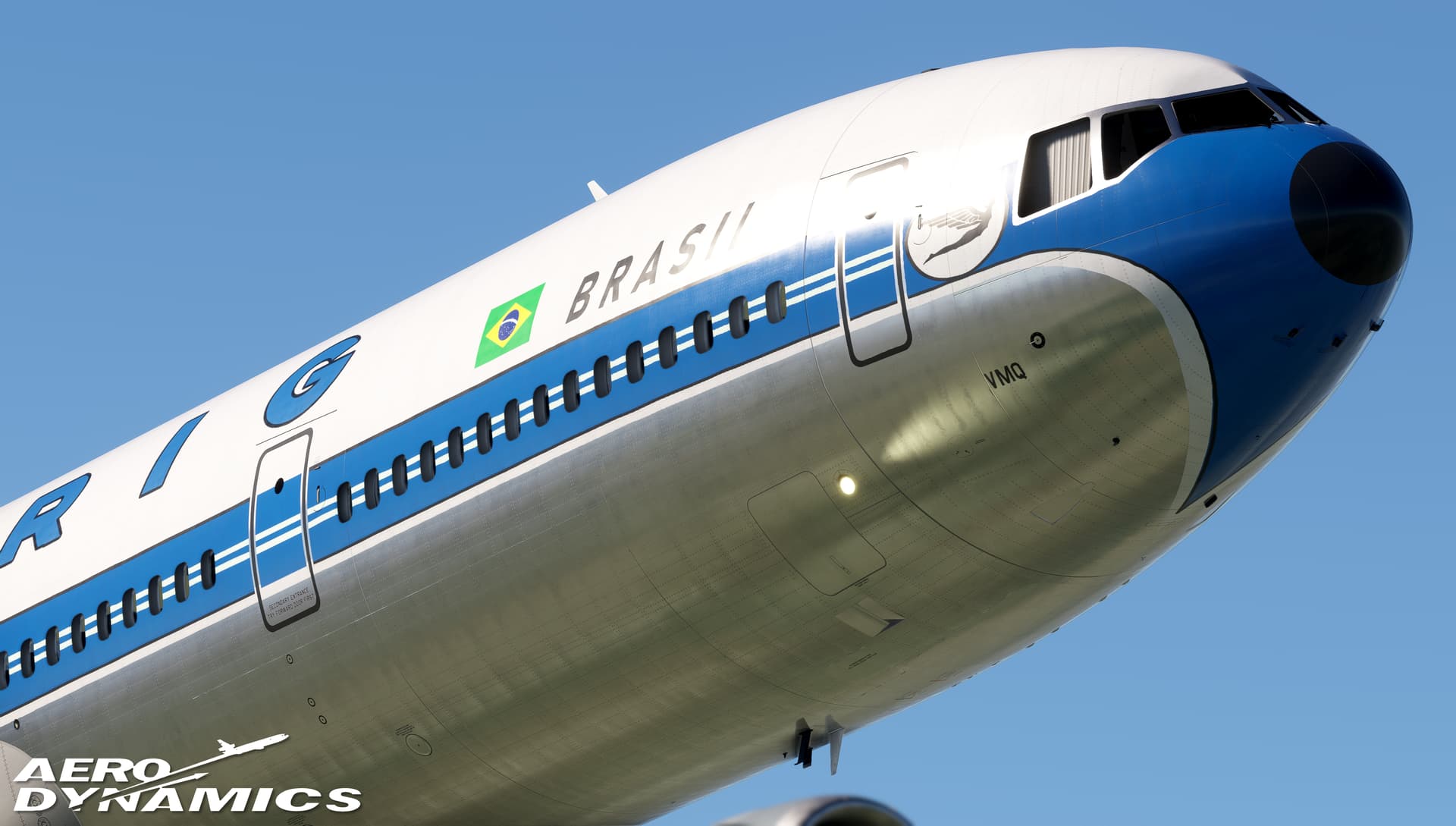
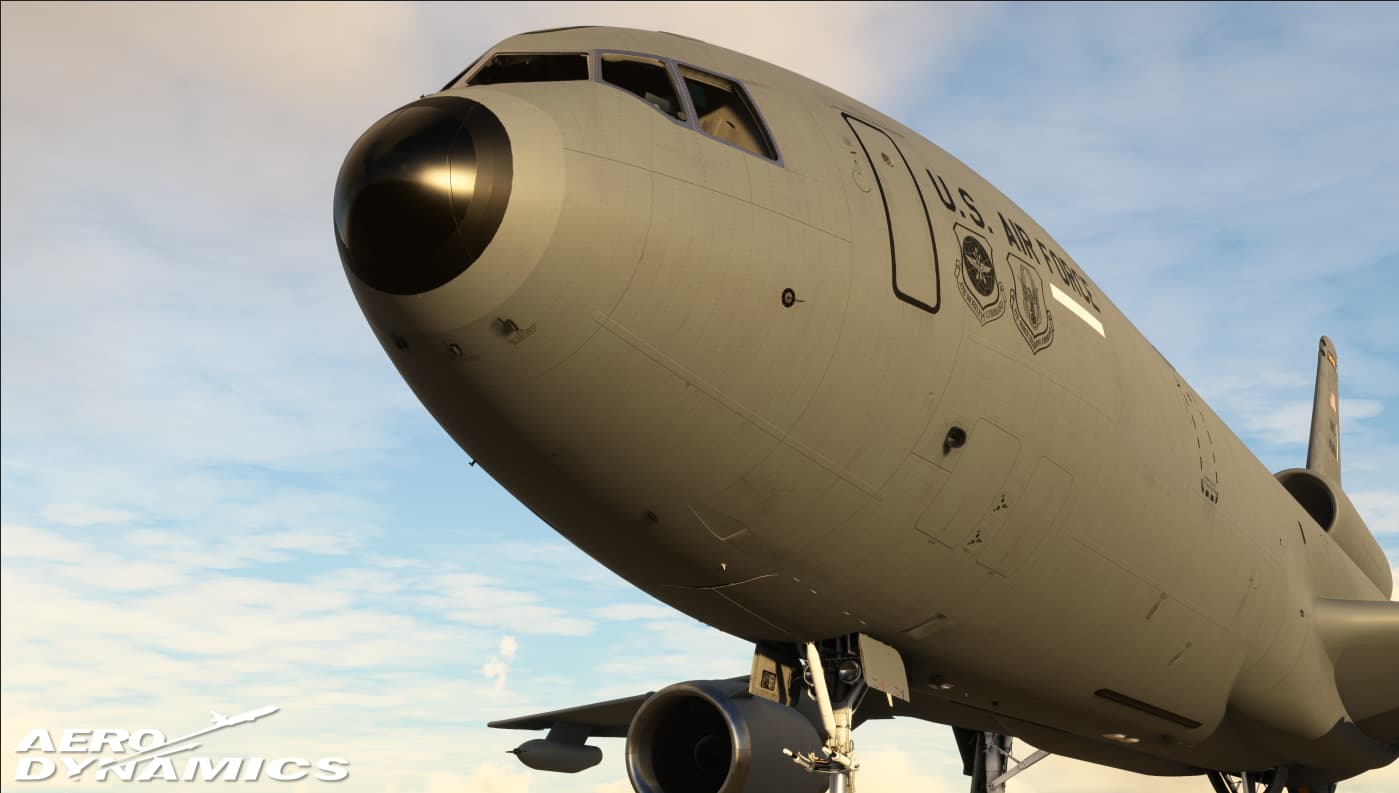
Model Exterior: This quarter, we’ve taken the exterior model to the next level of realism, focusing on a few key areas. One of the areas includes realistic rivet patterns. We’ve meticulously added realistic rivet sections across the entire aircraft, complete with subtle wear patterns that become evident upon closer inspection. This fine-grained detail significantly enhances the visual fidelity and immerses you in the experience.
Other areas of focus include enhancements of already existing parts. We’ve compared our model to real-world aircraft parts catalogs, ensuring panels and doors are faithfully reproduced. This accuracy extends to interactive elements like the ground electrical power panel, wing refueling panels, pneumatic ground air panel, and ground AC panels, allowing you to engage with the aircraft in a truly authentic way.
Model Interior:
Since the previous update, we’ve added mountains of detail to the cockpit and interior environment that captures the essence of the real aircraft, allowing you to feel like you’re truly at the helm. Every aspect of the cockpit, from the subtle wear patterns on instrument panels to the intricate mechanisms of switches and buttons, is meticulously recreated. We hope the continuous refinement ensures that your virtual cockpit experience continuously evolves and surpasses expectations.Experience unprecedented levels of freedom in transforming the DC-10 cockpit to match personal, operational, or historical preferences. The modular design allows you to craft a customized environment that feels entirely yours. You will have to option to swap out radios, ADF tuners, and transponders to fit your preferred navigation suite. On the front panel, you can tailor the display of engine gauges, HSIs, VOR displays, DME displays, and much more to create your optimal layout. This will allow you to prioritize the information most critical to your flight operations the way you want it.
Additionally, there will be customization to the flight engineer’s station with some interchangeable gauges, ensuring full control over the intricate systems monitoring and fuel planning.
Systems:
Backend Systems work has been focused on the interplay between each system, and matching that interplay to technical specifications defined in Aircraft Maintenance Manuals (AMMs), Pilot Reference handbooks, Illustrated Parts Catalogs, etc. This is done to create a fully functional Flight Engineer panel, which will be able to handle multiple situations beyond those found during Standard Operations.In Depth:
For an example of systems interplay, let’s discuss the APU and how that is interplayed with the pneumatic and electrical system. The below technical description has been represented faithfully in our jet:When the APU MASTER switch is moved to RUN, this sends power to the APU Inlet door relay which controls the opening of the APU Inlet door. The door takes 20-25 seconds to open, and upon completion will close the contacts in another relay which then connects the power to the Electronic Control Board (ECB) which regulates various APU Operations. When there is a momentary movement of the APU Master switch to the START position, this signals to the ECB to perform the startup procedure. There are multiple stages to the APU start, and multiple self checks by the ECB to ensure safe starting conditions. If any of these conditions are not met, then the APU will perform an auto-shutdown. For instance, before commencing the startup procedure by powering the START RELAY DRIVER, the ECB will check whether the APU’s current N2 is less than 50% and no existing shutdown signal is present. Once the START RELAY is powered, a starter motor will drive the engine shaft to start pulling in air from outside. At the same time, power is supplied to the Start Period Timer. If 60 seconds should pass prior to the starter motor disengaging, the auto shutdown sequence will start, as this indicates suboptimal starting conditions, due to a high likelihood of unbalanced air to fuel ratio at that stage. While the N2 picks up RPM, this generates electrical pulses which are converted to DC current and is used to electrically measure N2 rpm percentage.
Once N2 reaches 6.5% N2, the ECB evaluates whether it is safe to start ignition. This includes checking the current ambient temperature isn’t above 815 degrees Celsius, which is detected by EGT thermocouples, no emergency shutdown signal, and N2 > 6.5% and < 95%. Given these conditions are satisfied, ignition begins and accelerates the N1 and N2 turbines. There is a coupling of N1 and N2, which can be modeled a variety of ways, and we’ve chosen to model it with a good middleground between performance and complexity. This model accounts for some of the current atmospheric conditions, as air density has a huge effect on the N1 and N2, and have been tuned to approximate starts that faithfully represent the real jet, based on various references. This means that every start will be slightly different, and sometimes could result in some interesting cases. For example, on a hot day, the air is less dense which can cause a slow start, which could trigger a shutdown sequence. This is because it is likely that N1 does not reach 10% as N2 crosses 50%, which triggers an auto-shutdown by the ECB. Another possibility is that the max allowable EGT could be exceeded. This max EGT is dynamic based on the N2 speed.
As N2 gets to 50%, and given that N1 is greater than 10%, more fuel is introduced and this will disconnect the starter motor, which will cause a spike in EGT, and effectively change the acceleration function of N1 and N2 due to more energy being introduced by the fuel. This will trigger a rapid growth of N2 towards 100% and N1 towards 63% (unless you’re above 7000 ft, in which case it’s 89%). As the N1 and N2 values converge to their baseline values, the EGT will also converge to some stable temperature.
|
The APU N1 RPM adjusts based on aircraft needs based on the electrical and pneumatic system. At 63% N1, the APU can power the aircraft electrically, but is unable to do so pneumatically. Once the APU ISOL Valve (powered by electricity) is selected to the open position in the FE Panel, the APU N1 increases to 85% to supply the demanded air. ISOL Valves for the #1-2 and #2-3 engines are automatically opened or closed as N1 crosses 74% RPM given that the switches are in the NORM position. For an engine start, this N1 will rise to 98-100% to supply the demanded air to perform an engine start.That is a small insight into how we’re modelling the aircraft systems, and there will be much more to come!
Pop Quiz Time!
Which bus powers the APU ISOL Valve?
- A: DC BUS 1
- B: AC BUS 2
- C: DC BUS 3
What position does the APU ISOL VALVE default to when power is lost?- A: Stays Open
- B: Stays Closed
- C: Stays in its previous position
Bonus Question: How can you, as an FE, make the N1 of the APU go down from 85% to 63% while the APU ISOL VALVE switch is in the open position?

17 Likes
Yep the Air Force flew me on a medical evacuation flight from Yokota AB to Hicham AFB back in 1983.
1 Like
Now that xbox can run wasm and much more complicated aircraft do you intend on bringing this to the 36% marketshare of console users? Or are you planning in staying PC only and mussing out on all that premium price revenue?