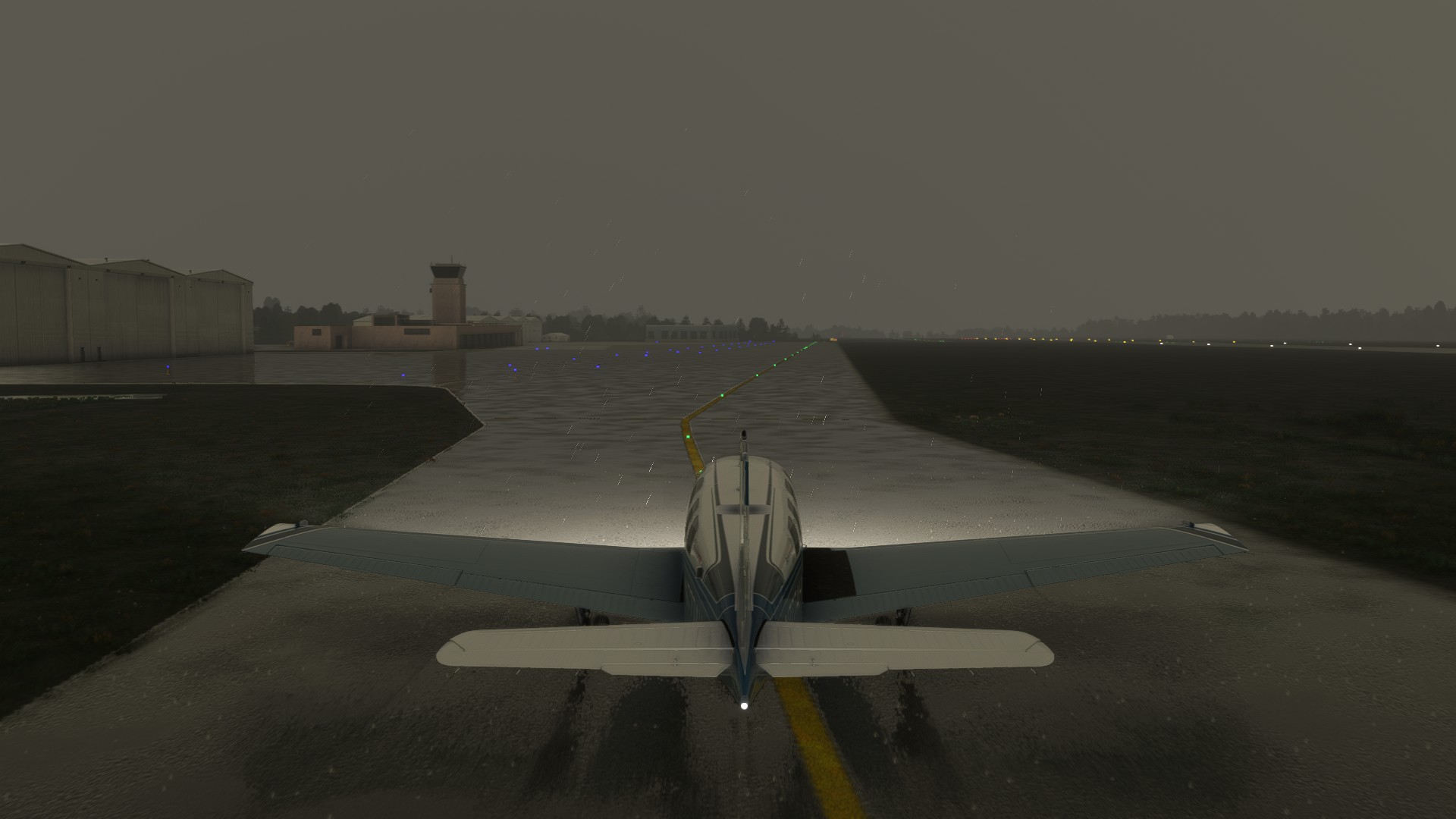
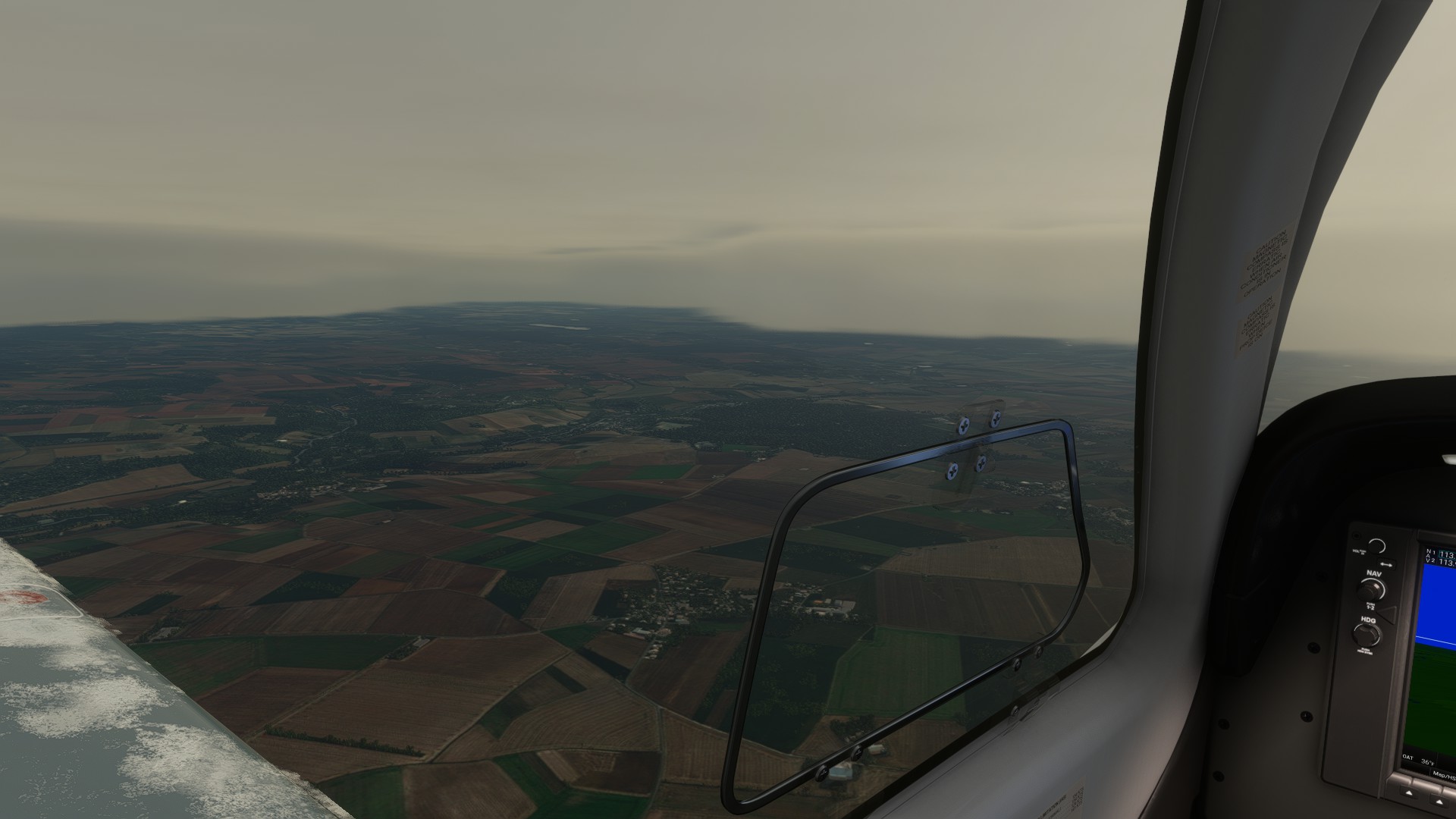
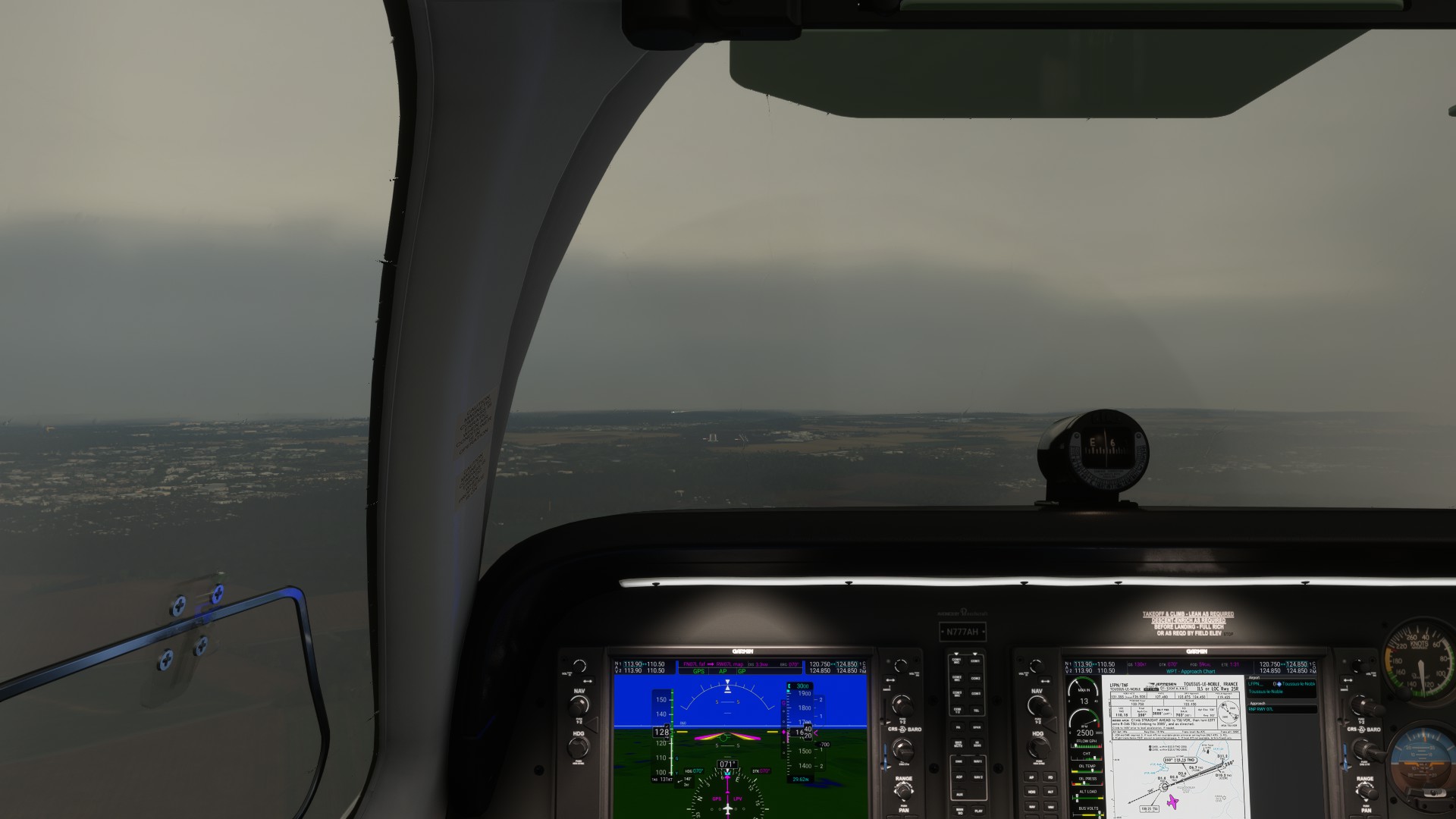
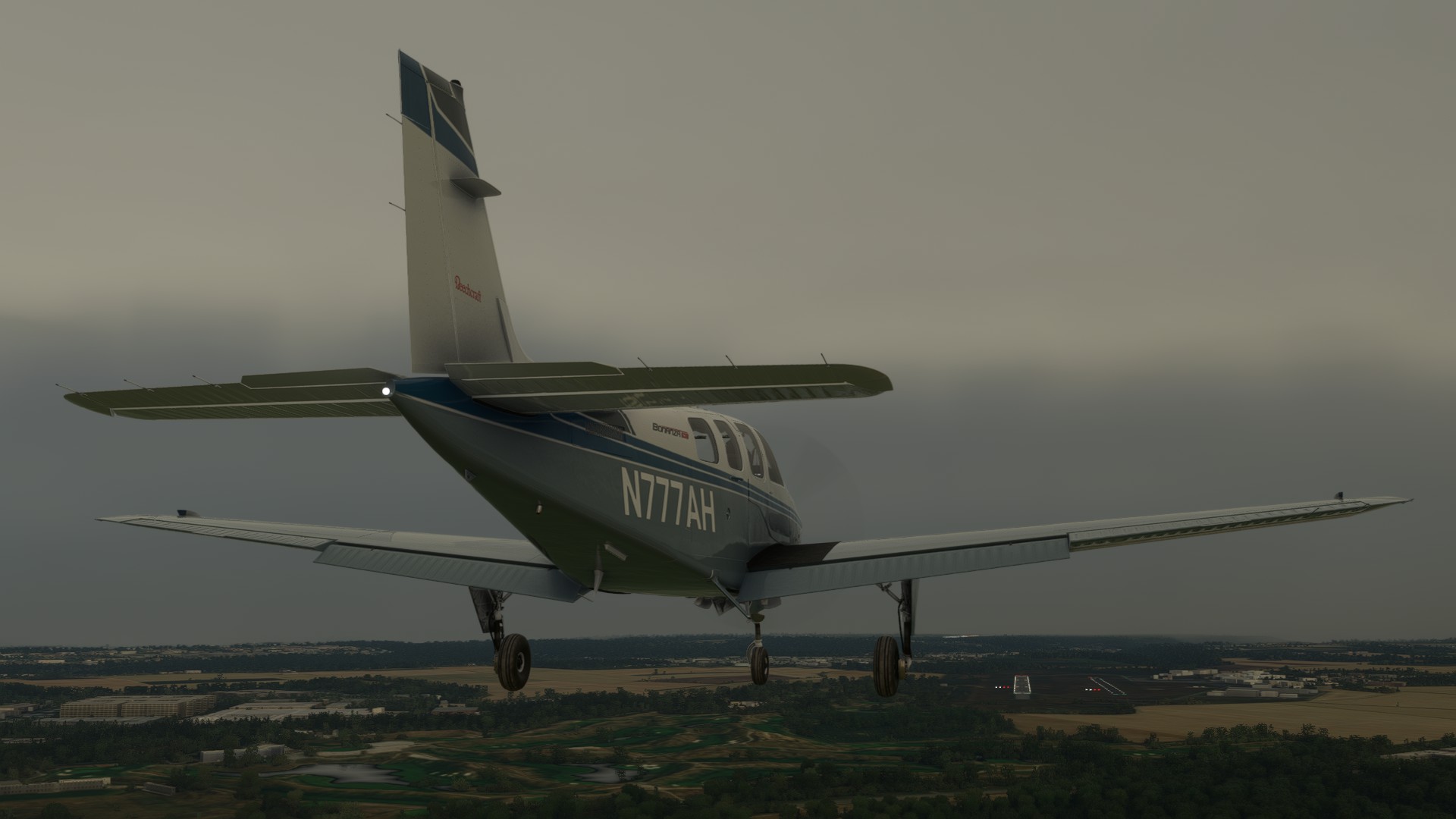
Biggin Hill to Toussus - Precip up to FL200, Icing at 5,000 or higher, Rain, Wind. Not a fun ride, but a good IFR hour earned. Cut the corner for RWY 07L because the icing was just getting worse by the mile.

2 Likes
Flew the Fokker 28 4000 from Abu Dhabi To VABB (I’m not gonna attempt the spelling of that long airport name)
1 Like
I spent the day trying out FlyingIron’s P-38L. I downloaded Jan Kees Blom’s excellent skin representing P-38L-1-LO 44-23852 of the 96th FS, 82nd FG stationed in central Italy during WW2 and started a flight at Camarillo, California (KCMA). Having read the official manual now, I experimented with reduced takeoff power settings. Takeoff with the full rated 54" and 3000 RPM is like being shot out of a canon or riding an out-of-control stallion. 35" and 3000 RPM is much smoother, yet still provides a short takeoff distance of about 2,600 feet.
I made a quick run over the Burbank where 44-23852 was built and after a low pass down Runway 8, headed northeast toward Lancaster, my first stop.
After lunch, I departed Lancaster toward one of my favorite low level routes: northbound along the western edge of the Indian Wells Valley to Lone Pine, then eastward over the Inyo Mountains toward Death Valley.
Low level over US Highway 395 in the Indian Wells Valley. There’s a huge array of power lines along the western edge of the valley. Pilots beware!
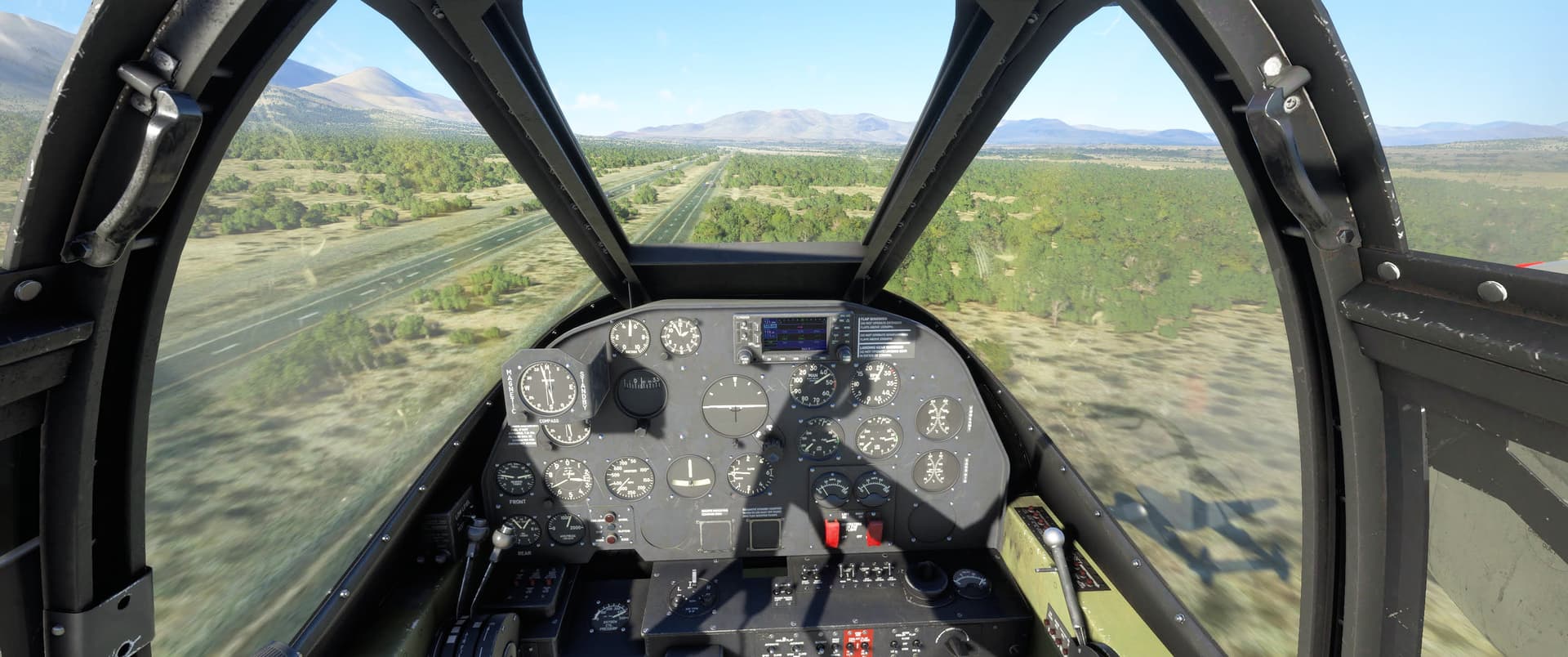
Once over the mountains, I turned back south toward the entrance to Rainbow (“Star Wars”) Canyon near Panamint Springs. I used to fly this route in FSX with the Restauravia Mirage III. Boy, it’s been a while! At over 300 MPH true, the P-38 is no slouch down low.
Approaching the canyon. It’s the dark spot above my P-38’s nose. You’ll need to square your turn into the canyon by widening out to the right, unless you really want to load up the G’s when diving in!
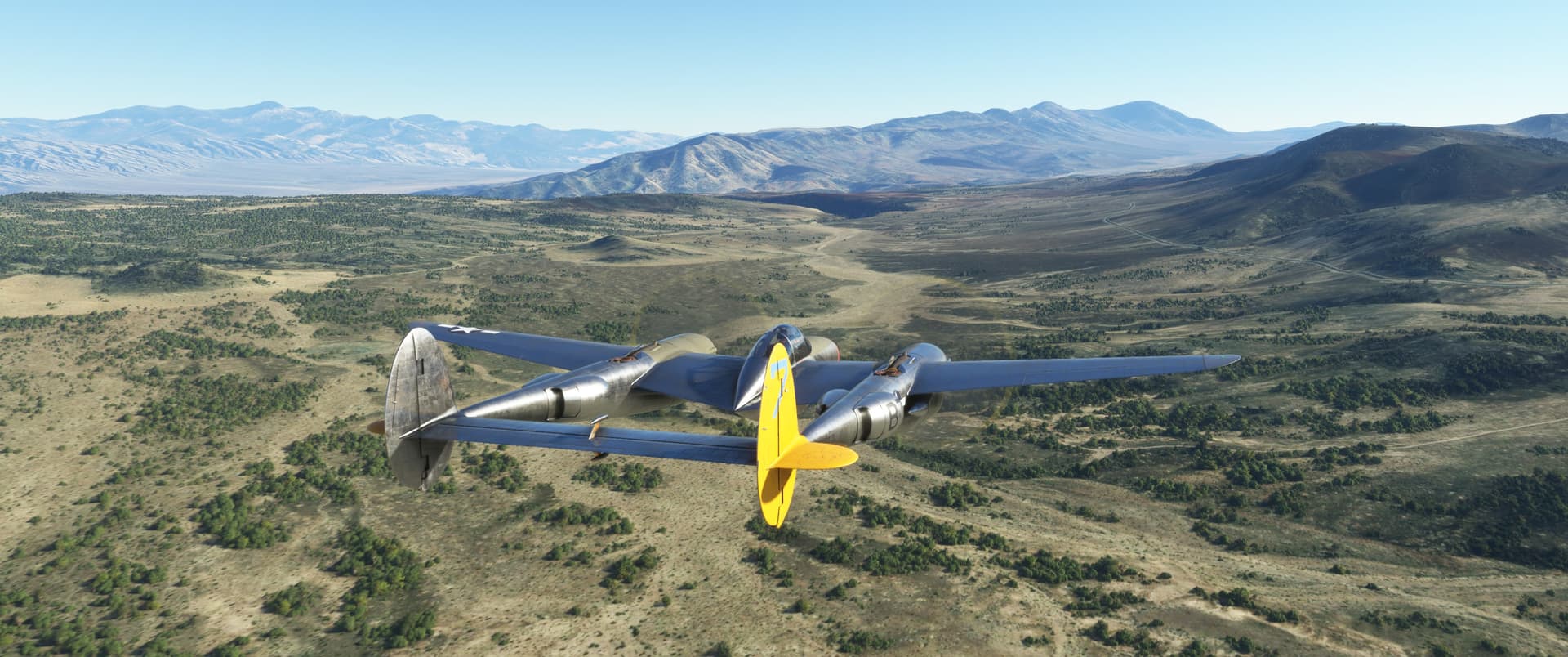
Hang on, R2!

After an uneventful flight back to Lancaster for a break, I departed again, this time heading west toward Santa Barbara and home. I went to the opposite extreme this time, taking the P-38 to high altitude. It took about 15 minutes to reach FL300, a very respectable time for any airplane, and one that I’d be pretty happy with in a heavily loaded 737-800.
With METO power set, I turned her with the wind and let her run, and reached 360 MPH (310 knots) true with a 440 MPH (378 knot) ground speed over the Channel Islands. For reference, that’s Mach 0.52 true, and Mach 0.64 across the ground. Not bad for cross country flying!
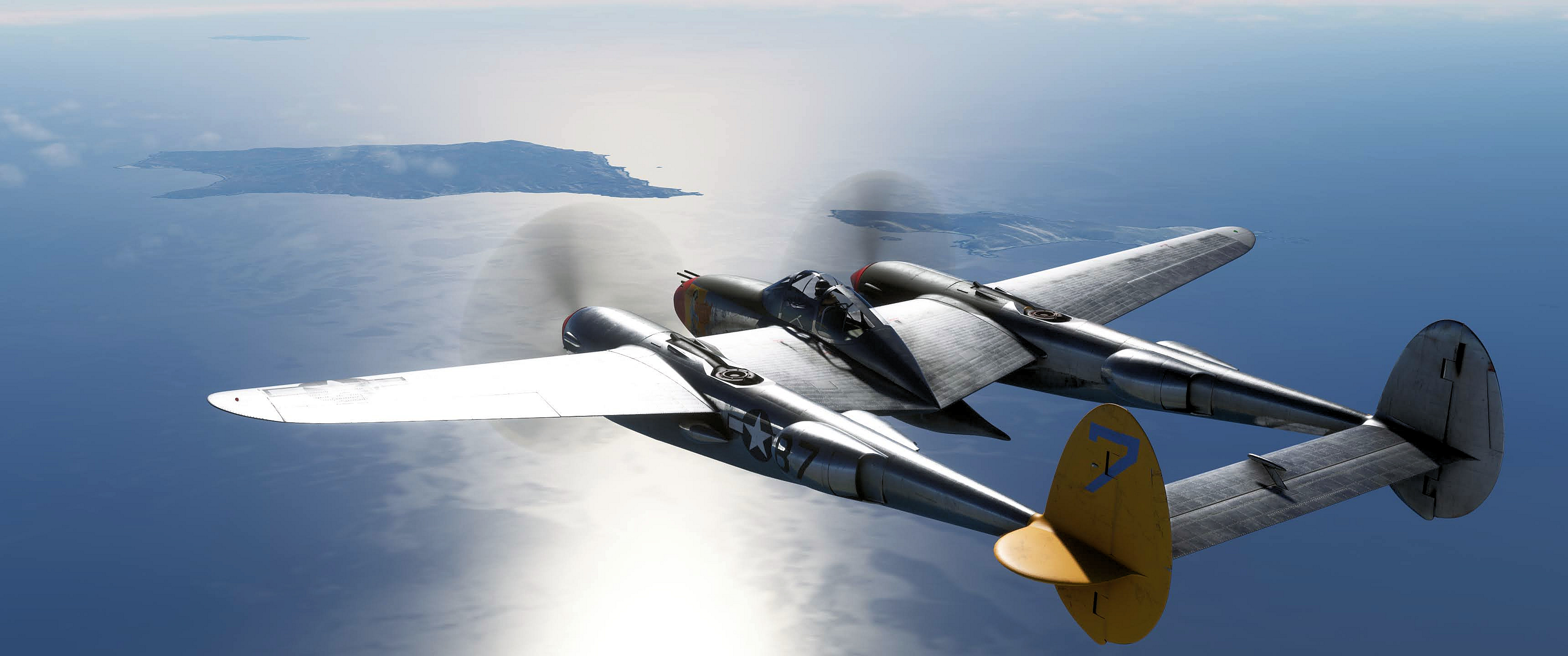
That’s it. I only finished about twenty minutes ago, and now there’s four baskets of laundry upstairs awaiting my attention before bedtime. Good night, all! 
6 Likes
Luxurious trip in the Carenado PC-12 from Keswick Island to Lindeman Island, Australia.
1 Like
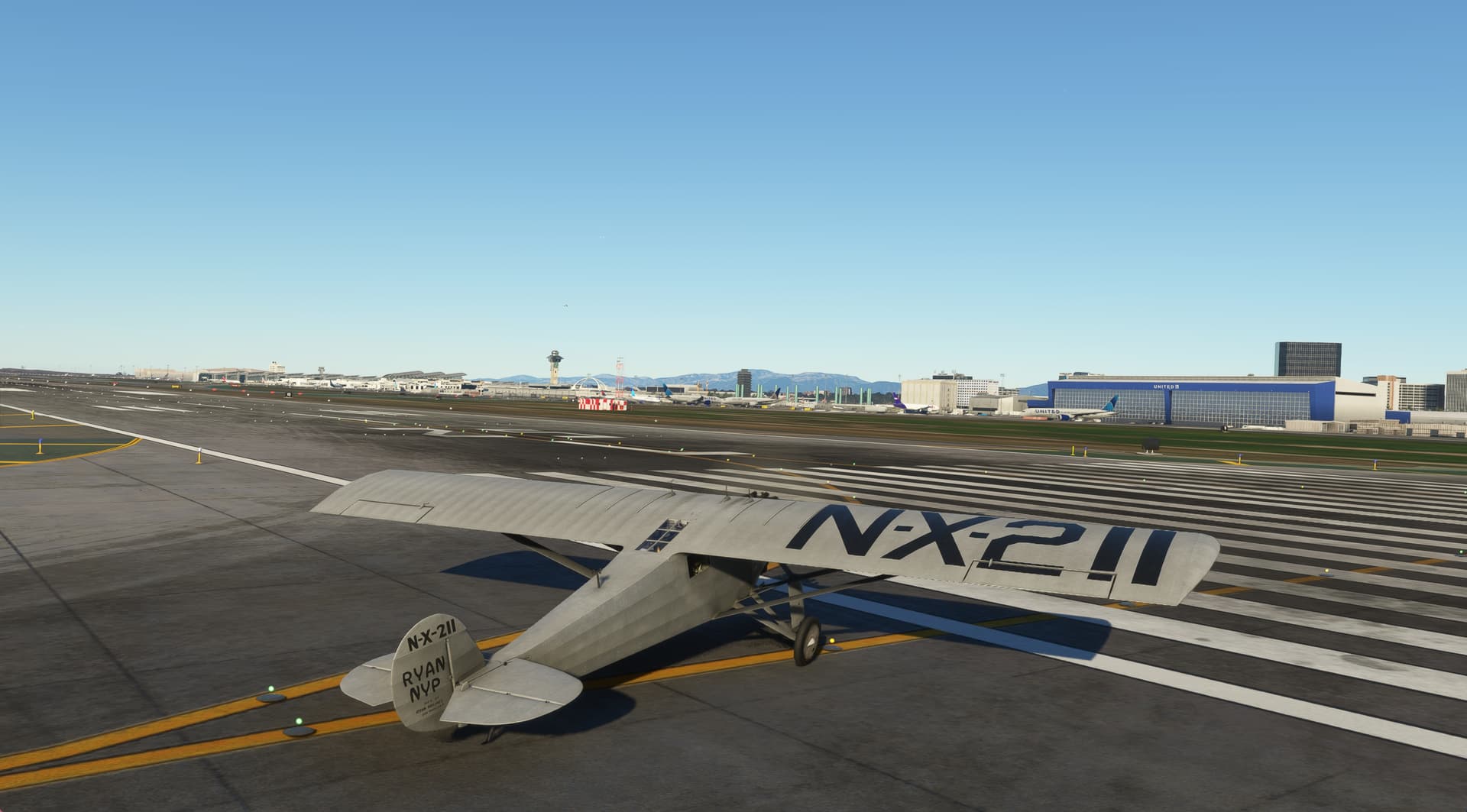
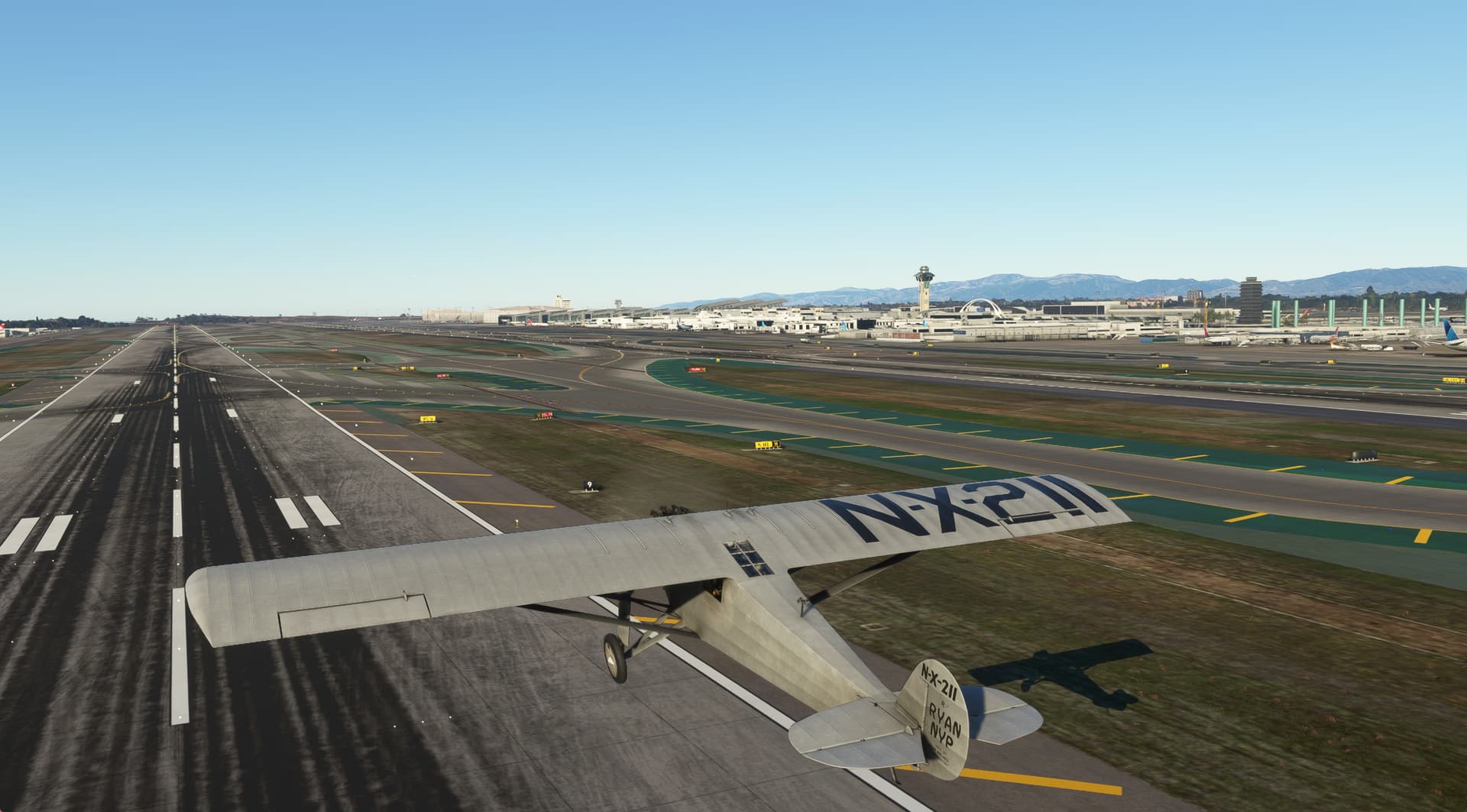
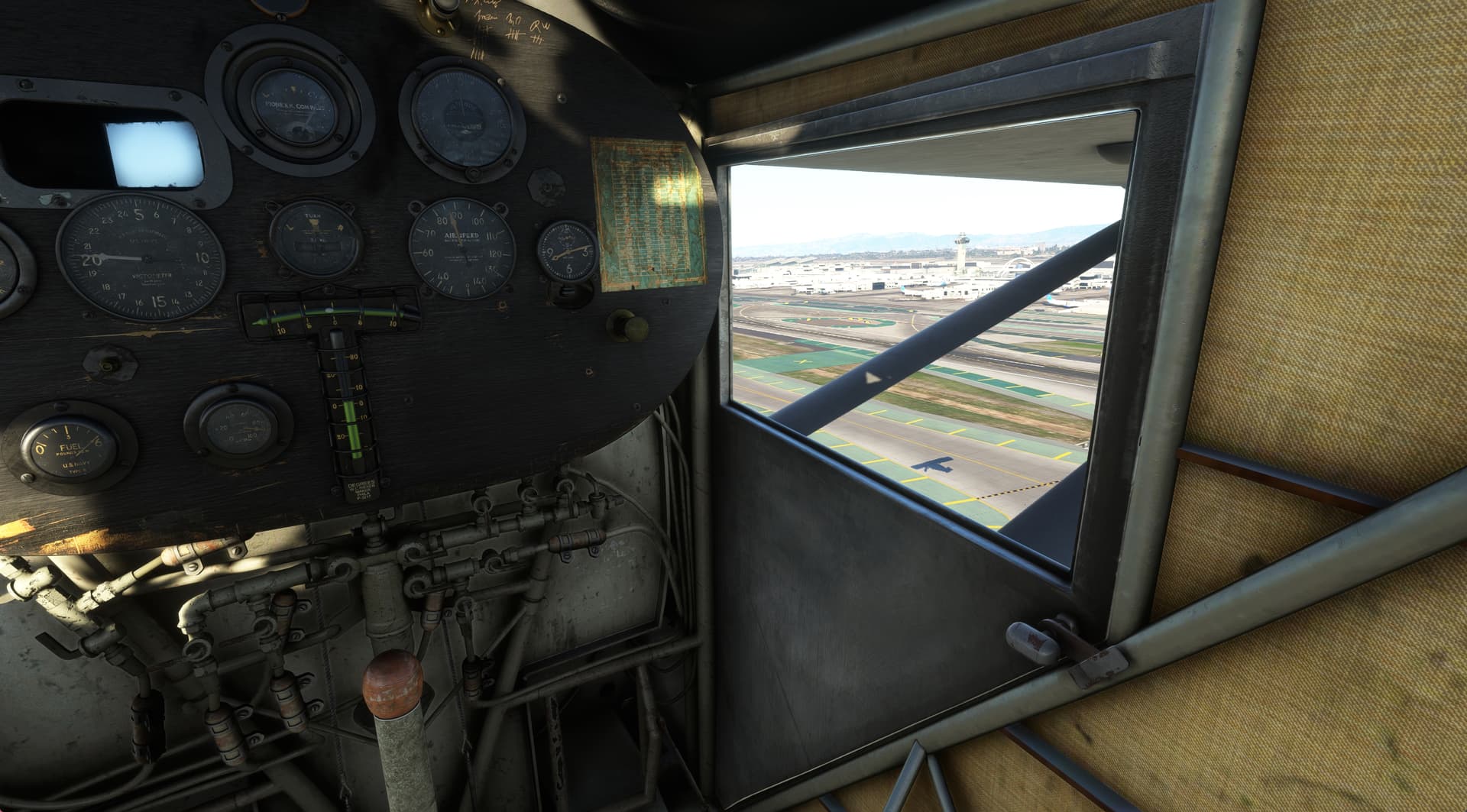
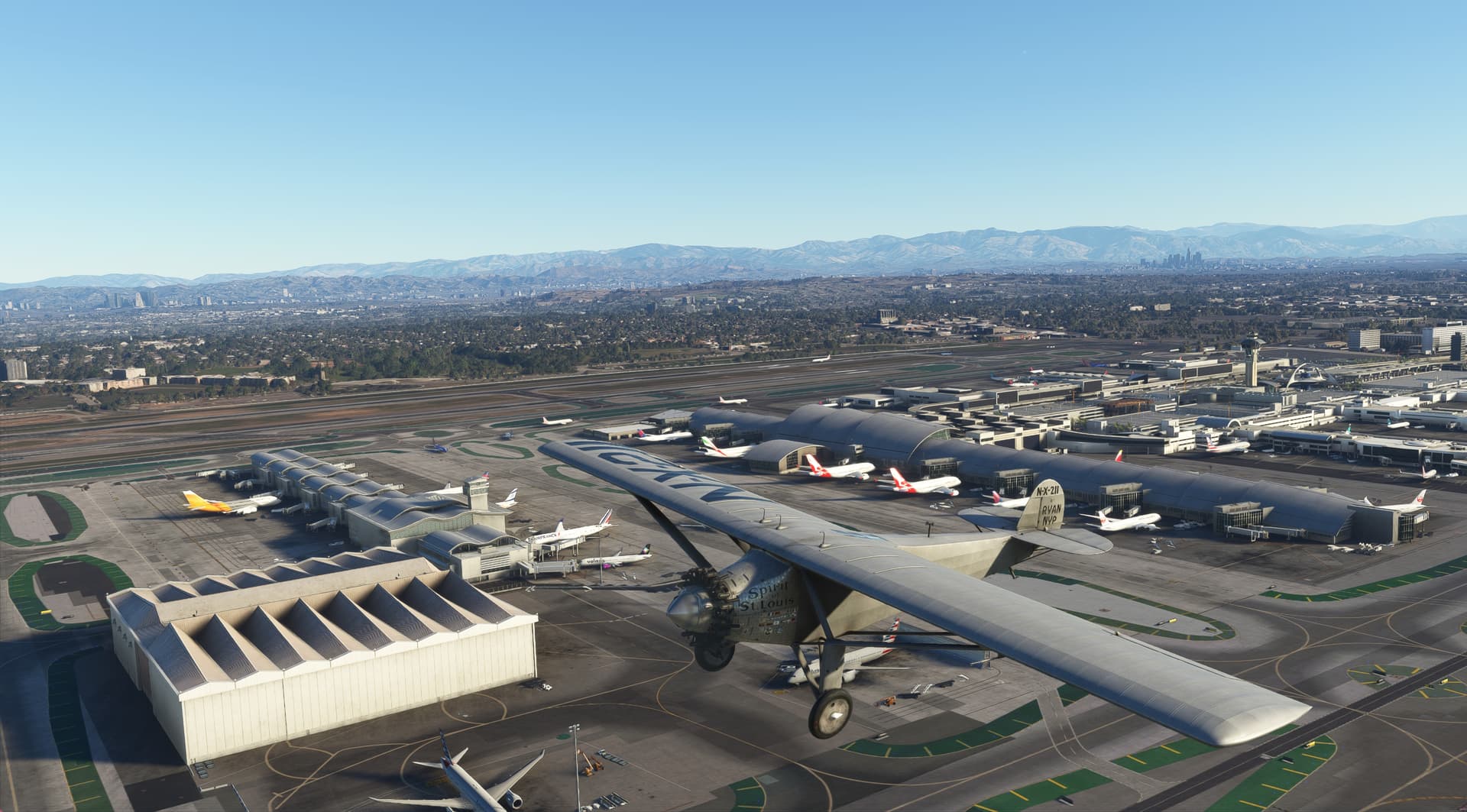
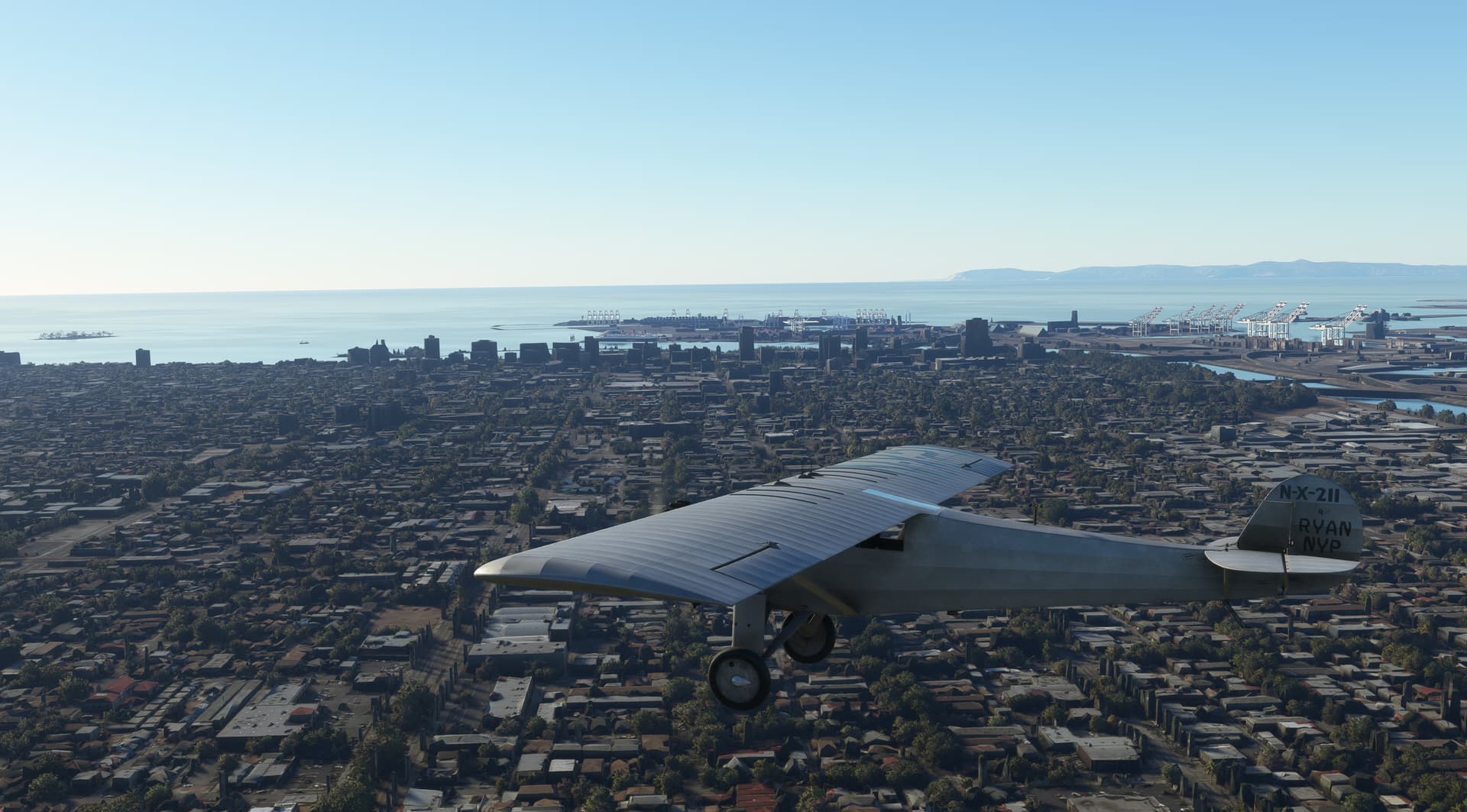
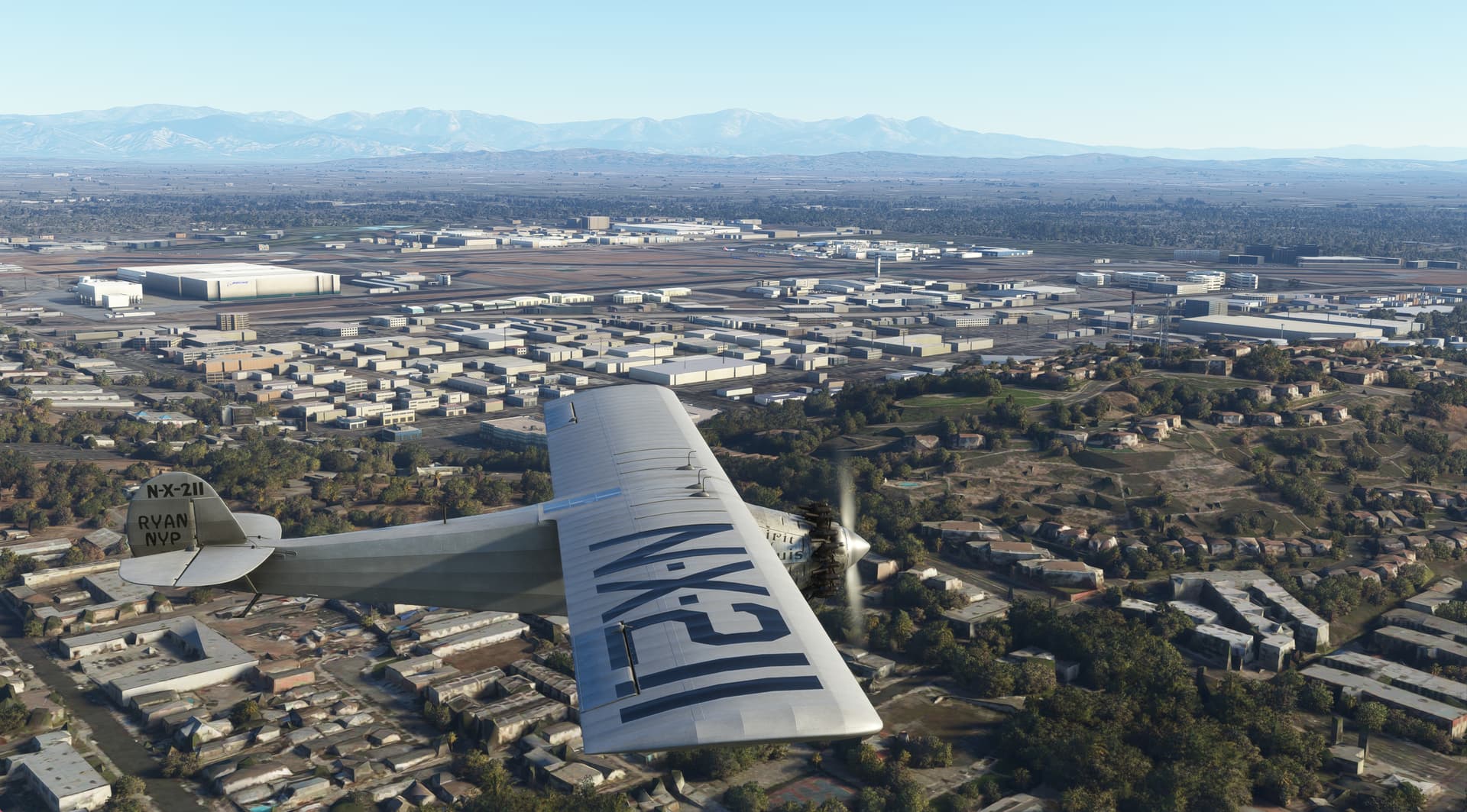
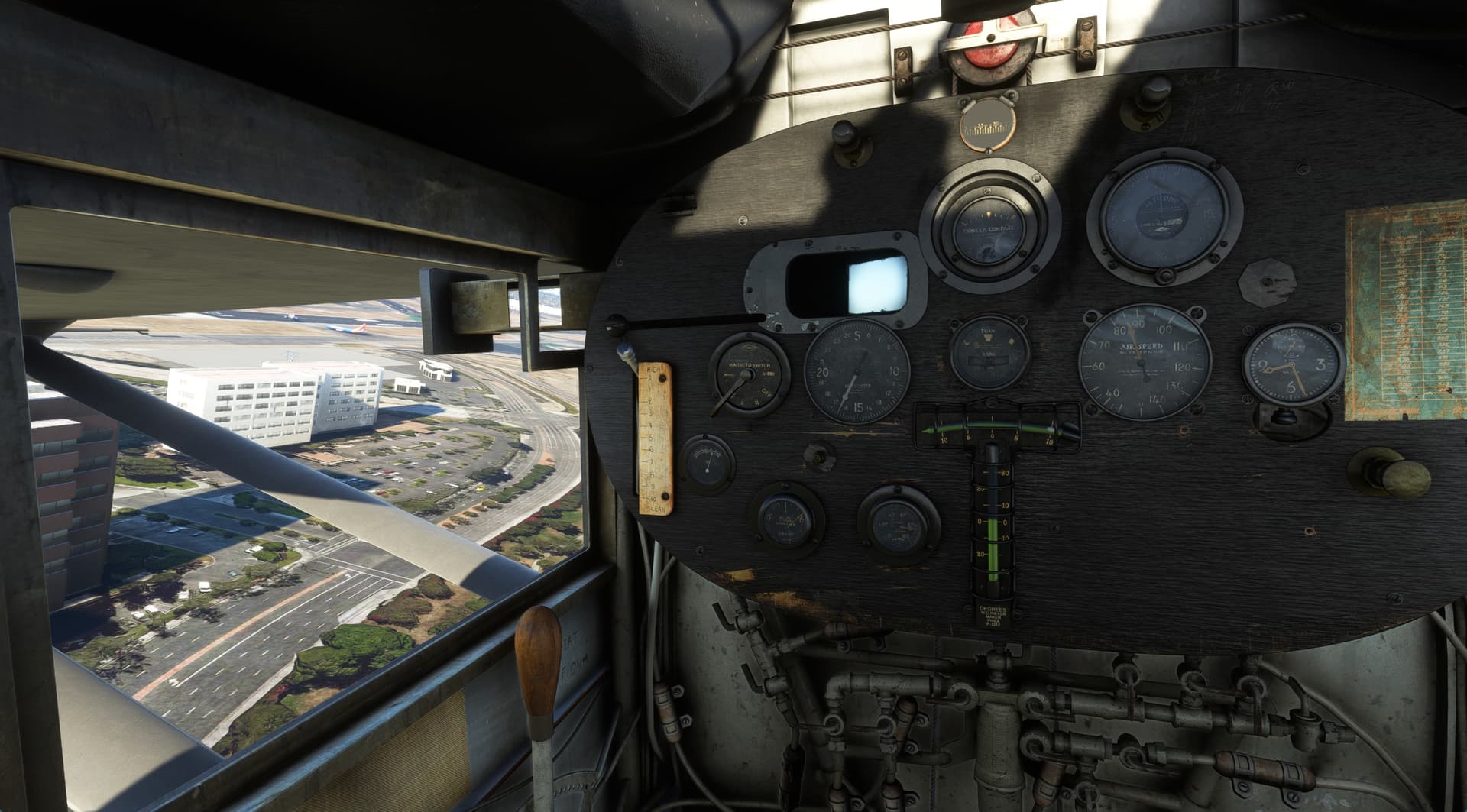
Another in my ‘Sim-plane-I’ve-not-yet-flown-since-I-started-three-years-ago’ series, of course, this is a recent addition to the sim. To be sure I could handle a flight, I did a quick trainer from the old Hanger 1, at KLAX, and landing at KLGB. A very nice flyer, but I’m glad I didn’t have to challenge the fuel management system, though I did try to keep it balanced out of habit.
Lindbergh did a round-the-nation victory lap, for near 900k bucks in today’s money, visiting many major cities. I practiced for an hour-long leg from LA to San Diego, home of the Ryan Air Line manufacturing facility that built the plane. If I had the patience or endurance, I’d try that across-nation flight, San Diego to NY, or the actually NY to Paris flight. Wonder if someone has made a 30+ hour flight on YouTube, and do I have the patience to even watch that?
So, my trainer-leg



8 Likes
I’d forgotten about the Spirit in MSFS. Maybe I’ll go try her out tomorrow, just for a change of pace!
1 Like

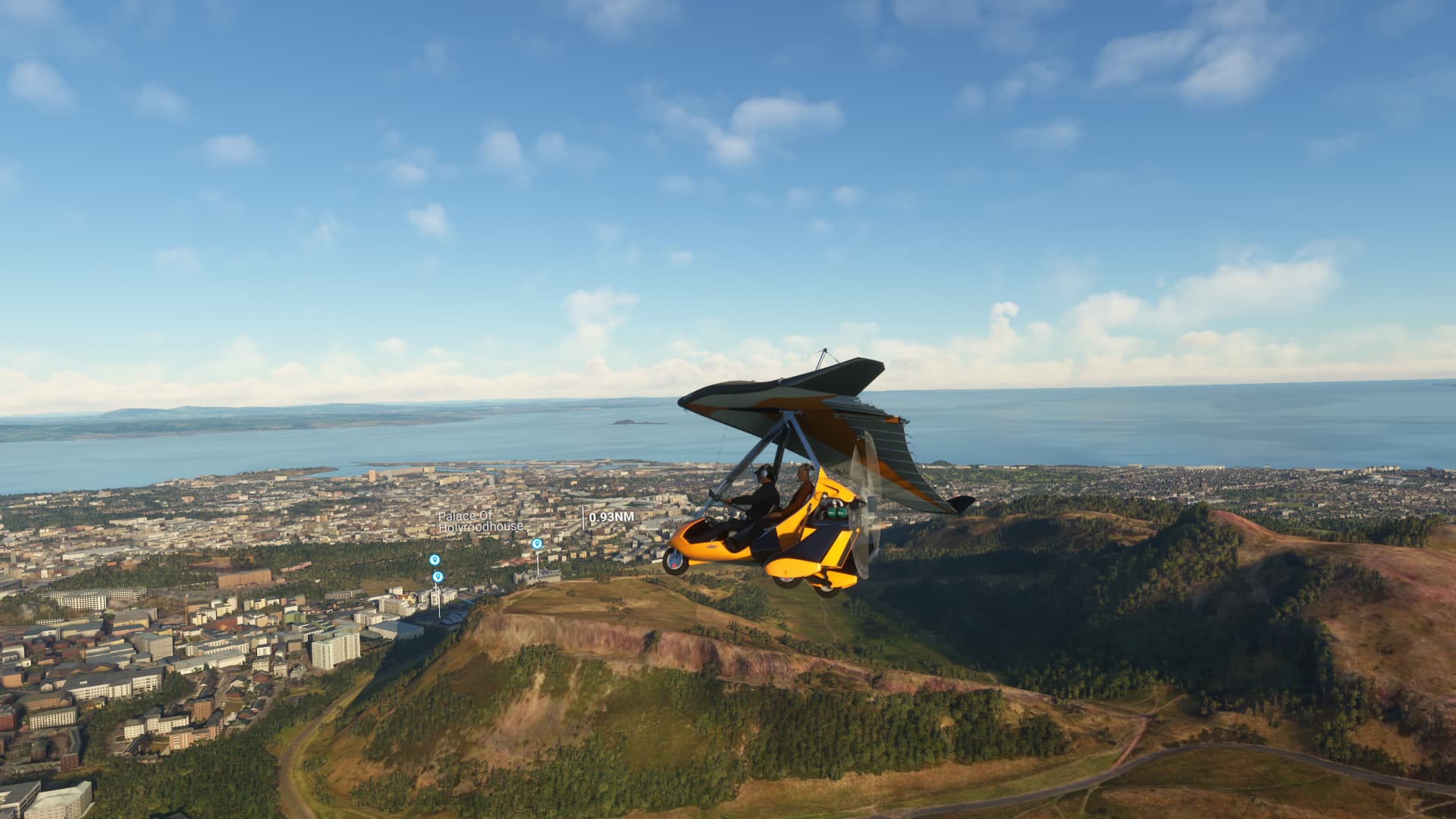
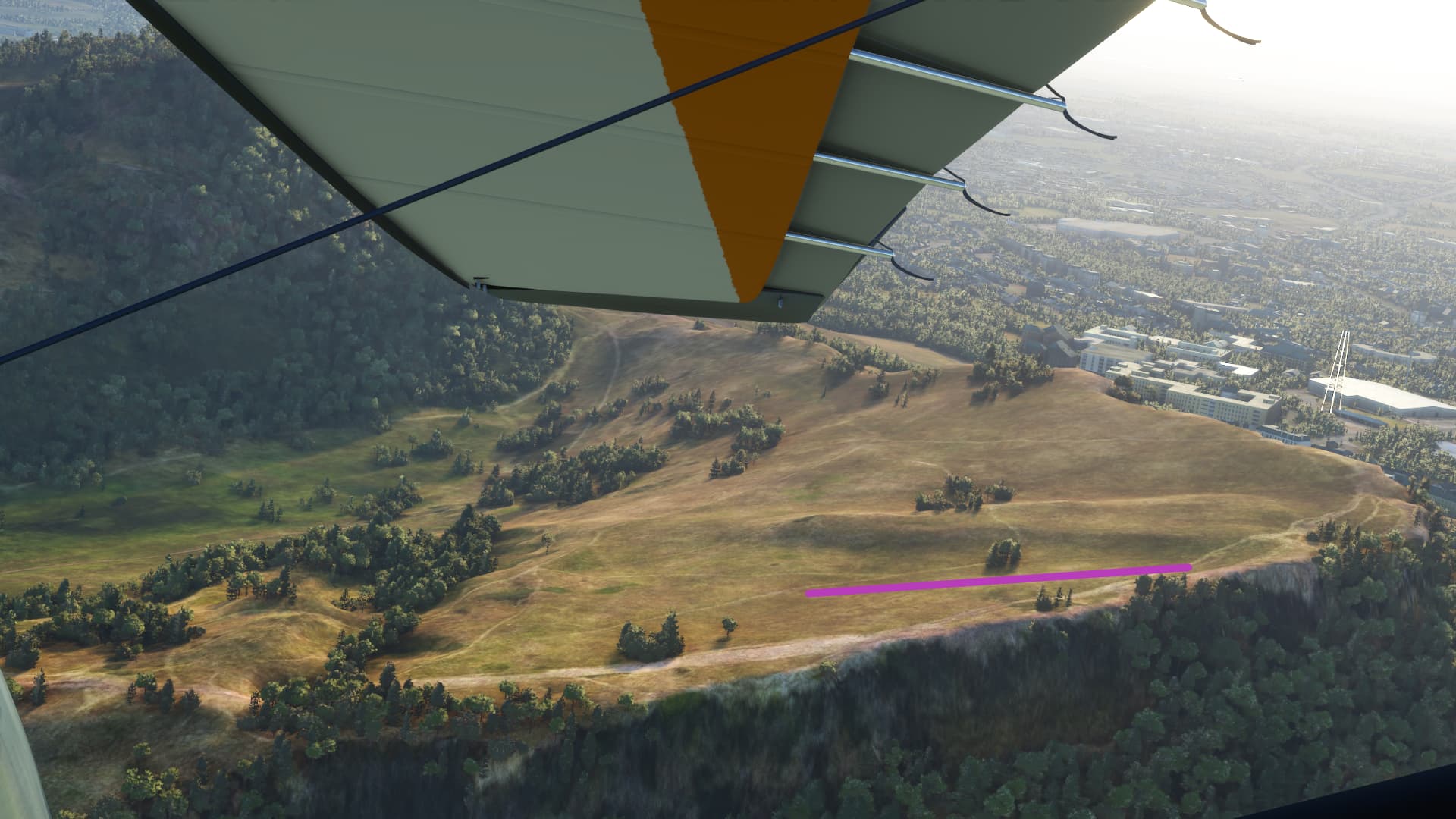
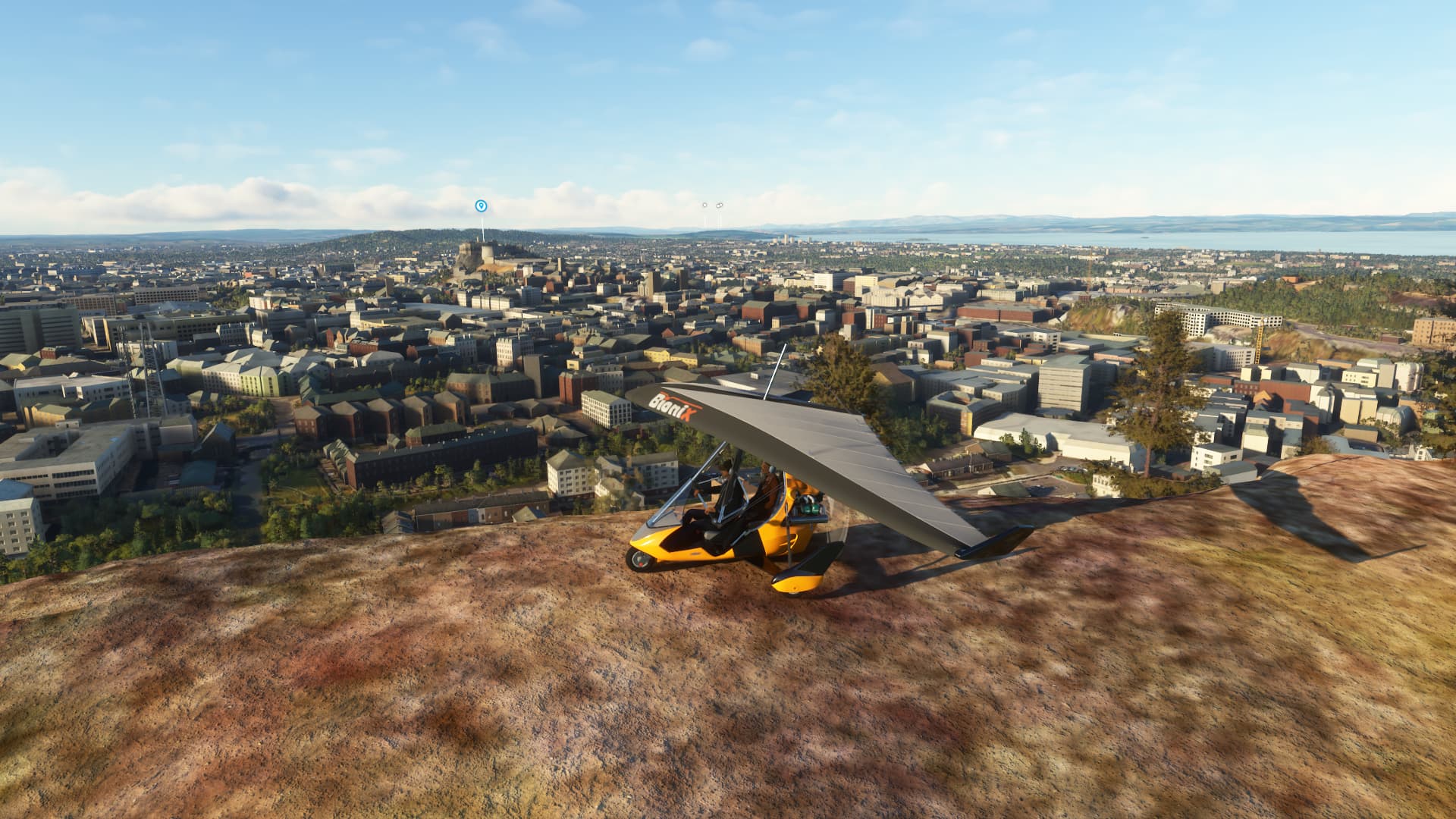
Perfect real weather for sightseeing over Edinburgh today
Looking for a spot for landing (pink line)
View over the city
6 Likes
A320ceo NZAA Auckland to NZWN Wellington.
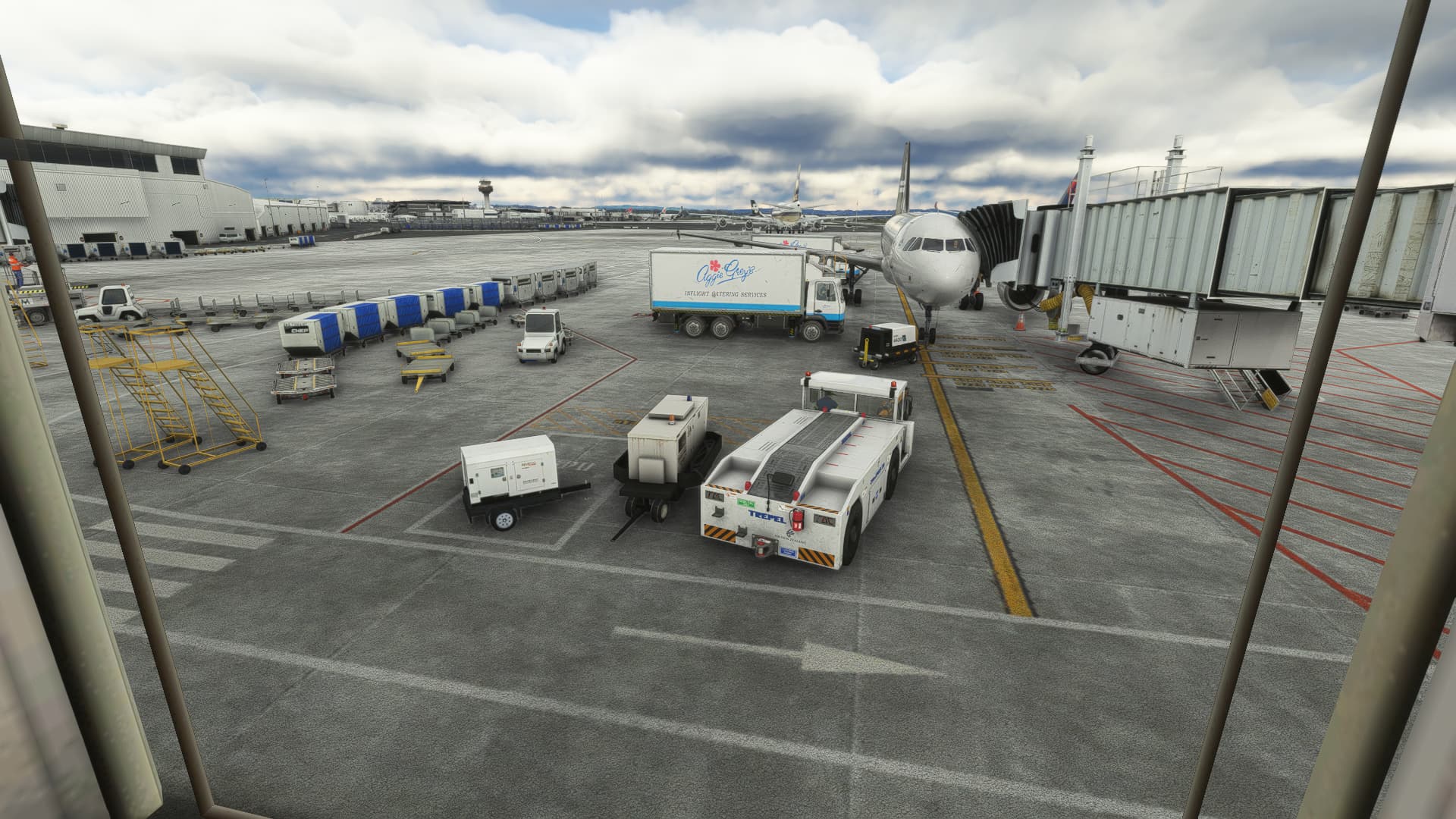
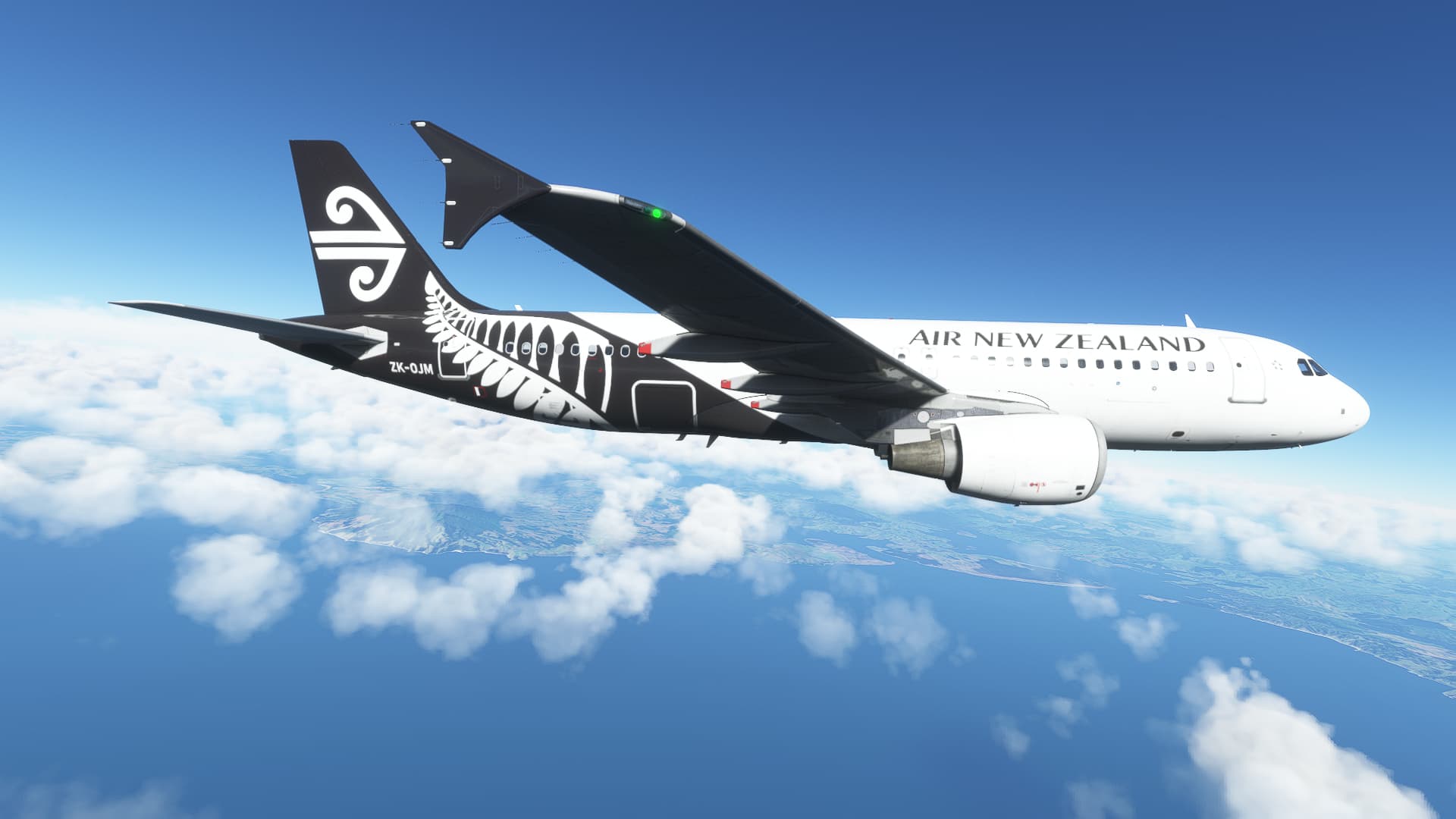

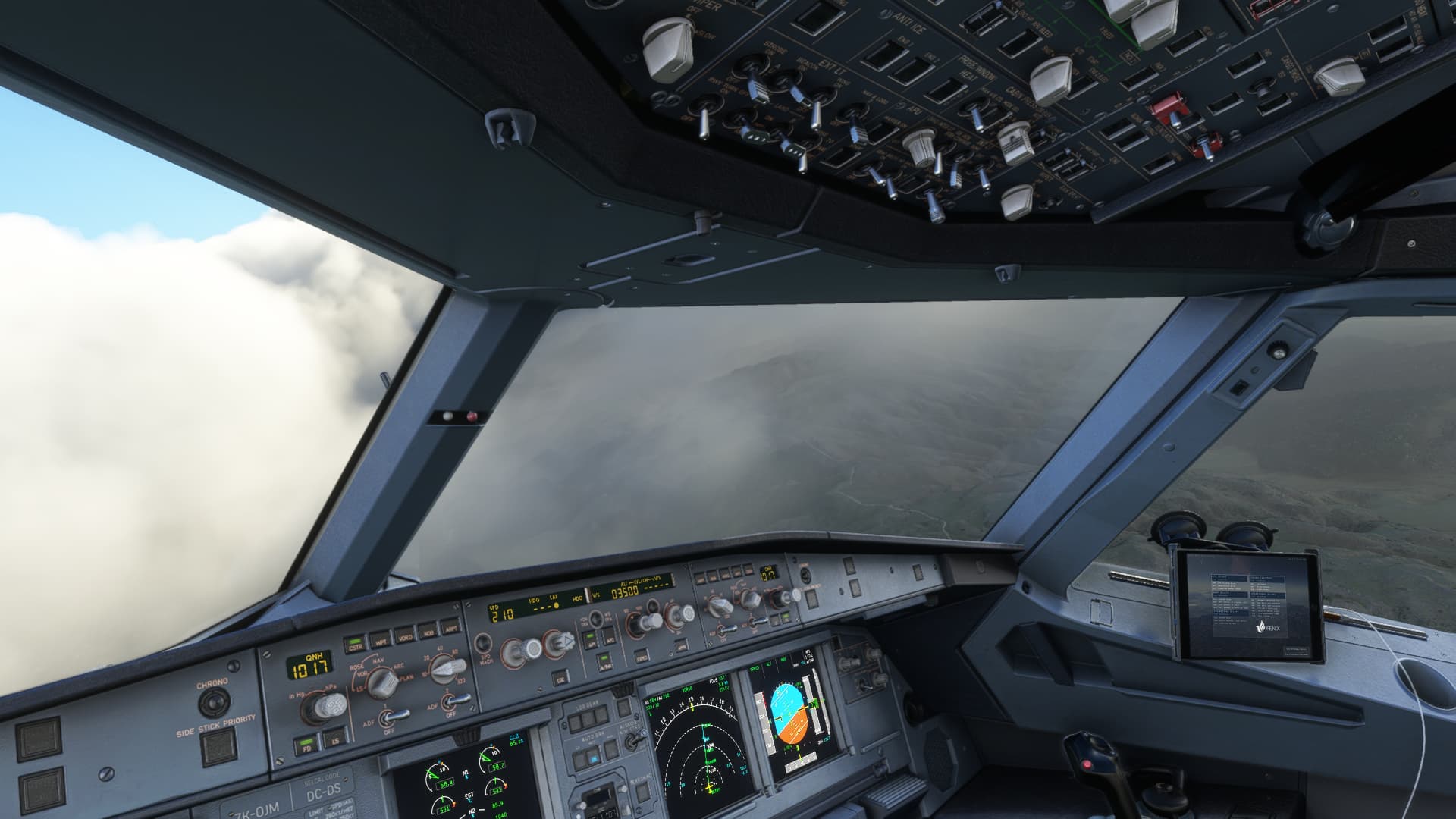
I decided to fly the VOR approach into Wellington 16 rather than the ILS which didn’t turn out to be a fantastic decision. As I descended I was in thick cloud and at MDA the runway was nowhere to be seen.
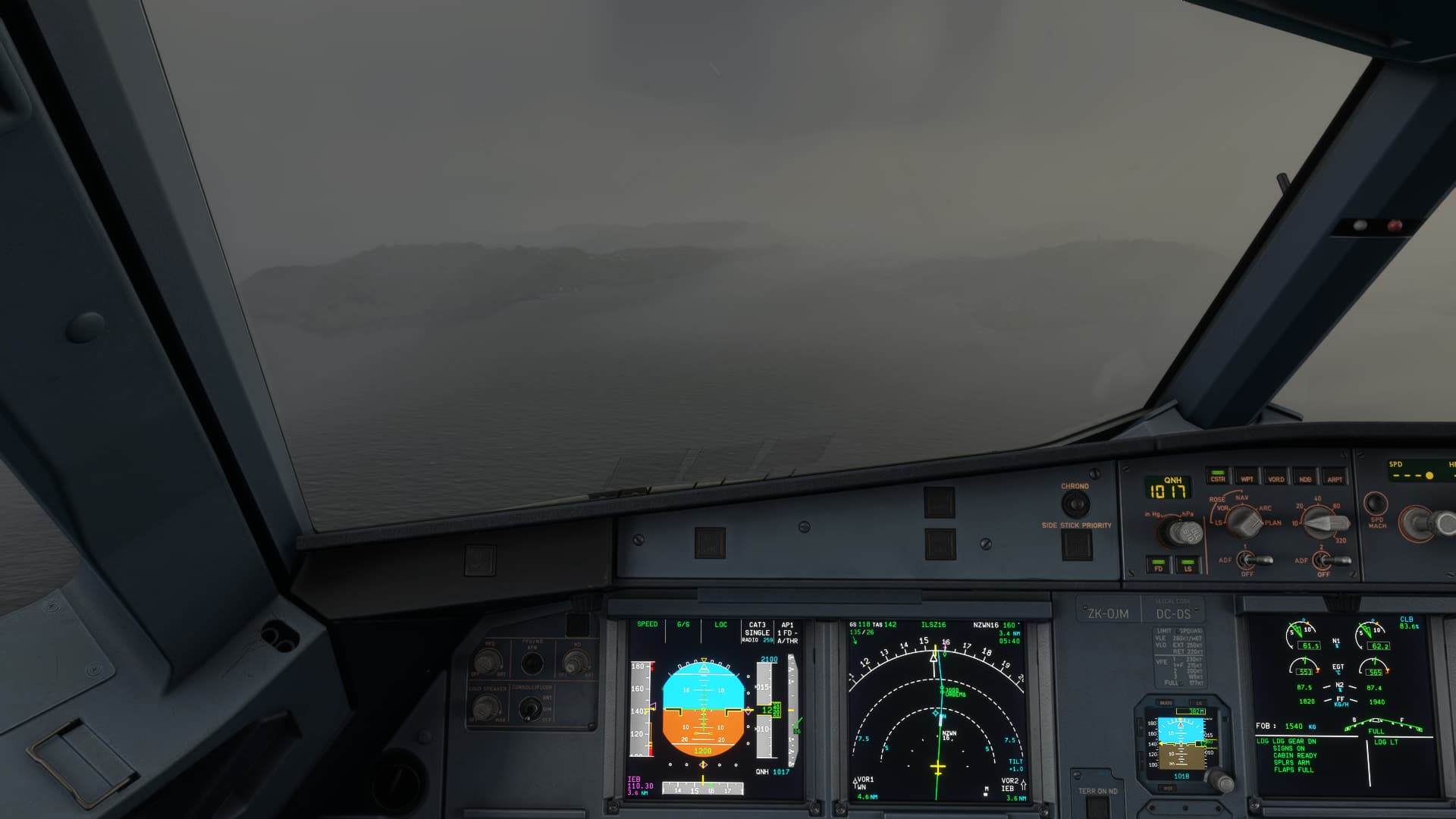
Go around #1
Obviously now I needed a precision approach so I set up for ILSZ16. ATC sort of vectored me back but it left me trying to capture the ILS from above. I didn’t have time to play around so I flicked off the automatics and switched to a raw data ILS approach hand flown. I got down onto the path and it was looking good, the runway coming into view.
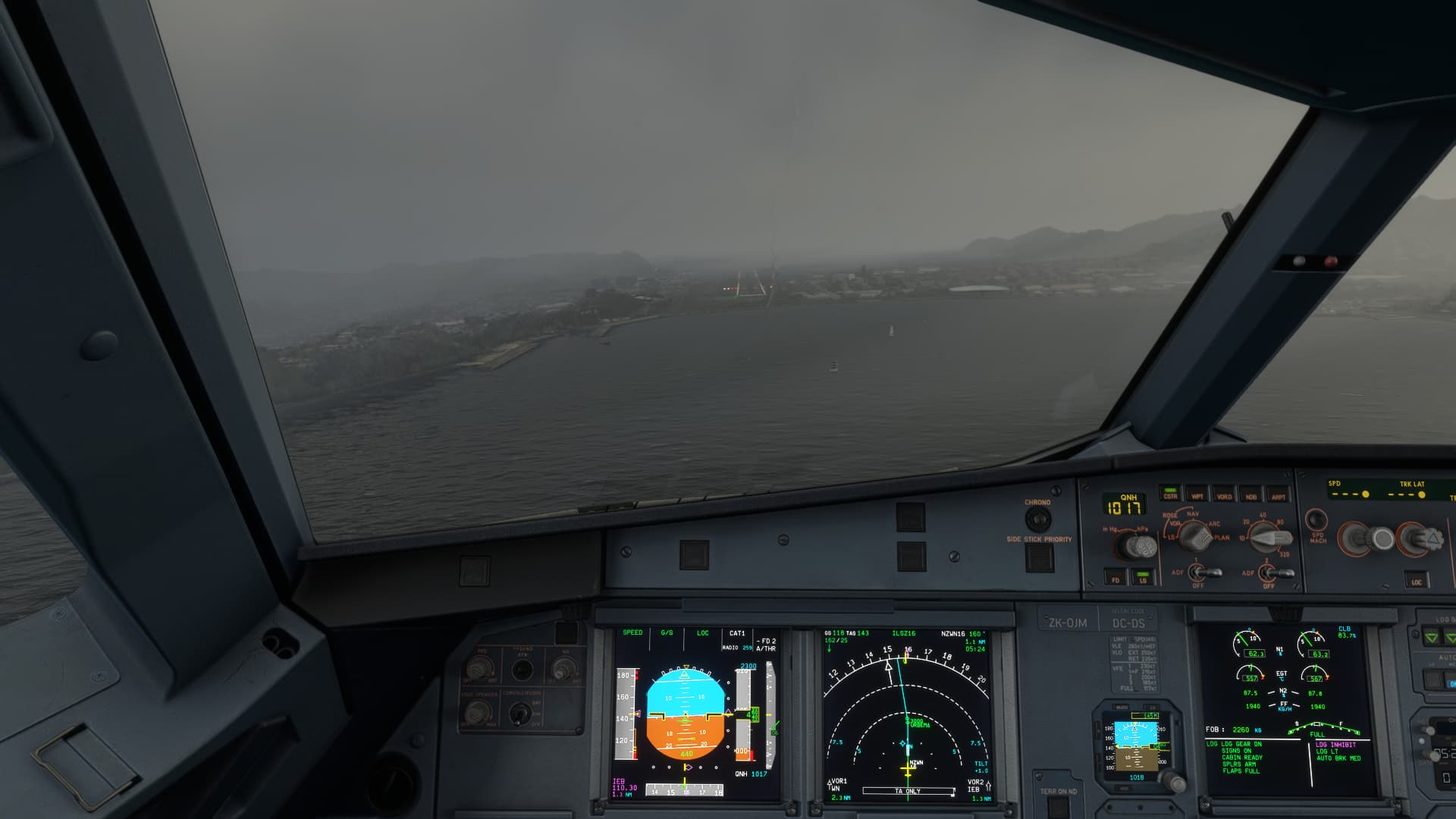
The wind was 25kt and gusting and the plane floated a bit too much in the flare, the runway was barely long enough on medium autobrake so I certainly couldn’t afford to land long.
Go around #2
Vectored back for the same ILS this time making sure to capture it from below. Now I’m low on fuel, probably too late to divert so I better get it down. I let the AP fly down to minimums, the ECAM telling me to LAND ASAP. The master caution for low fuel goes off on short final, piling the pressure on!
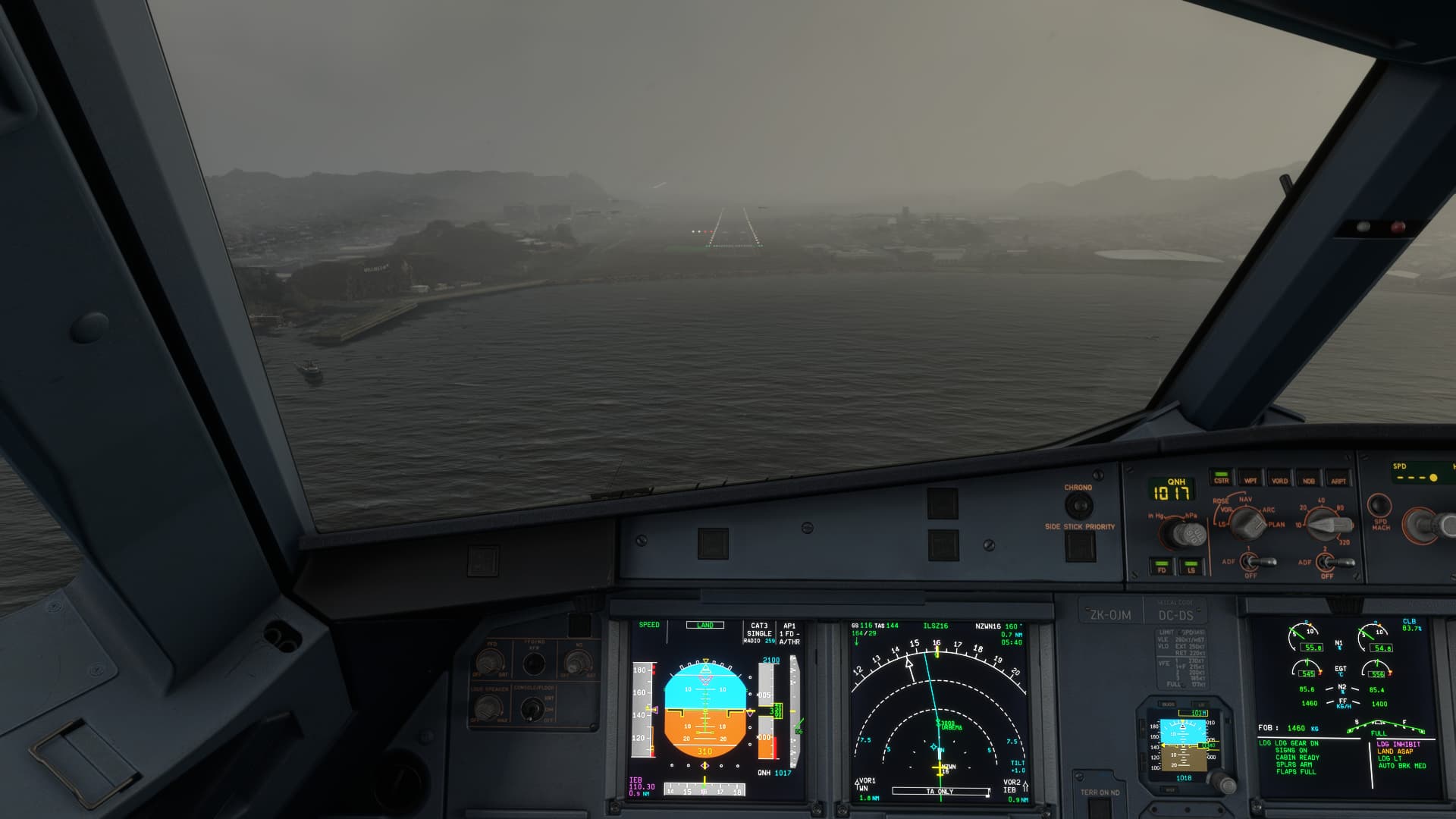
3rd time lucky and finally a safe landing to much relief from the crew.
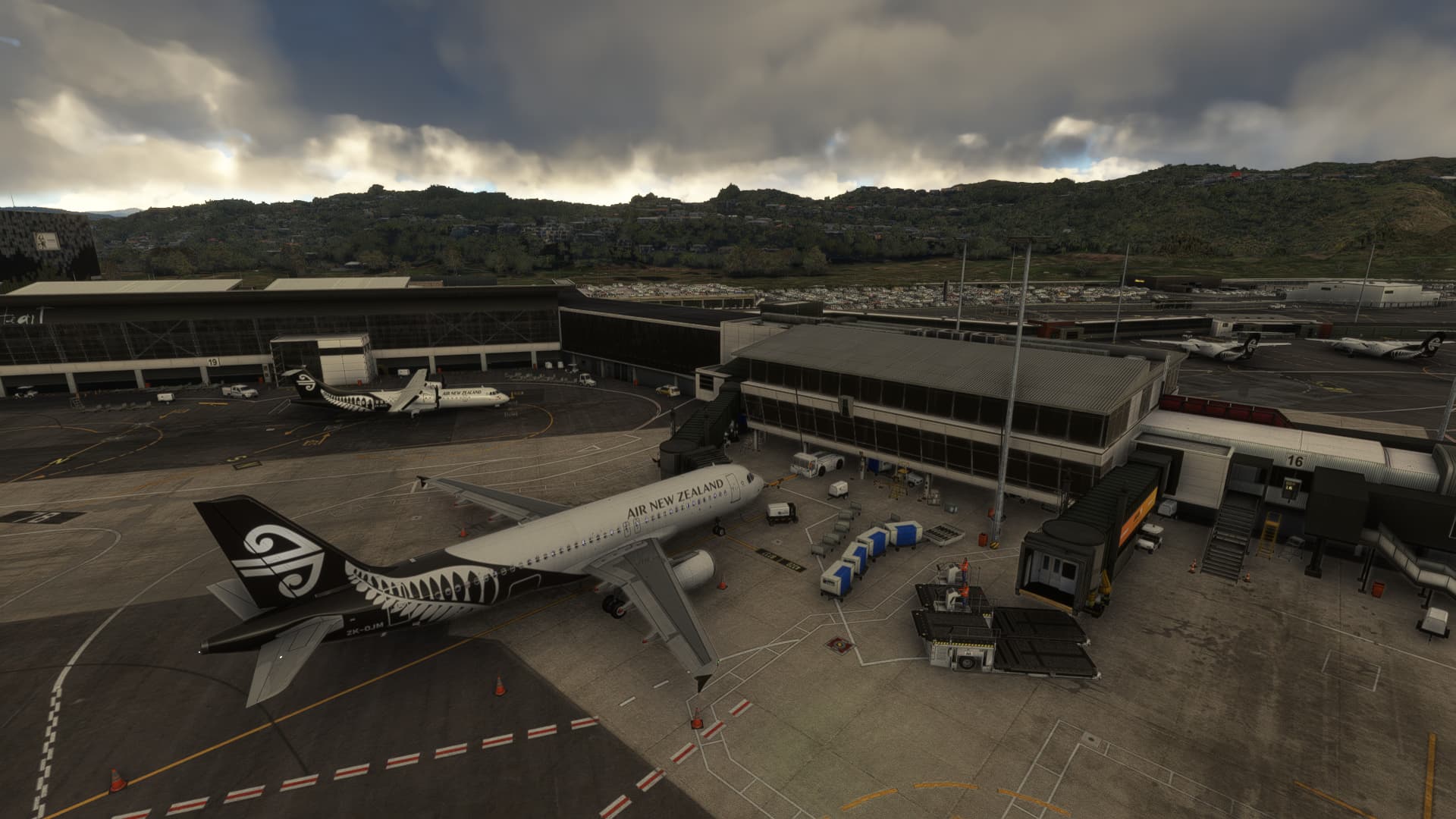
Wellington is known for bad weather, next time I’ll check the minimums on the ATIS more carefully before committing to fly a non precision approach.

Pilot workload on a go around having to reprogram the FMS when the copilot cat isn’t helping at all is certainly challenging.
12 Likes
At first I bought Sting S4. So I spent lot of time reading POH and making checklists and some flying circuits.
And then I reached Chile in my tour around Pacific in DC-3 in real weather: SPQU  SCDA
SCDA
This time I didn’t have to climb much, because I was already starting at 8000ft. Another nice thing was that weather at destination got better, until I arrived. So the full flight was VFR. Also it was interesting flying along the coast that raise from sea-level to 1000 meters.
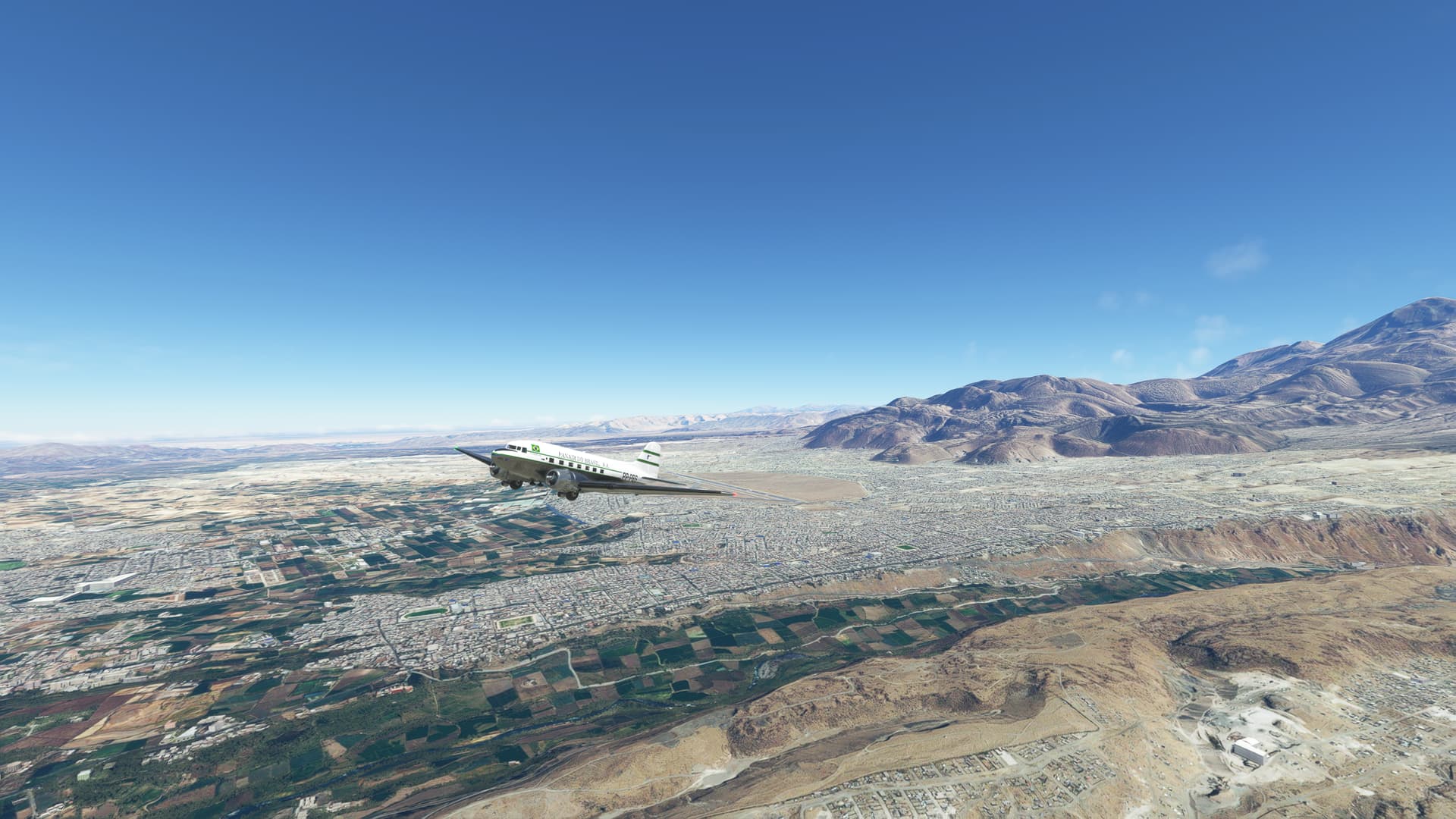
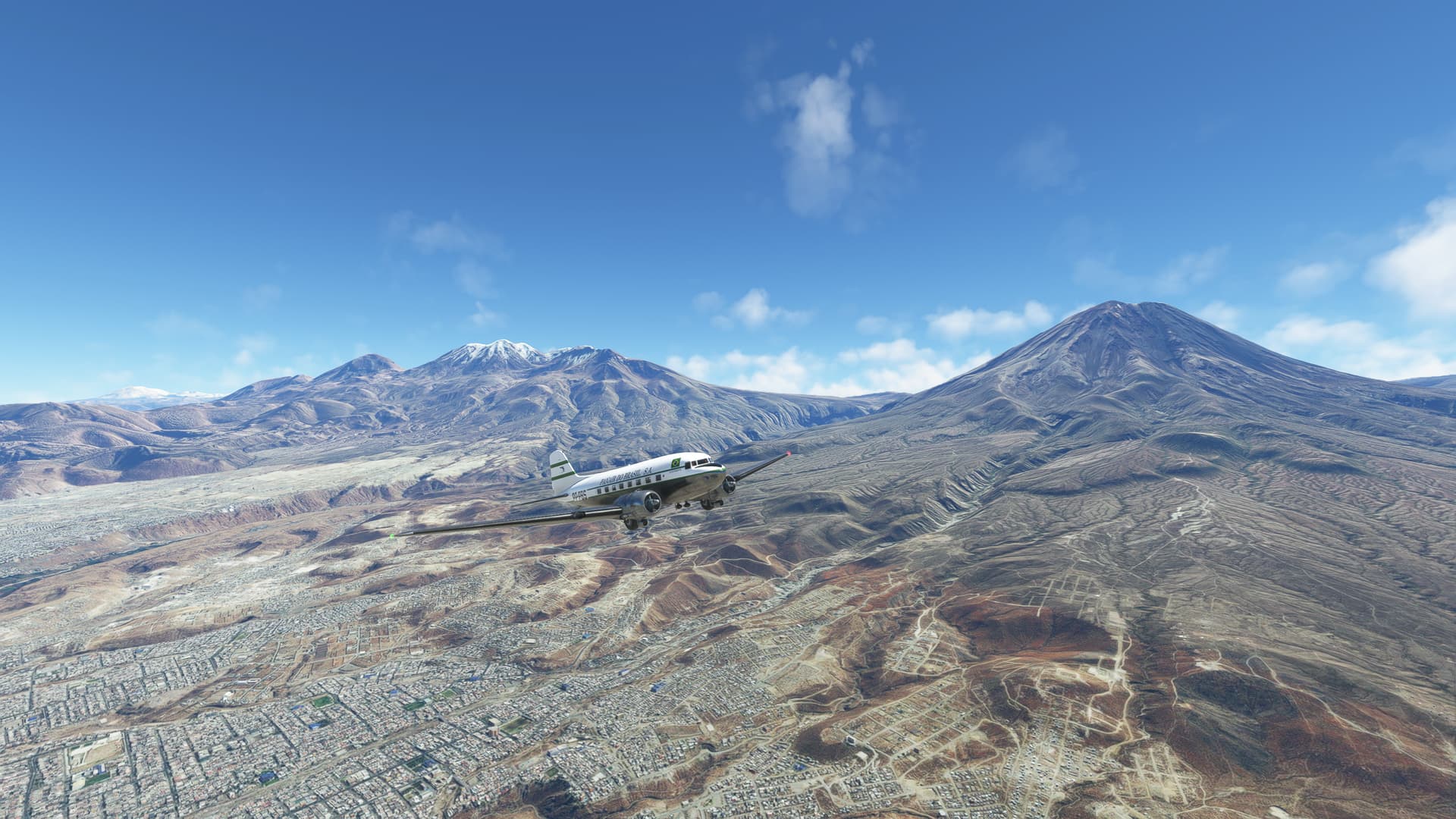
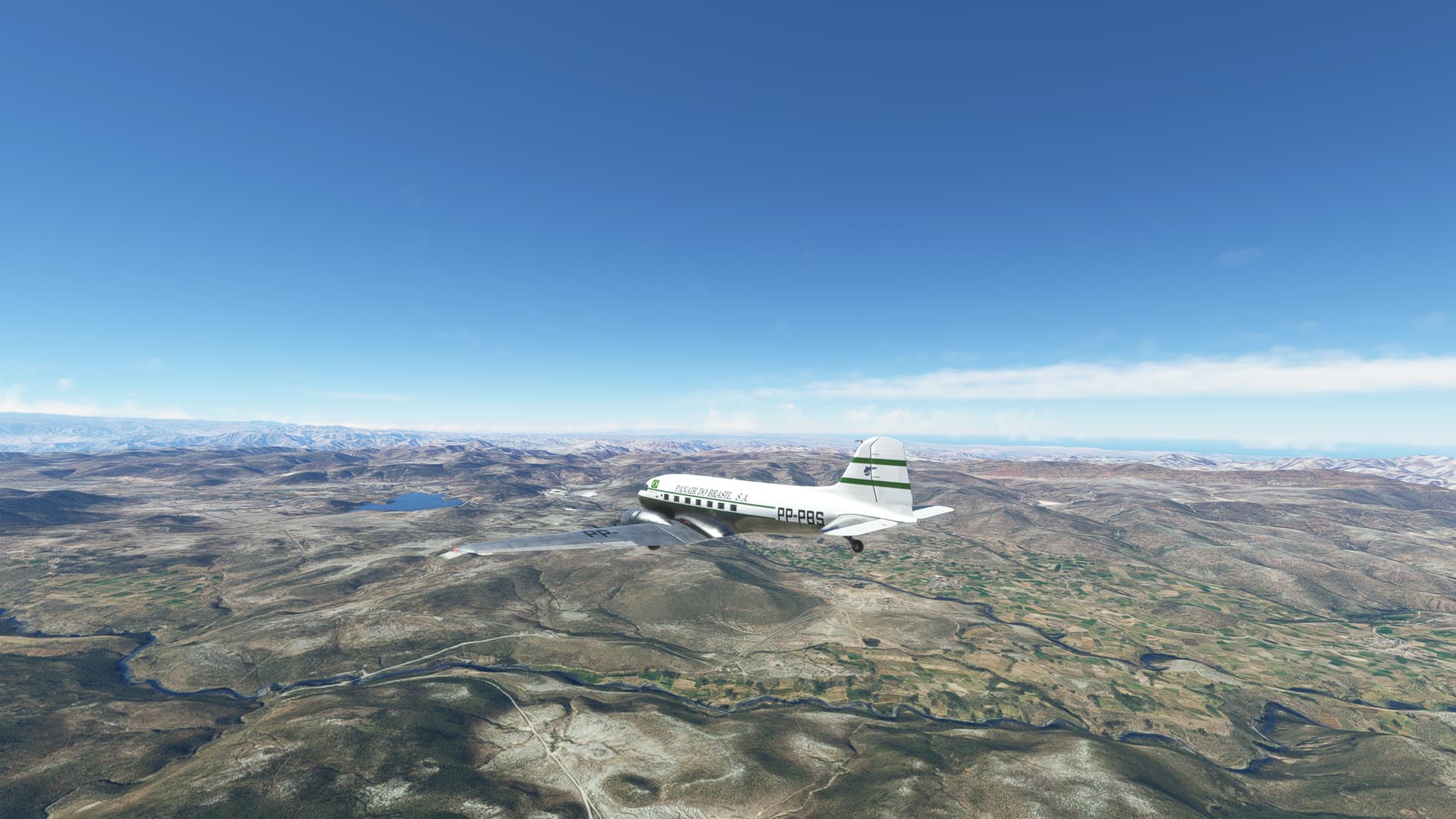
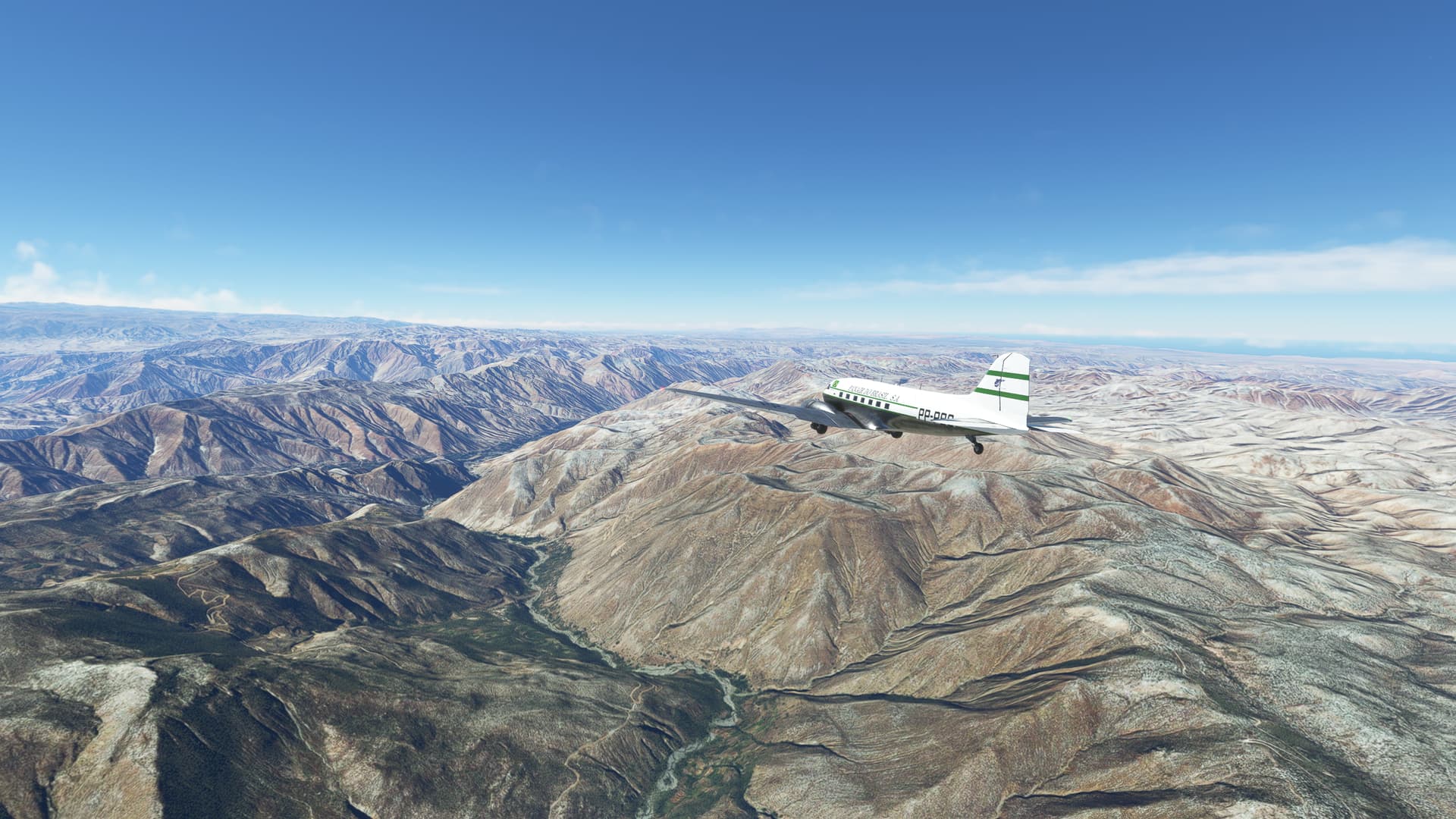
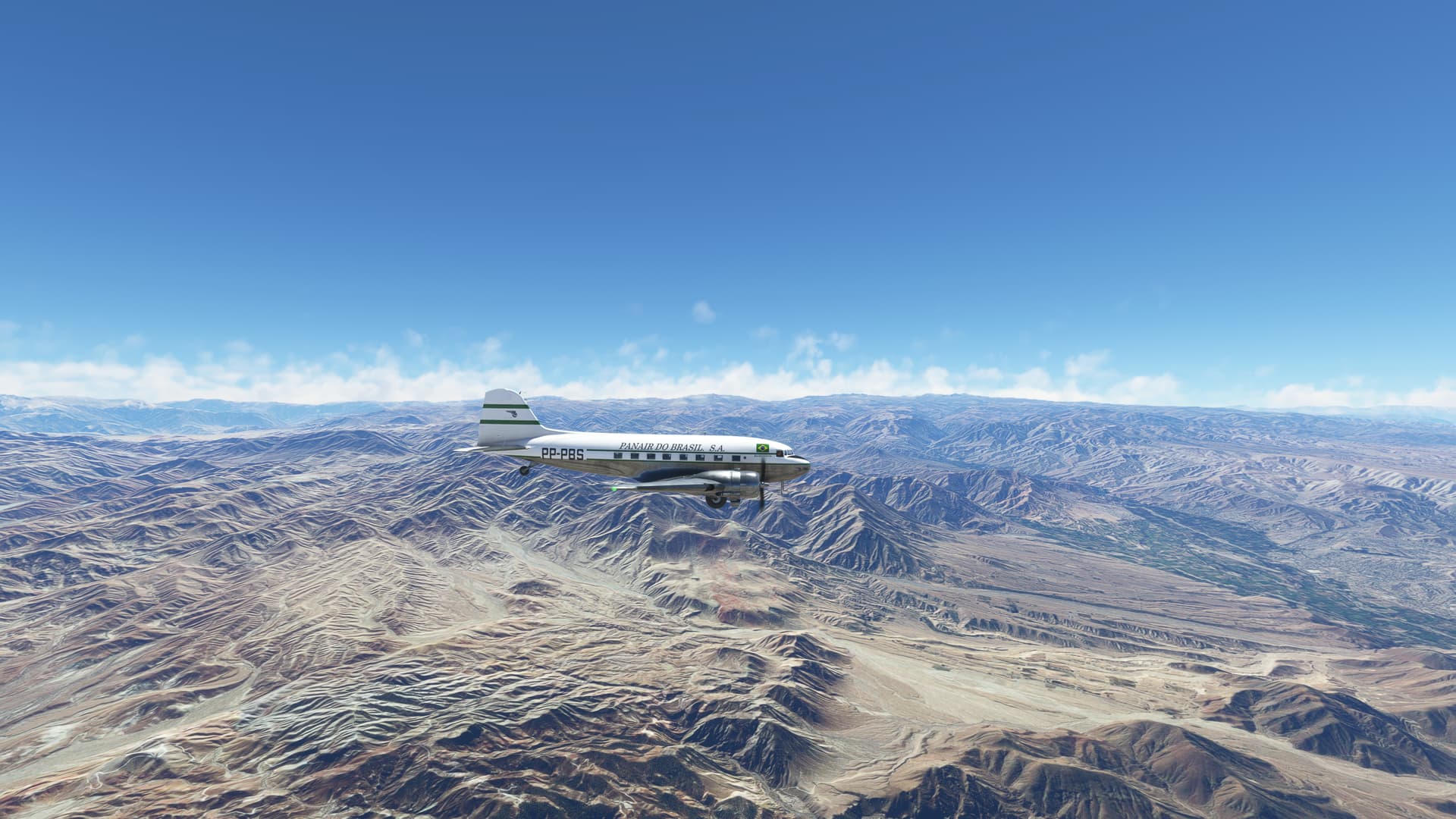
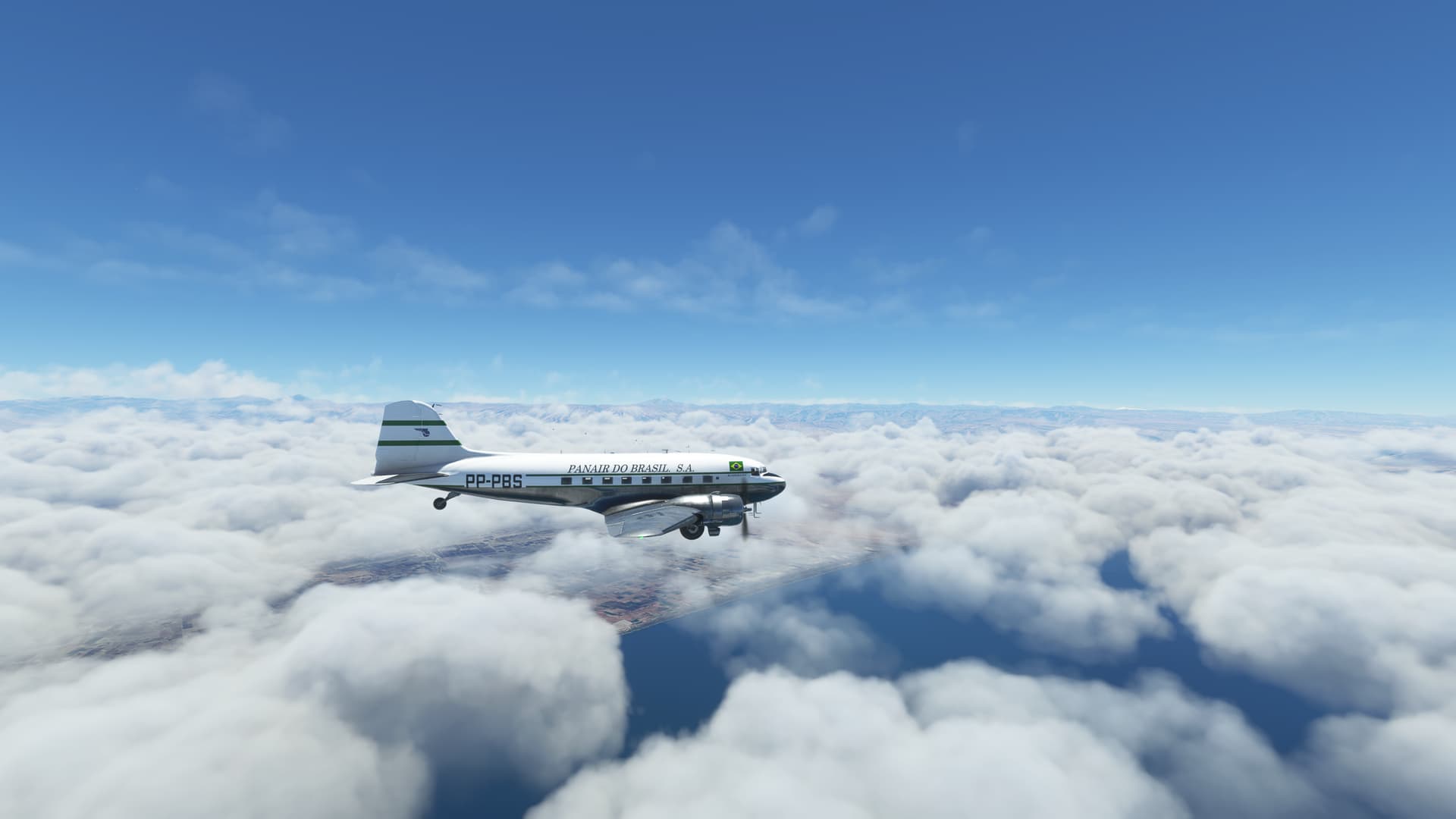
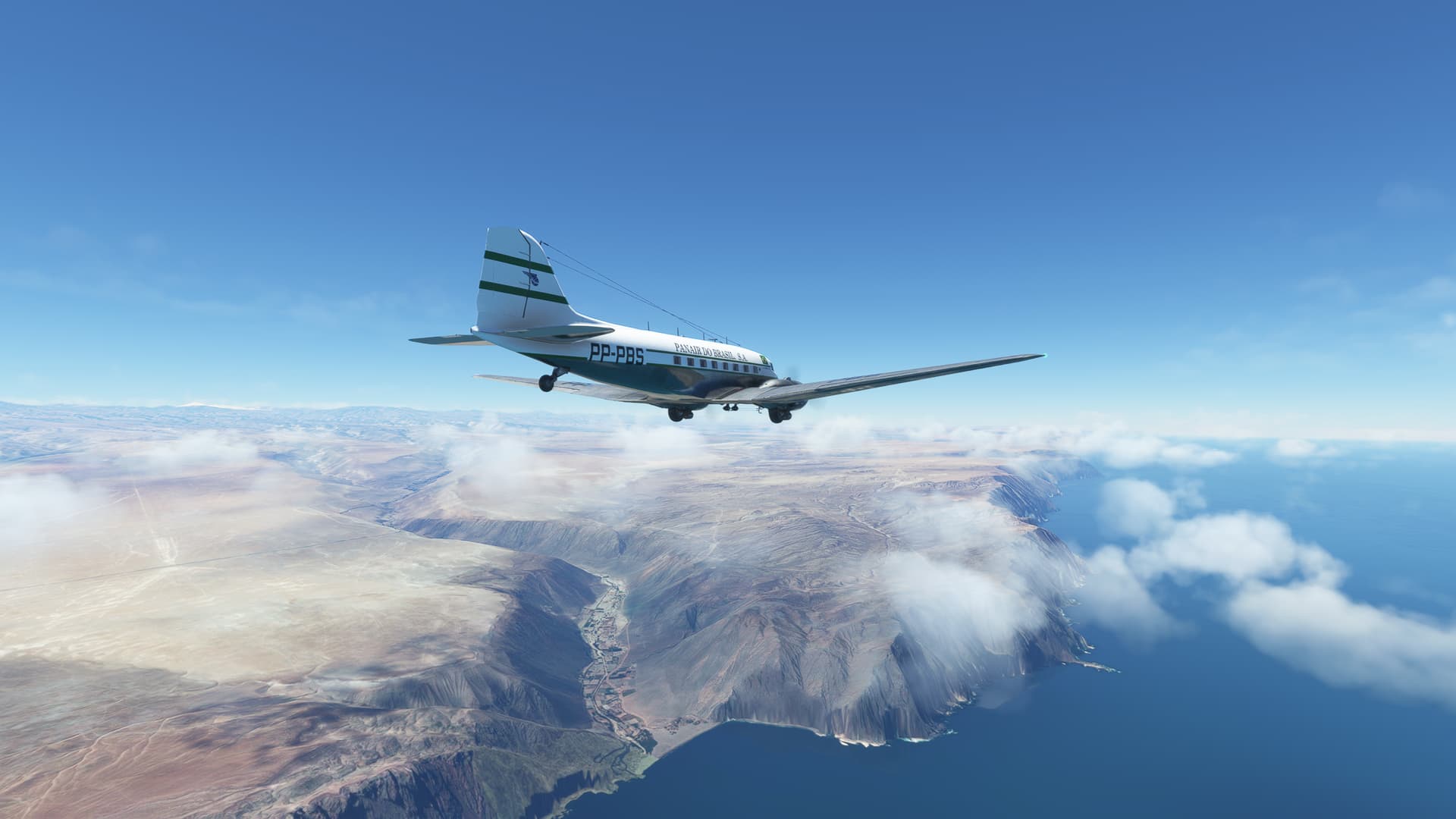
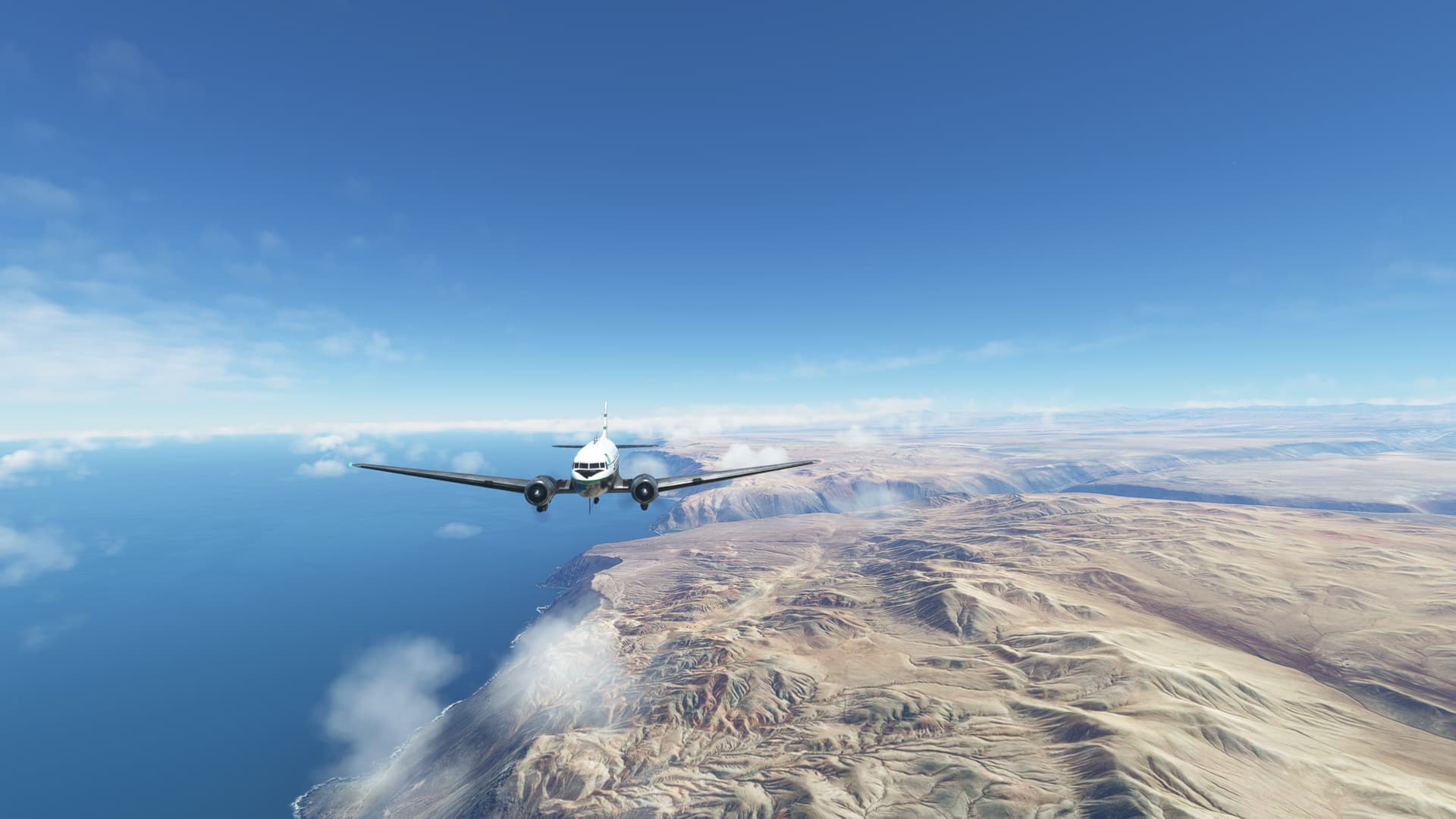
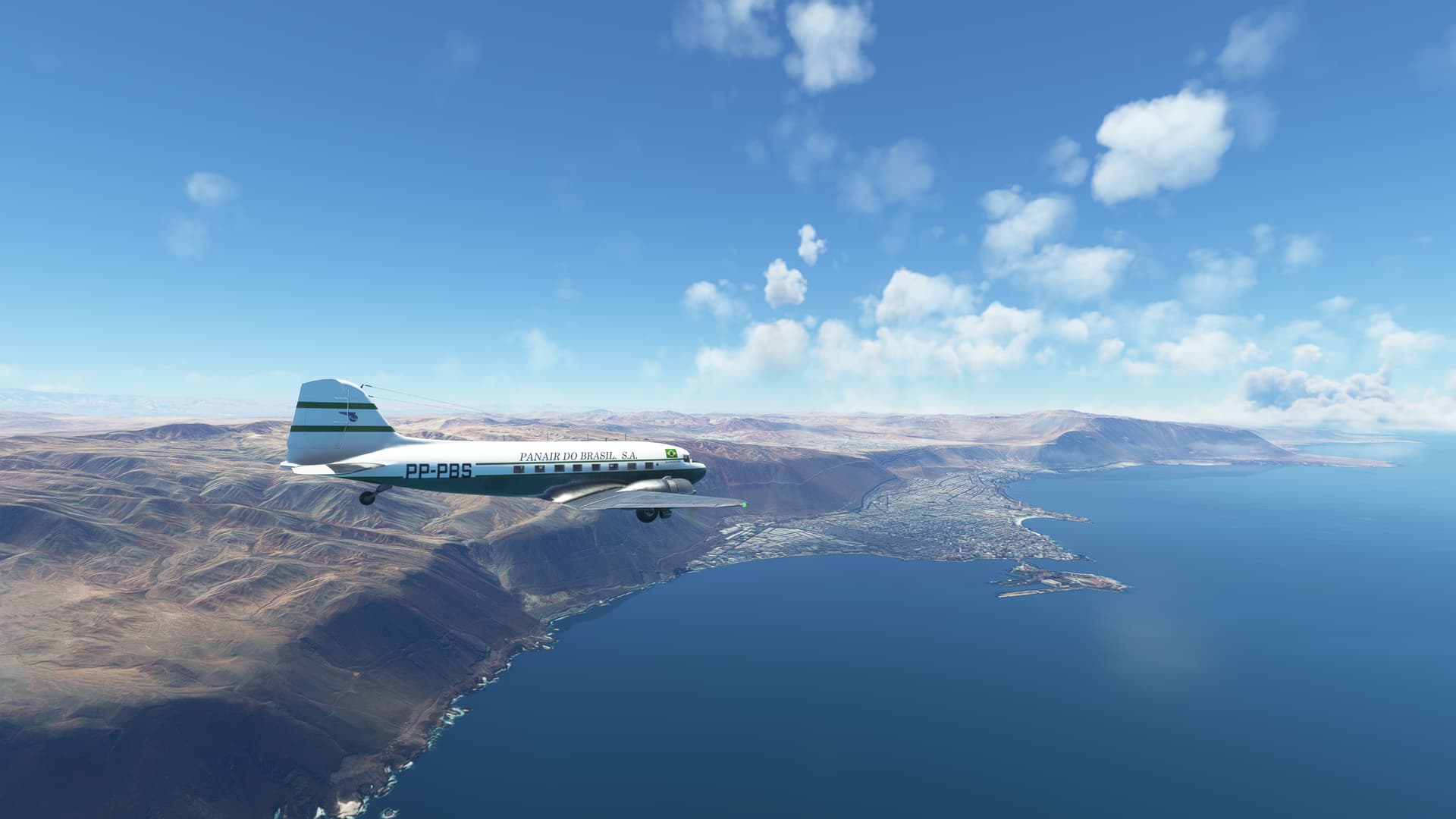
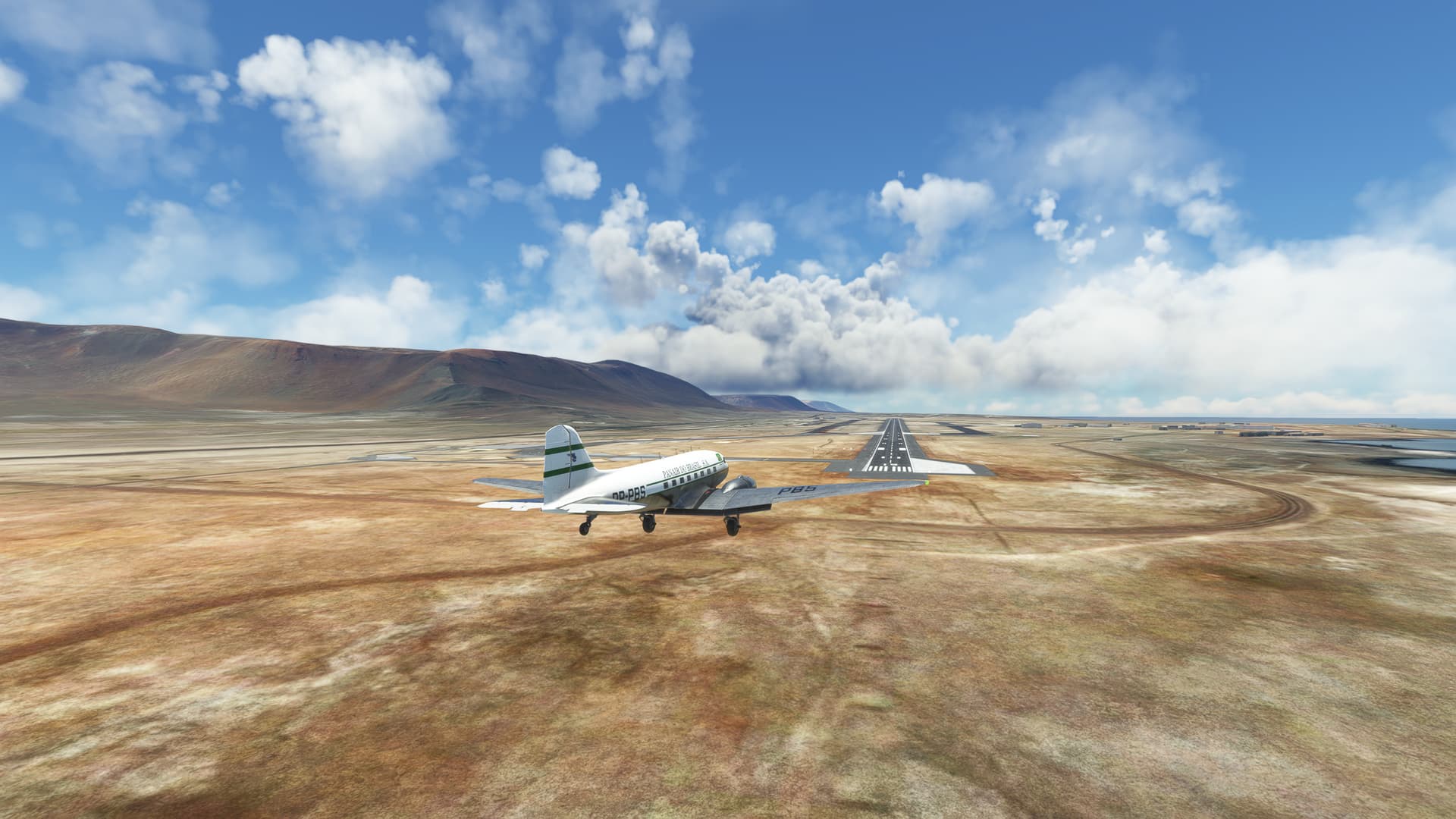
Chile is the last country on the route. And yet it is still about 10 legs to go.
6 Likes
Ventura C22-J from KVNY to KSAN, by way of KMYF, and overspeeding all around the vicinity.
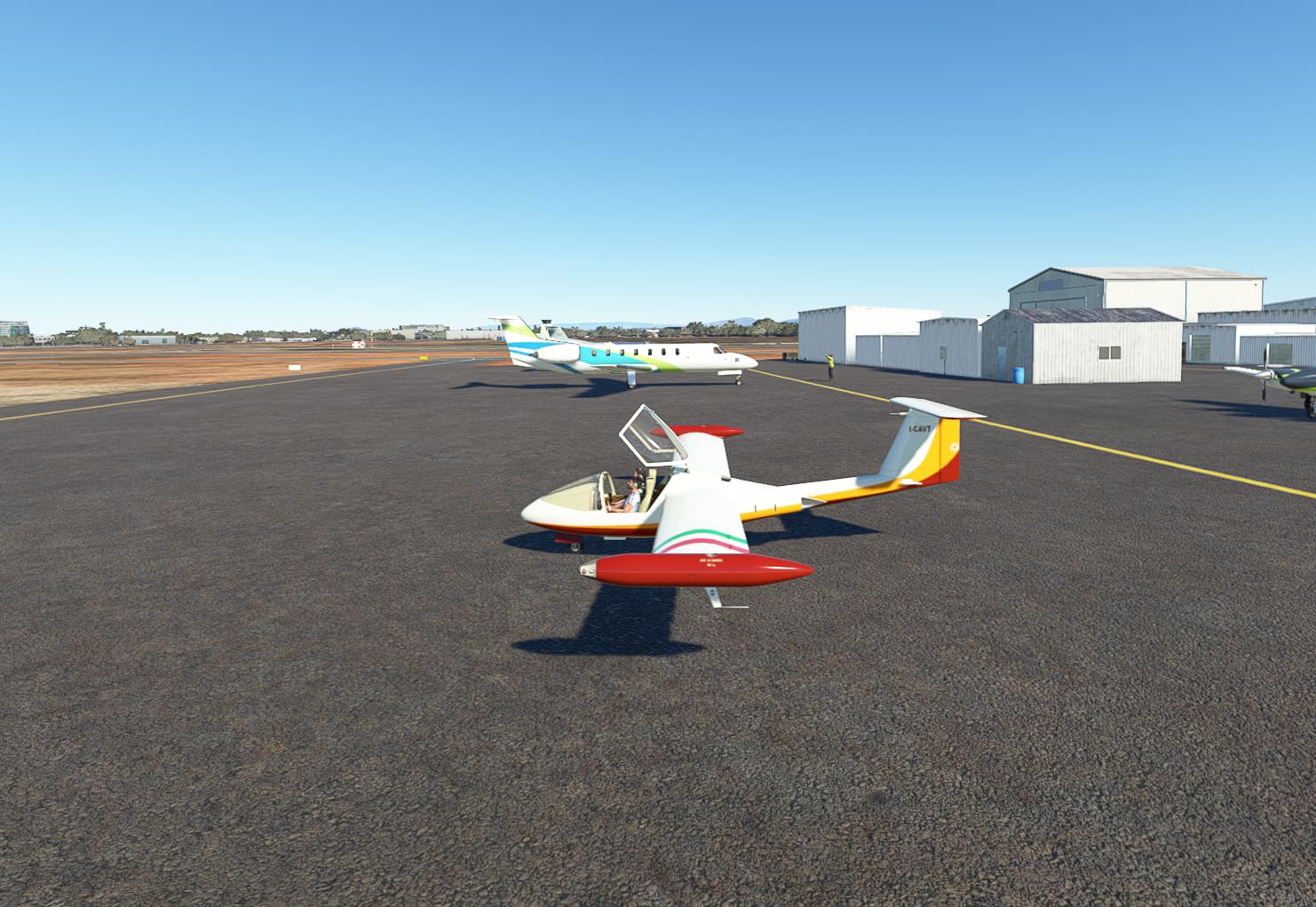
Preflight at KMYF.
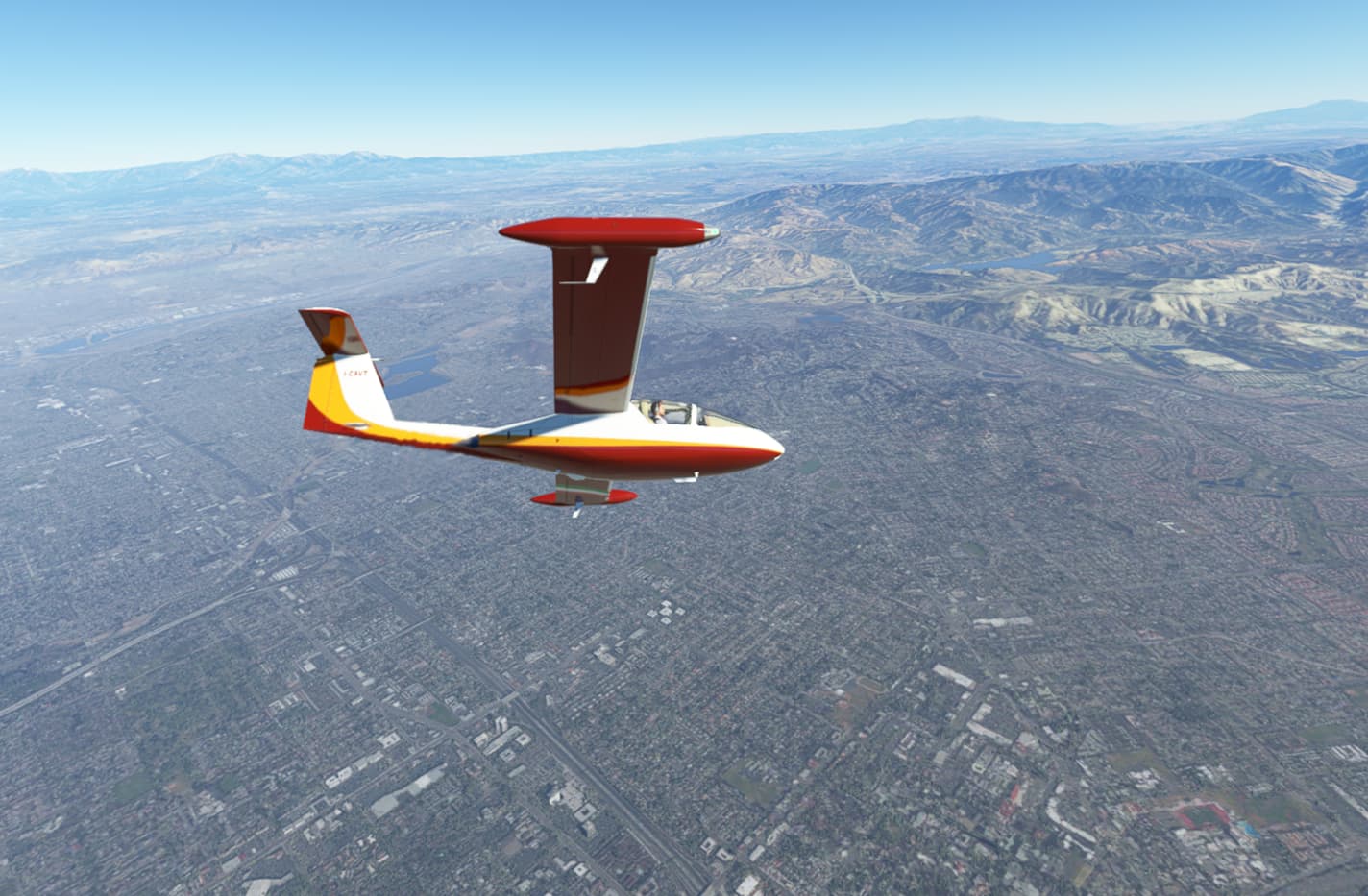
This plane loves to climb, and is very easy to overspeed!

Pretty easy to dial in a cruise, just keep your eye on the altimeter before you make your way all the way up to outer space.
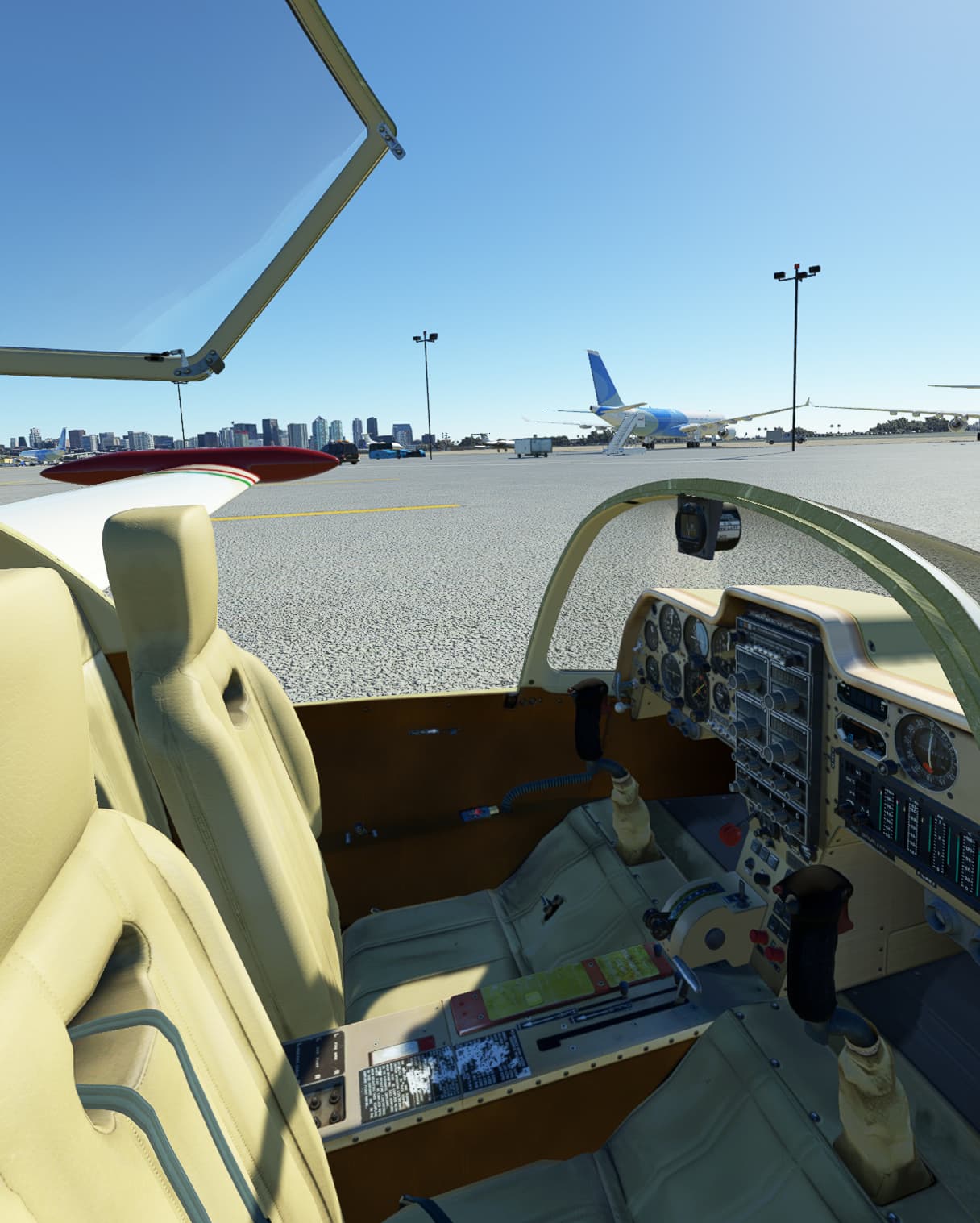
Finally landed at KSAN. Where to next?
4 Likes
Out for some much-needed landing practice in the Shrike MD 530F in the hills north of Glasgow:
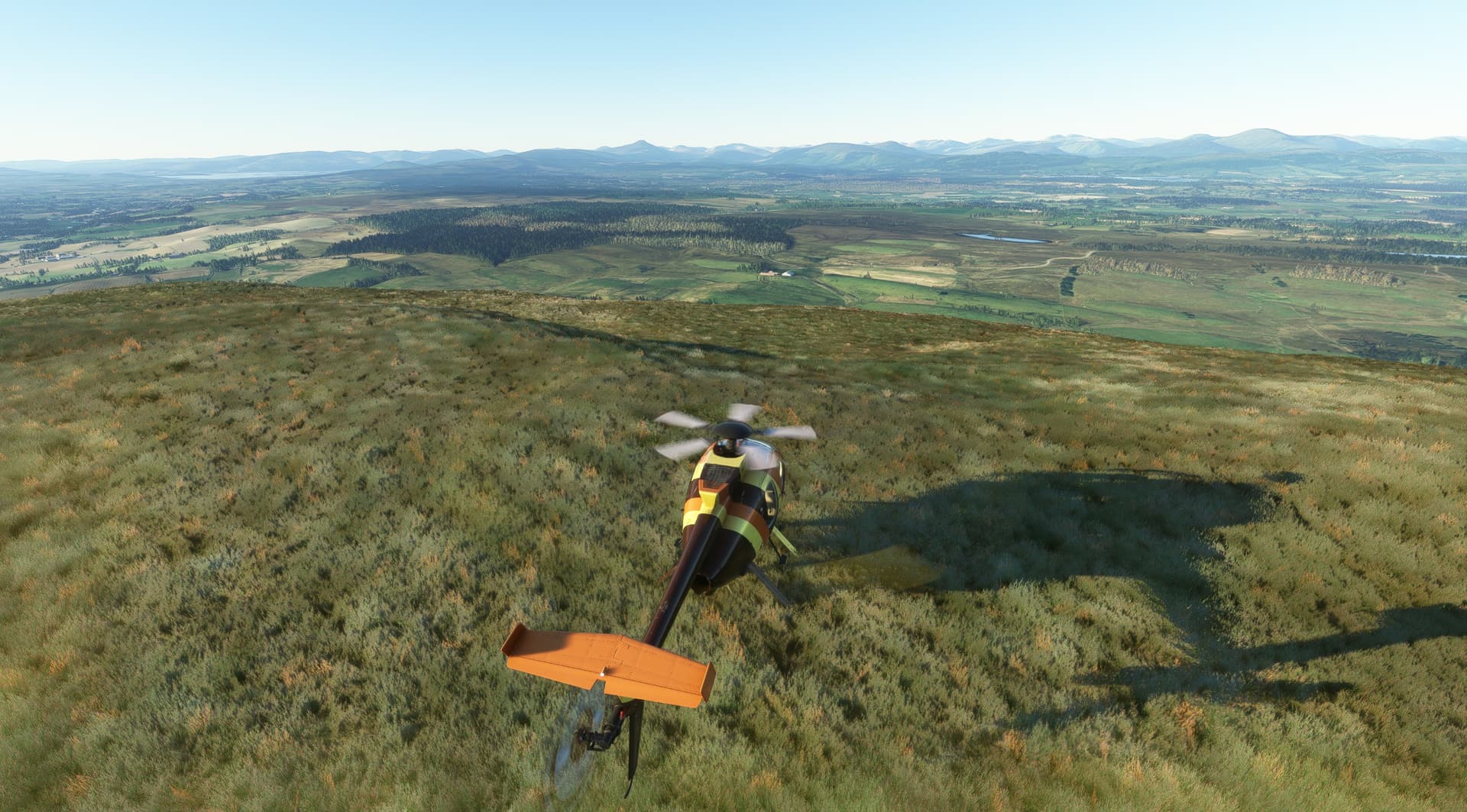
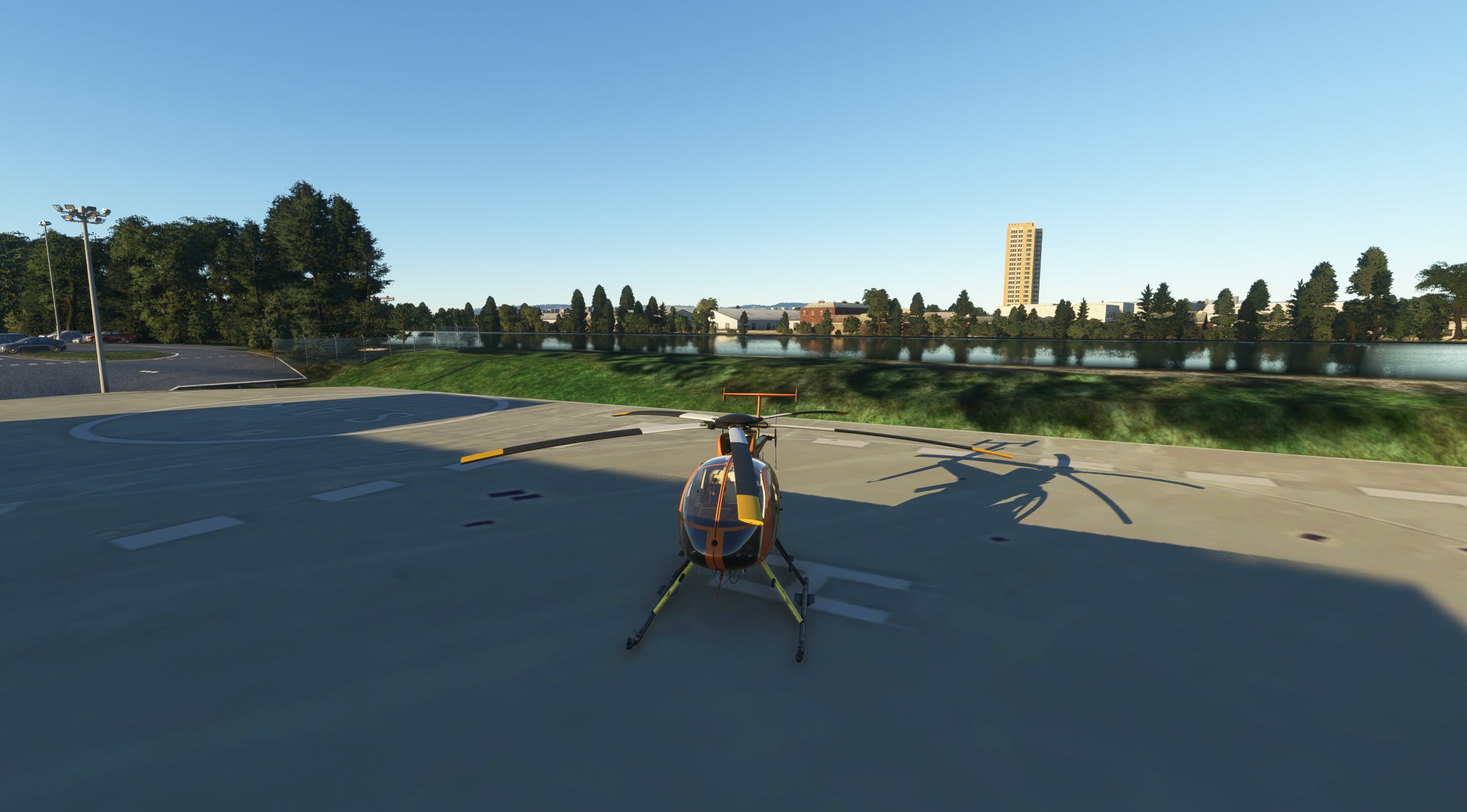
I flew from Glasgow Airport (EGPF), transformed by a Black Friday purchase of Pyreegue’s excellent scenery for it (and of their Edinburgh Airport (EGPH) to boot). I returned to Glasgow Heliport (EGEG) and was happily surprised to find that it had received a very welcome buff as part of the Glasgow Airport package.
The river side of the heliport in real life has some bushes on it, which MSFS of course transformed into Asobo supertrees, making access especially challenging, particularly for those of us who find that just landing a helicopter is all the challenge we want to handle.
Now they’re gone. Yipee!
2 Likes
-
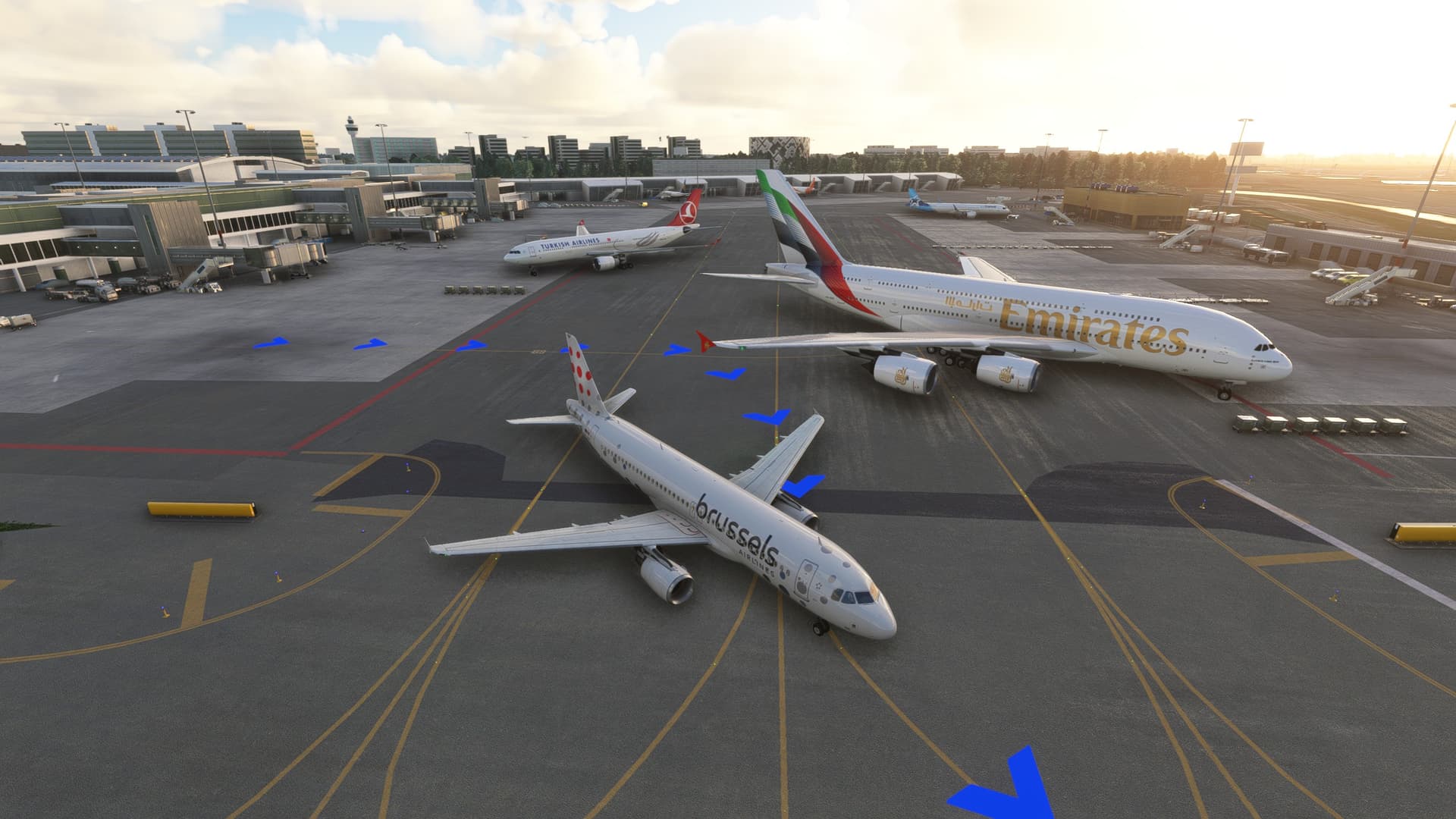
had a play with multi monitor for the first time (for shame)
-
Did my first cold and dark start → parked cold and dark landing thanks to the Slovenian Bush trip. Was a lot of fun!
2 Likes
After a long hiatus, reinstalled the RV-10 to give it one more chance. The annoying HDG and ALT bugs still persist. Not to mention the totally wacky ALT SEL and autopilot oddity.


2 Likes
Hadn’t updated my SoFly presets in a while, they have some new ones based on different cloud strata.
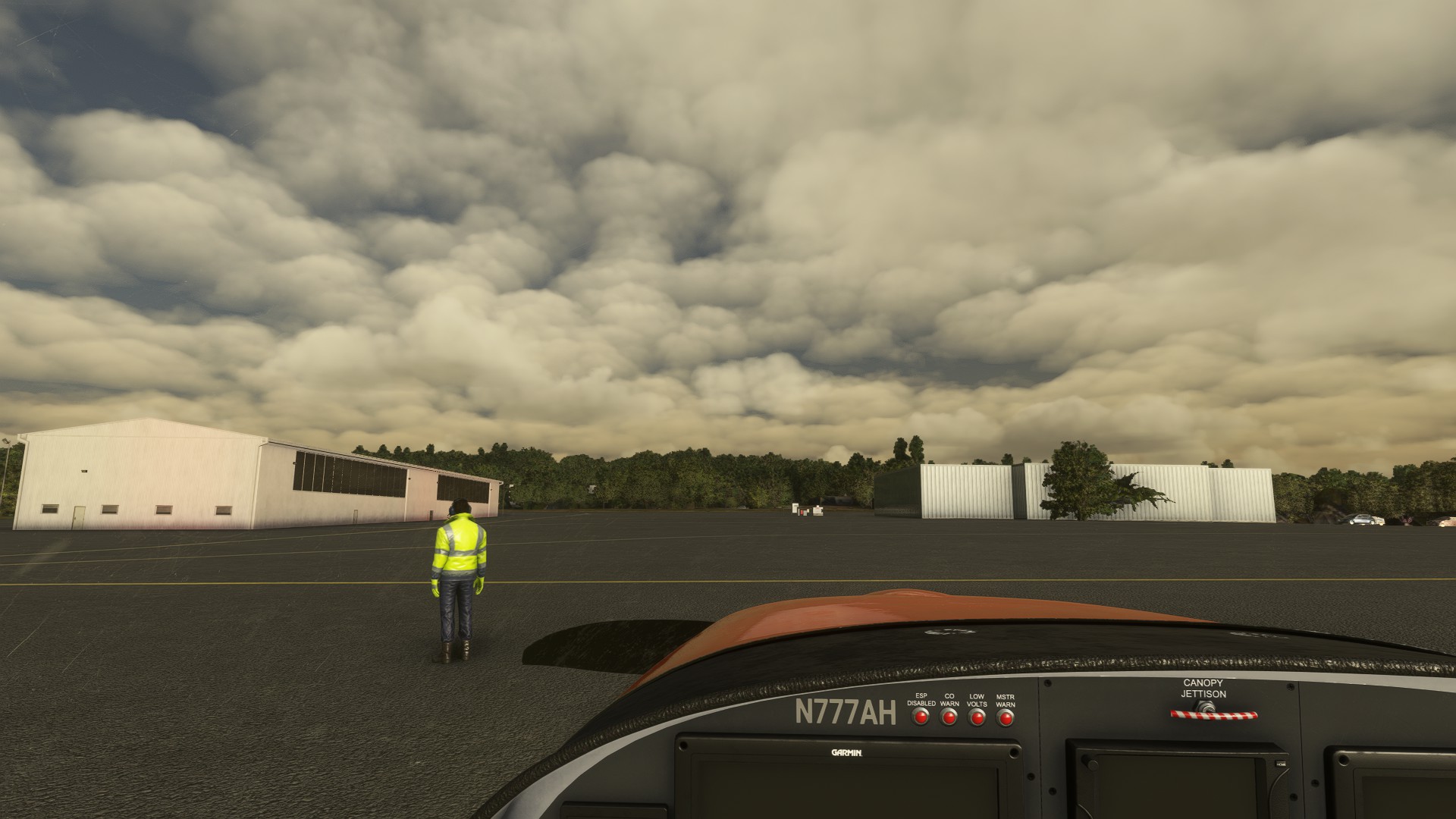

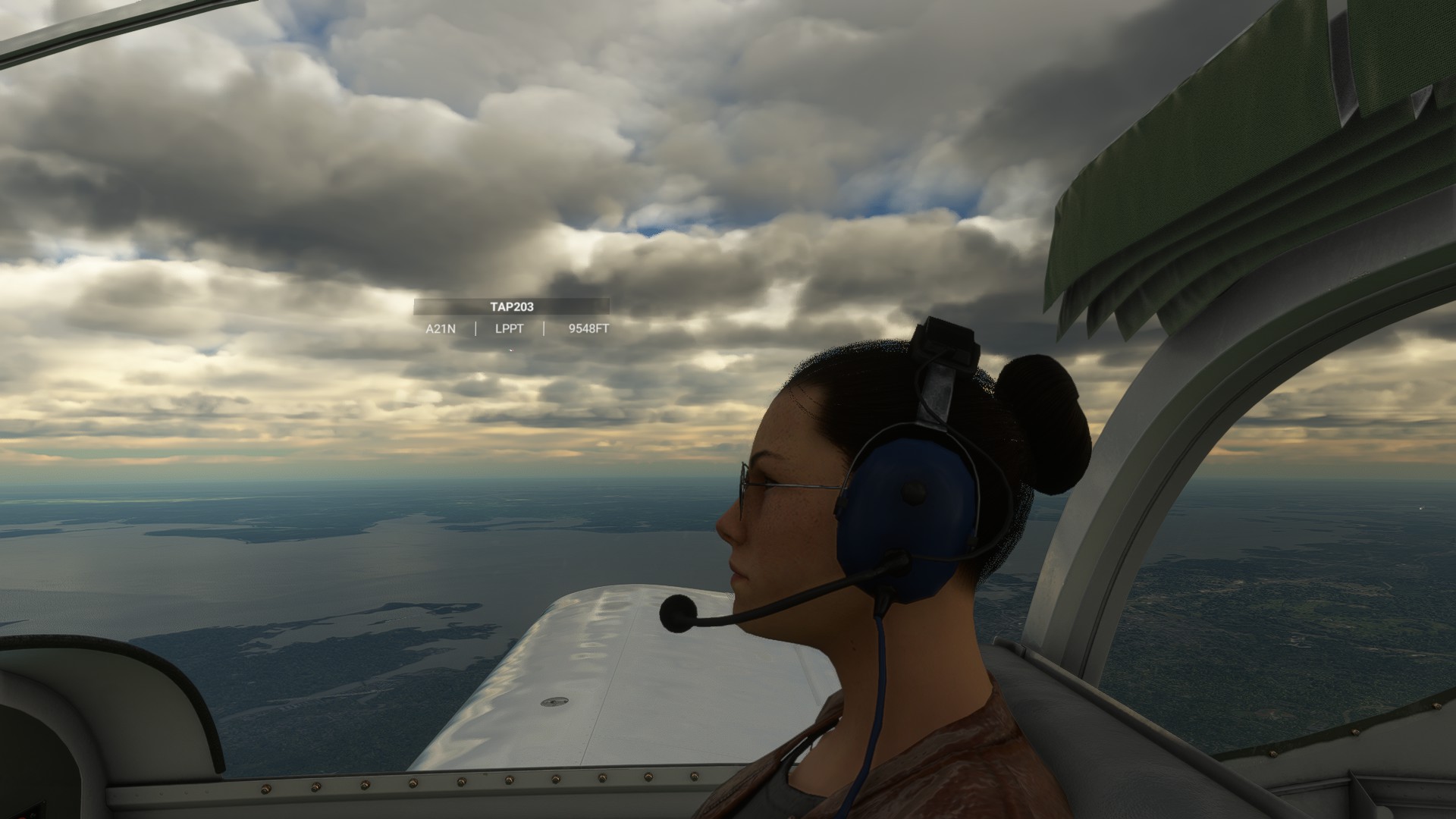
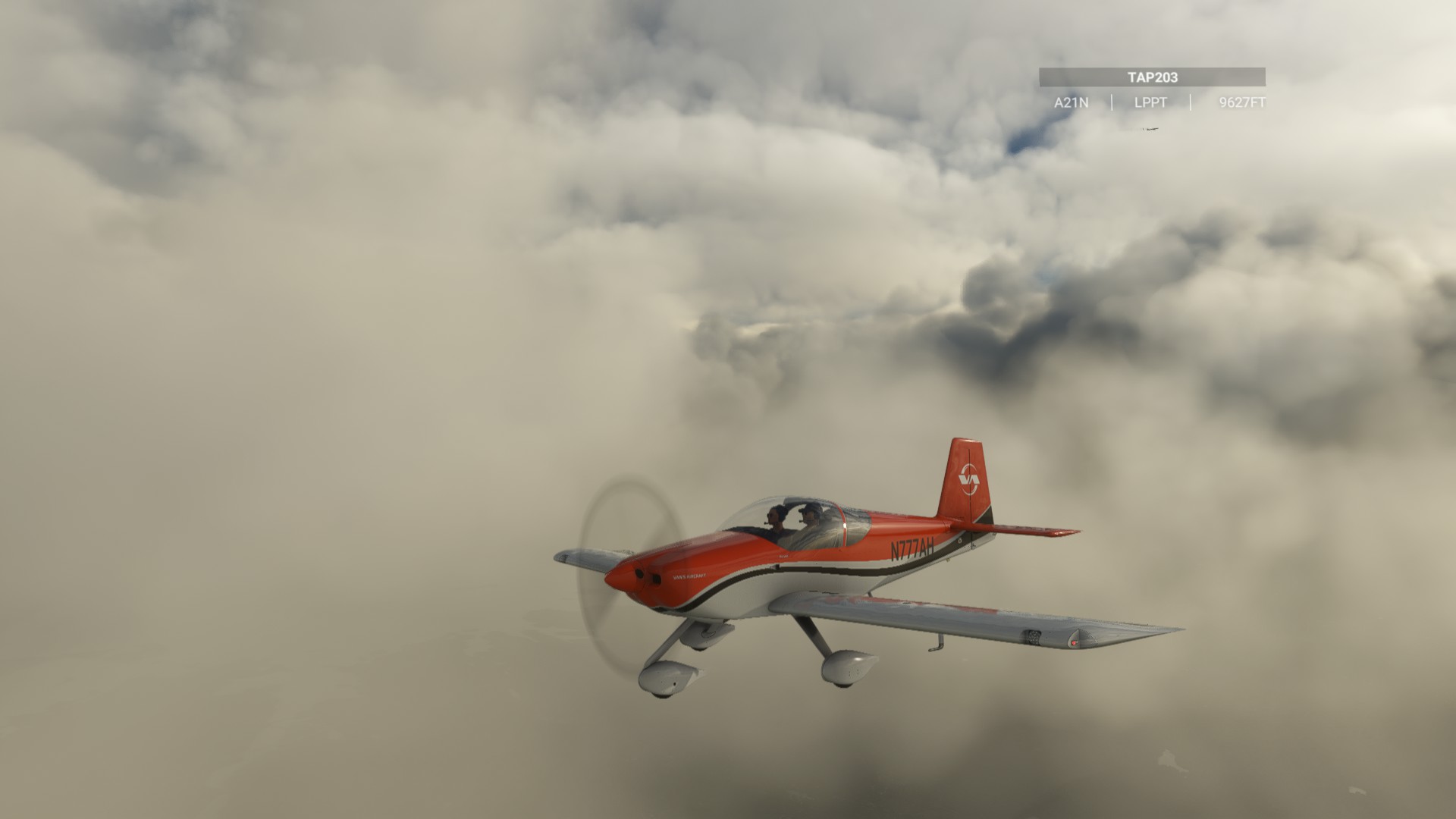
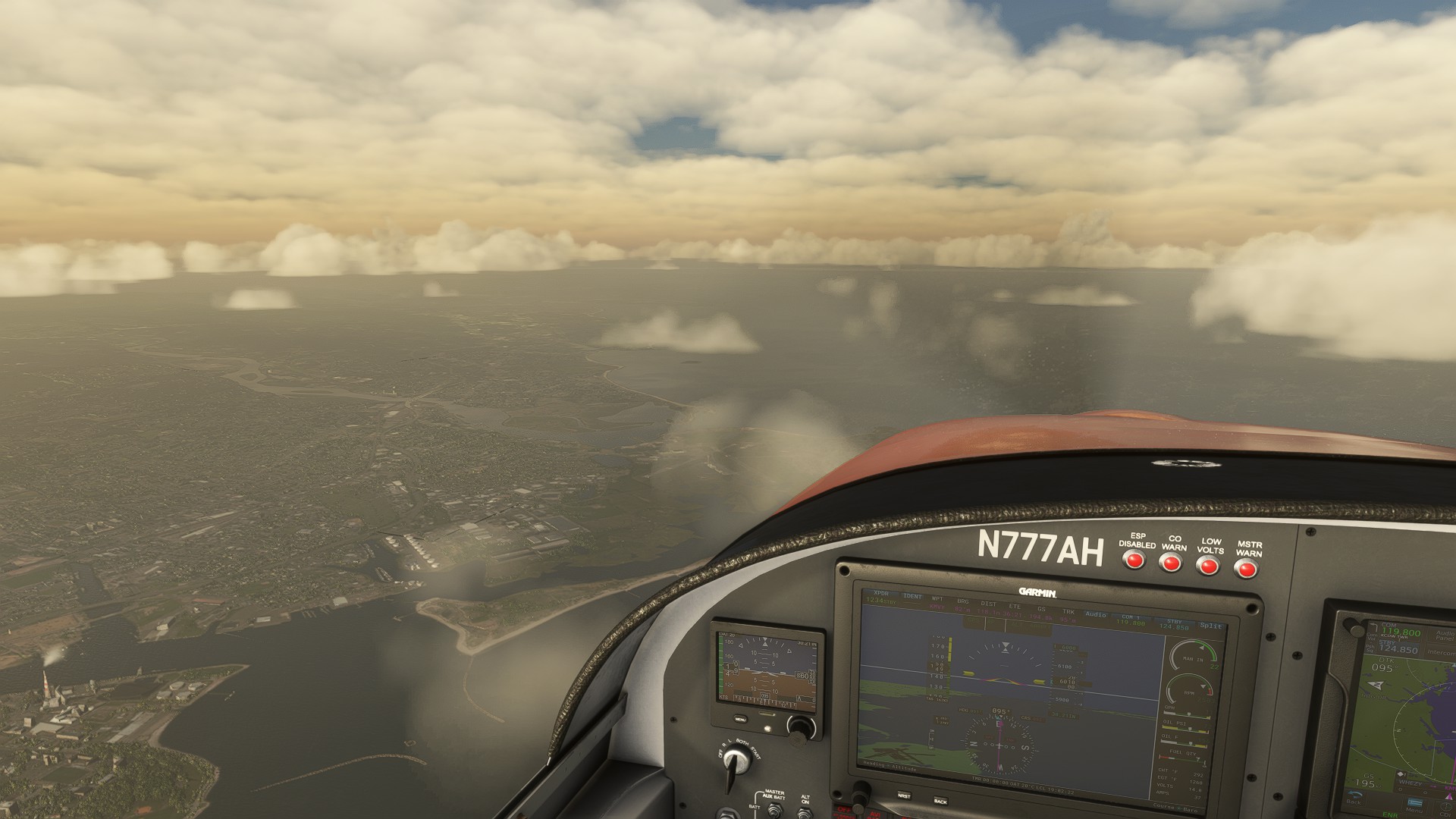
2 Likes
Fokker f28 4000 from VABB to VECC
1 Like
I did my first cross-country in Sting S4: NZRO NZAP
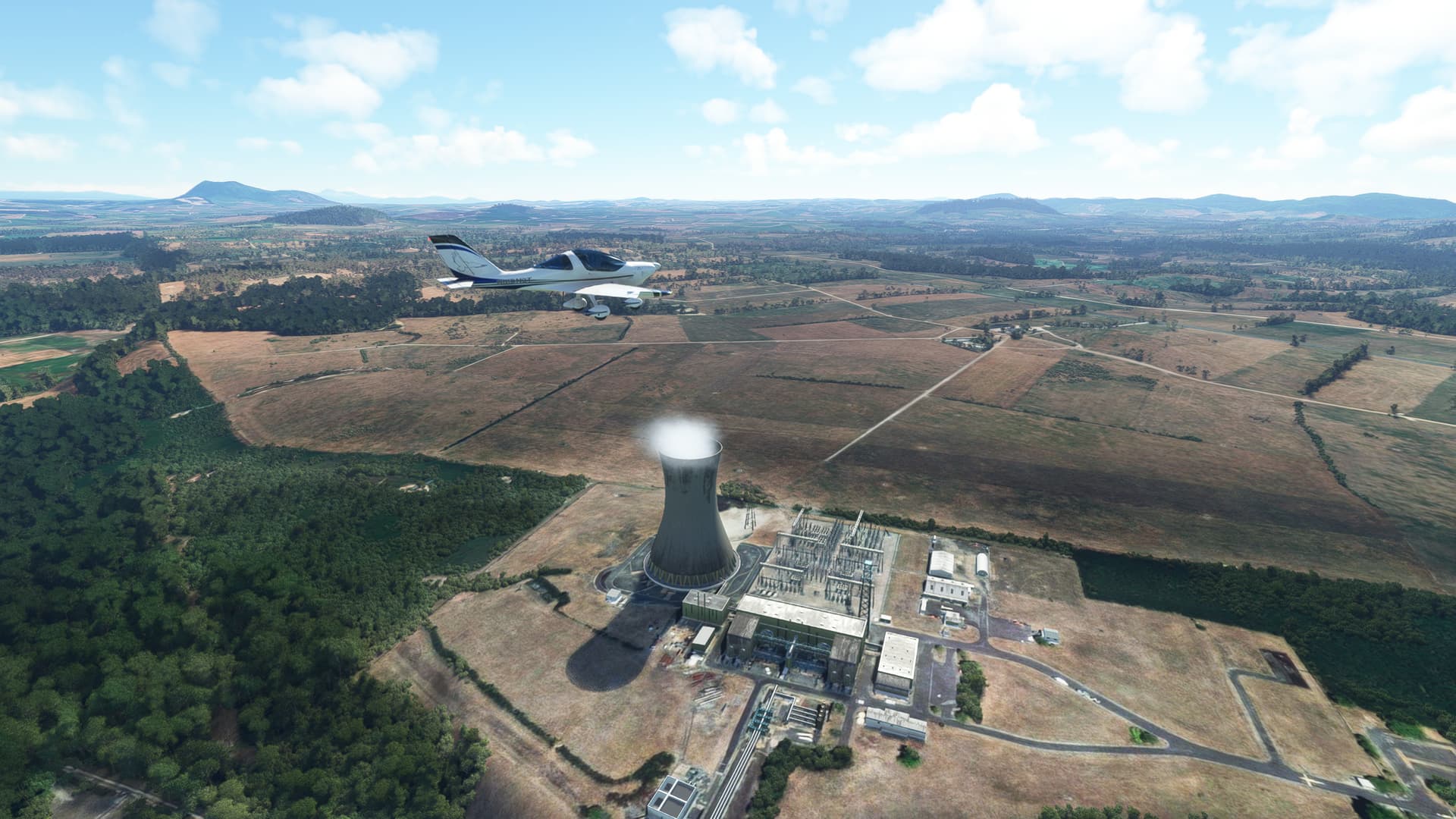
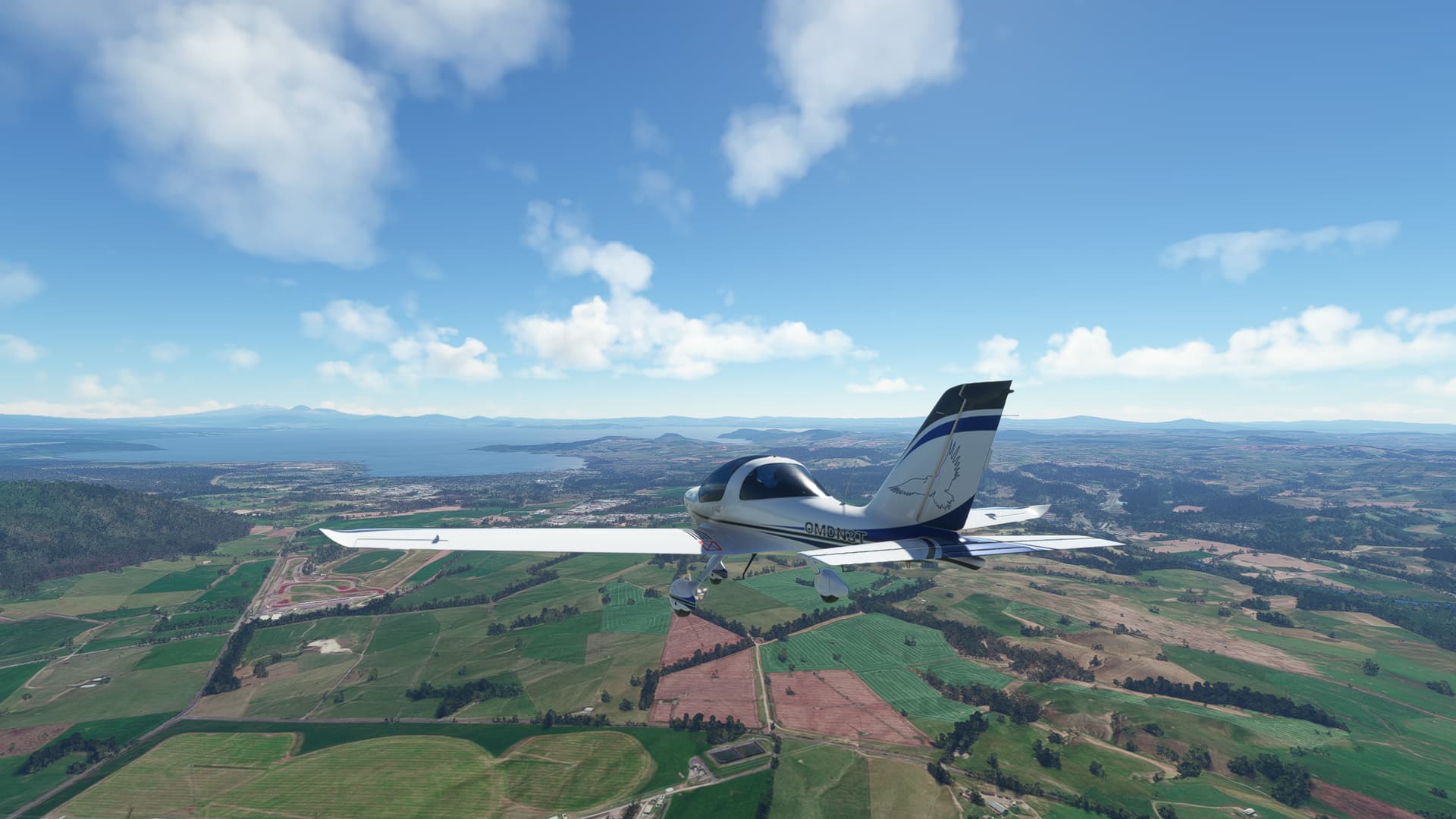
It was not direct. At first I flew around Rotorua lake, then Ohaaki power station, and then Taupo, destination.
Sting S4 is really fun to fly. Compared to C172 I love the view from the cockpit. And it’s really light. It takes off almost by itself, climbs so easy, and takes off and lands on really short distance. The only problem is it is more sensitive to wind. At Taupo I had to change runway from 17 to 28, because 28 had strong crosswind.
It will be hard to decide, which plane to use for next bush-trip.
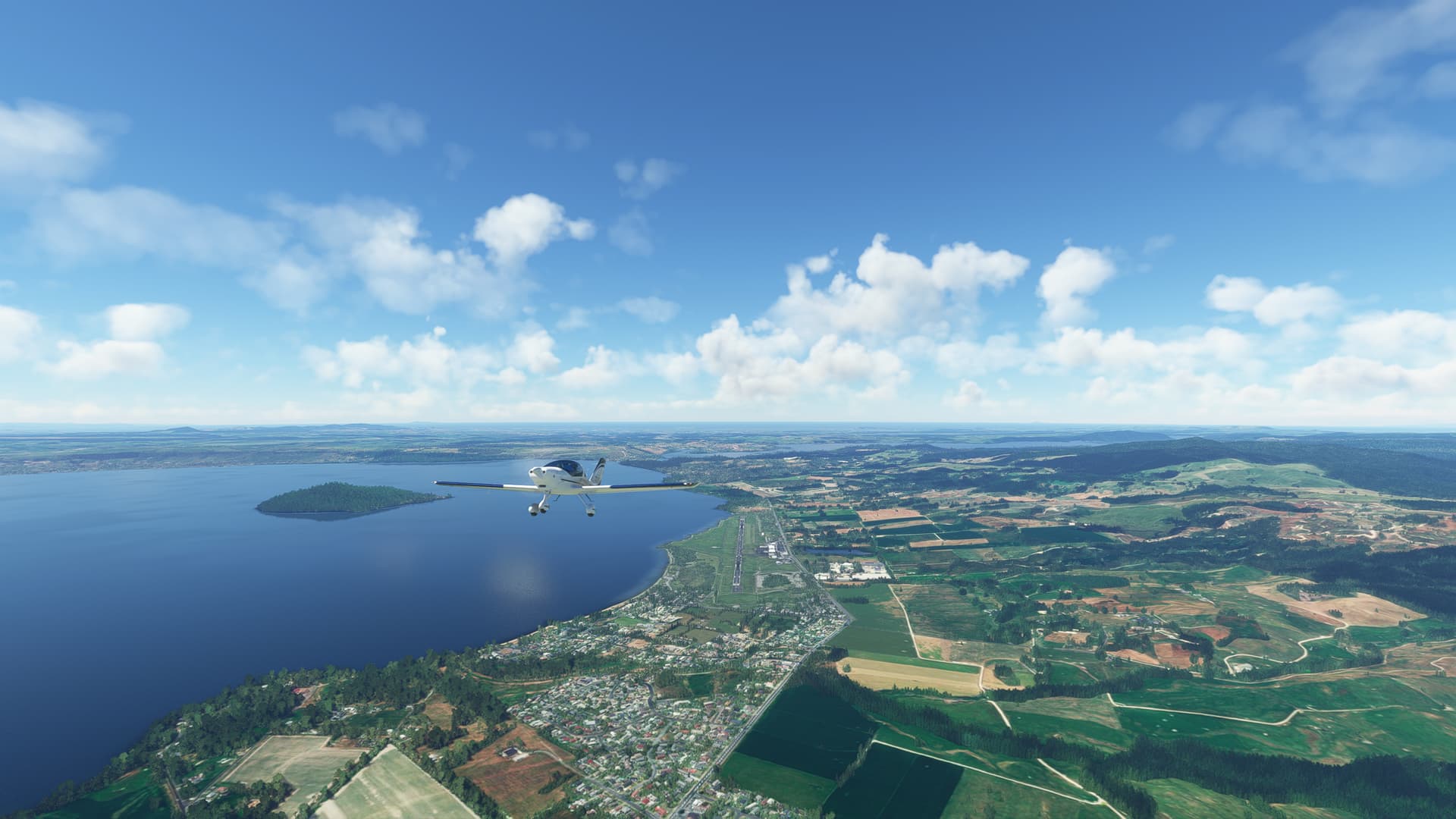
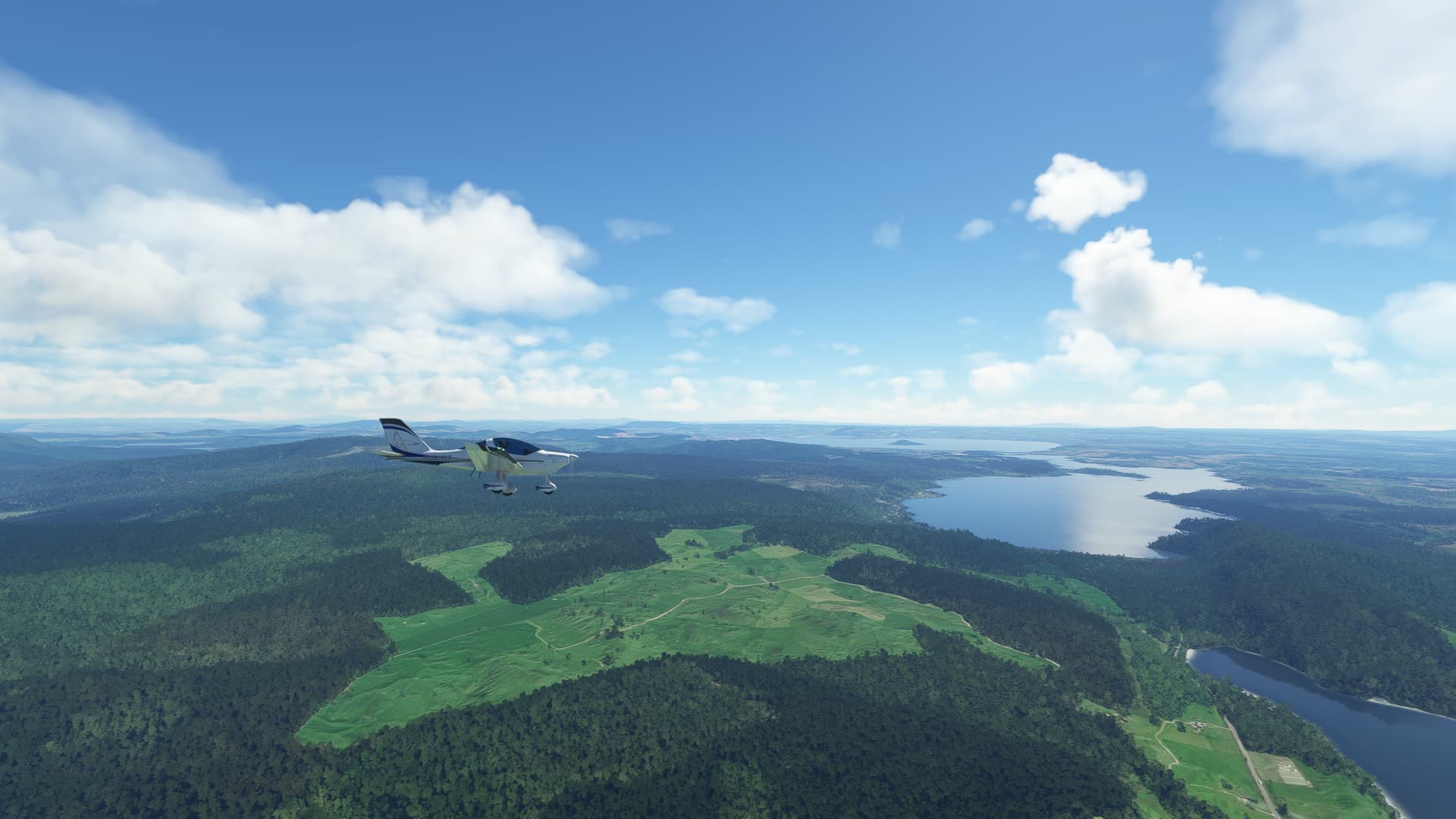
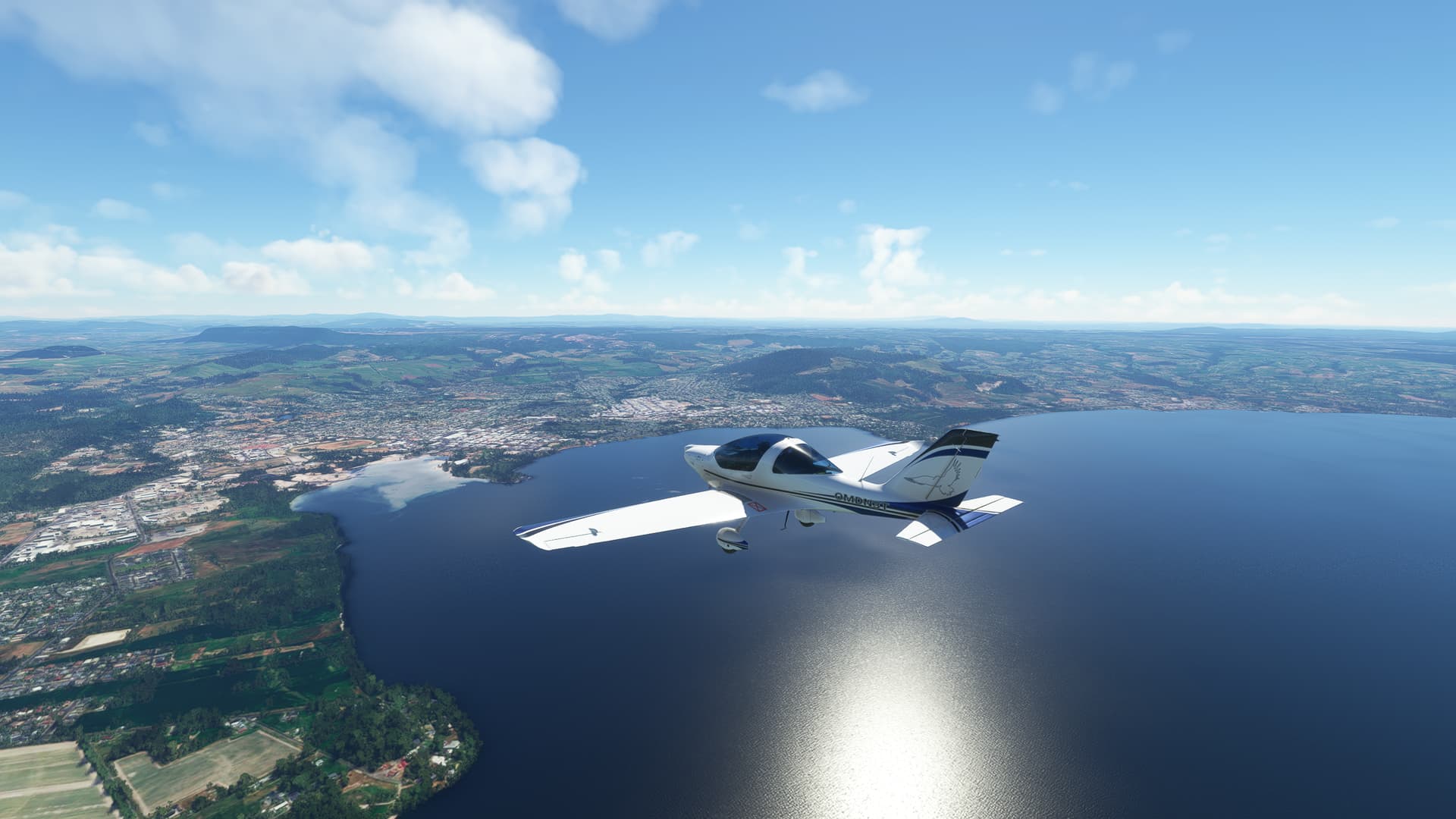
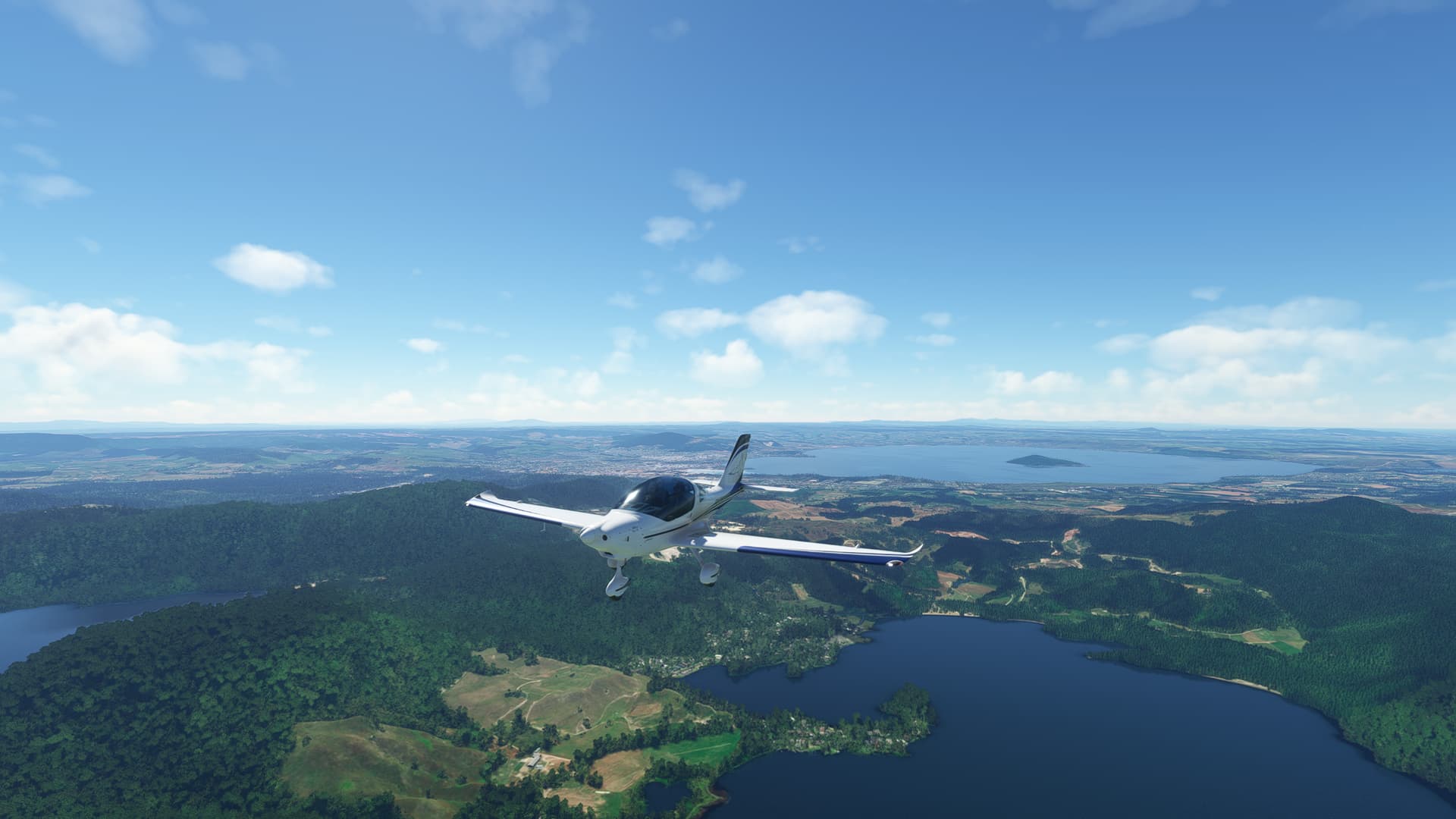
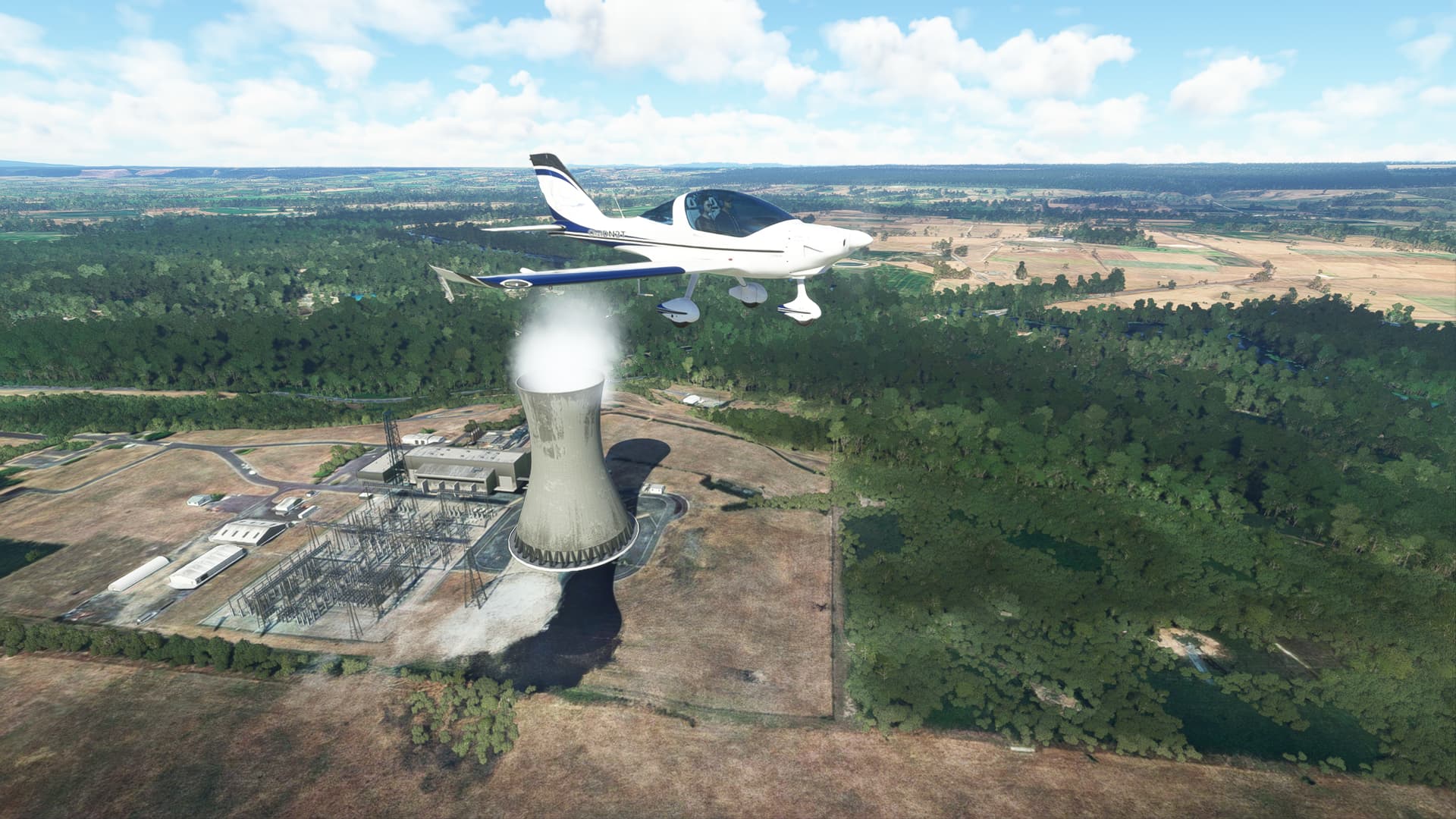
I guess, flying so close to powerplant, I would get check by air force.

3 Likes
More Lightning flying today. I went back at my favorite airfield: Duxford and the Imperial War Museum. Oh, how I’d love to visit the real place. If all goes as planned, 2025 will be the year! 
I downloaded another Jan Kees Blom skin for the forked-tailed beauty, this one representing P-38L “Glamour Puss II” as flown by Lt. Chester Schachterie of the 80th FS/8th FG in the final months of World War 2. Viewing this historically accurate paint may not be suitable for minors!
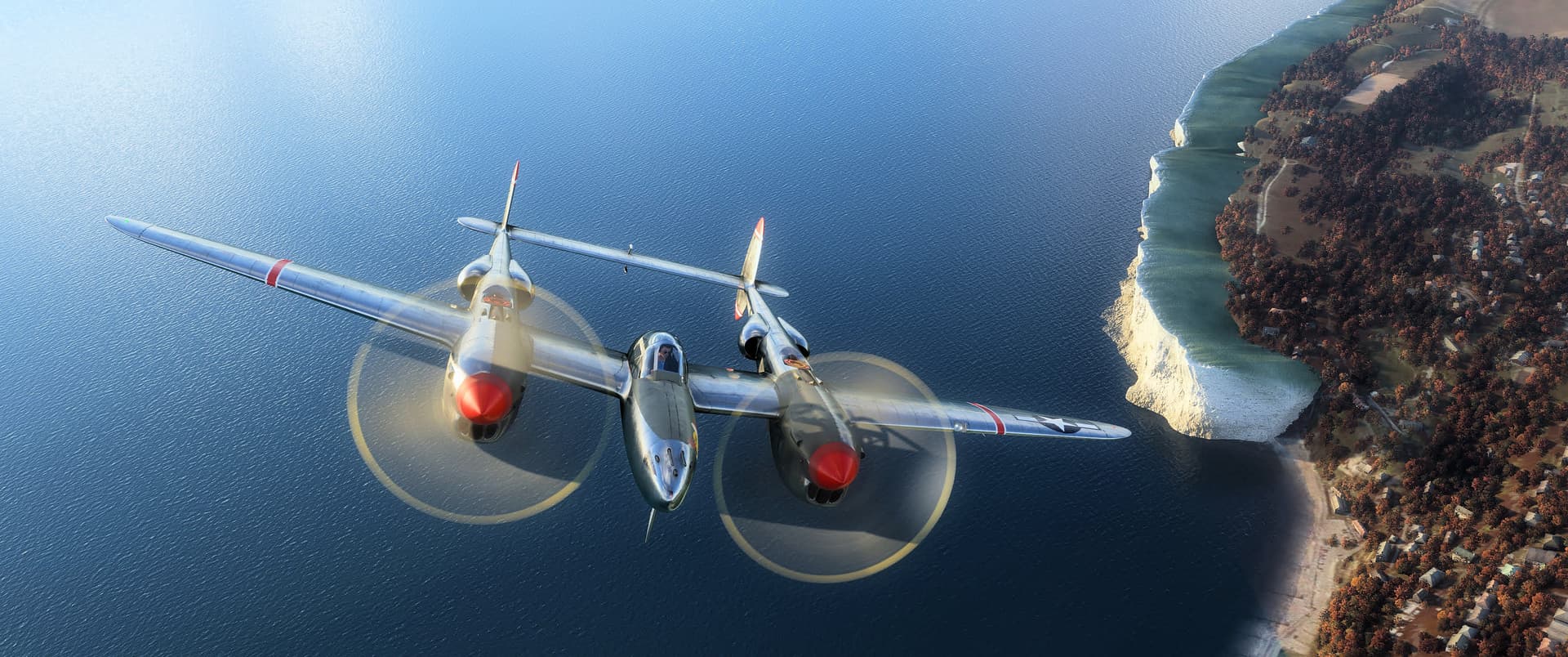
I decided to fly down to the Cliffs of Dover just after sunrise, having only seen them in photo books and the occasional war movie (The Battle of Britain and The War Lover, to name a few). I’ve discovered that the Lightning has trouble balancing when lightly loaded with only my 150 pounds in the cockpit and fuel in the main and reserve tanks, so I reduced the amount in the main tanks to compensate, which still gave me plenty for my proposed 45-minute round trip. (Pro tip: when loading an MSFS airplane near the edge of the CG envelope, drag the appropriate fuel tank sliders on the payload screen to simulate burning fuel and watch your CG change. It is possible to takeoff in balance but move your CG out of limits by burning fuel. Adjust your fuel and payload accordingly!)
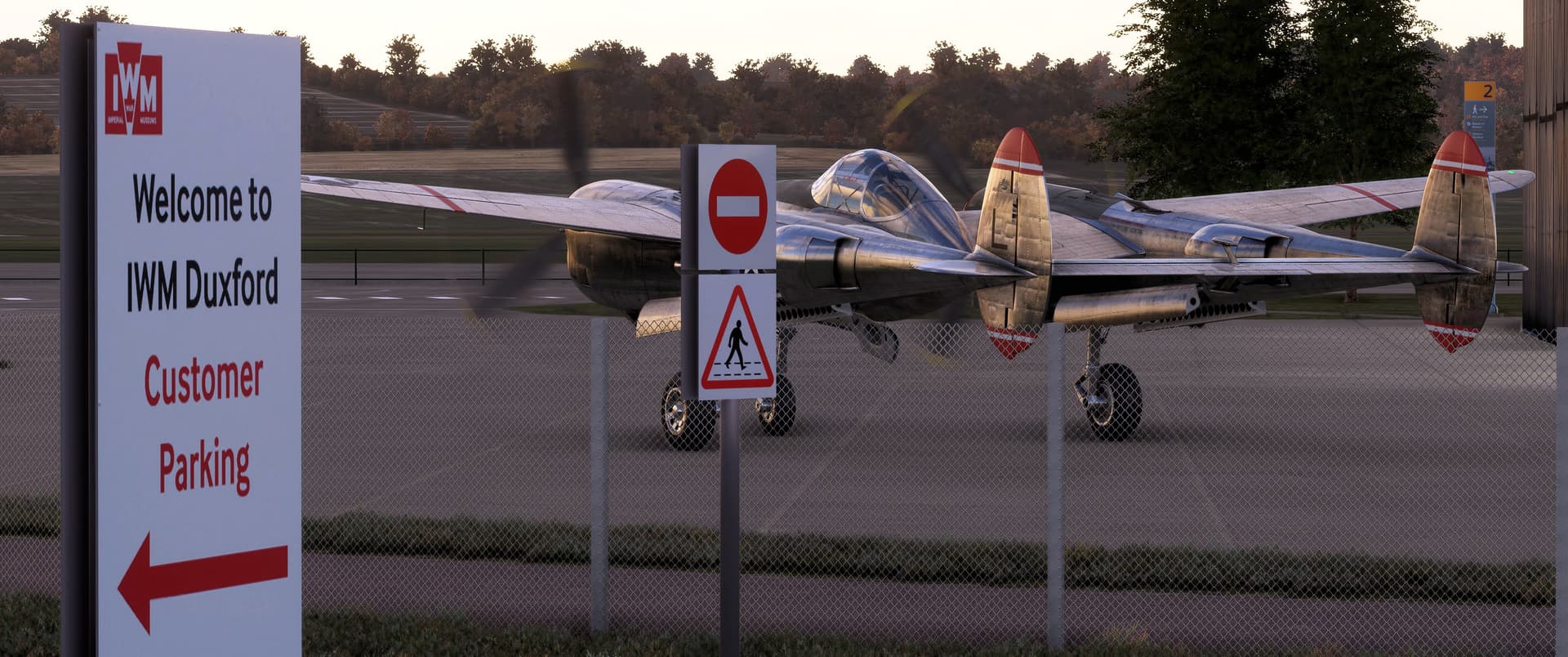
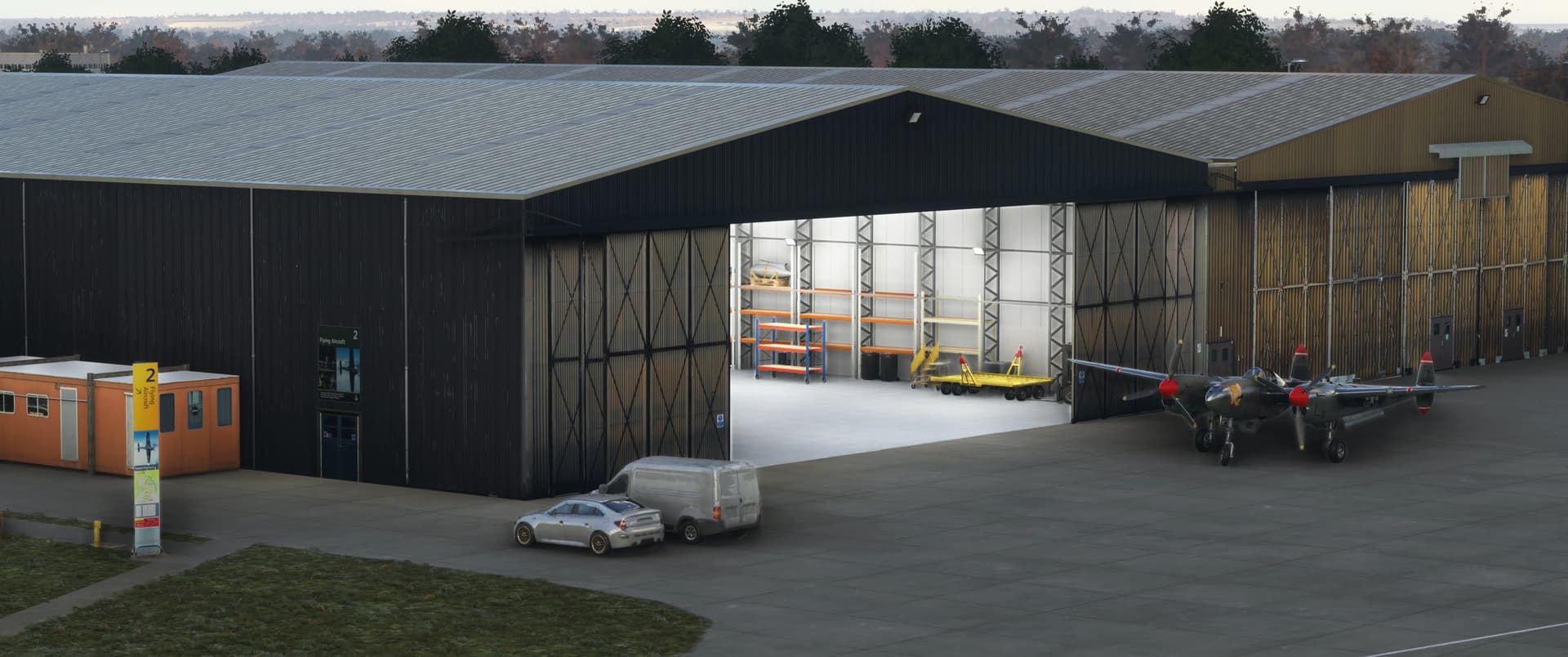
Anyway, here’s my girl sitting on the ramp outside Hangar 2 at Duxford. I can’t speak highly enough of this scenery package by ChicoMick! The detail and included features are amazing!
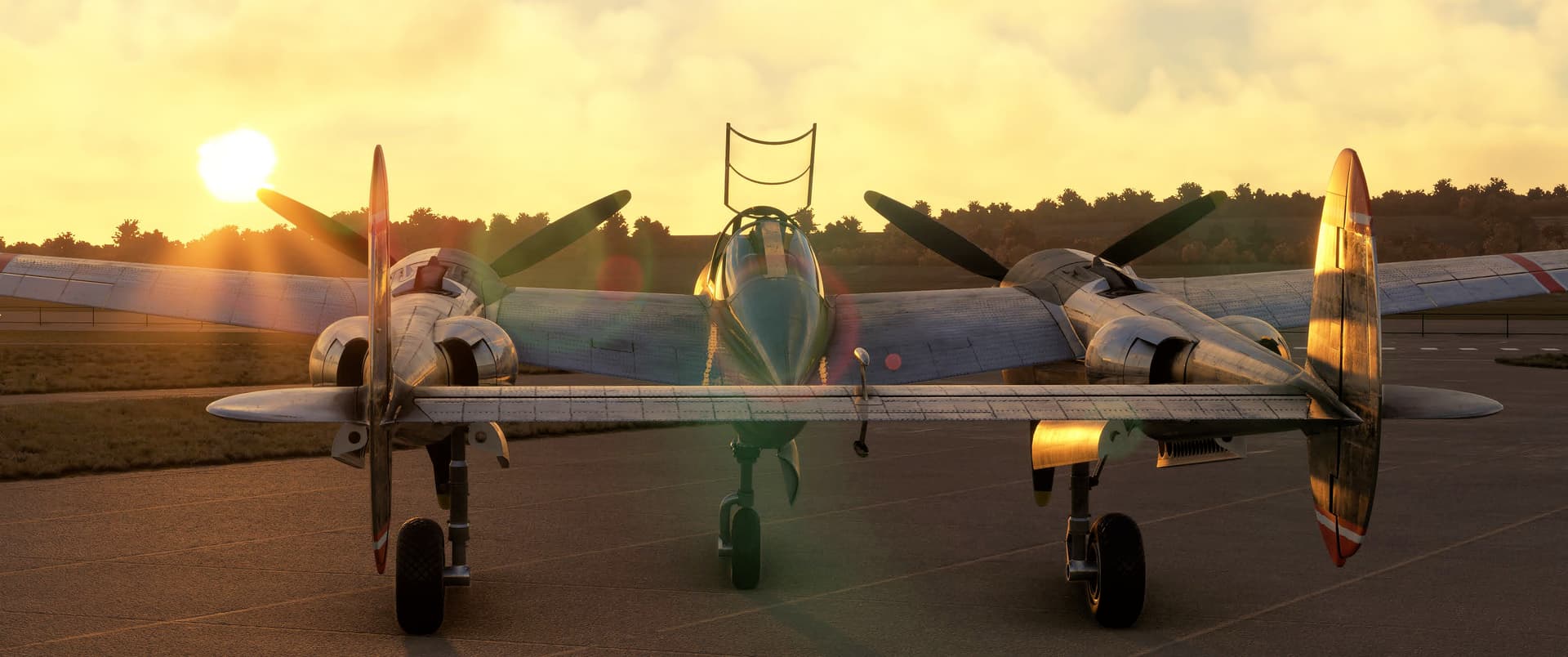
Both Allison’s warming up in the crisp morning air. Welcome to the IWM! The airfield and museum don’t open until 10 a.m., so I made certain to turn off the airshow scenery. It’s those little details that really create immersion.
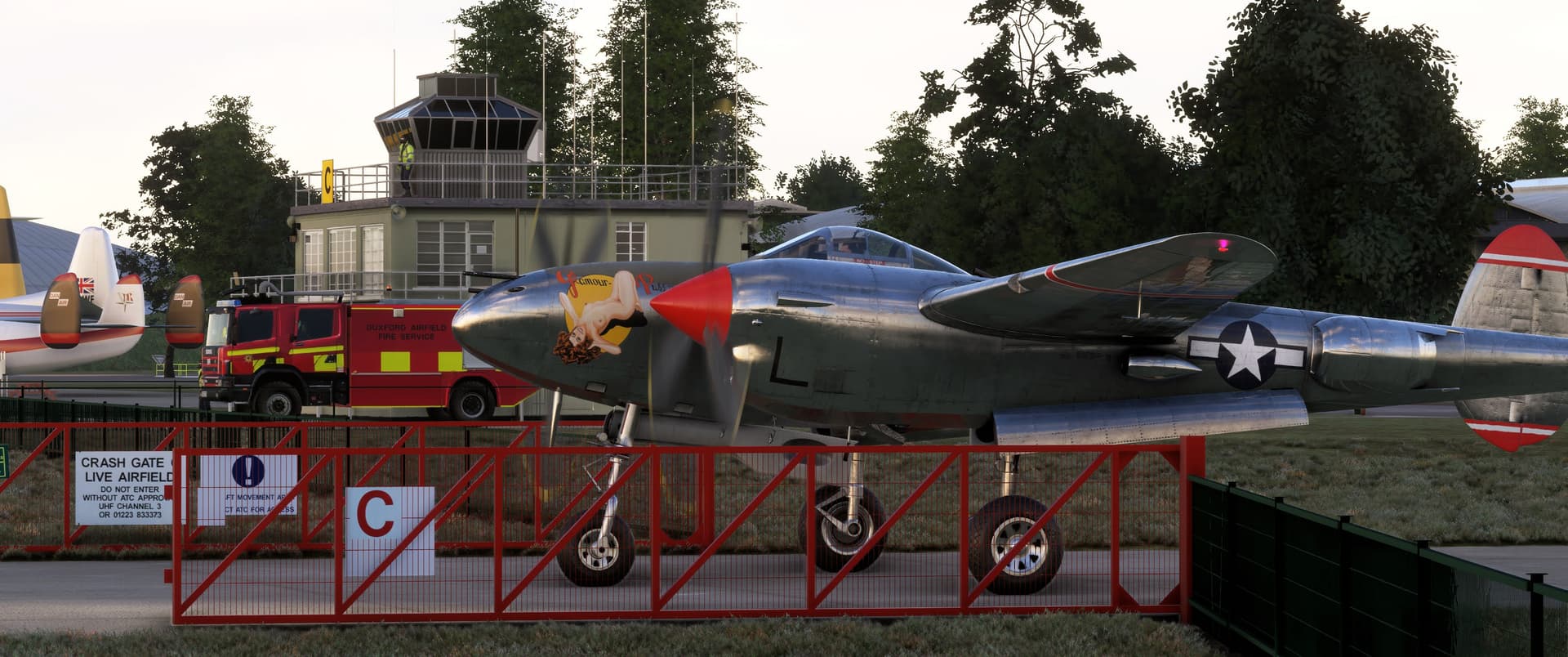
I taxied very carefully out to the airfield through Crash Gate C. Outbound, approach the gates slowly and they’ll open automatically. Inbound, be mindful of leaving enough room for the gates to swing towards you!
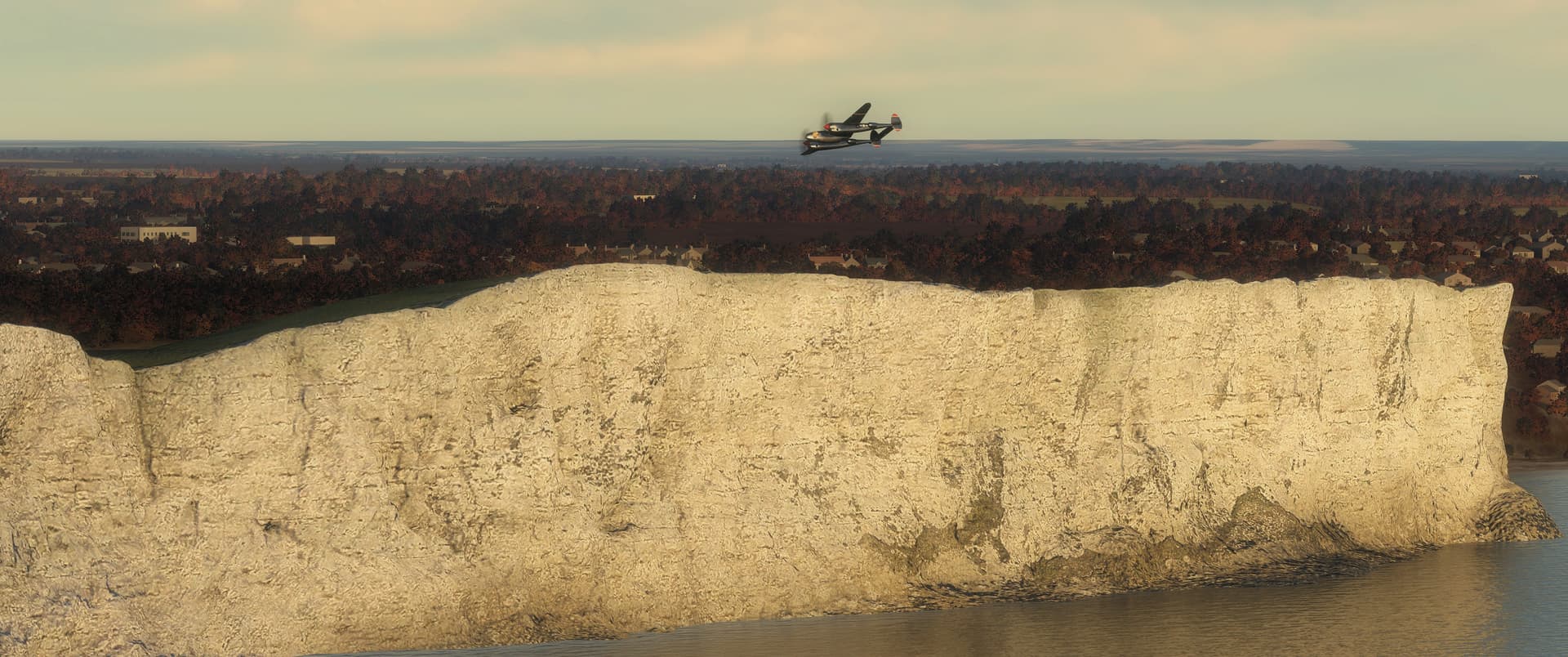
Thirty minutes later and I’m over the Cliffs. Asobo’s model looks pretty convincing! These shots are why I departed Duxford so early. Having the sun shining from behind the cliffs wouldn’t have worked. I will say that, from the air, the cliffs are smaller than I expected. Buzz Rickson was really unlucky!
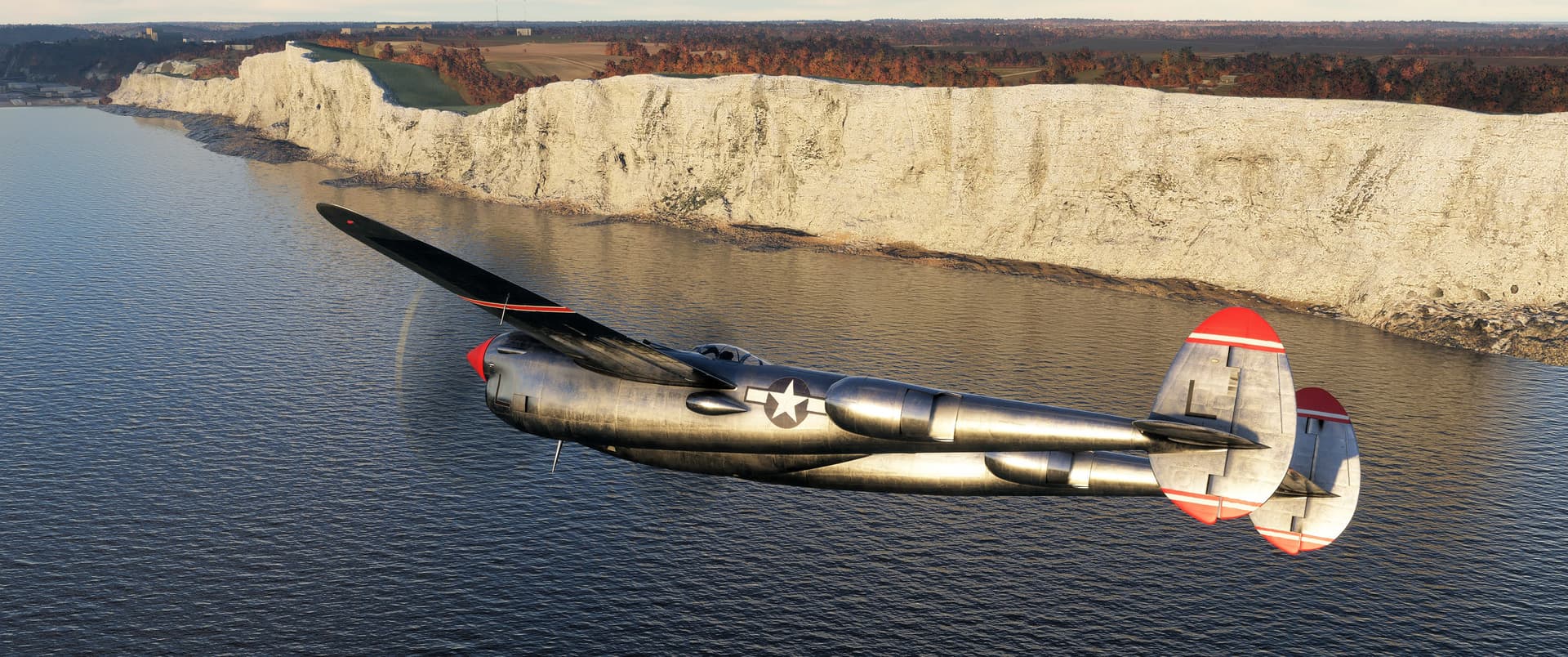
After another pass I climbed back to altitude and set course for home. Pressed for time, I climbed above 10,000 feet both directions to let Glamour Puss run. Thanks to a wonderful tailwind, my groundspeed was nearly 400 MPH on the way down. Alas, every tailwind is someone’s headwind! My groundspeed was nearly 100 MPH less on the return leg. (Another pro tip: remember that in many places, the speed limit below 10,000 feet is 250 knots, and 200 knots beneath the overhanging portions of a Class B airspace. That’s 288 and 230 MPH respectively. If you’re flying a high-performance warbird like the Lightning, remember to slow down before descending below 10,000!)
With mist obscuring the field, I maneuvered south of the field and joined the left downwind for Runway 24L, carefully avoiding the noise sensitive areas and smokestacks southeast of the field. I’d love to report that the landing was a greaser, but they can’t all be  The waiting mechanics opened the doors into Hangar 2 as I approached, ready to push Glamour Puss into her berth for a long day’s nap.

It was another fun and informative flight! And now I’m tired, so it’s off to bed for me, too! 
10 Likes
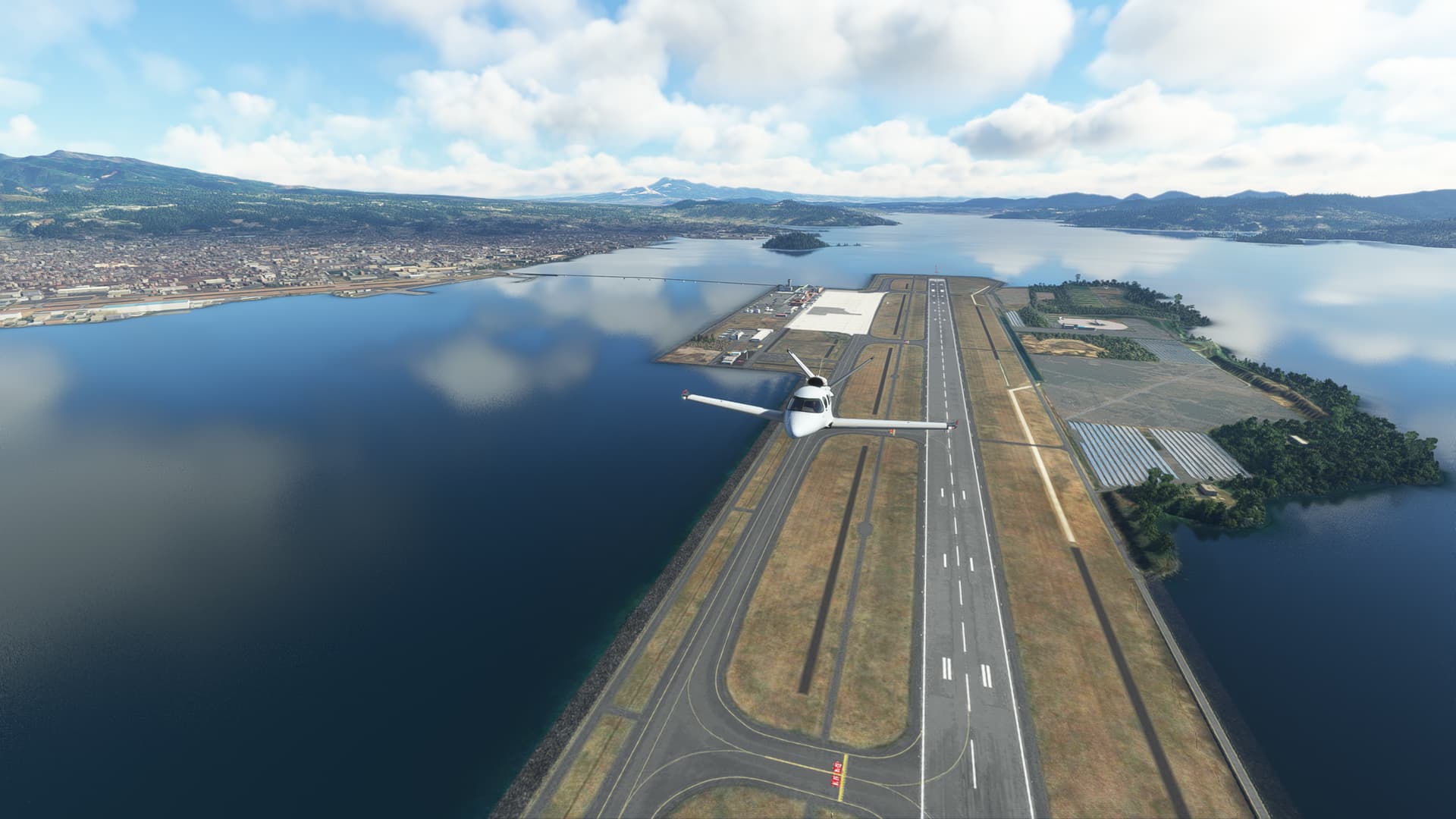
No time for lengthy flights today, but I managed to squeeze in some sightseeing:
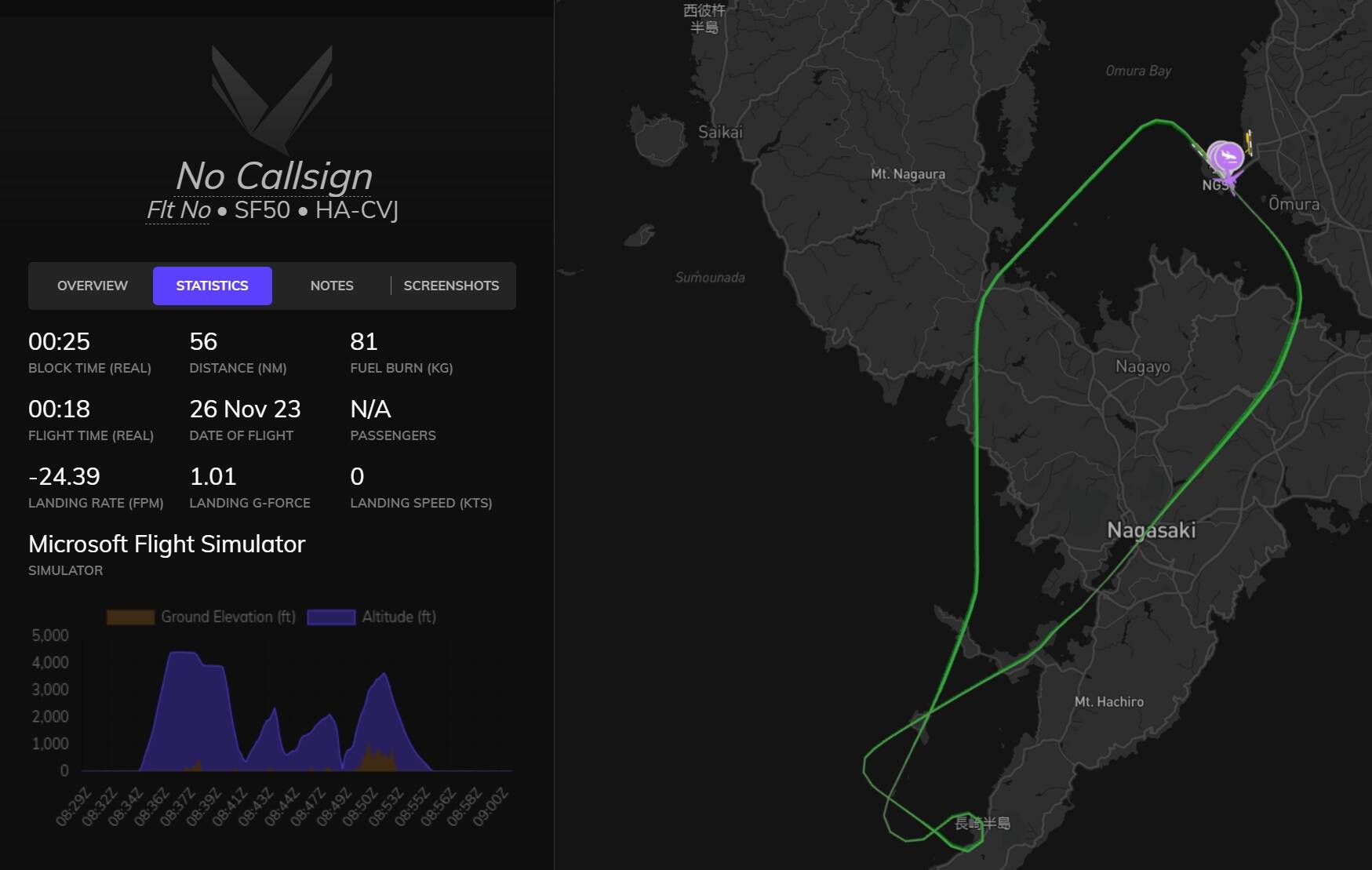
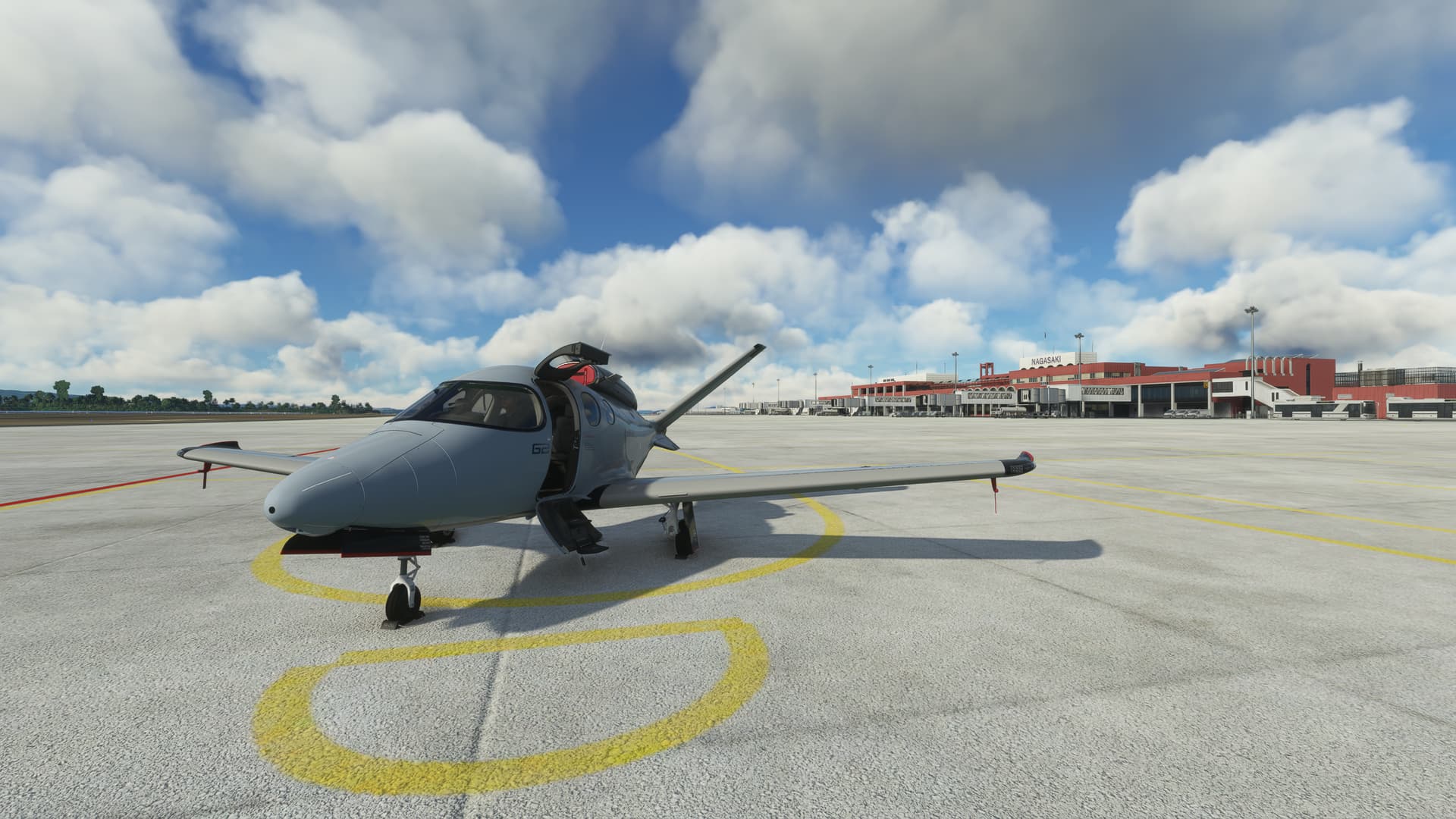


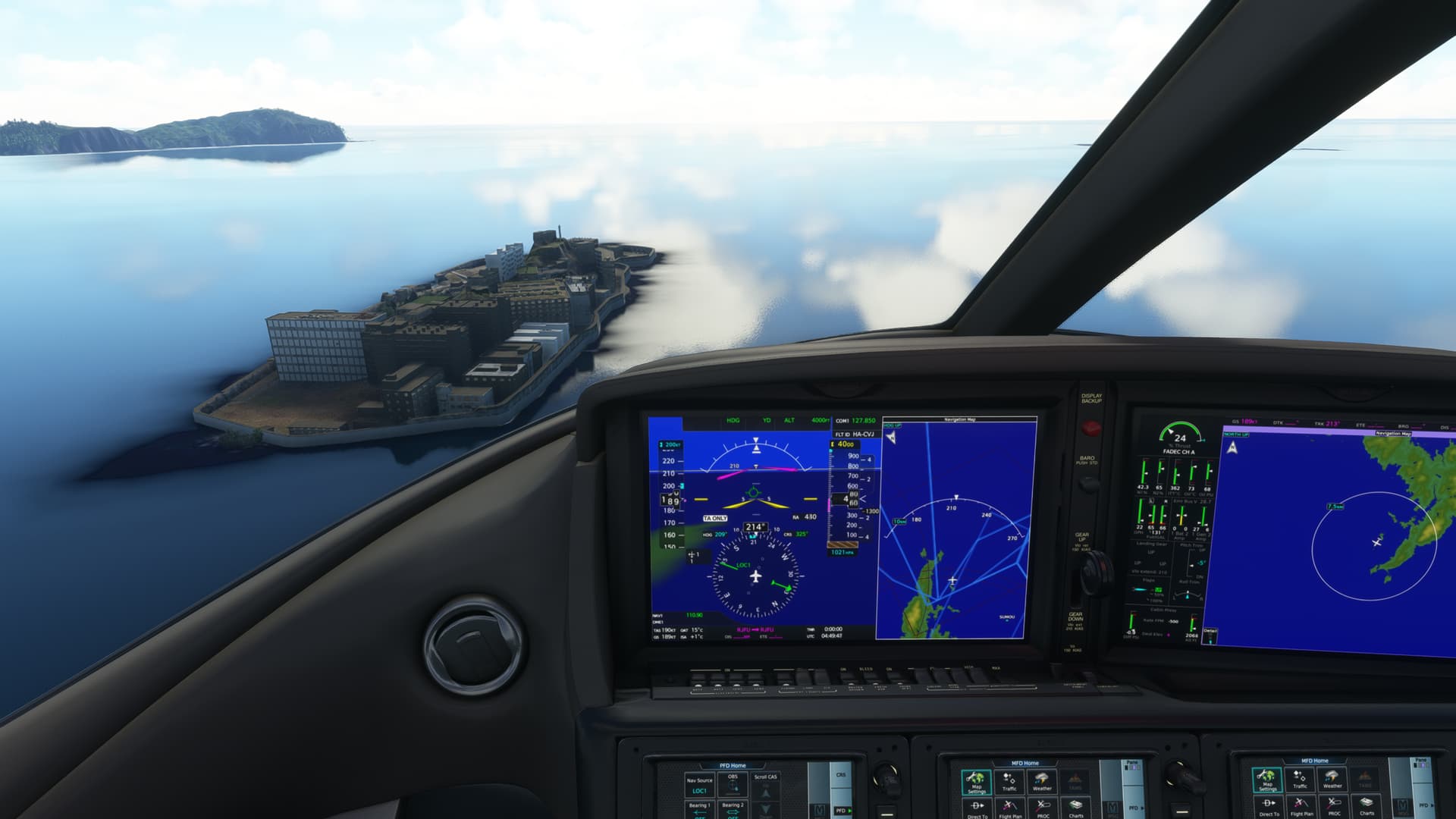
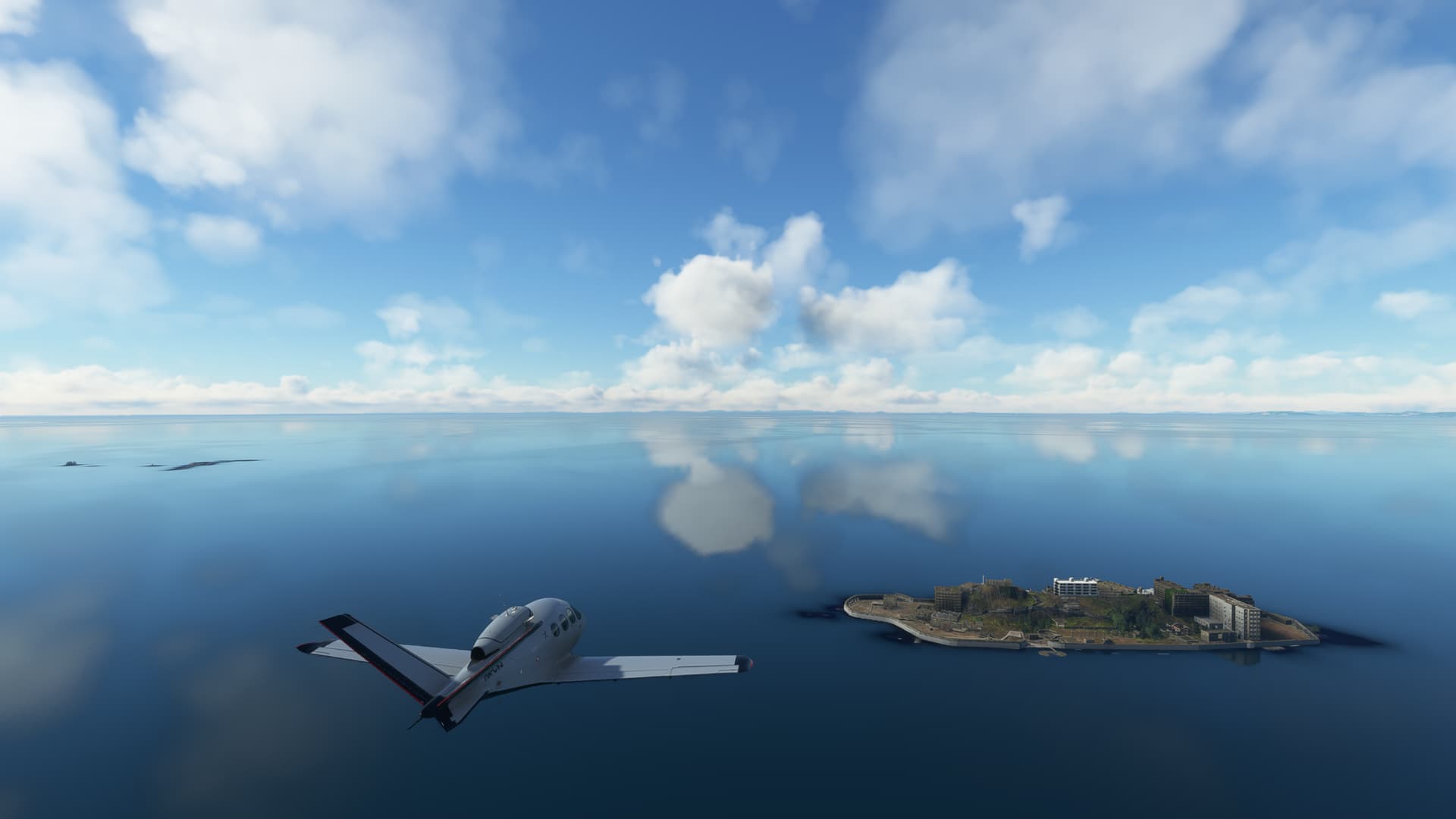
Hashima Island, commonly called Gunkanjima (Battleship Island), is a tiny abandoned island off Nagasaki, lying about 15 kilometres (8 nautical miles) from the centre of the city. (from Wikipedia)
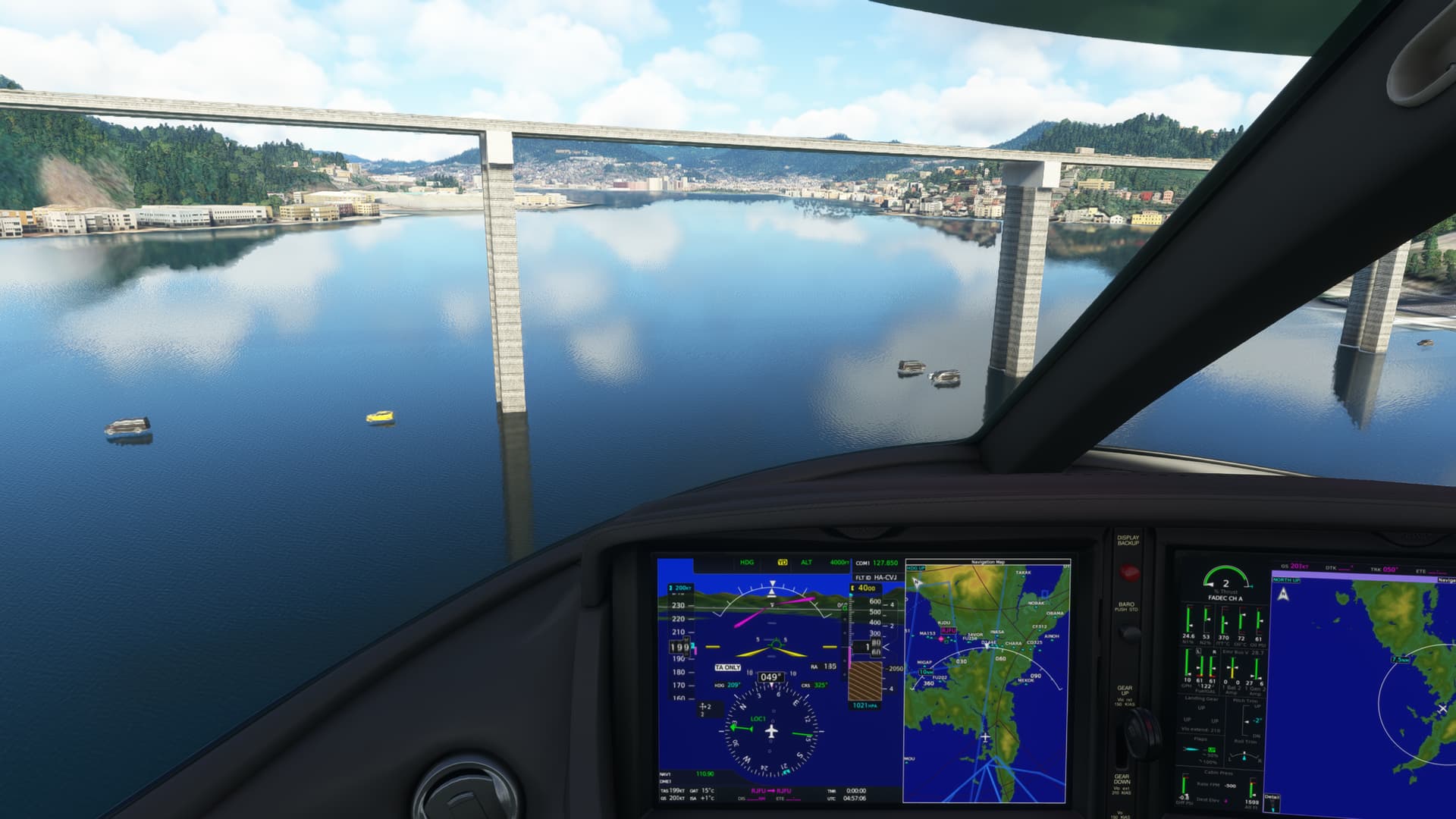
I’m not very skilled in such things, but I did manage to fly under this one. And look at all those poor sould tht have to drive on the water instead of the bridge…
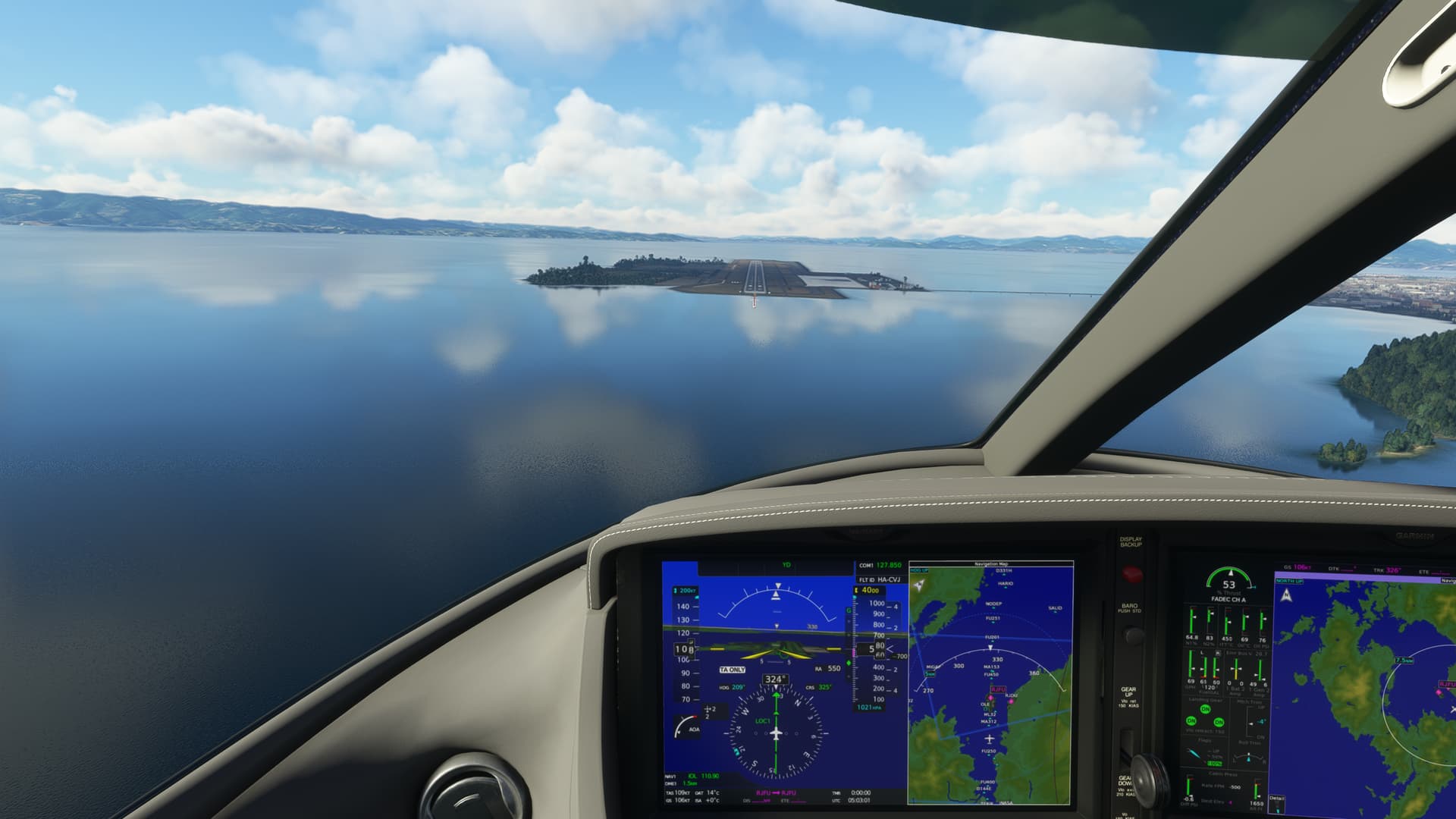
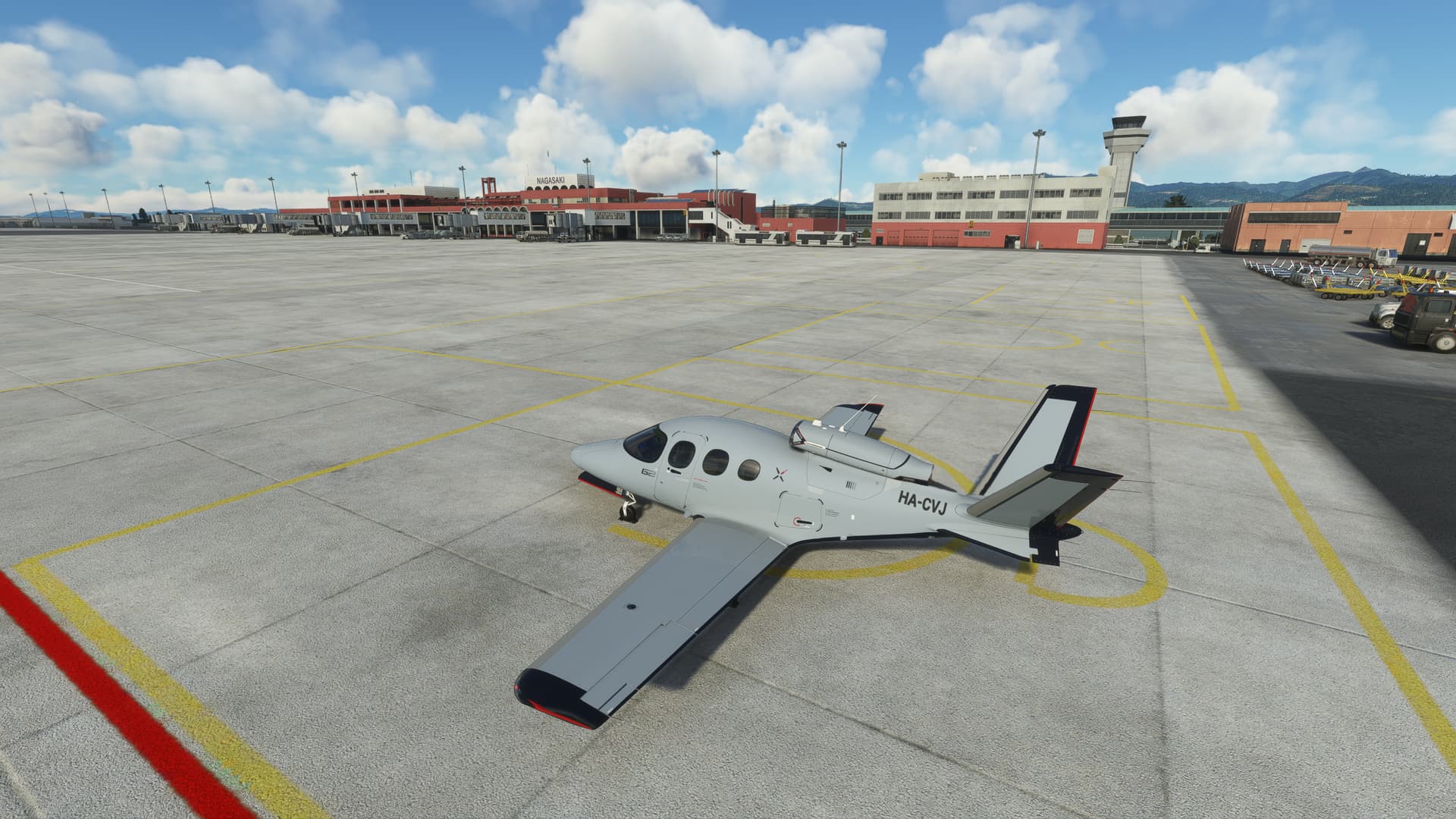
Volanta recorded 3 landings for some reason, but the actual landing was -66fpm at 1.04g
4 Likes